Artwork
Bridge at Caracas
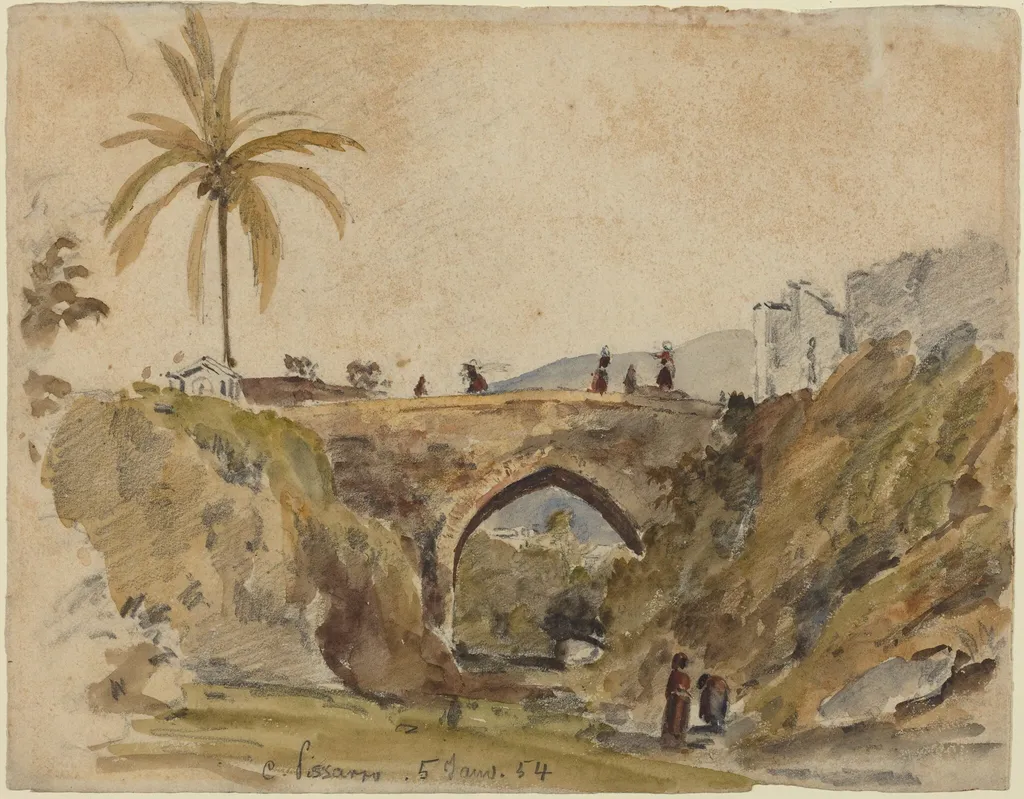
Bridge at Caracas is a graphite drawing by the Impressionist artist Camille Pissarro. It dates from 1854 and is held in the collection of the National Gallery of Art.
- Inscription
- Inscribed:recto: lower center in graphite: C. Pissarro .5 Janv. 54; verso: at upper left in graphite in later hand: 50; at lower right in graphite in later hand: 22
- Markings
- Marked:none
About this work
Overview
Camille Pissarro’s drawing titled Bridge at Caracas, executed in 1854, is a transparent watercolor and graphite work on wove paper. The piece measures a modest size and presents a quiet, rural scene rendered in delicate washes and fine line work.
Subject & Meaning
The composition centers on a single‑arch stone bridge spanning a shallow valley. Dark‑clothed figures occupy the bridge and the surrounding path, suggesting a moment of everyday travel. The surrounding terrain is rocky and gently rolling, punctuated by sparse trees and bushes, while a pale yellow sky with soft clouds looms overhead, conveying a calm atmosphere.
Technique & Style
Pissarro combines watercolor’s translucency with graphite’s precision to delineate the bridge’s weathered stone and the surrounding foliage. A restrained palette of warm browns, muted greens, and a subtle yellow sky captures the varied textures of rock, vegetation, and sky, while the graphite outlines provide structural clarity without disrupting the overall softness of the wash.
Context
Created early in Pissarro’s career, the drawing reflects the artist’s interest in rural infrastructure and the interplay of human activity with natural landscapes. The work aligns with mid‑nineteenth‑century French drawing practices that emphasized plein‑air observation and a modest, observational approach to everyday subjects.
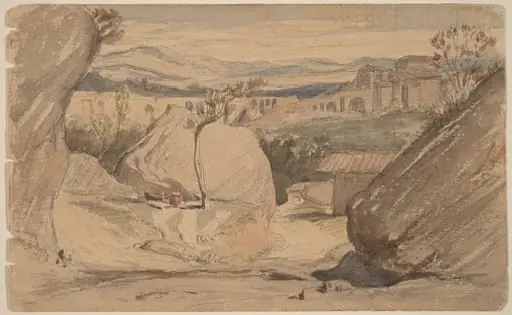
Own this work as a print
Artist & collection



- Orte
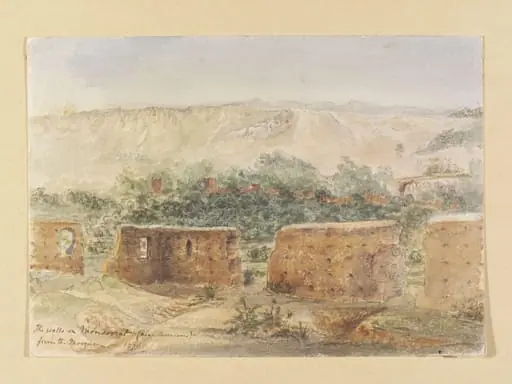 The walls on Monsoorat (near Tlemcen) from the Mosque
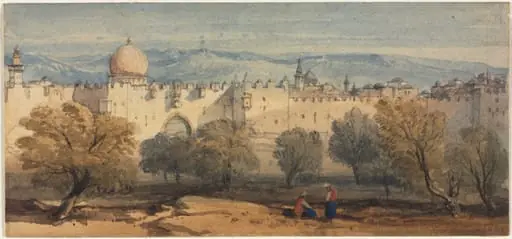 St. Stephen's Gate, Jerusalem
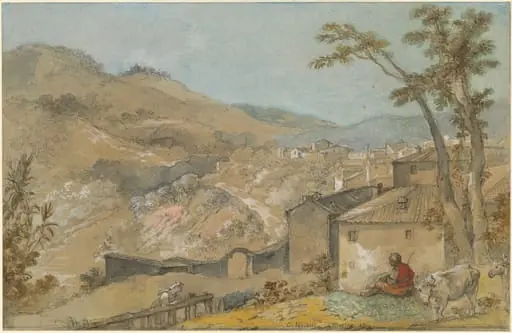 Marino and the Alban Hills
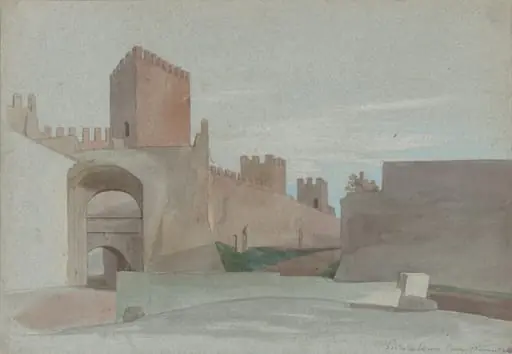 Porta San Lorenzo, Rome
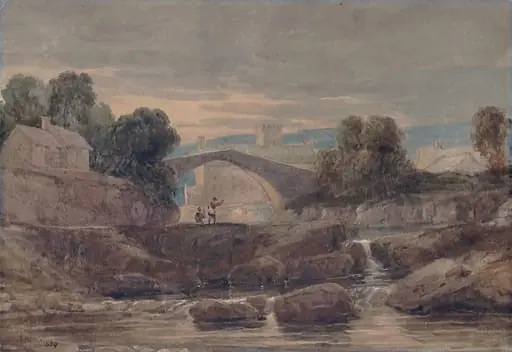 Landscape with Bridge
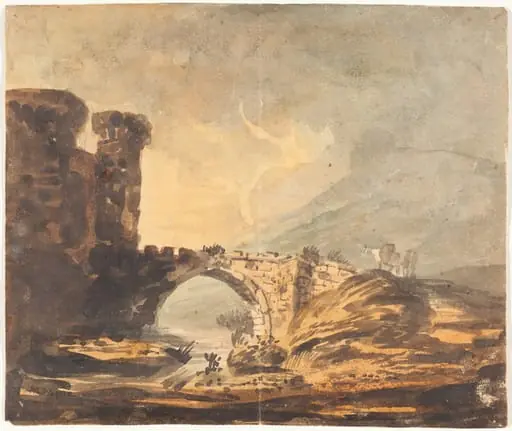 Landscape with a Castle and Bridge
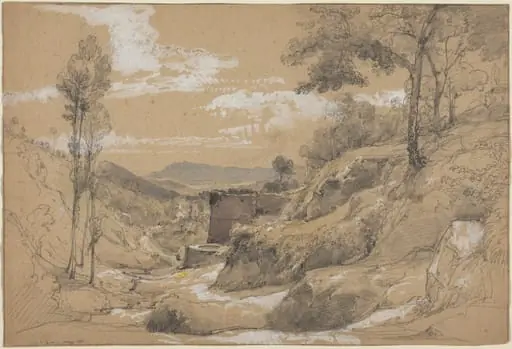 Corpo di Cava
 The Ruins of an Ancient Amphitheater
 `Temple of Denderah. Distant view from bank of River. Upper Egypt'
 Linnanrauniot, portaaliholvi
 Karnak