Artwork
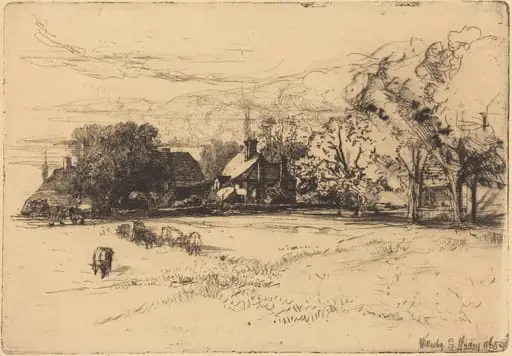
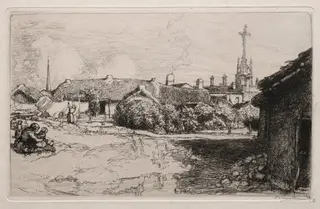
Eglise et ferme d'Éragny (A Church and Farm at Éragny)
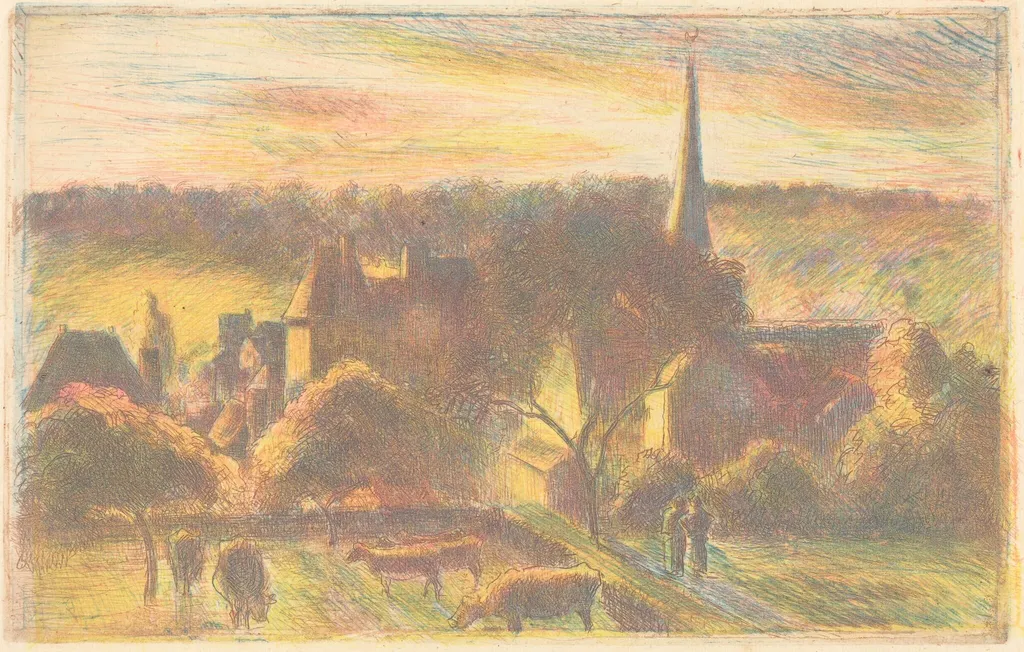
Eglise et ferme d'Éragny (A Church and Farm at Éragny) is an ink print by the Impressionist artist Camille Pissarro. It dates from 1890 and is held in the collection of the National Gallery of Art.
About this work
Overview
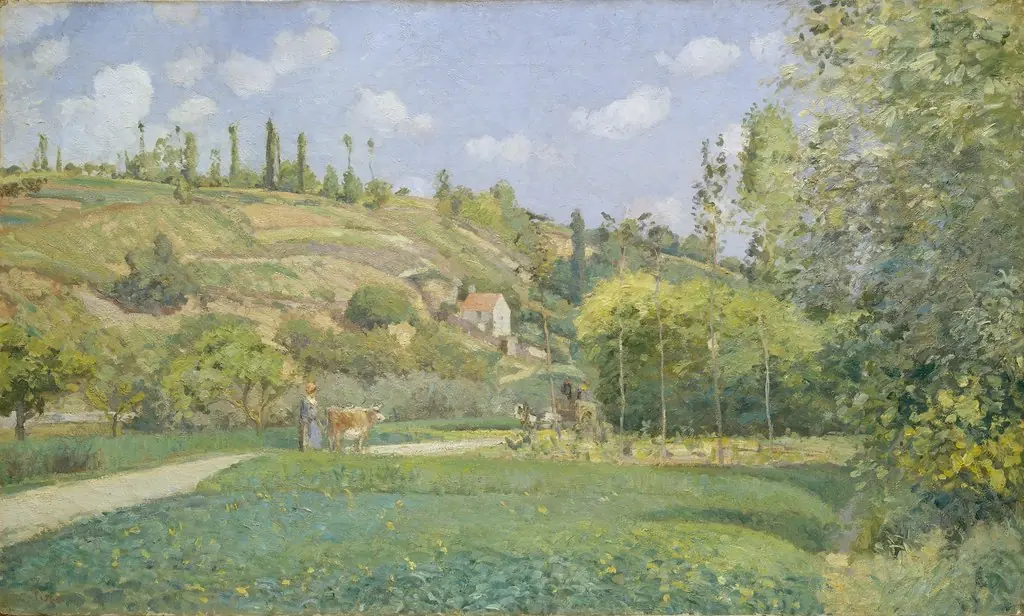
Created in 1890, Camille Pissarro’s print titled Eglise et ferme d’Éragny presents a quiet rural tableau. The composition centers on a modest church and an adjoining farm, set within a gently rolling landscape. Soft, muted tones dominate the image, while a few cows graze in the foreground, lending a sense of everyday calm to the scene.
Subject & Meaning
The work captures a moment of pastoral stillness, emphasizing the harmonious coexistence of agricultural life and religious architecture. By placing the church’s steeple against a backdrop of trees and fields, Pissarro underscores the integration of spiritual and earthly concerns within the French countryside, inviting contemplation of rural rhythms.
Technique & Style
Executed as a color etching combined with drypoint and aquatint, the print showcases Pissarro’s mastery of printmaking processes. The aquatint provides broad washes of tone, while drypoint adds delicate lines that define structures and foliage. The overall effect aligns with Impressionist aims, rendering fleeting light and atmospheric depth through subtle color modulation.
Context
During the late 1880s, Pissarro frequently painted scenes around Éragny, a village he settled in after moving from Paris. This period saw him exploring print media to disseminate his observations of rural France. The work reflects his ongoing interest in documenting the everyday landscape, a central concern of his later career.
Own this work as a print
Artist & collection