Artwork
Paytoe Hall, Leintwardine
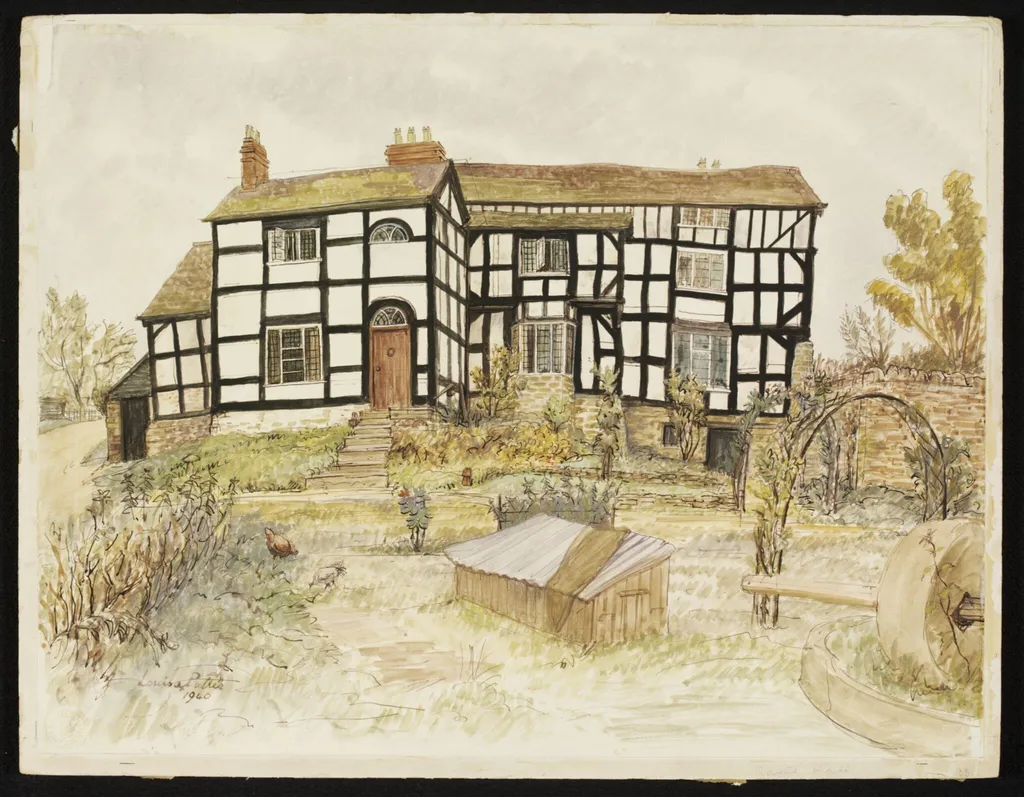
Paytoe Hall, Leintwardine is a watercolor work on paper by the Social Realist artist Puller. It is held in the collection of the Victoria and Albert Museum.
About this work
Overview
The work is a watercolor created in 1940 that records Paytoe Hall, a 16th‑century half‑timbered residence near Leintwardine in Herefordshire. The composition captures the building’s irregular roofline and weathered walls, set within a modest garden that includes a chicken coop and a stone millstone, all rendered in a muted palette.
Subject & Meaning
Paytoe Hall is presented as a lived‑in rural dwelling, its aged timber frame and modest outbuildings suggesting continuity of everyday life amid the disruptions of wartime Britain. The inclusion of a neglected garden and a chicken coop hints at self‑sufficiency and the domestic adjustments forced upon rural households during the early 1940s.
Technique & Style
The artist employs delicate washes of watercolor and body colour, allowing light and shadow to emerge through soft transitions rather than hard outlines. The rendering of timber framing and stone elements relies on subtle tonal variations, giving the scene a quiet, observational quality that emphasizes texture over decorative detail.
History & Provenance
Commissioned as part of the Recording Britain project, the painting was produced under a wartime programme that enlisted artists to document the nation’s changing landscapes and built heritage. The work remains in the collection of the Victoria and Albert Museum, where it stands alongside other contemporaneous records of Britain’s architectural environment.
Own this work as a print
Artist & collection

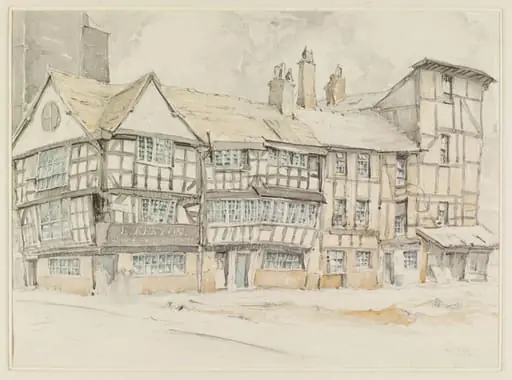 The Old Shambles, Manchester, Lancashire
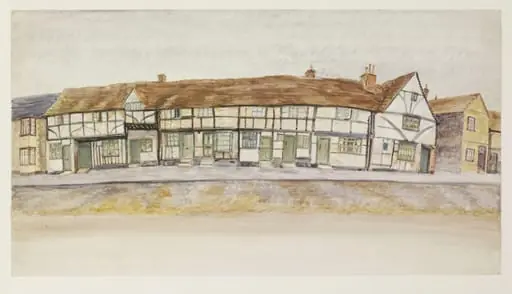 Houses in Rose Street, Wokingham
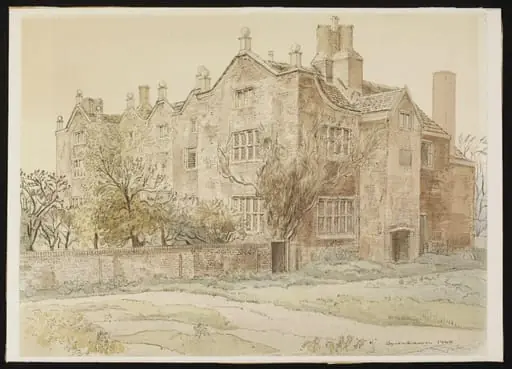 Hough End Hall, Manchester
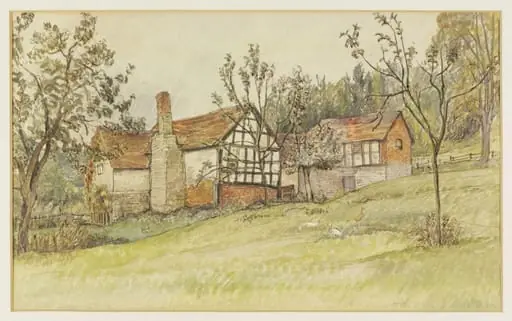 Oldfield Farm, between Leinthall Earls and Richard's Castle
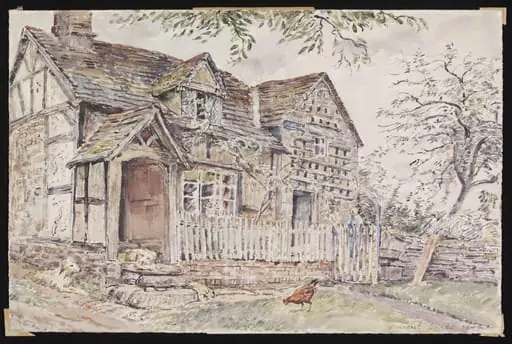 Pigeon House and Post Office, Mansel Lacy
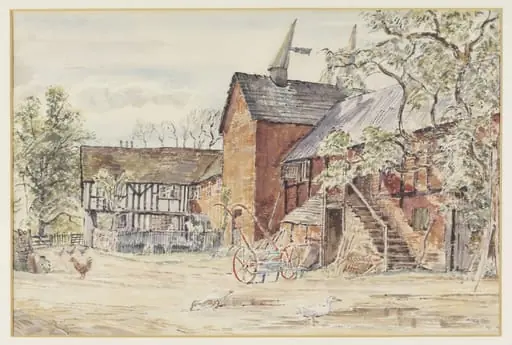 Blackhall Farm, King's Pyon
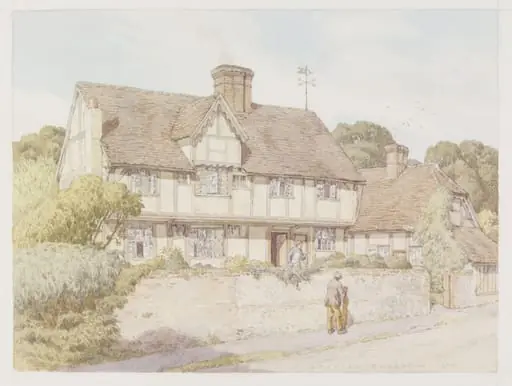 An old Quaker Meeting House, Hedgerley Village
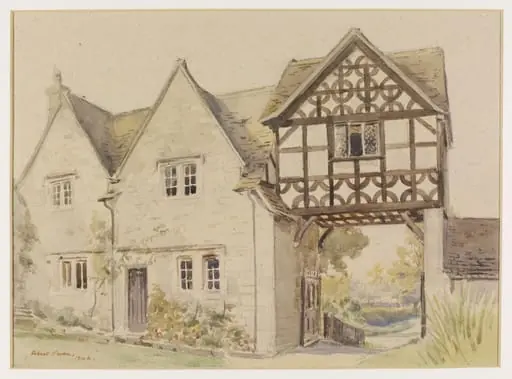 Gatehouse, Frocester Court
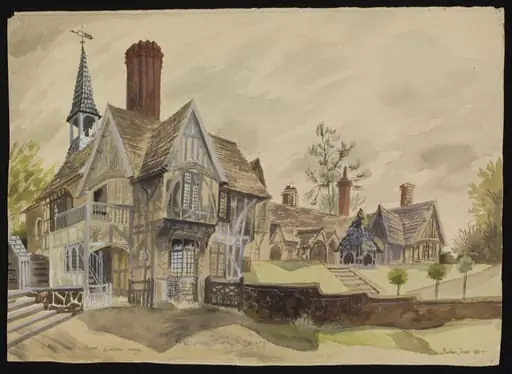 St. Mary's Homes and Chapel, Godstone
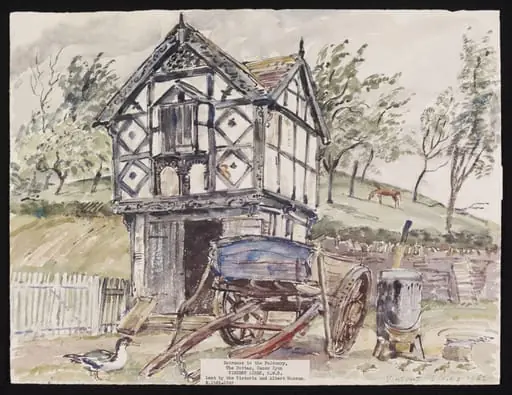 Entrance to the Falconry, The Buttas, Canon Pyon
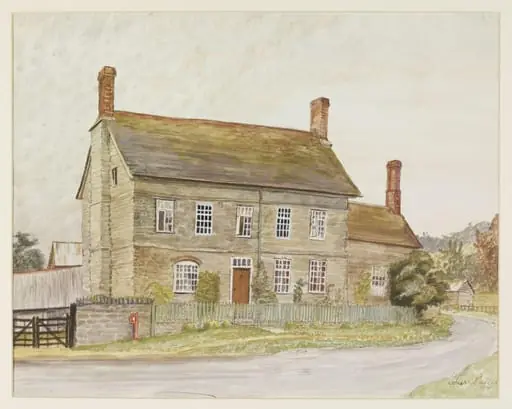 Hall Farm, Leinthall Earls