Artwork
Midas and Bacchus
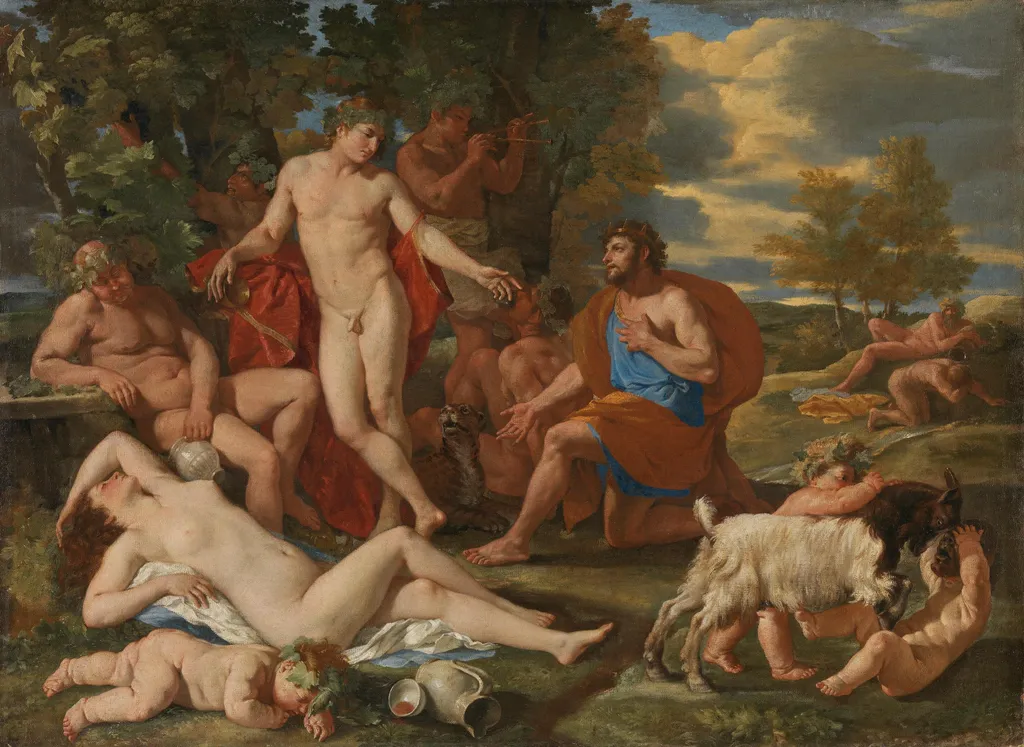
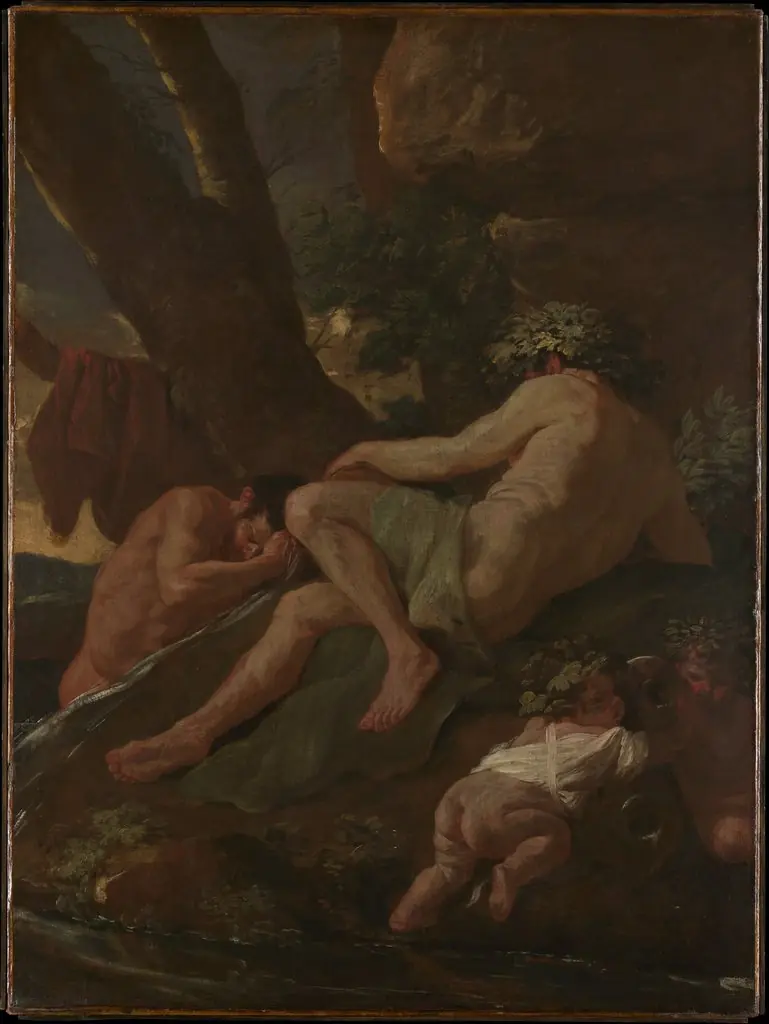
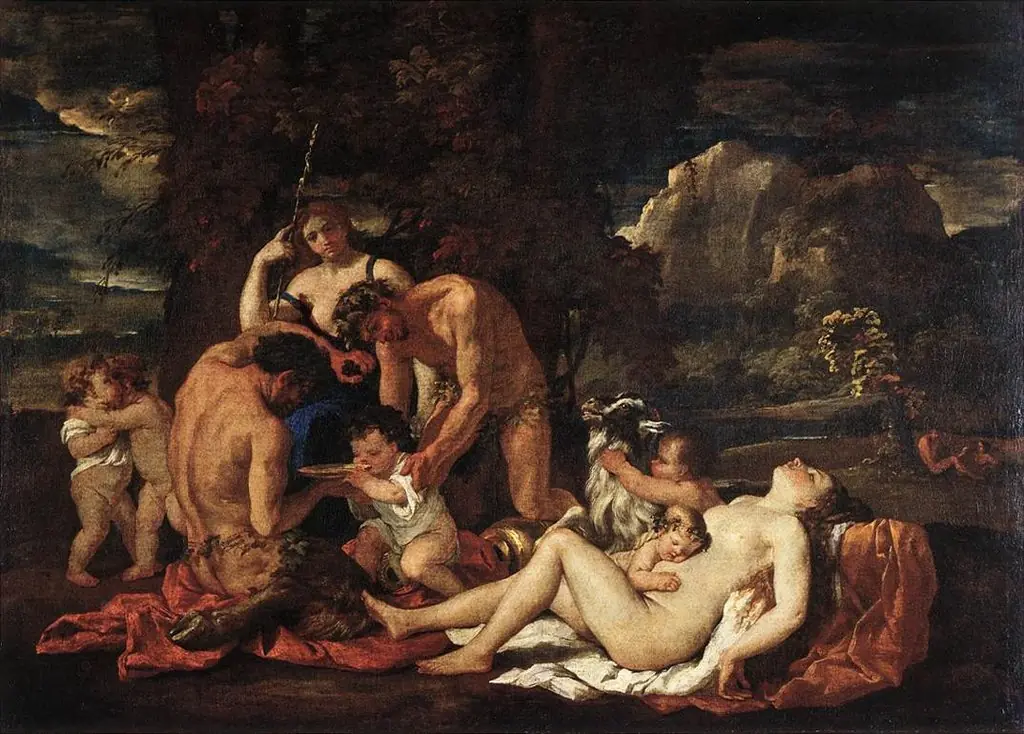
Midas and Bacchus is an oil painting by the Classicist painting artist Nicolas Poussin. It dates from 1624 and is held in the collection of the Bavarian State Painting Collections.
About this work
This painting is called Midas and Bacchus. It was made by Nicolas Poussin in 1624. The painting is now in the Alte Pinakothek, and I don't know what it looks like, but I can tell you that Nicolas Poussin was the artist who created it, and if you want to learn more about his style, you can look up Nicolas Poussin.
Subject & Meaning
Supporting figures include Silenus, a sleeping nymph with an infant, fauns, and river deities, all within an Arcadian landscape.
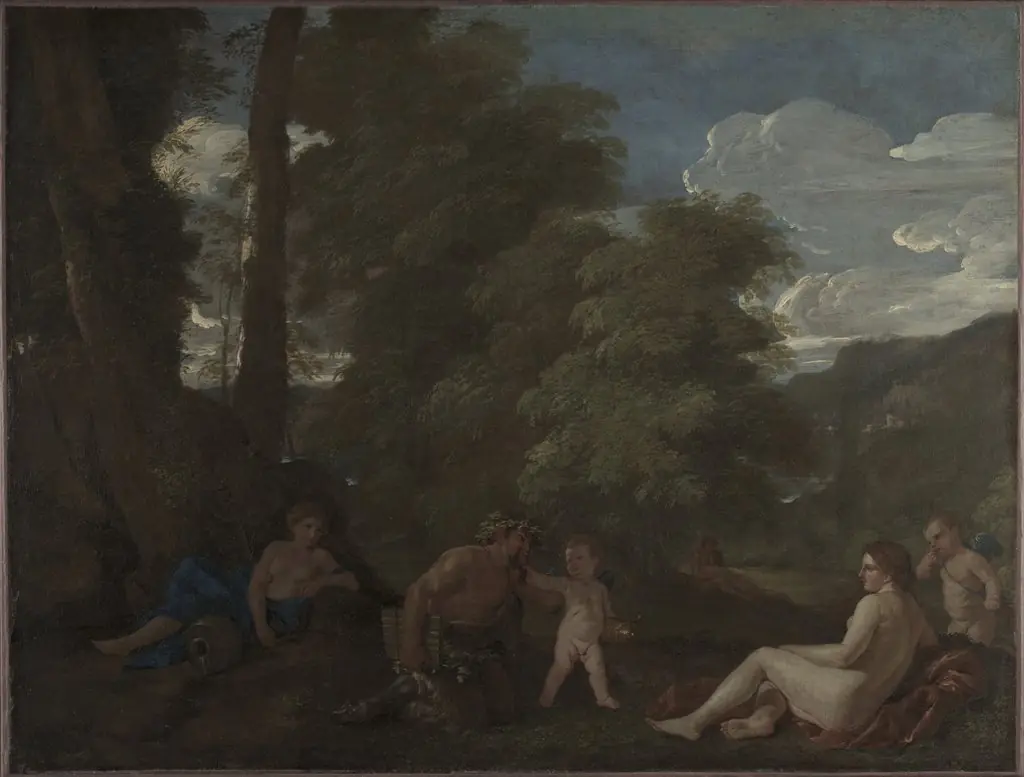
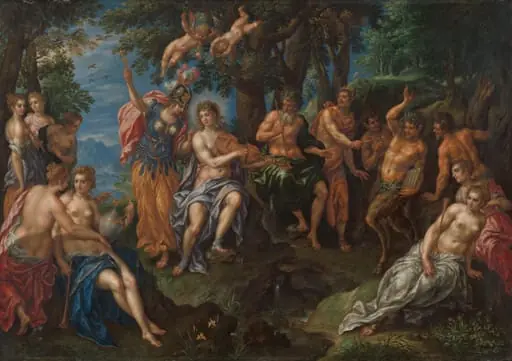
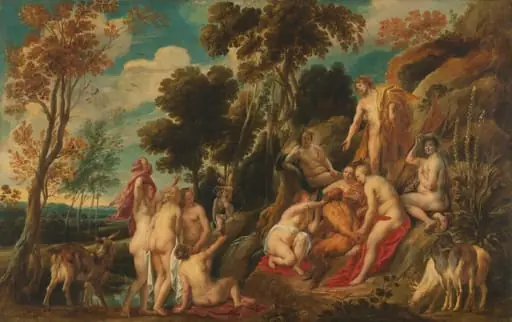
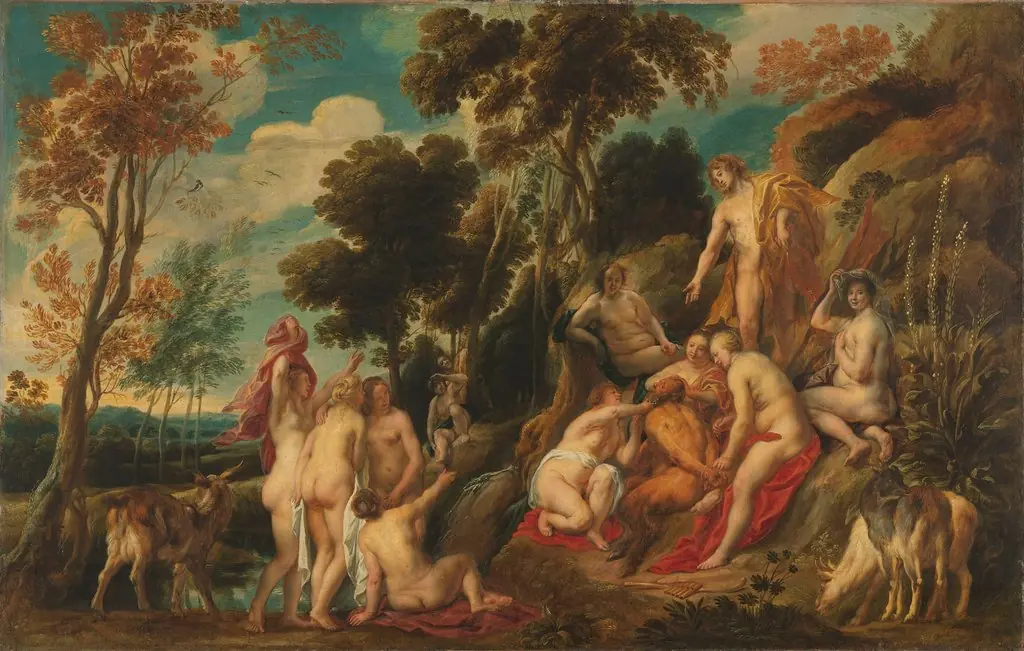
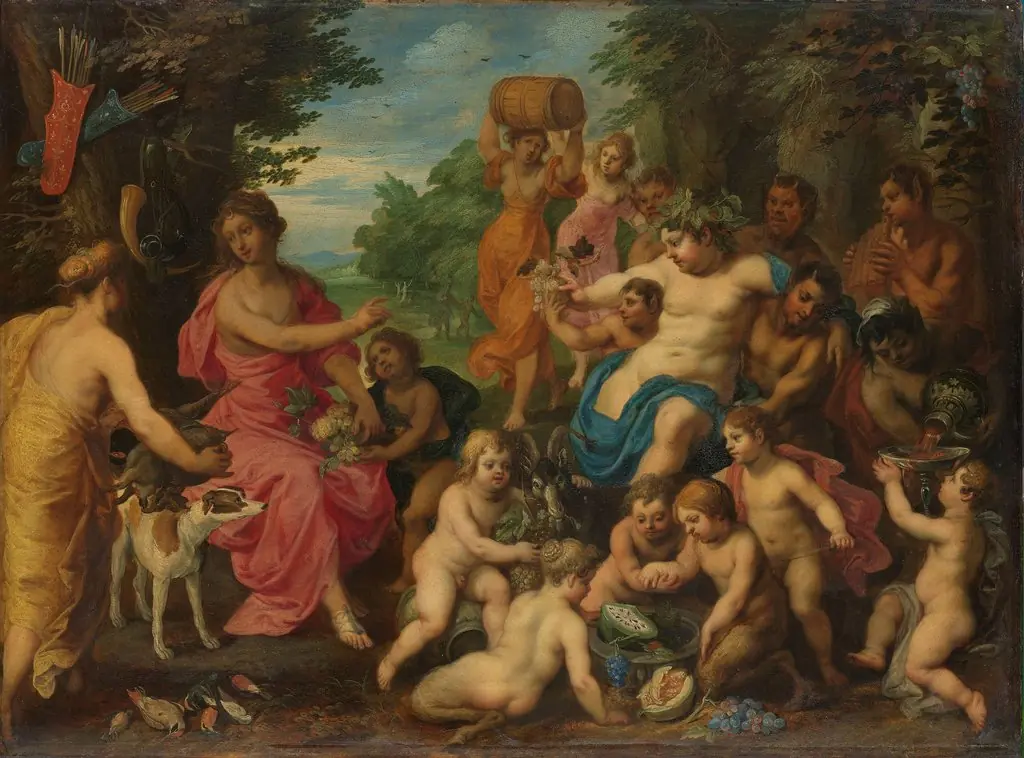
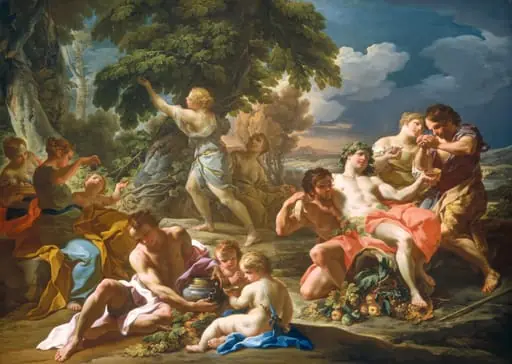
Midas and Bacchus depicts the mythological moment when King Midas of Phrygia, transformed by Dionysus (Bacchus) into a figure of avarice, kneels before the god to beg reversal of his golden touch. The painting illustrates the climax of the myth where Midas, after bathing in the Pactolus River, regains his humanity. Poussin arranges the scene with Bacchus extending compassion while Midas, clad in blue and yellow, seeks absolution.
Supporting figures include Silenus, a sleeping nymph with an infant, fauns, and river deities, all within an Arcadian landscape. The work symbolizes the consequences of greed and divine mercy, reflecting Classicist ideals of order and narrative clarity. It was created circa 1624–1629, now housed in the Alte Pinakothek, Munich, and is attributed to Nicolas Poussin, though early scholarship questioned its authorship.
Technique & Style
Executed in oil paint on canvas, this mythological work measures 98.5 by 153 cm. The composition features King Midas kneeling in a blue vesture and yellow mantle, supplicating Bacchus, who stands nearby holding a cup with a compassionately extended hand. Surrounding figures include a recumbent Silenus, a sleeping nude nymph with an infant, three fauns engaging in music and fruit gathering, and boys playing with a goat. The background depicts an Arcadian landscape with a river god and a youth kneeling by a stream.
While the painting is generally accepted as an early work by Nicolas Poussin displaying Classical movement characteristics, some scholarship has disputed its authenticity due to perceived awkward spatial awareness and confused iconography.
History & Provenance
Midas and Bacchus is an oil-on-canvas painting attributed to Nicolas Poussin, depicting the mythological scene of King Midas pleading with Bacchus to reclaim the power to turn objects to gold. The work measures 98.5 cm by 153 cm and was created around 1624, during Poussin's early Roman period. It was first recorded in the 1751 inventory of Nymphenburg Palace in Munich and moved to the Alte Pinakothek in 1836, where it remains in the Bavarian State Painting Collections.
Attribution has been debated; while Anthony Blunt questioned its authenticity and suggested the Heytesbury Master as an alternative, Christopher Wright and the Alte Pinakothek accept it as an early work by Poussin. The painting is part of the Alte Pinakothek's permanent collection and has been referenced in scholarly catalogues by Blunt (1966), Smith (1837), and Wright (1985, 2007).
The painting Midas and Bacchus is held by the Bavarian State Painting Collections at the Alte Pinakothek in Munich, Germany. It was first recorded in the inventory of Nymphenburg Palace in 1751 before being transferred to the Alte Pinakothek in 1836. The work is not assigned a specific accession number in the provided sources, though it is cataloged within the museum's holdings.
While the sources detail the painting's physical dimensions and mythological subject matter, they do not list any specific exhibitions in which the work has participated. The artwork remains part of the permanent collection at the Alte Pinakothek, having been located at Nymphenburg Palace prior to its move to the current museum in 1836.
Context
The attribution of Midas and Bacchus has been a long-standing point of scholarly debate. Anthony Blunt, in his 1966 critical catalogue, disputed the painting's authenticity, citing confused iconography and awkward spatial handling, and tentatively ascribed it to an anonymous figure he called the Heytesbury Master. Subsequent scholars have taken a different view: Christopher Wright included it as an early Poussin in both his 1985 and 2007 catalogues raisonnés, and the Alte Pinakothek continues to accept it as autograph.
The work is generally situated at the beginning of Poussin's Roman period, dated to around 1624–1630, and is associated with the classical movement that would define his mature output. Jacques Thuillier also catalogued the painting in his 1994 monograph on the artist.
The composition has resonated beyond art history: a large-scale reproduction appears on a wall of the apartment in Rainer Werner Fassbinder's 1972 film The Bitter Tears of Petra von Kant.
Legacy
The painting's cultural legacy extends significantly into modern cinema, where a large-scale reproduction serves as a dominant visual element in Rainer Werner Fassbinder's 1972 film The Bitter Tears of Petra von Kant. In this work, the image occupies an entire wall of the apartment setting, functioning as a constant backdrop for the narrative action.
Art historically, the subject matter itself remains relatively rare within the Western painting tradition, making Poussin's interpretation a notable, albeit debated, contribution to the depiction of the Midas myth. While the composition has faced scrutiny regarding its authenticity from scholars like Anthony Blunt, its acceptance by institutions such as the Alte Pinakothek ensures its continued presence in the canon of Poussin's early oeuvre.
Overview
Midas and Bacchus is an oil painting by the French artist Nicolas Poussin, executed in 1624. The work illustrates a scene from Ovid's Metamorphoses, depicting the moment the god Bacchus grants King Midas the power to turn everything he touches into gold. In the composition, Bacchus is typically shown gesturing toward the king, who stands amidst a landscape populated by attendants and mythological figures.
Painted during Poussin's early years in Rome, this work reflects the artist's initial engagement with classical antiquity and the influence of Venetian colorism, particularly that of Titian, before he fully developed his more austere, linear style. The painting demonstrates Poussin's early interest in narrative clarity and the integration of figures within a structured landscape. It is currently held in the Alte Pinakothek in Munich.
As one of Poussin's earliest dated mythological subjects, it marks a significant step in his transition from a provincial French painter to a leading figure of the Roman Baroque classicism.
Own this work as a print
Artist & collection
Artist
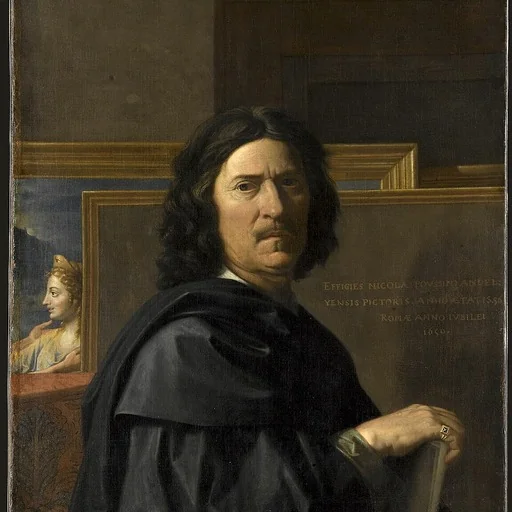
Nicolas Poussin (UK: US: French:; June 1594 – 19 November 1665) was a leading painter of the classical French Baroque style, although he spent most of his working life in Rome.