Artwork
元 錢選 王羲之觀鵝圖 卷|Wang Xizhi watching geese
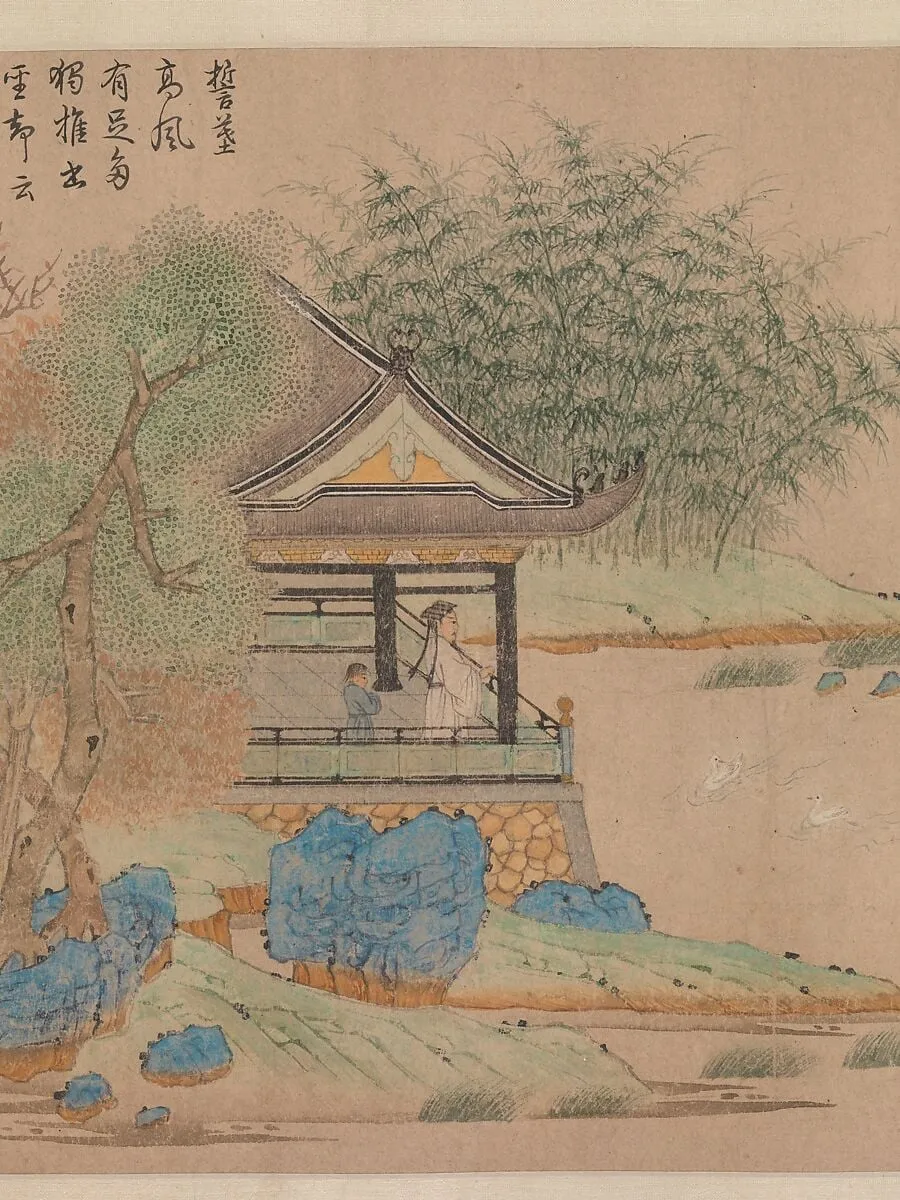
元 錢選 王羲之觀鵝圖 卷|Wang Xizhi watching geese is an ink painting by Qian Xuan. It dates from 1295 and is held in the collection of the Metropolitan Museum of Art.
About this work
On a handscroll barely nine inches tall, the Yuan painter Qian Xuan set the fourth-century calligrapher Wang Xizhi in a pavilion above a stream, watching geese whose graceful necks were said to guide his brush. Painted around 1295 in a deliberately archaic blue-and-green manner, the scene is flat and dreamlike, the past rendered as memory.
Overview
This handscroll, created around 1295 by the Yuan-dynasty painter Qian Xuan, depicts the revered Jin-dynasty calligrapher Wang Xizhi observing geese.
This handscroll, created around 1295 by the Yuan-dynasty painter Qian Xuan, depicts the revered Jin-dynasty calligrapher Wang Xizhi observing geese. Executed in an intentionally archaic blue-and-green palette with gold accents, the painting presents a flattened, dreamlike space. It reflects Qian Xuan's personal response to the fall of the Southern Song dynasty, using a classical subject to convey a sense of cultural discontinuity and a lament for a bygone era.
Subject & Meaning
The scroll centers on Wang Xizhi, a fourth-century calligraphic master renowned for his Daoist practices. Legend holds that Wang drew inspiration for his fluid brushstrokes from observing the graceful movements of geese. Qian Xuan portrays the sage in a pavilion, contemplating the birds below.
This depiction serves not merely as an homage to a historical figure but also as a veiled expression of the artist's profound sorrow and sense of cultural loss following the collapse of the Song dynasty.
Technique & Style
Qian Xuan employed ink, color, and gold on paper for this handscroll, deliberately adopting an archaic blue-and-green style. The composition features a flattened perspective and minimal spatial recession, creating an intentionally unrealistic and dreamlike atmosphere. Gold accents further enhance this retrospective vision, preventing a literal interpretation of depth.
This stylistic choice evokes a sense of the past as a distant memory rather than a tangible place, underscoring the artist's emotional state.
Context
Qian Xuan, a scholar-official from Zhejiang, lived through the Mongol conquest of Hangzhou in 1276, which marked the end of the Southern Song dynasty. He chose not to serve the new Yuan rulers, instead embracing the identity of a "yimin," or "leftover subject." Turning to painting for sustenance, Qian infused his works, including this scroll, with a profound sense of cultural displacement.
The artwork thus functions as a poignant reflection of his personal and political stance during a period of dynastic transition.
History & Provenance
This handscroll entered the collection of the Metropolitan Museum of Art in 1973. It was acquired through a generous gift from the Dillon Fund. Prior to its acquisition by the museum, the painting was part of the distinguished C. C. Wang Family collection, a notable private holding of Chinese art.
Artist & collection

Artist
Qian Xuan (simplified Chinese: 钱选; traditional Chinese: 錢選; pinyin: Qián Xuǎn; Wade–Giles: Ch'ien Hsüan; 1235–1305), courtesy name Shun Ju (舜举), pseudonyms Yu Tan (玉潭, "Jade Pool"), Xi Lanweng (习嬾翁), and Zha Chuanweng…

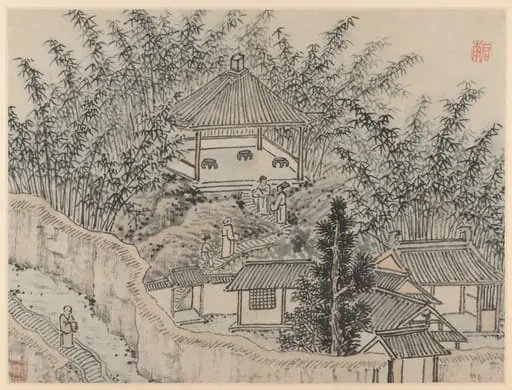
- Bamboo Pavilion, Tiger Hill, from Twelve Views of Tiger Hill, Suzhou
 Watching Geese at Lan-t'ing Pavilion
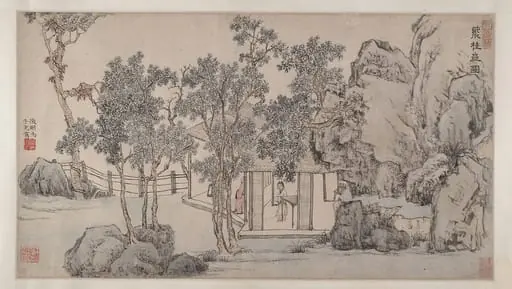 明 文徵明 叢桂齋圖 卷|The Cassia Grove Studio
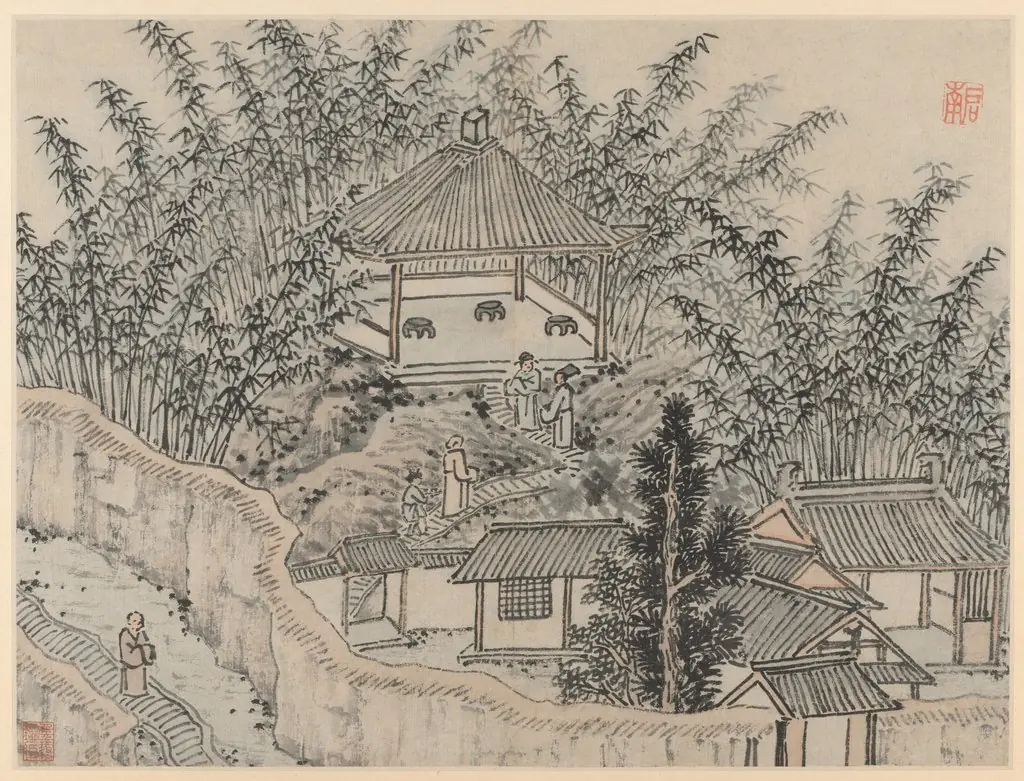 Bamboo Pavilion, Tiger Hill, from Twelve Views of Tiger Hill, Suzhou
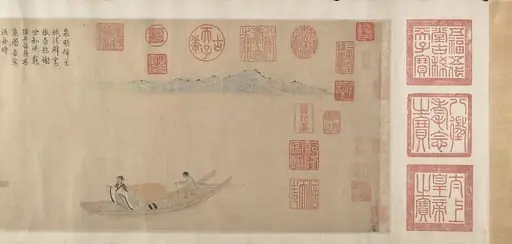
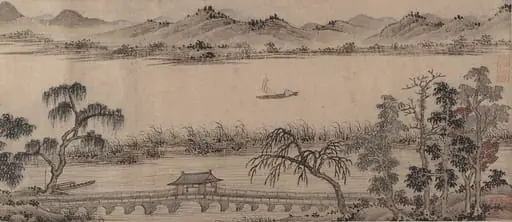 明 佚名 仿趙孟頫 垂虹亭圖 卷|Pavilion of the Hovering Rainbow Bridge
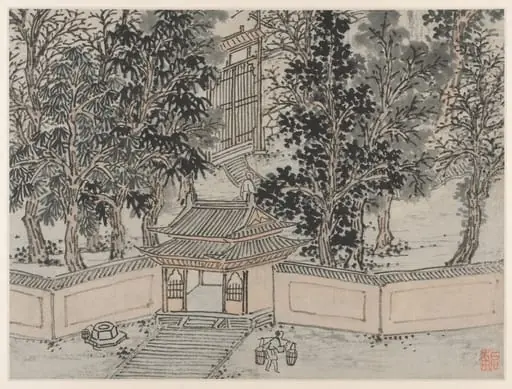 Tiger-Flight Spring at the Back Gate, from Twelve Views of Tiger Hill, Suzhou
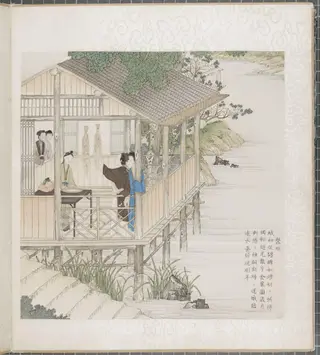 Pictures of Weaving
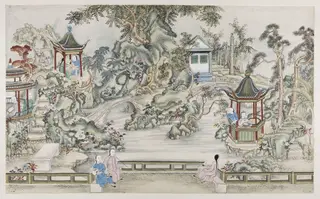 Pavilions in lake area
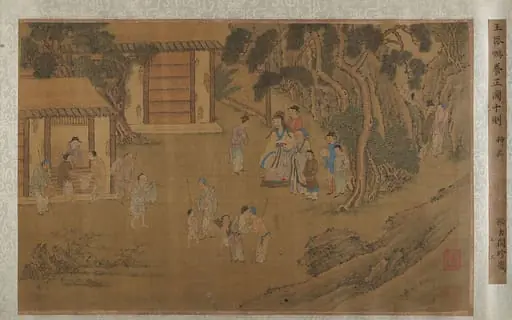 明/清 佚名 舊傳王振鵬 養正圖 卷|Family Training
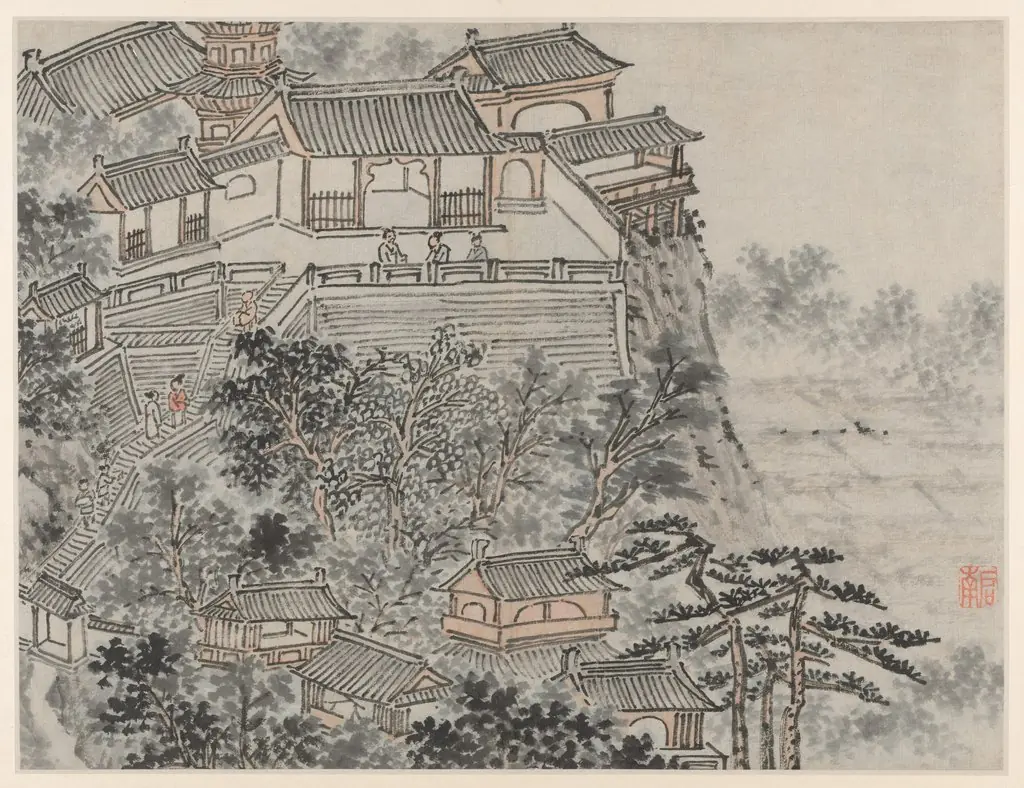 The Five Sages Terrace, from Twelve Views of Tiger Hill, Suzhou
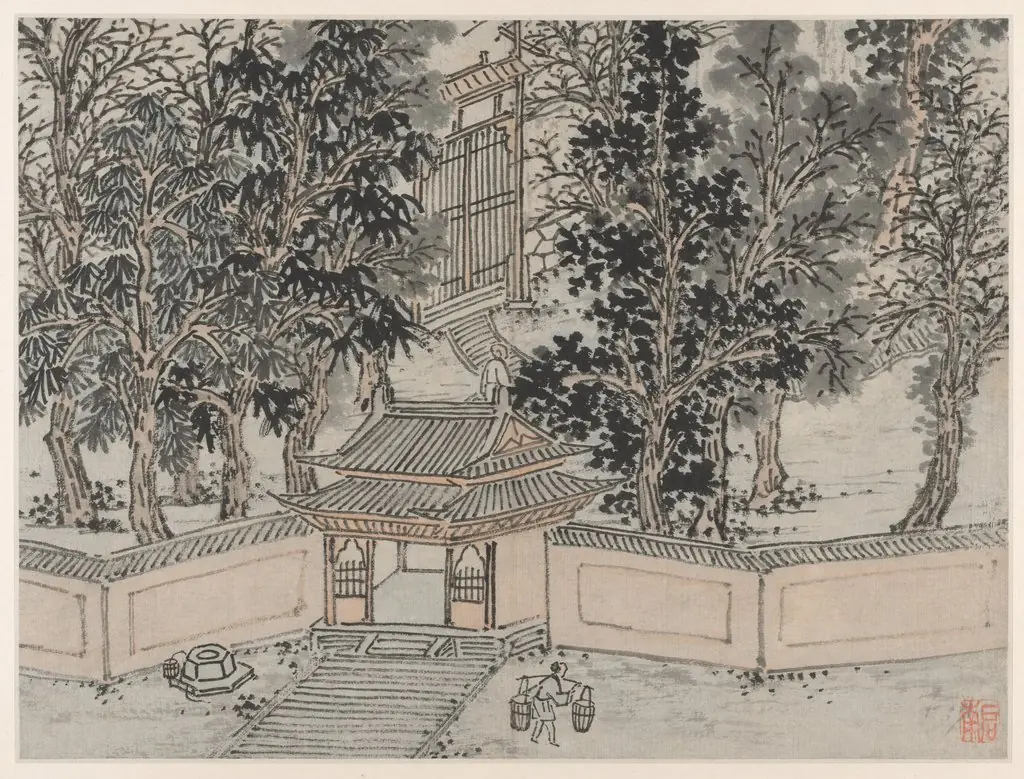 Tiger-Flight Spring at the Back Gate, from Twelve Views of Tiger Hill, Suzhou
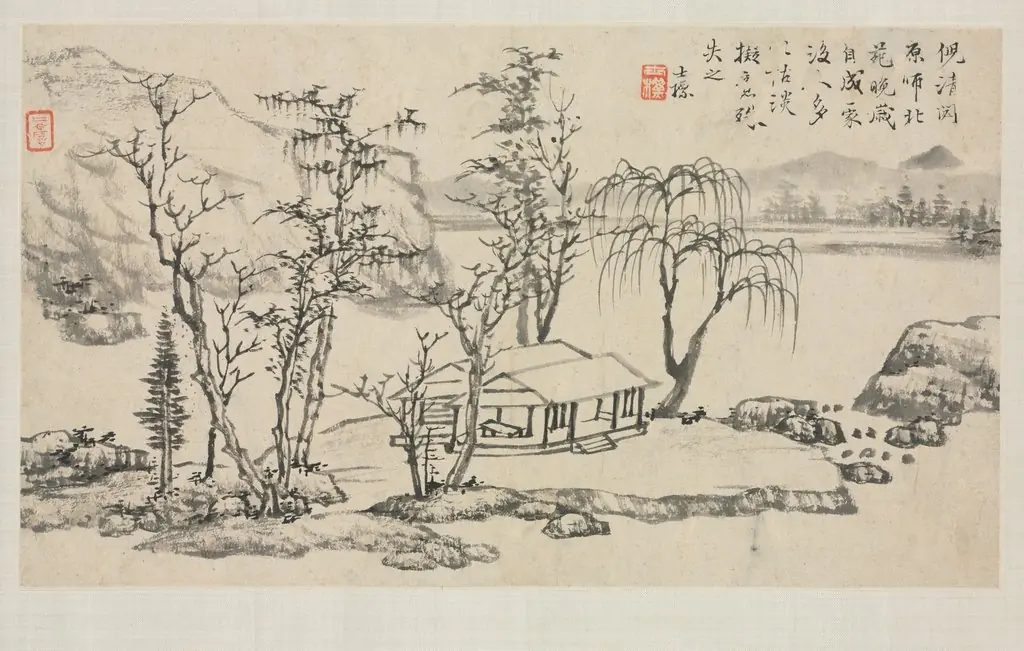 Landscape Album in Various Styles: Landscape after Ni Zan