Artwork
明 佚名 蘇蕙璇璣圖 卷|Lady Su Hui and Her Verse Puzzle
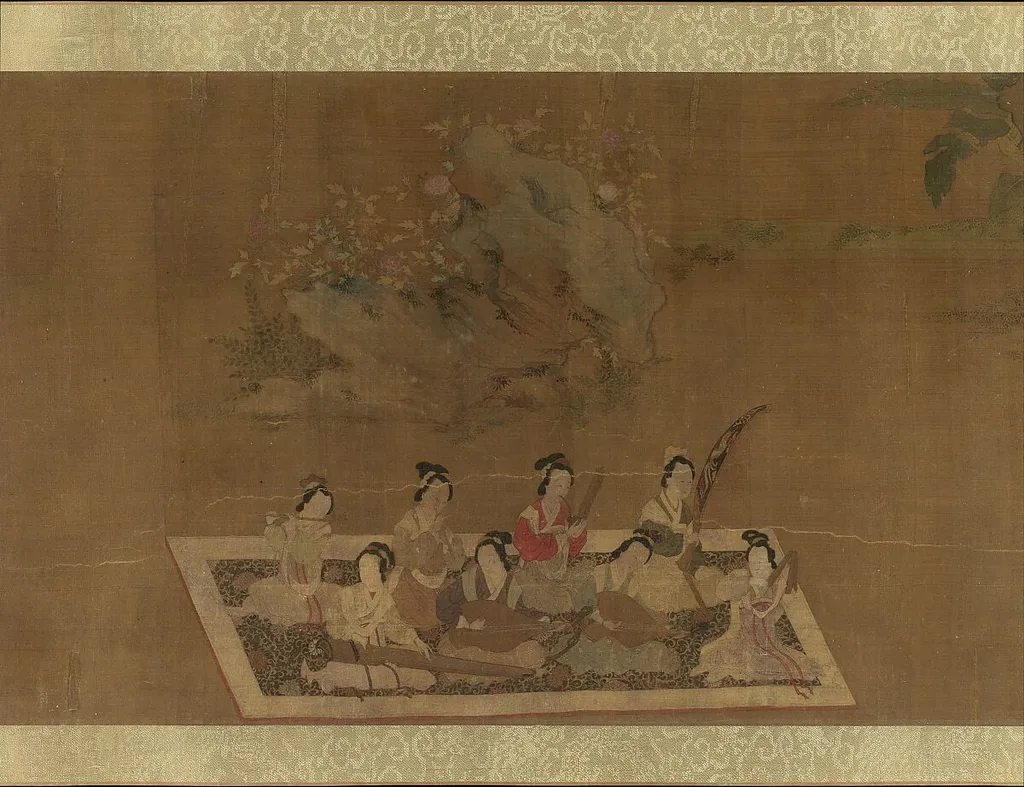
明 佚名 蘇蕙璇璣圖 卷|Lady Su Hui and Her Verse Puzzle is an ink painting by the Ming dynasty painting artist Qiu Ying. It dates from 1549 and is held in the collection of the Metropolitan Museum of Art. This Ming dynasty handscroll depicts Lady Su Hui, a notable poet from the 4th century.
About this work
This painting isn’t just a portrait, it shows Lady Su Hui, a poet from the 4th century.
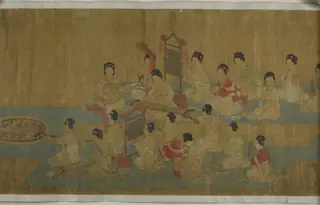
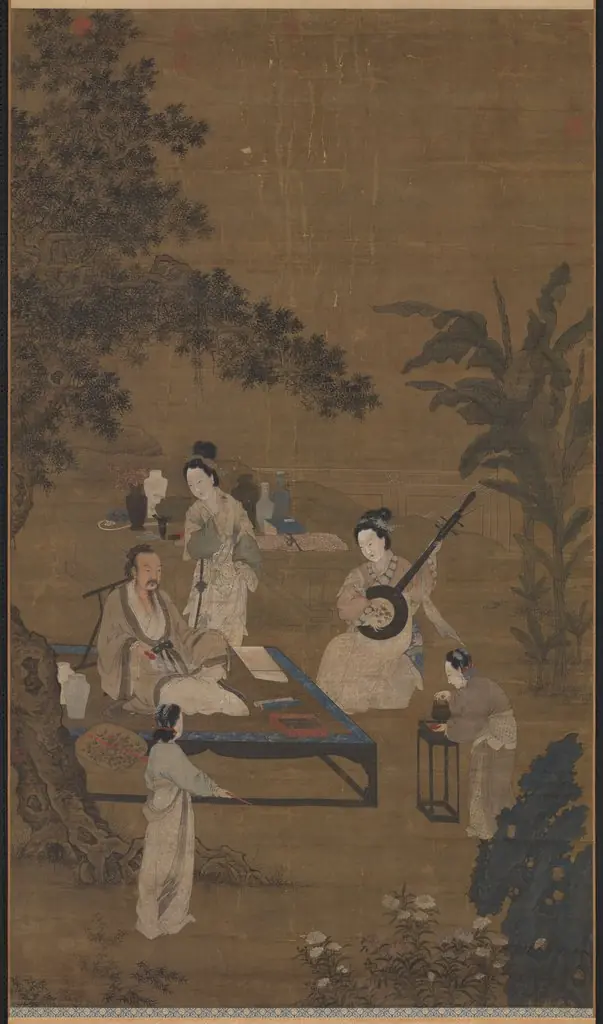
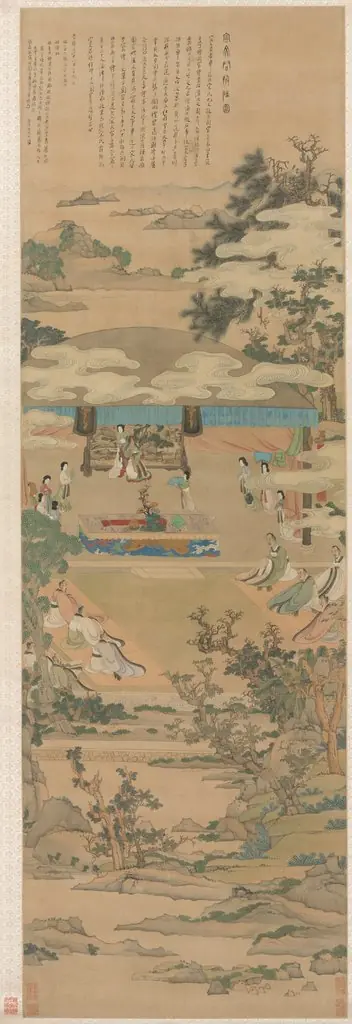
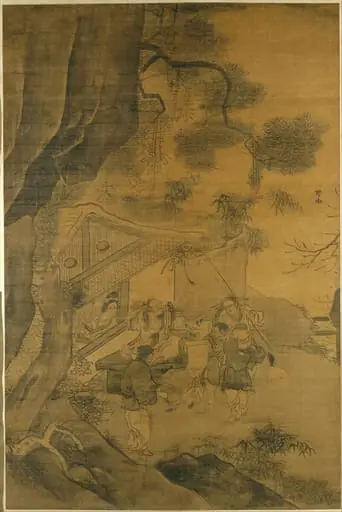
A woman sits on a garden terrace, plucking a lute while two attendants stand nearby. Behind her, a screen shows a grid of tiny red and black characters.
This painting isn’t just a portrait, it shows Lady Su Hui, a poet from the 4th century. She wrote a famous poem that could be read in any direction, like a word puzzle. The artist included the poem on the screen, turning the painting into a quiet riddle.
To see more works like this, look up women in art.
Subject & Meaning
The handscroll depicts the historical figure Lady Su Hui, portrayed as a woman accompanied by a musical instrument. This imagery illustrates the legend of Su Hui's creation of the Xuanji tu (Verse Puzzle), a complex woven poem composed of 841 characters that can be read in multiple directions to reveal hidden verses. The work symbolizes female literary ingenuity and devotion, as the original puzzle was crafted by Su Hui to win back her estranged husband.
By visualizing the woman and the instrument within a portrait genre, the painting emphasizes the cultural significance of her poetic achievement and the enduring legacy of her emotional expression through intricate literary art.
Technique & Style
Created in 1549, this handscroll is executed in ink and color on silk. The work measures 25.6 cm in height and 311.8 cm in width, presenting a formal composition that integrates portraiture with the depiction of musical instruments. As a painting attributed to Qiu Ying, the piece utilizes traditional Chinese materials where the silk support serves as the foundation for the ink and pigment application.
The visual style characterizes the subject within a scroll format, maintaining the integrity of the medium through its specific dimensions and material composition.
History & Provenance
Attributed to the Ming dynasty artist Qiu Ying, this handscroll was created in 1549. Executed in ink and color on silk, the work measures 25.6 cm in height and 311.8 cm in width. The piece was produced in China and depicts a woman alongside a musical instrument. It is currently held in the collection of the Metropolitan Museum of Art, where it remains located.
The handscroll Lady Su Hui and Her Verse Puzzle, attributed to Qiu Ying and dated 1549, is held in the collection of the Metropolitan Museum of Art in New York. The work is cataloged as a painting on silk executed in ink and color, measuring 25.6 cm in height and 311.8 cm in width. While the specific accession number is not provided in the available records, the museum's inventory confirms its status as a Chinese painting from the Ming dynasty depicting a woman and a musical instrument. No specific exhibition history is documented in the provided sources.
Overview
This Ming dynasty handscroll depicts Lady Su Hui, a notable poet from the 4th century. Rendered in ink and color on silk, the painting portrays her seated on a garden terrace, engaged with a musical instrument. The artwork subtly integrates her famed "verse puzzle," a complex poem known for its multi-directional readability, making the painting itself a visual and intellectual challenge for the viewer.
Context
Lady Su Hui's story, particularly her poetic ingenuity, resonated through subsequent centuries, making her a compelling subject for artists. Depictions of literary figures, especially women celebrated for their intellect and artistic contributions, were a recurring theme in Chinese painting. This work aligns with a tradition of honoring historical personages whose achievements transcended their immediate era, offering both a portrait and an homage to her enduring legacy.
Artist & collection