Artwork
明 佚名 傳仇英 唐宫圖 軸|A Tang Palace
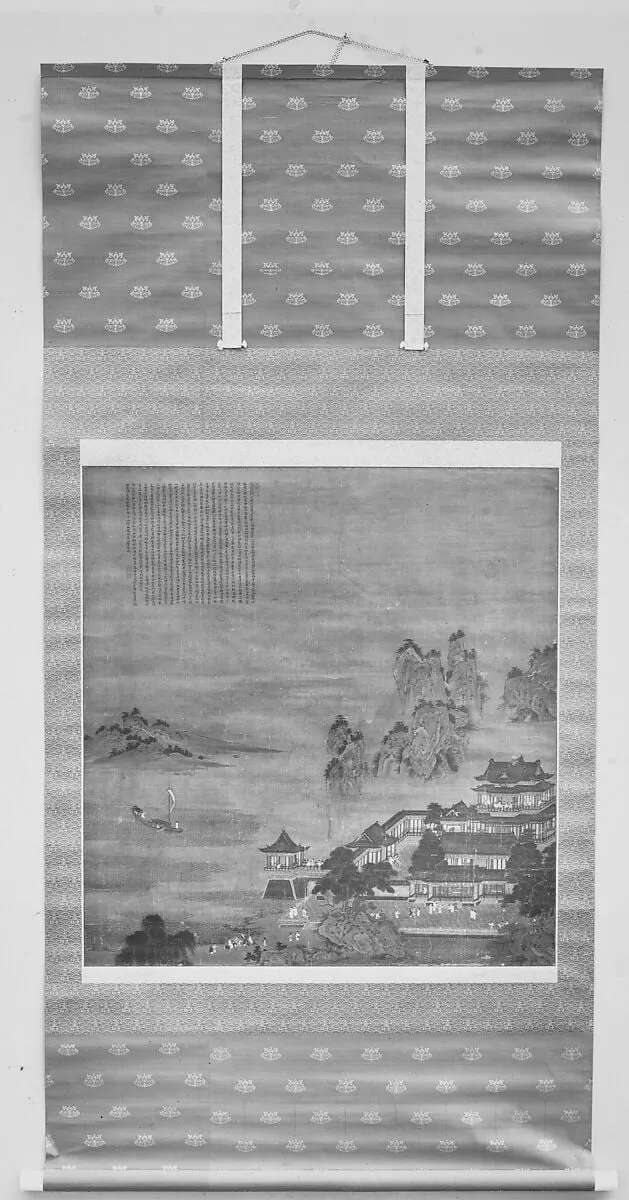
明 佚名 傳仇英 唐宫圖 軸|A Tang Palace is an ink painting by the Ming dynasty painting artist Qiu Ying. It dates from 1523 and is held in the collection of the Metropolitan Museum of Art.
- Accession no.
- 12.134.8
- Credit line
- Rogers Fund, 1912
About this work
Subject & Meaning
The composition centers on a refined architectural setting associated with the Tang period, populated by figures in courtly attire.
The painting depicts a palace interior, aligning with the title A Tang Palace. The composition centers on a refined architectural setting associated with the Tang period, populated by figures in courtly attire. The scene evokes the cultural and aesthetic ideals of a bygone imperial era, emphasizing elegance and order.
The work likely references the luxurious life of the Tang court, a historical motif popular in Ming dynasty painting. By portraying an idealized palace environment, the scroll symbolizes nostalgia for a golden age of Chinese civilization, often serving as a visual metaphor for harmony and prosperity in scholarly discourse.
Technique & Style
A Tang Palace is executed as a hanging scroll utilizing ink and color applied to a silk support. Created around 1523, the work is classified as a history painting that depicts a palace setting. The formal composition relies on the traditional medium of silk, which serves as the foundation for the ink and pigments used by the artist.
This technique aligns with the standard practices for Chinese scroll painting of the period, focusing on the detailed rendering of architectural and courtly subjects within a vertical format.
History & Provenance
Traditionally attributed to Qiu Ying, A Tang Palace was produced by an anonymous Ming artist around 1523 in China as a hanging scroll in ink and color on silk depicting a palace. The work is classified as a history painting. It is held in the collection of the Metropolitan Museum of Art.
Its subject aligns with the genre of historical narrative, idealizing the courtly life of the Tang era as imagined by later Ming painters. The available records do not document a specific commission, prior ownership, or accession number.
Overview
A Tang Palace is a hanging scroll painting, rendered in ink and color on silk, attributed to the Ming dynasty artist Qiu Ying around 1523. This artwork presents an elaborate vision of a palatial setting, populated by numerous small figures. It deliberately evokes the grandeur of the Tang dynasty, an era centuries before its creation, offering a detailed glimpse into an imagined historical scene.
Context
Created in 1523, this painting is attributed to Qiu Ying, a prominent Ming dynasty painter known for his detailed figure and landscape works. The decision to portray a Tang dynasty palace reflects a common practice among later Chinese artists to draw inspiration from and pay homage to earlier, revered periods. This work exemplifies a cultural fascination with historical grandeur and the imaginative recreation of past eras within the visual arts.
Artist & collection




 Untitled
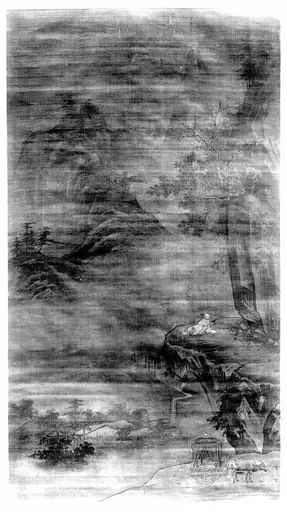 明 佚名 人物山水 軸|Scholar Admiring Autumn Scenery
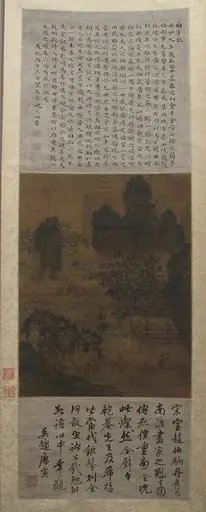 明/清 佚名(舊傳趙伯駒) 蘭亭圖 軸|Orchid Pavilion or Lanting
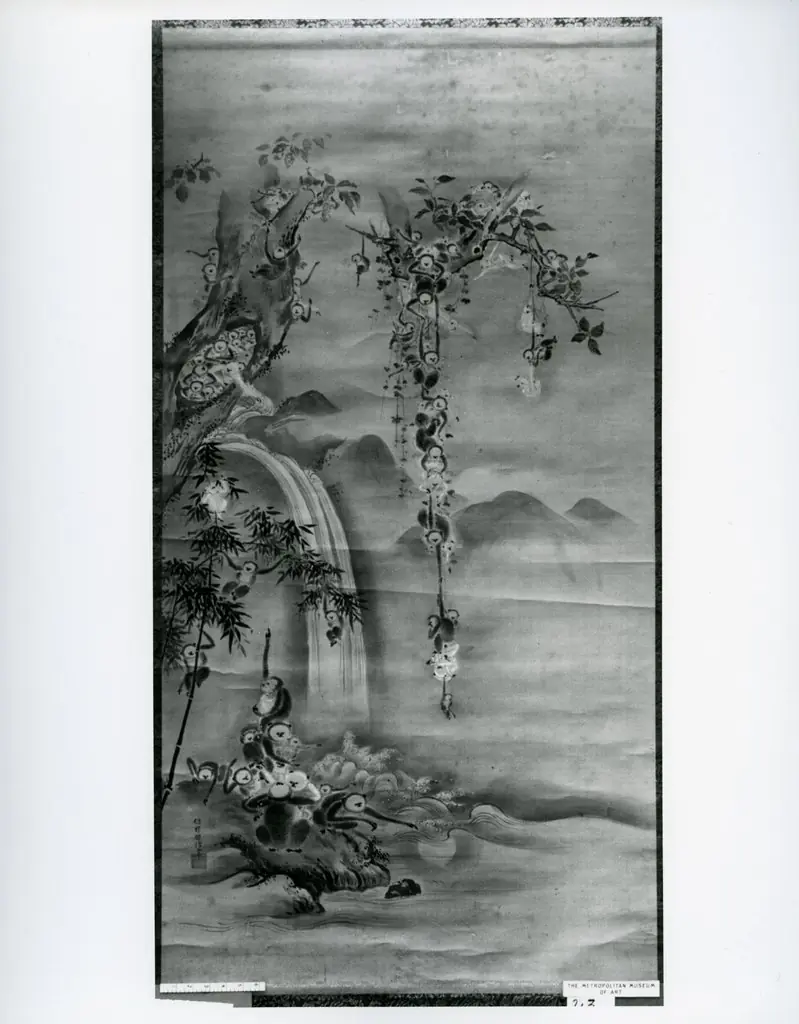 Family of Monkeys
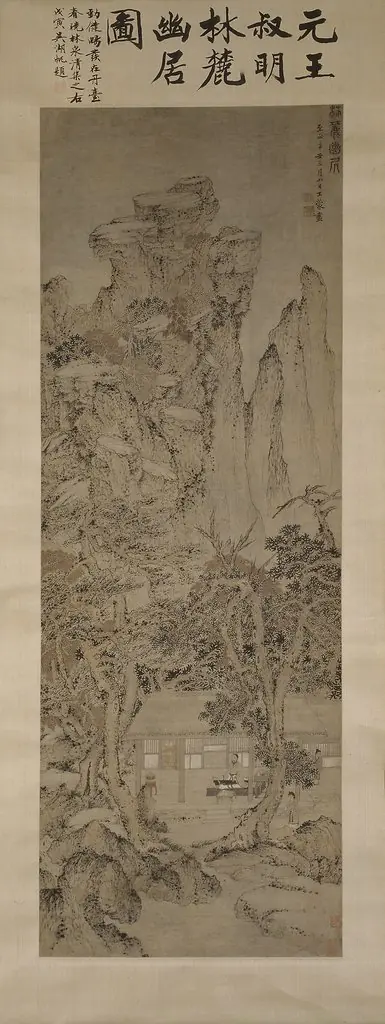 Quiet Life in a Wooded Glen
 Riding to a Lakeside Pavilion
 Windy Landscape with Sailboat
 Fishing Recluse by an Autumn Grove
 Mount Fuji
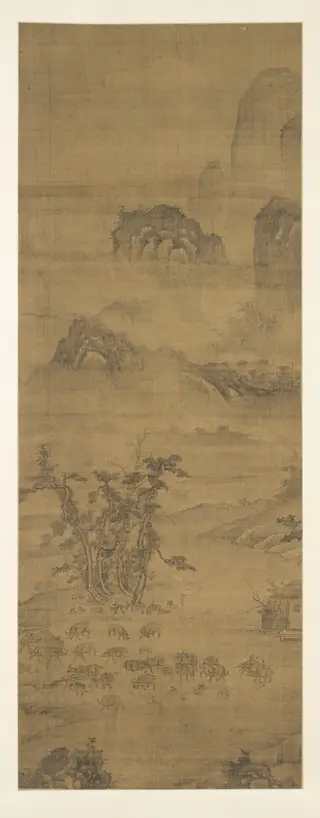 Water Buffaloes in a Mountain Valley
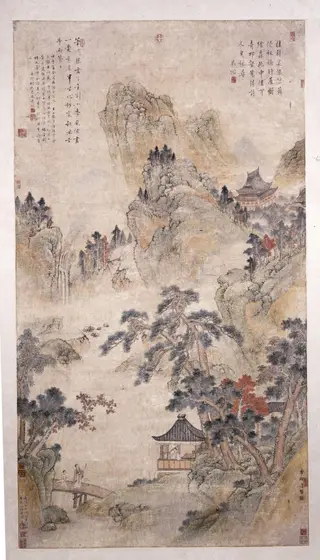 Visiting a friend in the mountains
- 明/清 僧滐 山水 軸|Landscape