Artwork
Moulin de la Galette Interior
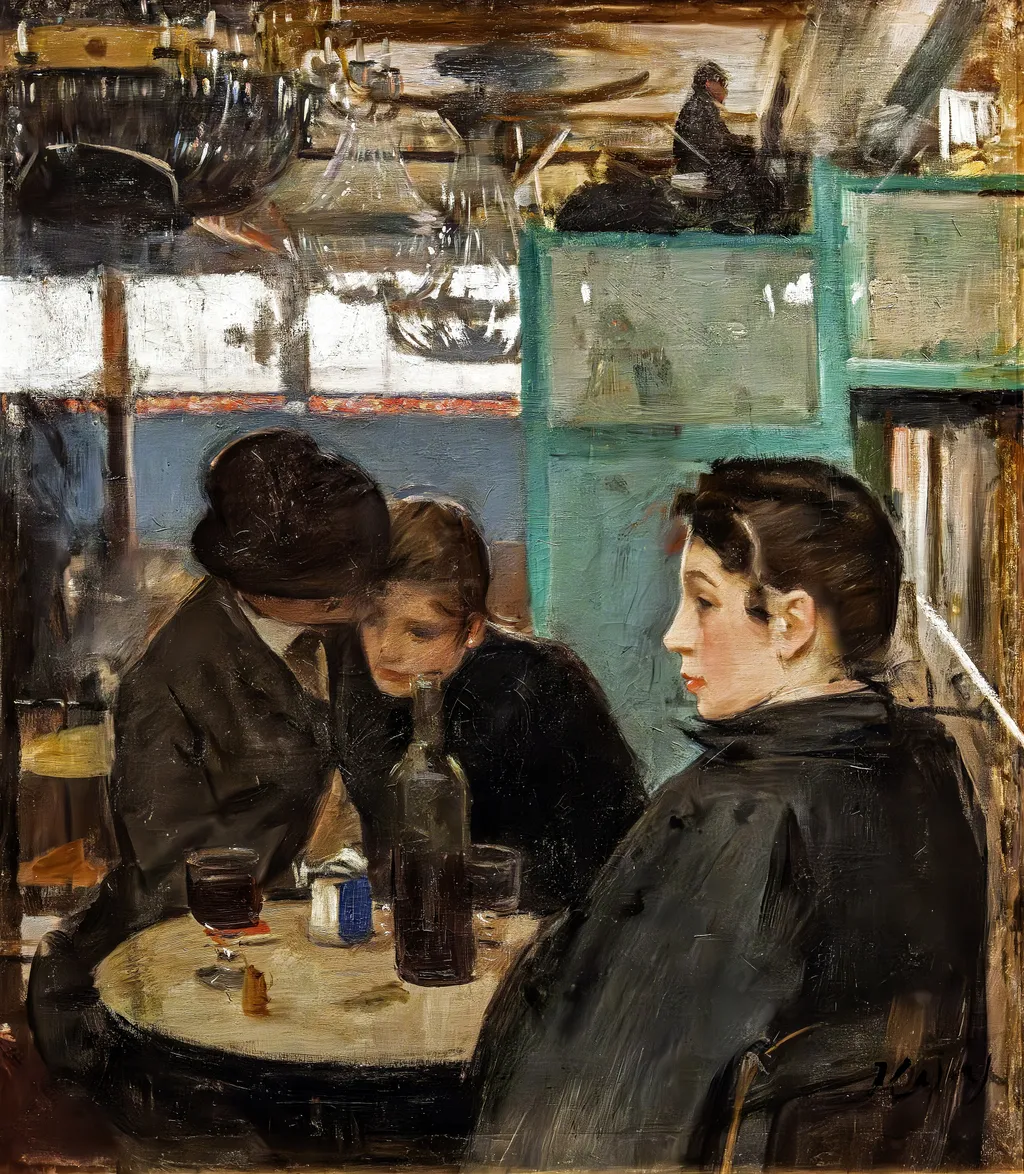
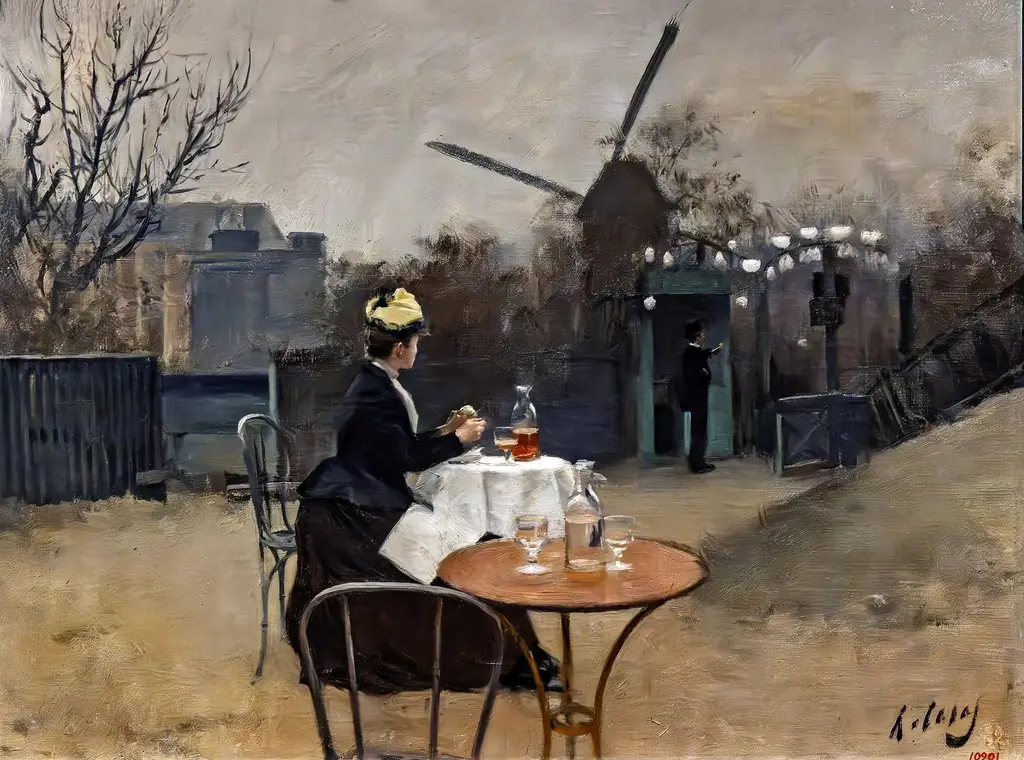
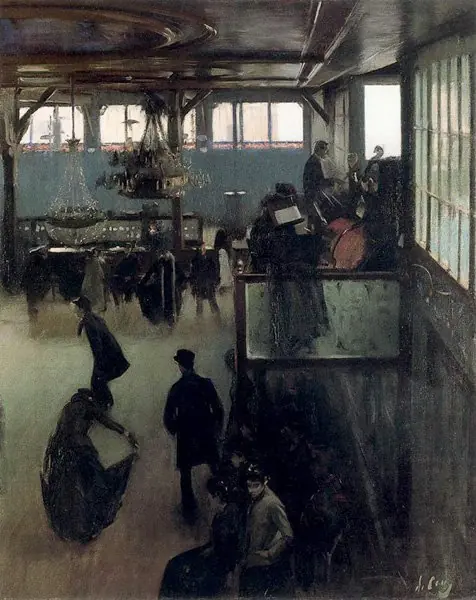
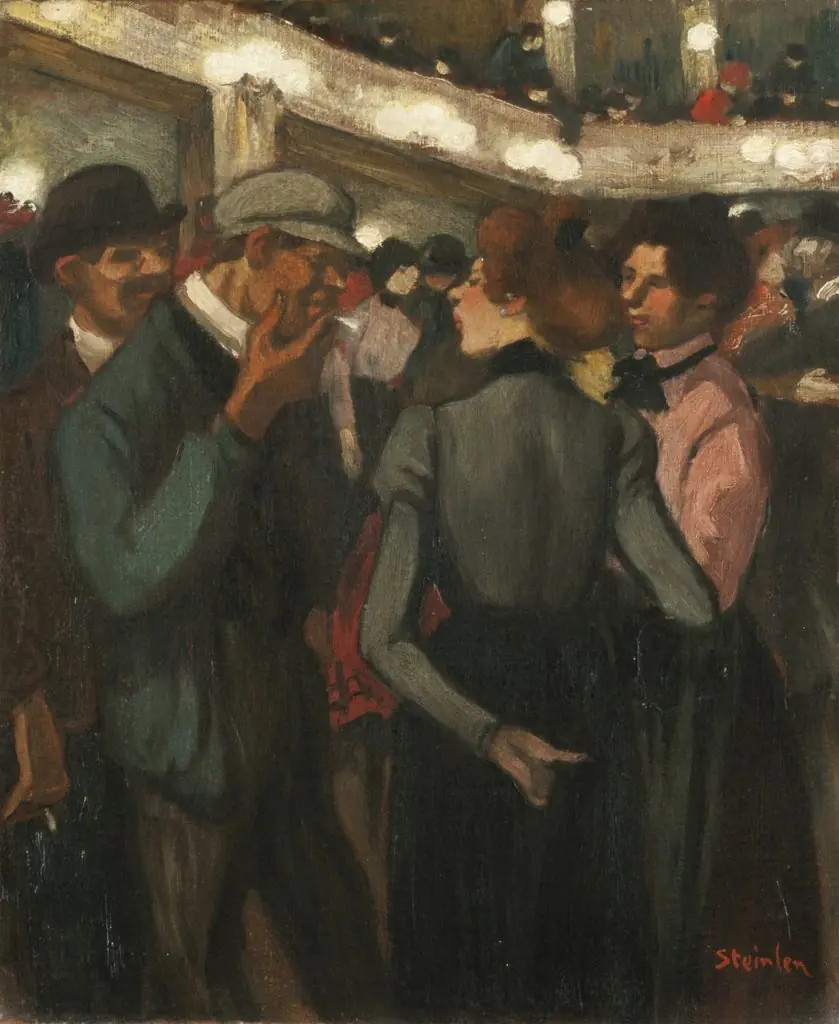
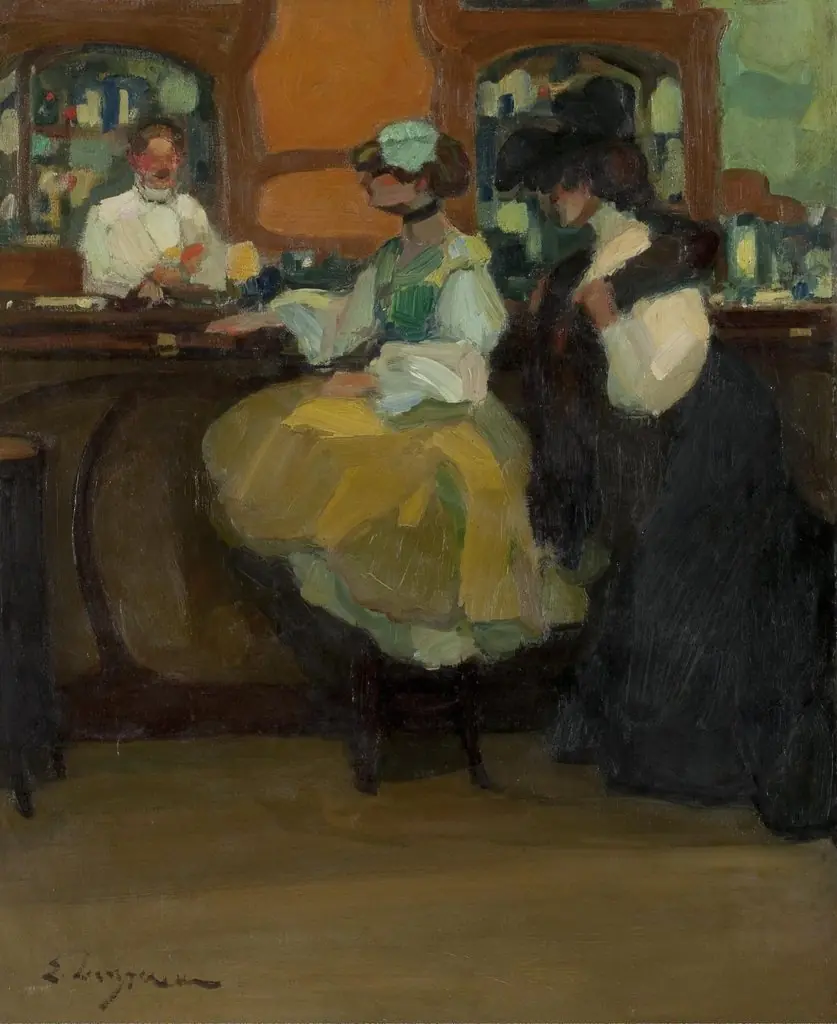
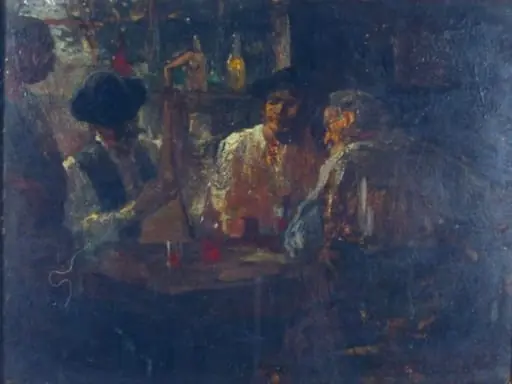
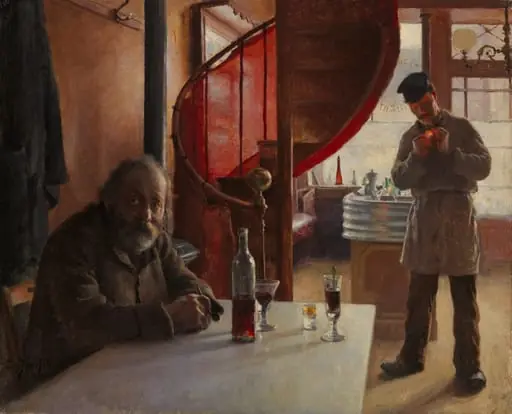
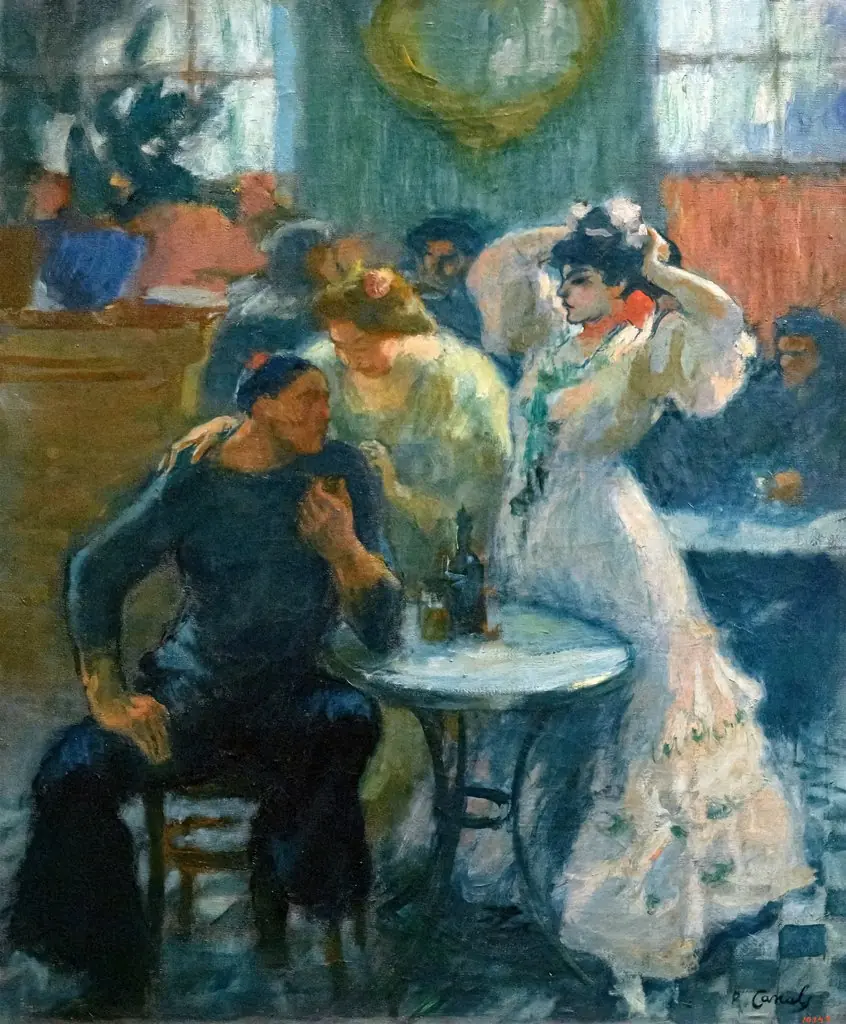
Moulin de la Galette Interior is an oil painting by the Art Nouveau artist Ramon Casas. It dates from 1896 and is held in the collection of the Museu Nacional d'Art de Catalunya.
About this work
Overview
The painting is part of the collection at the Museu Nacional d'Art de Catalunya, reflecting his broader interest in modern European urban culture.
Ramon Casas painted Moulin de la Galette Interior in 1896 using oil on canvas. The work captures an interior scene from a well-known dance hall in Montmartre, Paris. Casas, a Catalan artist deeply engaged with urban life in both Barcelona and Paris, rendered this moment with a focus on social atmosphere rather than narrative.
The painting is part of the collection at the Museu Nacional d'Art de Catalunya, reflecting his broader interest in modern European urban culture.
Subject & Meaning
The painting centers on three women seated at a round table, their dark clothing contrasting with the warm interior lighting. A bottle and glasses suggest a moment of pause amid social activity. Behind them, a figure stands near a counter surrounded by shelves and glassware, hinting at the space’s function as both a café and dance venue. The scene conveys quiet intimacy within a public setting, emphasizing everyday rituals over spectacle.
Technique & Style
Casas employed bold, expressive brushwork to convey movement and texture, particularly in the rendering of fabric and wood surfaces. Light falls diagonally across the composition, modeling forms and deepening shadows to create spatial depth. The palette is restrained, dominated by earth tones and muted hues, with subtle highlights drawing attention to the table and figures. This approach aligns with Art Nouveau’s emphasis on organic flow and atmospheric tone rather than rigid realism.
History & Provenance
Painted during Casas’s time in Paris, the work reflects his engagement with French artistic circles after establishing his reputation in Barcelona. It was acquired by the Museu Nacional d'Art de Catalunya in the early 20th century, where it remains today. The painting’s journey from a Parisian venue to a Catalan national collection underscores Casas’s transnational influence and the museum’s commitment to documenting Catalan artists’ broader European connections.
Context
In the 1890s, Montmartre’s dance halls like the Moulin de la Galette were hubs of working-class leisure and artistic fascination. Casas, like many of his contemporaries, was drawn to these spaces as sites of modern life. His depiction avoids romanticization, instead focusing on quiet observation.
This aligns with broader trends in European art that sought to portray urban social dynamics with psychological nuance rather than idealized spectacle.
Legacy
The painting exemplifies Casas’s ability to merge Catalan sensibilities with Parisian modernism. While less celebrated than some of his portraits of Barcelona’s elite, this interior scene reveals his sensitivity to light, space, and social nuance. It contributes to a broader understanding of how regional artists engaged with international urban cultures, influencing later generations interested in the intersection of everyday life and artistic expression.
Own this work as a print
Artist & collection
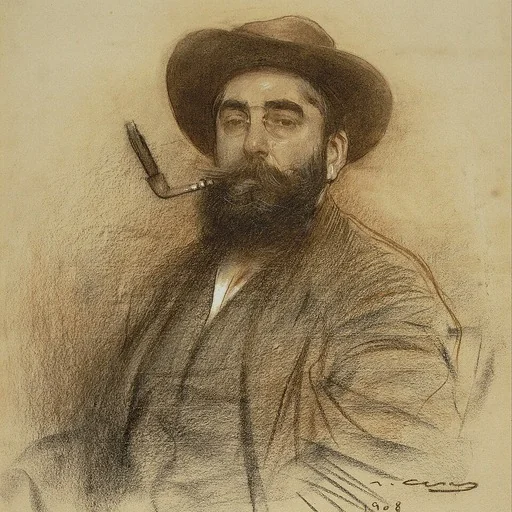
Artist
Ramon Casas i Carbó (Catalan pronunciation:; 4 January 1866 – 29 February 1932) was a Catalan artist from Spain.