Artwork
Evocation of Roussel
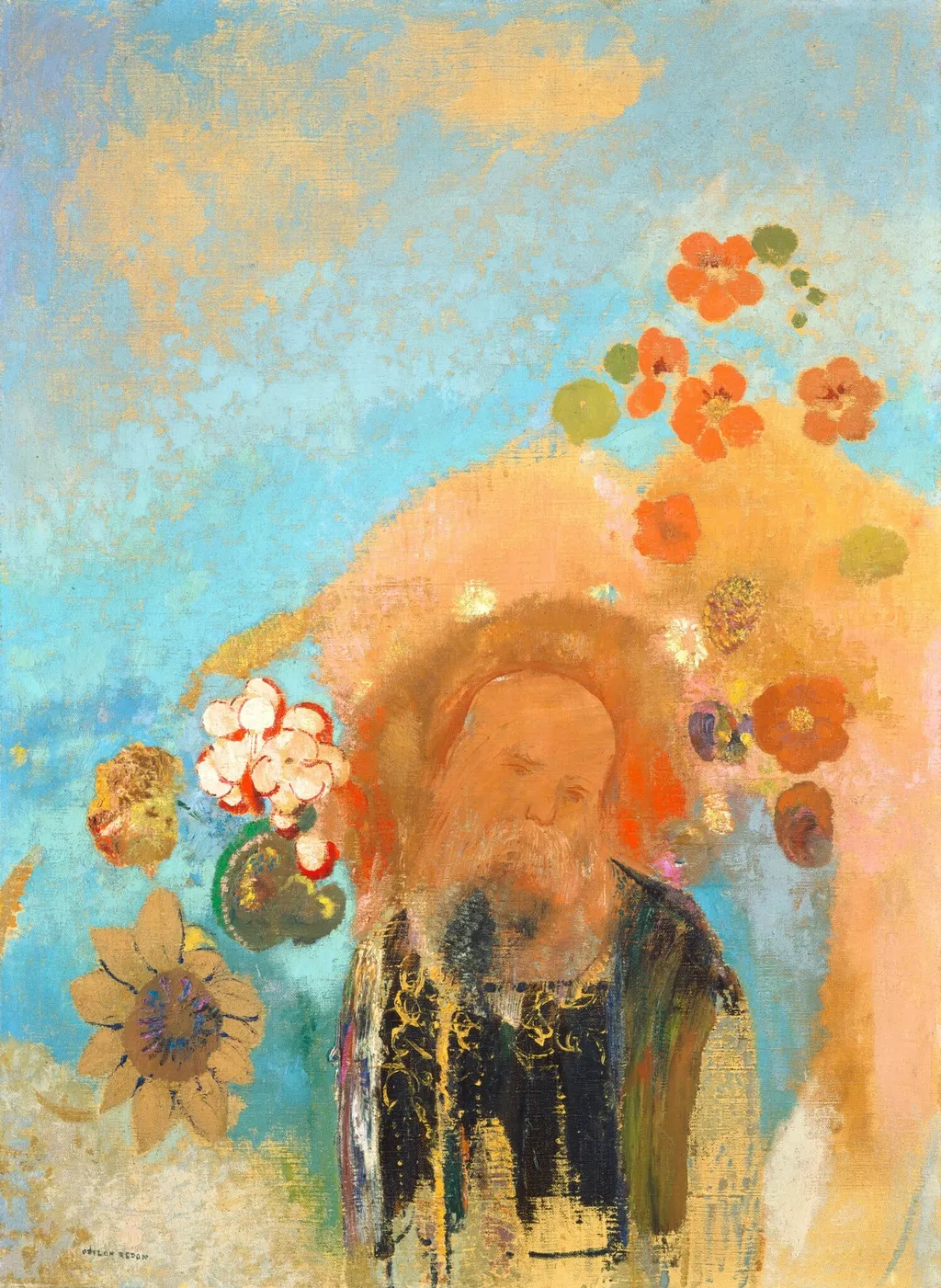
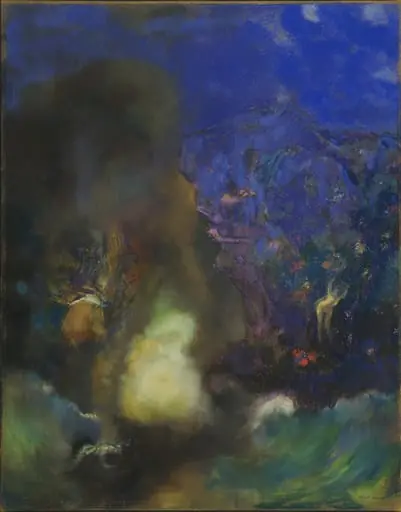
Evocation of Roussel is an oil painting by the Symbolist artist Odilon Redon. It dates from 1912 and is held in the collection of the National Gallery of Art.
- Inscription
- Inscribed:lower left: ODILON REDON
About this work
Technique & Style
The available records do not describe the painting's specific condition or conservation history.
Odilon Redon created Evocation of Roussel in 1912 using oil paint applied to canvas. The work measures 73 centimeters in height by 54 centimeters in width. It is classified as a painting and falls within the allegorical genre.
Stylistically it combines symbolic abstraction with figurative suggestion, characteristic of Redon's later oeuvre, with a restrained palette and a muted, dreamlike tonality that emphasize psychological resonance over narrative clarity. The available records do not describe the painting's specific condition or conservation history.
History & Provenance
Odilon Redon painted Evocation of Roussel in 1912. The work remained in Jos Hessel's Paris collection until 1913, when it was lent to the Armory Show and exhibited under the title Veillard, where it was offered for sale. It reappeared at Raoul Pellequer's Paris sale on 29 October 1927 (lot 118), where Galerie Étienne Bignou acquired it on behalf of the New York collector Chester Dale.
It remained in Dale's collection until he bequeathed it to the National Gallery of Art, Washington, D.C., in 1963. The canvas measures 73 × 54 cm and is executed in oil on canvas.
Context
The painting entered the National Gallery of Art in Washington, D.C., through the bequest of Chester Dale in 1963, following its sale by Galerie Étienne Bignou in 1927 and its earlier appearance at the 1913 Armory Show under the title Veillard. Redon, a French Symbolist painter active in the late nineteenth and early twentieth centuries, developed a distinctive approach blending mythological allegory with intimate, dreamlike visions, positioning his work at the intersection of Symbolism and early modernism. The work is part of the museum's permanent collection and is catalogued as a 1912 oil on canvas measuring 73 by 54 centimeters.
Legacy
Odilon Redon's 1912 painting Evocation of Roussel passed through the Parisian art market: from the dealer Jos Hessel, who lent it to the 1913 Armory Show under the title Veillard, through the 1927 Pellequer sale, to Galerie Étienne Bignou, which acquired it for the collector Chester Dale. Dale bequeathed the work to the National Gallery of Art in 1963, where it remains today. Its enduring presence in a major public collection anchors its place within the legacy of late Symbolist painting.
Overview
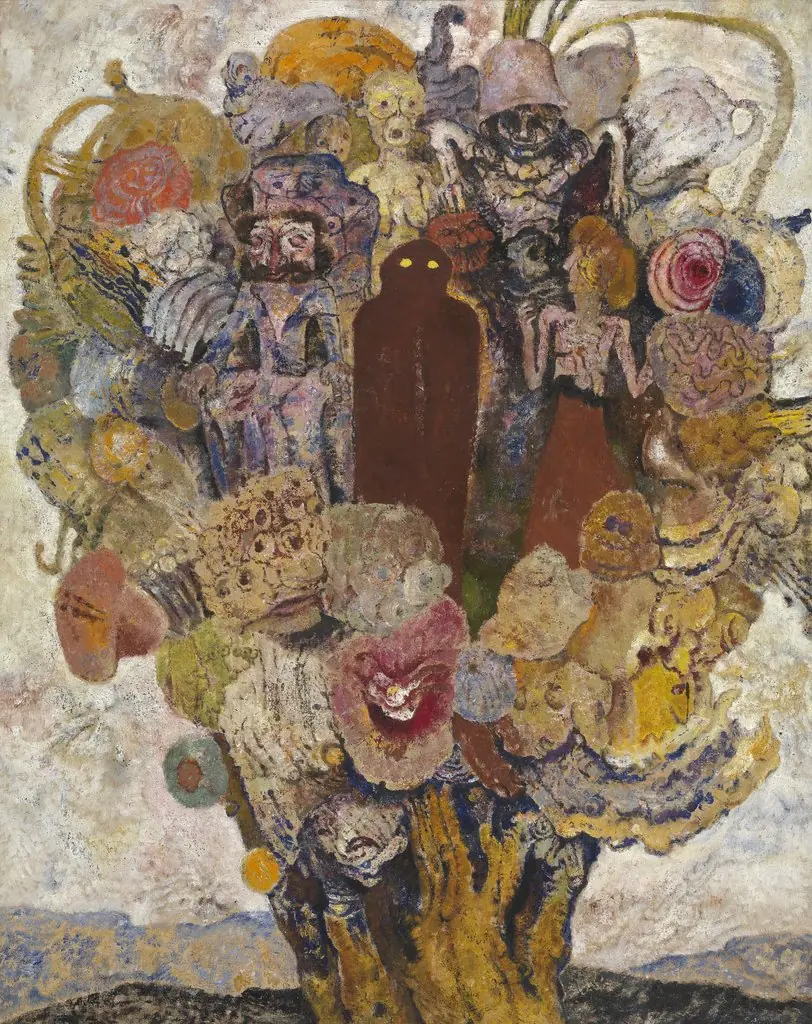
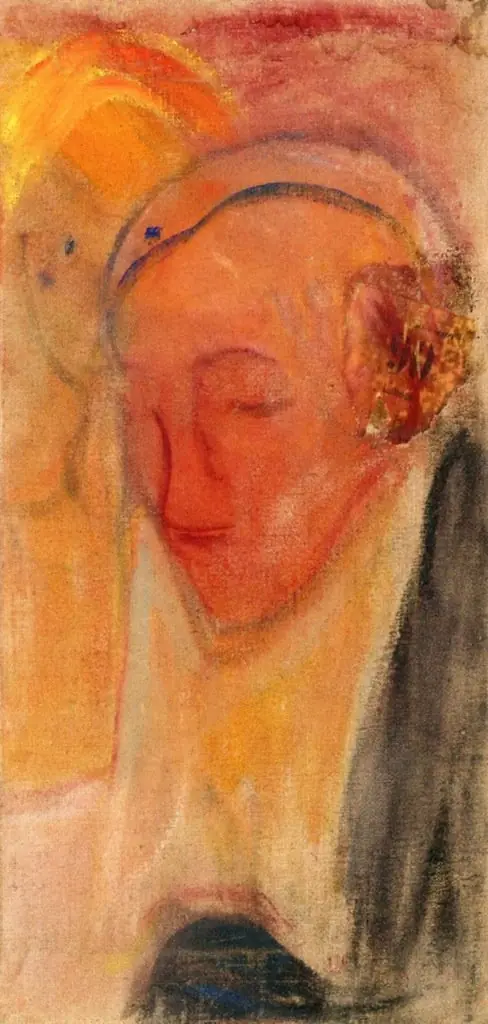
Created around 1912, Evocation of Roussel is an oil painting by French symbolist Odilon Redon. The work presents a solitary, bearded figure standing before an ethereal backdrop, his dark, modest attire contrasted by a patterned collar. Floating around him are luminous orange and white blossoms that appear to drift weightlessly, lending the composition a contemplative, otherworldly atmosphere.
Subject & Meaning
The central figure, rendered with a solemn expression, suggests a portrait of the poet and critic Théodore Roussel, though Redon never confirmed a literal identification. The surrounding flowers may symbolize fleeting inspiration or the transitory nature of memory, reinforcing the painting’s allegorical intent to evoke rather than depict a specific narrative.
Own this work as a print
Artist & collection

Artist
Odilon Redon (born Bertrand Redon; French: ; 20 April 1840 – 6 July 1916) was a French Symbolist draftsman, printmaker, and painter.