Artwork
Portrait of an Old Woman (Prophetess Hannah)
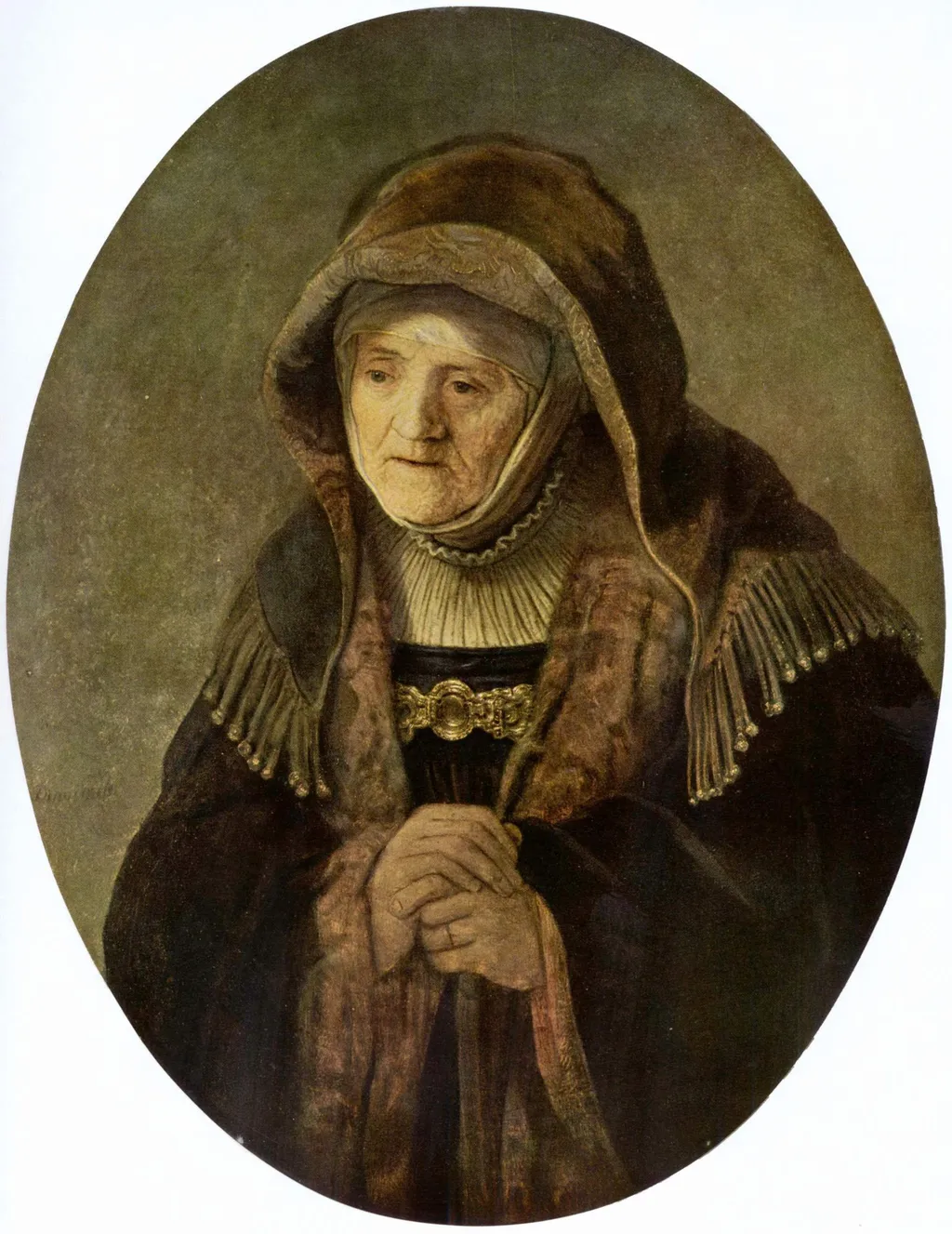
Portrait of an Old Woman (Prophetess Hannah) is an oil painting by the Dutch Golden Age artist Rembrandt van Rijn. It dates from 1639 and is held in the collection of the Kunsthistorisches Museum.
About this work
Technique & Style
This portrait depicts Prophetess Hannah rendered in oil on an oak panel. Rembrandt’s handling emphasizes chiaroscuro to model the subject’s weathered features, while the composition balances intimate realism with symbolic gravitas. The work measures 79.5 cm in height and 61.7 cm in width.
History & Provenance
No specific inventory or accession number is documented in the available sources, and no exhibition history is recorded.
The Portrait of an Old Woman (Prophetess Hannah) was created by Rembrandt in 1639. Executed in oil paint on an oak panel, the work measures 79.5 cm in height and 61.7 cm in width. The painting currently resides in the collection of the Kunsthistorisches Museum, though the provided sources do not detail the specific commission, original ownership, or the full chain of custody leading to its current location.
The painting is held in the collection of the Kunsthistorisches Museum in Vienna, as recorded in its Wikidata entry. No specific inventory or accession number is documented in the available sources, and no exhibition history is recorded.
The work is catalogued as an oil-on-oak panel measuring 79.5 cm in height by 61.7 cm in width, and is held under the collection and location of the Kunsthistorisches Museum.
Overview
Painted in 1639 by Rembrandt Harmenszoon van Rijn, this oil-on-canvas portrait depicts an elderly woman identified as the biblical prophetess Hannah. Part of the Kunsthistorisches Museum’s holdings, the work exemplifies the artist’s mature portraiture during the Dutch Golden Age. Rembrandt’s output across painting, etching, and drawing totals roughly three hundred surviving canvases alongside extensive graphic works.
Subject & Meaning
The sitter is portrayed as Hannah, the devout widow from the Gospel of Luke who recognized the infant Christ as the Messiah. Her solemn expression and clasped hands resting on folded fabric suggest contemplation and reverence. The dark, enveloping cloak and subdued palette focus attention on her face, reinforcing the spiritual gravity attributed to her biblical role.
Context
During the 1630s and 1640s, Rembrandt frequently explored biblical themes in portraiture, often blending historical narrative with intimate character studies. This work aligns with his interest in depicting figures of quiet devotion, reflecting both the artistic conventions of the Dutch Golden Age and the period’s broader religious sensibilities.
Legacy
The portrait contributes to the understanding of Rembrandt’s approach to aging subjects, emphasizing dignity and inner life over idealization. Its inclusion in the Kunsthistorisches Museum’s collection ensures ongoing study as an example of seventeenth-century Dutch portraiture, particularly in its fusion of psychological depth and technical mastery.
Own this work as a print
Artist & collection

Artist
Rembrandt Harmenszoon van Rijn, known mononymously as Rembrandt, was a Dutch Golden Age painter, printmaker, and draughtsman.

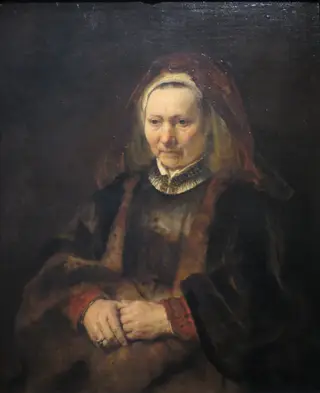 Portrait of an Old Woman in a Fur Robe
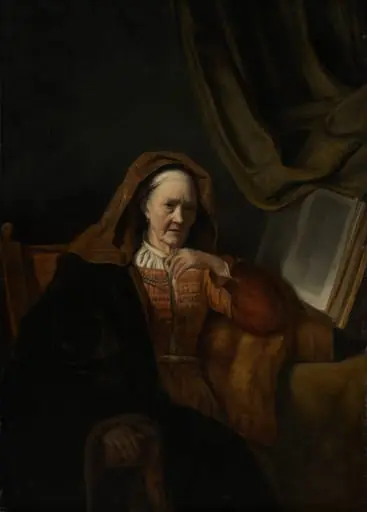 Woman with a Pearl Necklace
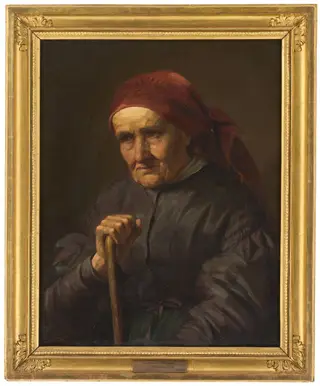 Brustbild einer alten Bäuerin
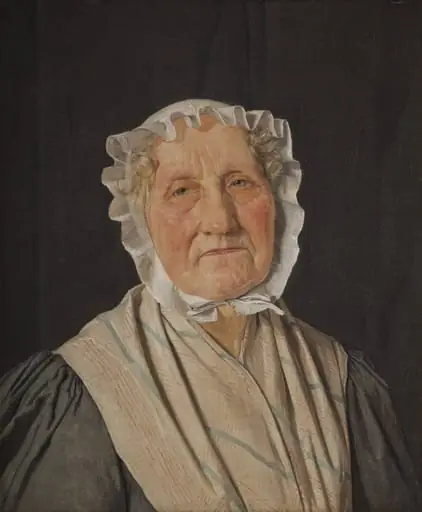 Portrait of Inger Margrethe Høyen, née Schrøder, the Mother of the Art Historian N.L. Høyen
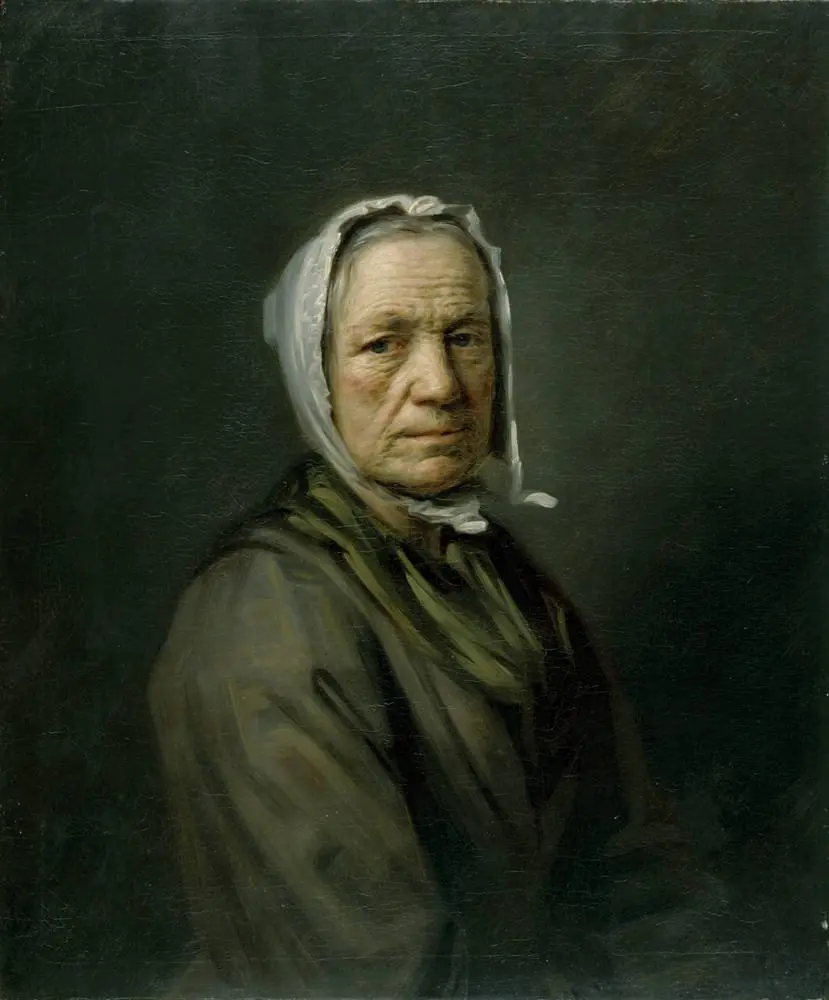 Bejahrte Frau mit weißer Haube
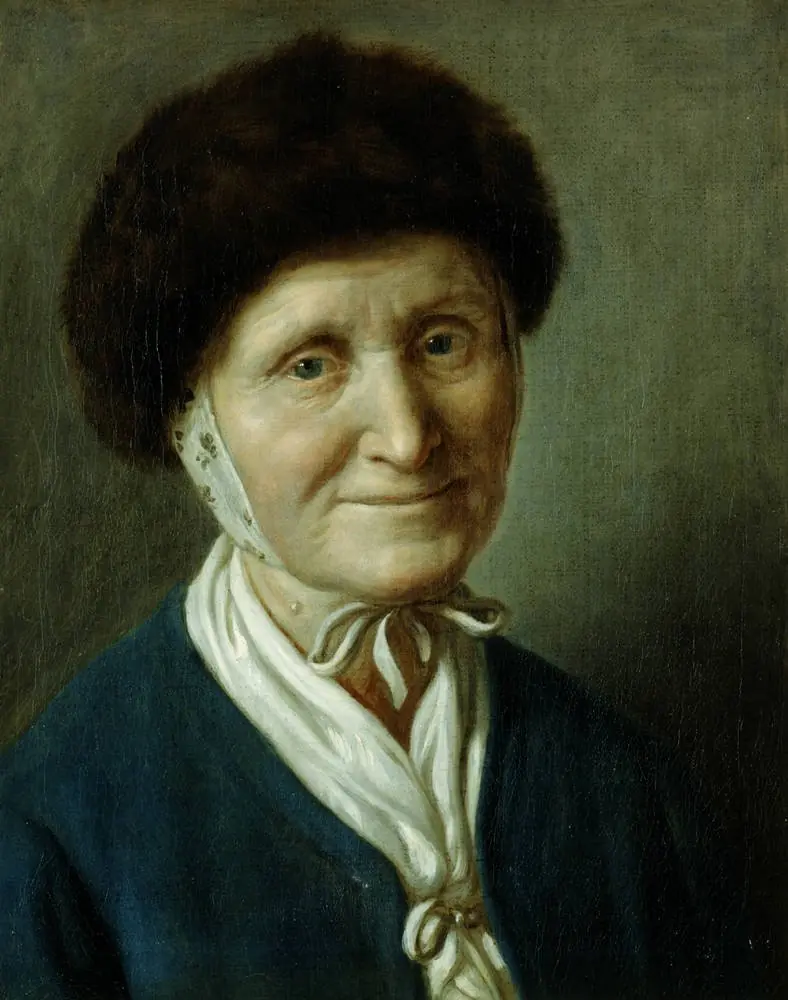 Old woman with fur hat
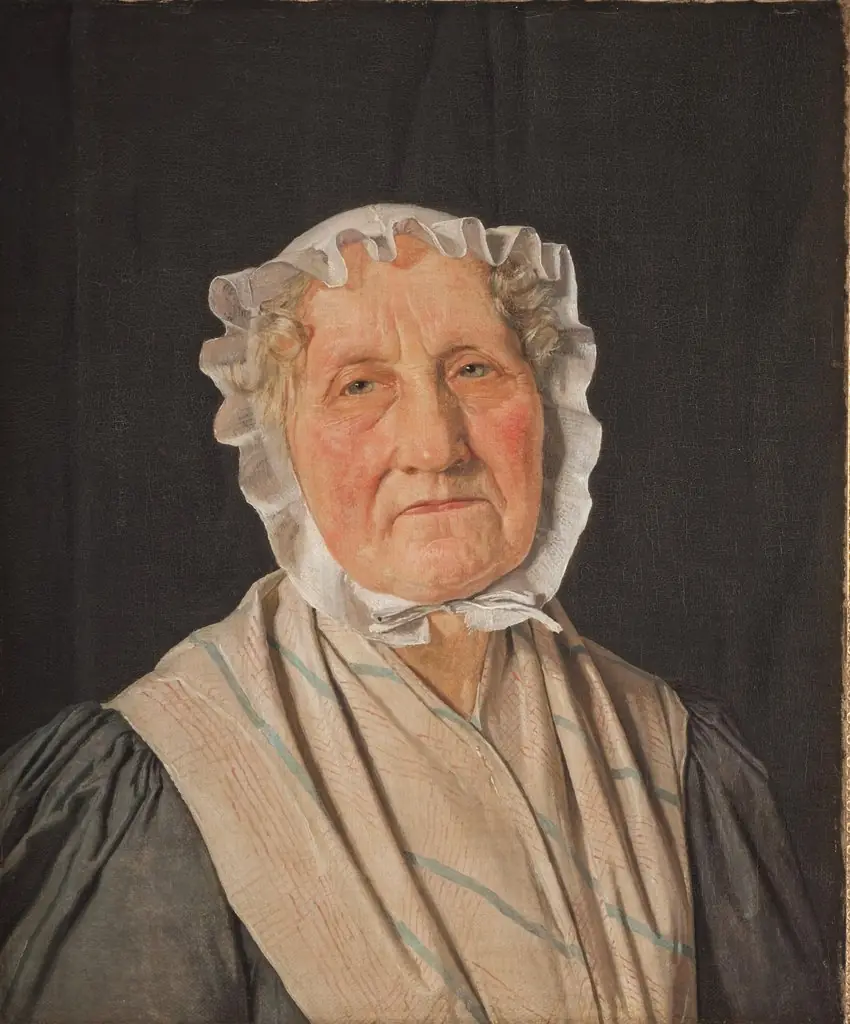 Portrait of Inger Margrethe Høyen, née Schrøder, the Mother of the Art Historian N.L. Høyen