Artwork
Portrait of a Gentleman with a Tall Hat and Gloves
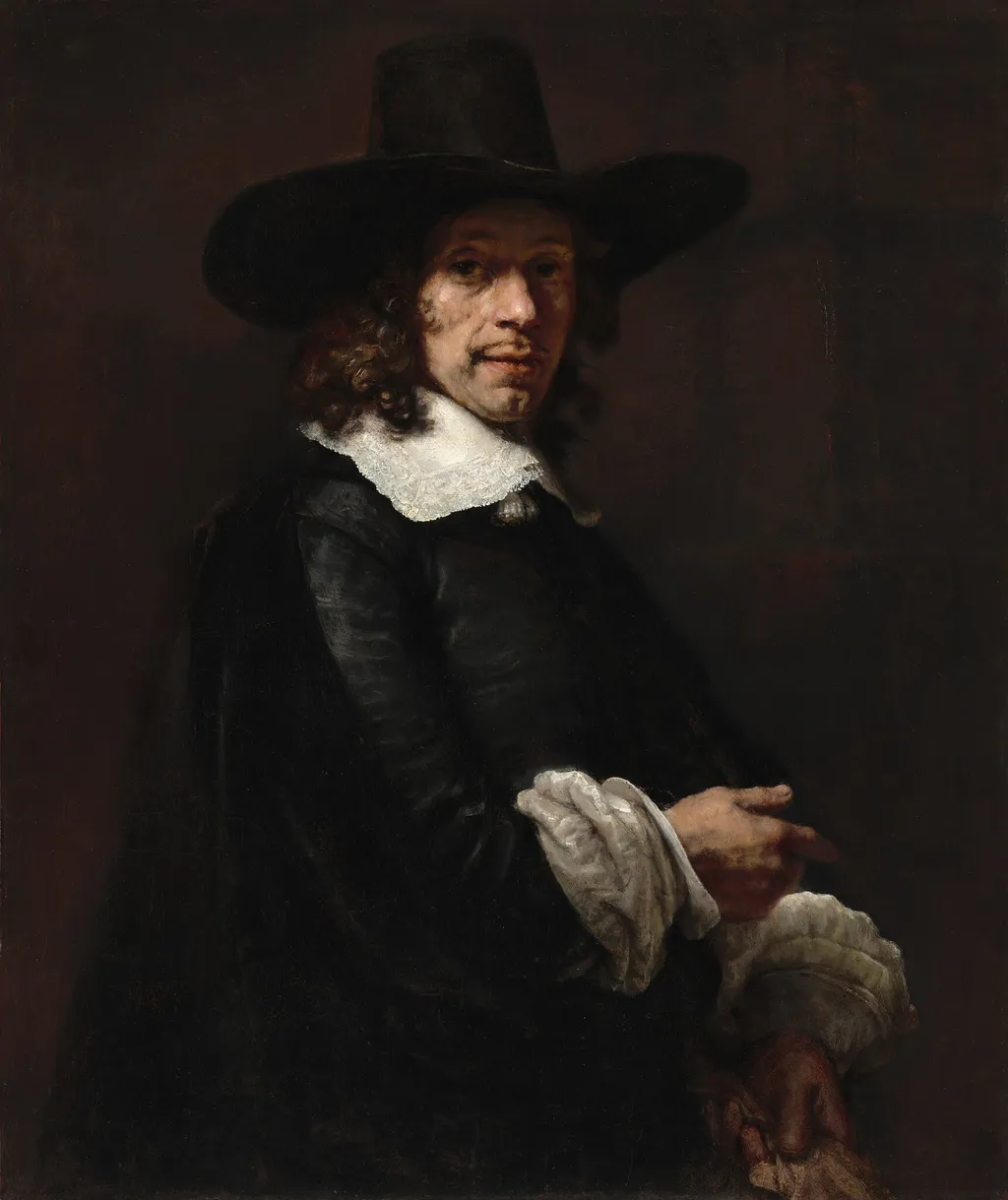
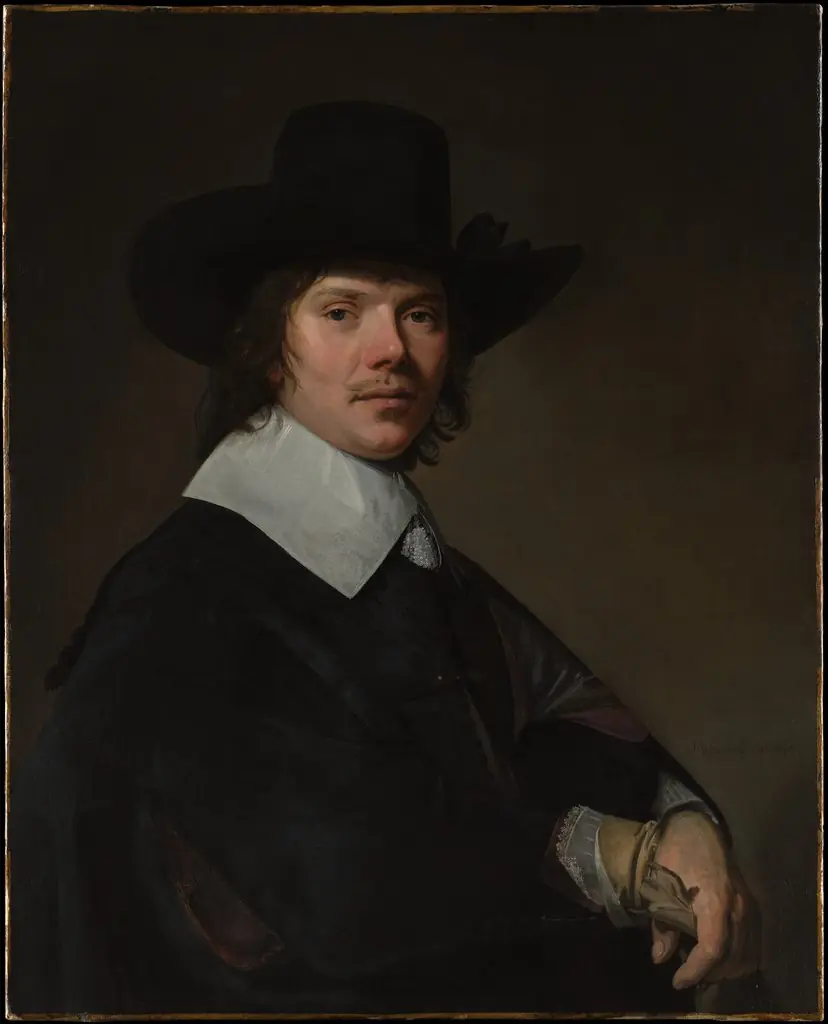
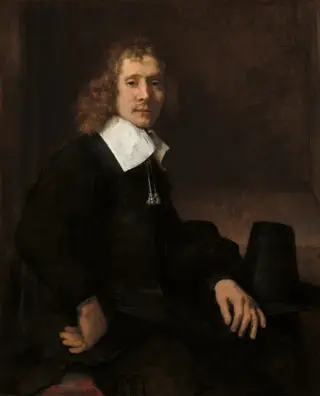
Portrait of a Gentleman with a Tall Hat and Gloves is an oil painting by the Baroque artist Rembrandt van Rijn. It dates from 1657 and is held in the collection of the National Gallery of Art.
About this work
Subject & Meaning
The work thus functions both as a faithful likeness and as a visual statement of the sitter’s place in society.
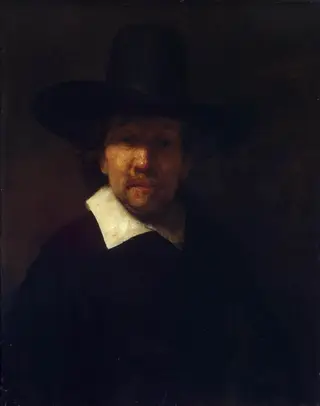
The painting’s subject is identified as Frans van Schooten, a Dutch scholar. He is shown wearing a tall hat and holding gloves, objects that were conventional attributes in seventeenth-century portraiture, often signaling the sitter’s social standing or professional identity. The work thus functions both as a faithful likeness and as a visual statement of the sitter’s place in society. No deeper iconographic or symbolic meaning is elaborated in the available records.
History & Provenance
Painted by Rembrandt in 1657, the portrait likely first appeared in the collection of Gerard Hoet, Jr. in The Hague before being sold in 1760. By 1803 it belonged to Prince Nicolai Borisovich Yusupov of Saint Petersburg and Moscow. The painting descended through the Yusupov family to his great-granddaughter Princess Zinaida Nikolaievna Yusupova.
In 1921 her son Prince Felix Felixovich Yusupov sold it to American collector Joseph E. Widener. It entered the National Gallery of Art in Washington, D.C., in 1942 as part of the Widener Collection.
The painting is held at the National Gallery of Art, Washington, D.C., as part of the Widener Collection, to which it was gifted in 1942. It is currently displayed in Gallery 51. The work was included in the exhibition 'Late Rembrandt' (2014–2015).
Overview
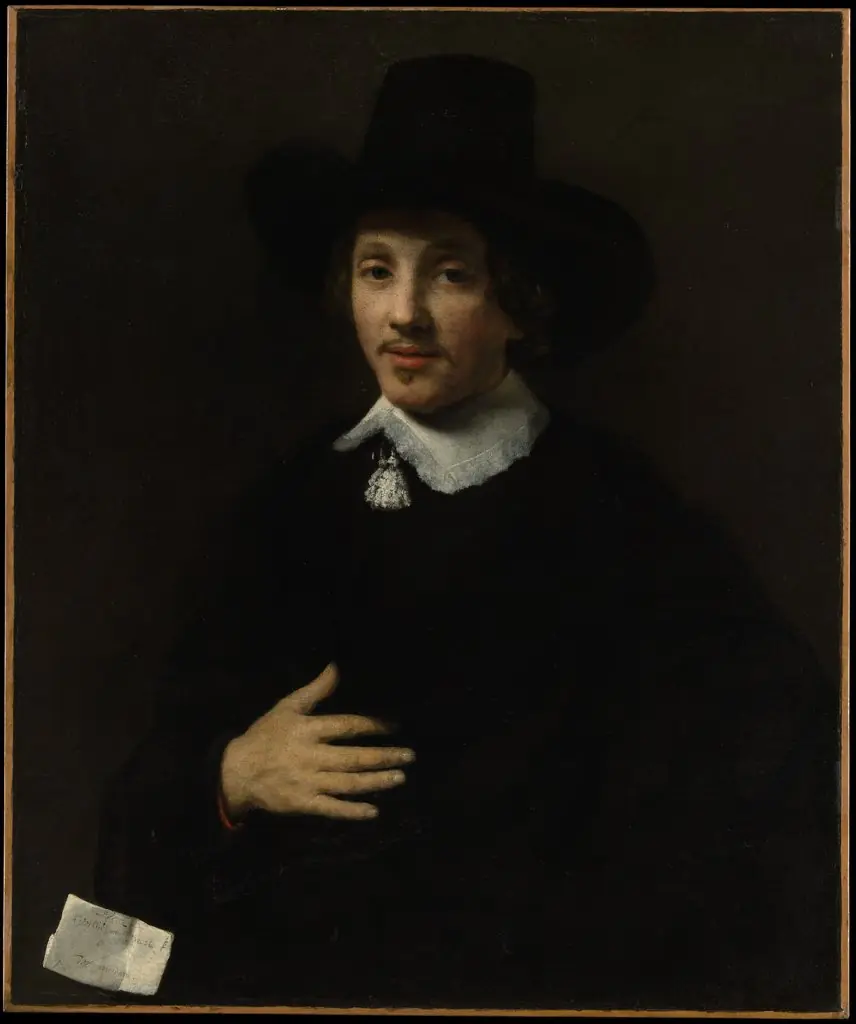
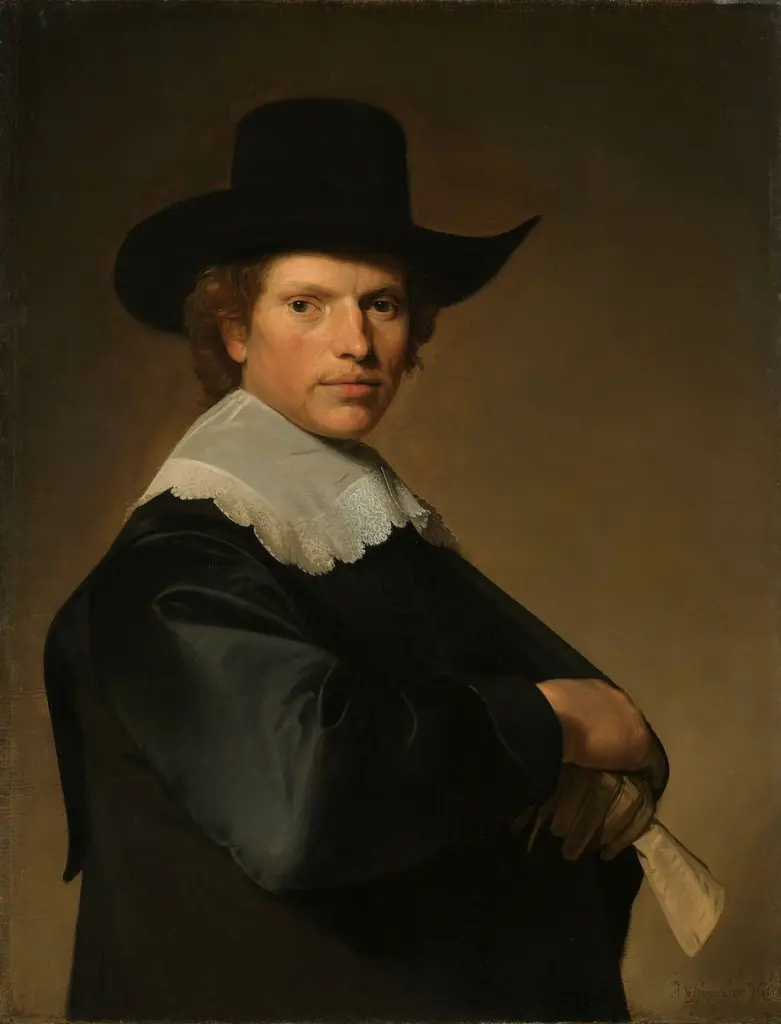
Painted in 1657, Portrait of a Gentleman with a Tall Hat and Gloves is an oil-on-canvas work by Rembrandt van Rijn depicting a man in formal attire. The subject, traditionally identified as the mathematician Frans van Schooten, faces the viewer directly with a composed expression. He wears a dark, tall hat and holds a pair of gloves in his left hand, while his right hand rests near his waist.
Rembrandt employs his characteristic late-career technique, utilizing thick impasto for the highlights on the face and gloves against a dark, indistinct background. The brushwork is loose yet precise, particularly in rendering the texture of the fabric and the soft folds of the leather gloves. This portrait reflects the artist's mature style, where psychological depth and material realism are achieved through economical but expressive handling of paint.
The work stands as a significant example of Rembrandt's portraiture from the 1650s, demonstrating his continued ability to capture the character of his sitters through subtle facial modeling and the interplay of light and shadow.
Technique & Style
The artist demonstrates considerable skill in rendering the textures and forms of the sitter's clothing, particularly evident in the nuanced depiction of the gloves' folds. This attention to realistic detail and the directness of the portrayal are characteristic elements often associated with the Baroque artistic movement. The medium of oil on canvas allowed for such precise and rich visual effects.
Own this work as a print
Artist & collection

Artist
Rembrandt Harmenszoon van Rijn, known mononymously as Rembrandt, was a Dutch Golden Age painter, printmaker, and draughtsman.