Artwork
Minerva and Arachne
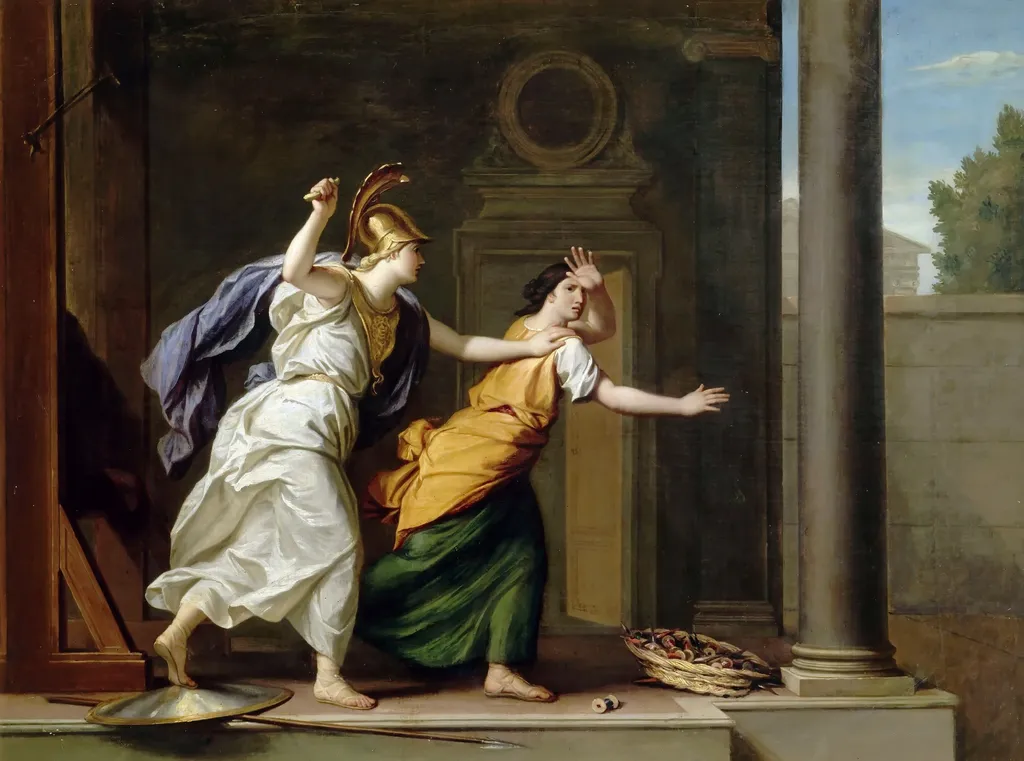
Minerva and Arachne is an oil painting by the French Classical Baroque artist René-Antoine Houasse. It dates from 1706 and is held in the collection of the Palace of Versailles.
About this work
Subject & Meaning
The composition features Minerva, identifiable by her helmet and spear, standing opposite Arachne, who is depicted in the act of spinning.
René-Antoine Houasse's 1706 oil painting illustrates the mythological confrontation between Minerva and Arachne. The composition features Minerva, identifiable by her helmet and spear, standing opposite Arachne, who is depicted in the act of spinning. These attributes underscore Minerva's role as the goddess of wisdom and warfare, while the spinning wheel references Arachne's legendary skill as a weaver, the central element of their divine contest.
Commissioned by Louis XIV for the billiard room of the Grand Trianon at Versailles, the work serves as a visual narrative of this classical tale, likely emphasizing themes of divine authority versus mortal hubris within the context of the French royal residence.
Technique & Style
The work is an oil painting executed on canvas, reflecting the academic classicism promoted at the French court in the early 18th century. Houasse’s handling of the figures emphasizes idealized anatomy and controlled chiaroscuro, while the composition balances narrative tension with decorative symmetry. Formal analysis highlights the crisp rendering of drapery and the precise delineation of attributes such as Minerva’s helmet and Arachne’s spindle, underscoring the artist’s mastery of mythological subject matter.
History & Provenance
Minerva and Arachne was created in 1706 by René-Antoine Houasse, who was born in Paris in 1645 and died there in 1710. The painting was commissioned that same year by Louis XIV, with the Grand Trianon at Versailles specified as its intended destination, specifically the salle du billard (billiard room). It was therefore conceived as part of the decorative program of the château de Versailles rather than as an independent commission.
The work is recorded in the French national collections under the inventory numbers MV 7271, INV 5383, and B 711. Related inventory entries (MV 7122, MV 7123, and MV 7268 to MV 7270) correspond to other elements associated with the same decorative ensemble. The painting is now held at the Musée national des châteaux de Versailles et de Trianon, located within the Museum of the History of France at Versailles, where it remains part of the historic palace collections.
The painting Minerva and Arachne is held in the collection of the Museum of the History of France at the Palace of Versailles. It is cataloged under multiple inventory numbers, including MV 7271, INV 5383, and B 711. Commissioned by Louis XIV in 1706, the work was originally intended for the billiard room of the Grand Trianon.
The piece remains located at the national museum of the châteaux of Versailles and Trianon. While the work is part of the permanent French museum collections documented in the Joconde database, specific details regarding temporary exhibitions or loan history are not provided in the available records.
Overview
René‑Antoine Houasse, a French painter trained under Charles Le Brun, completed the oil canvas Minerva and Arachne in 1706. Executed for the decorative scheme of the Château de Versailles, the work illustrates a mythological contest and remains in the palace’s collection. It exemplifies the French Classical Baroque style, where narrative clarity and monumental composition are emphasized.
Context
The early‑18th‑century French court favored grand mythological narratives that conveyed moral lessons and reinforced the authority of the monarch. By portraying Minerva’s triumph over a hubristic mortal, the work aligns with contemporary themes of order, wisdom, and the consequences of overreaching ambition.
Own this work as a print
Artist & collection
Artist
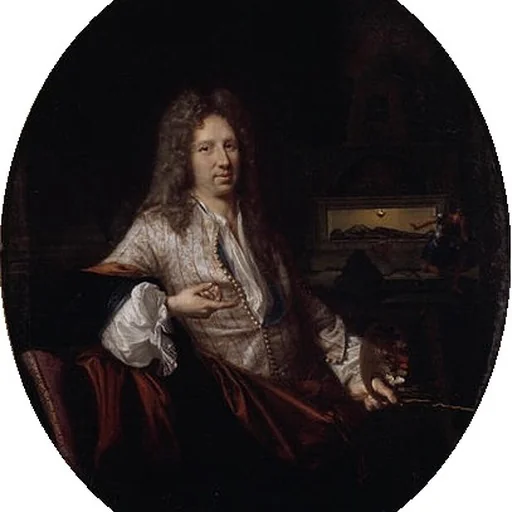
René-Antoine Houasse (c. 1645–1710) was a decorative French painter. He was a pupil of Charles Le Brun, under whose direction he worked at the Manufacture des Gobelins, and with whom he worked on the decoration of the…

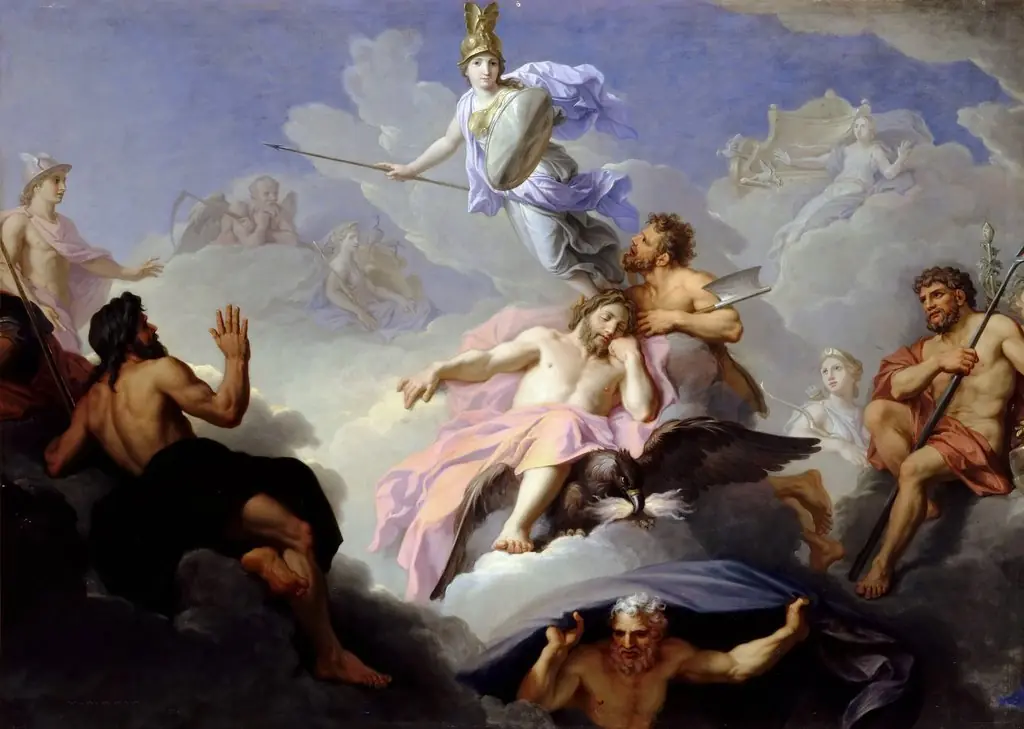 The Birth of Minerva
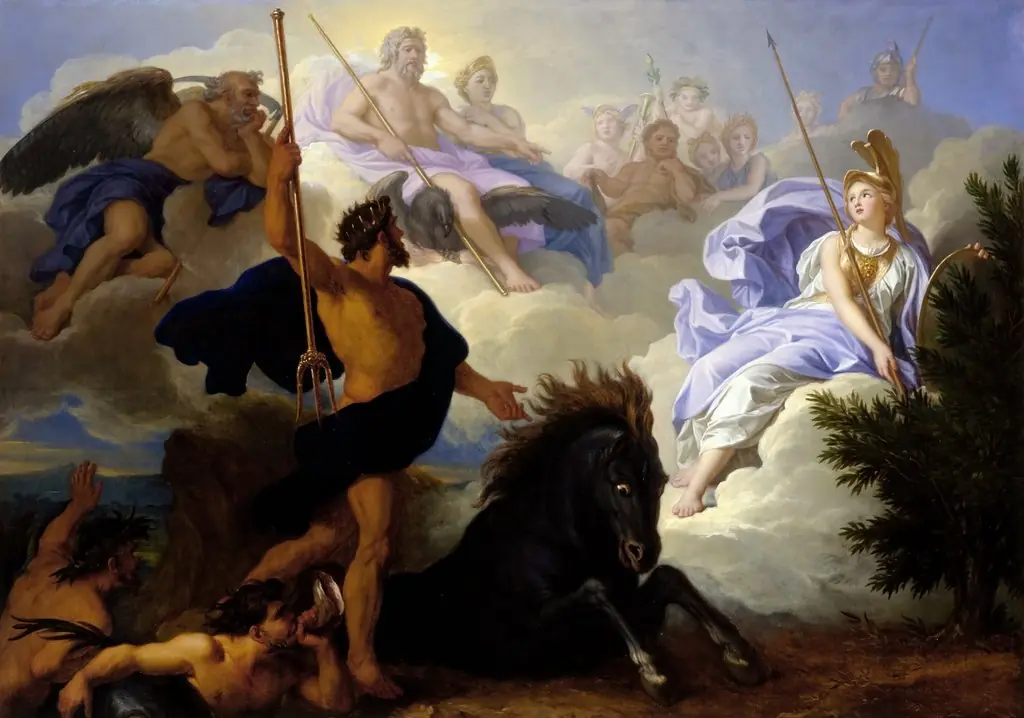 Dispute between Minerva and Neptune over the Naming of the City of Athens
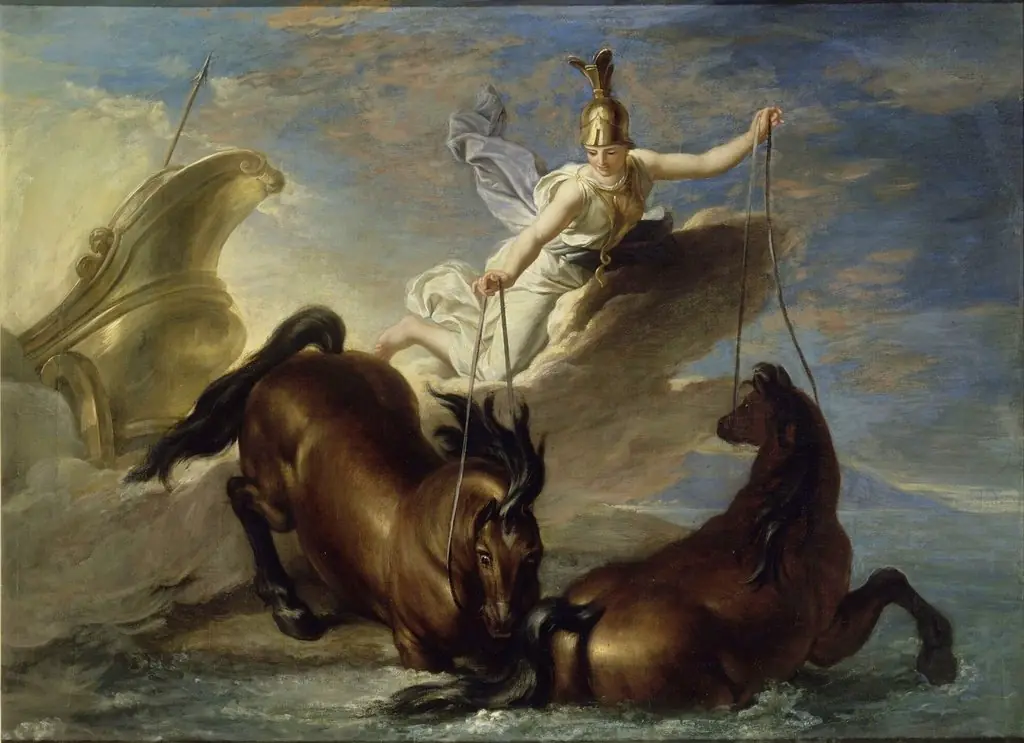 Story of Minerva - Minerva Watering her Horses into the Sea
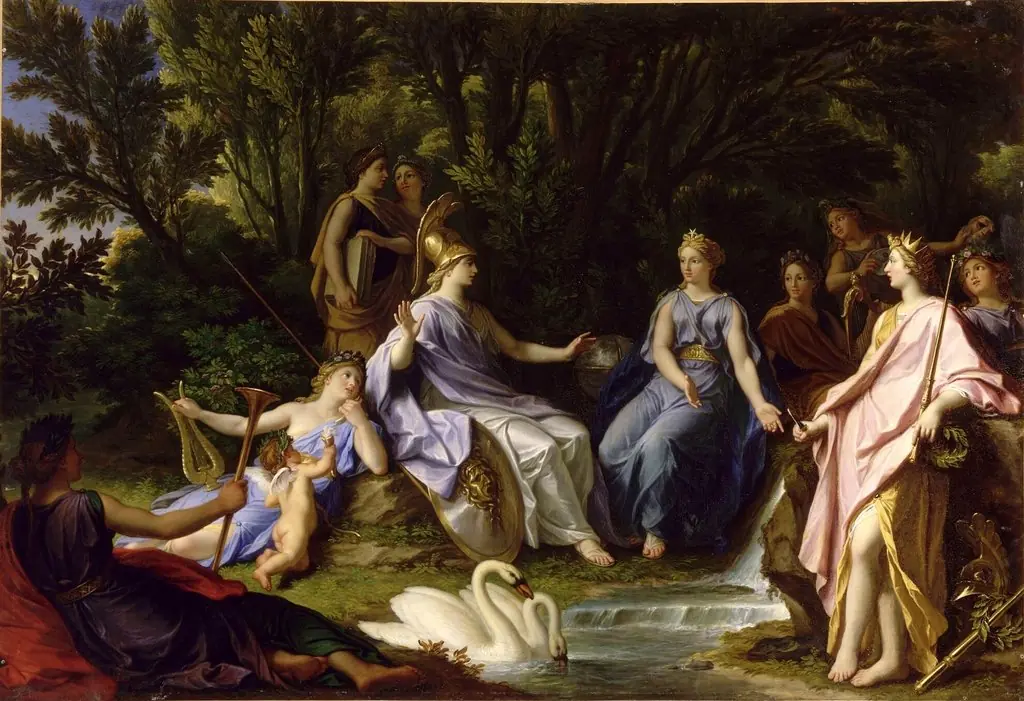 Story of Minerva - The Muses Showing Minerva Hippocrene Waters of the River that Brings Out Pegasus
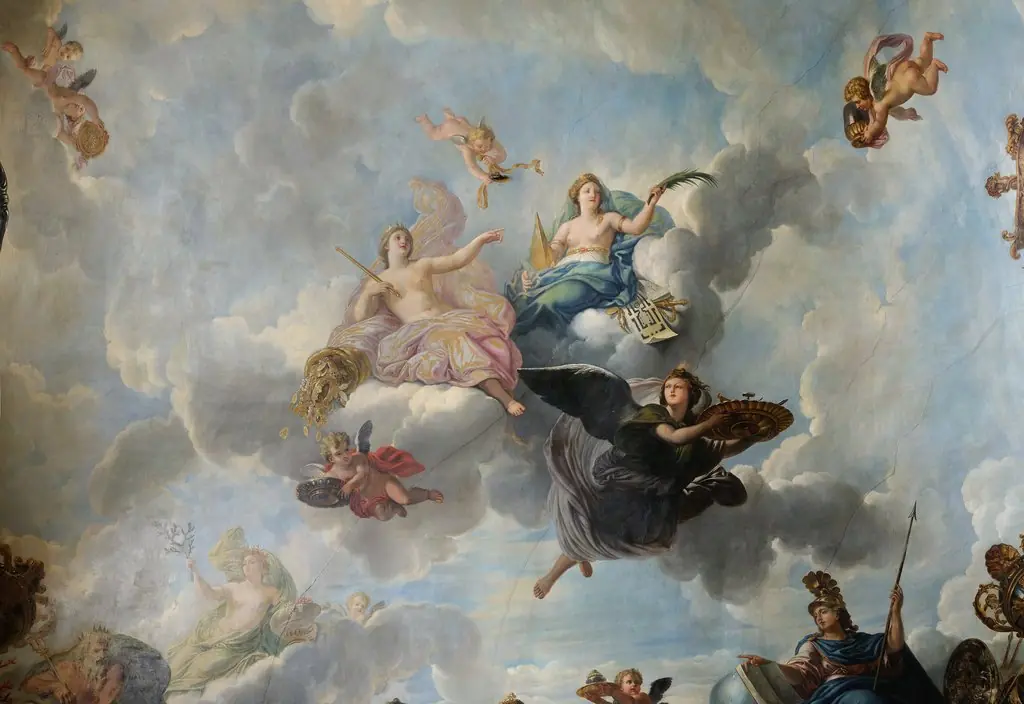 Figure of the Royal Magnificence, Immortality and Progress in the Fine Arts
 Retrato equestre de Luís XIV
 Coving, the Nef of Louis XIV
 The Opening of the Tomb of Nitocris by Darius (?)
- "Seigneur! Voyez ces yeux" (Cleopatra Discovered by Rodogune to Have Poisoned the Nuptial Cup)
 Jephta erblickt seine Tochter
 Rape of the Sabine Women
 Death of Messalina
 Hector Calling Up Paris to a Battle
 Joseph and Potiphar's Wife
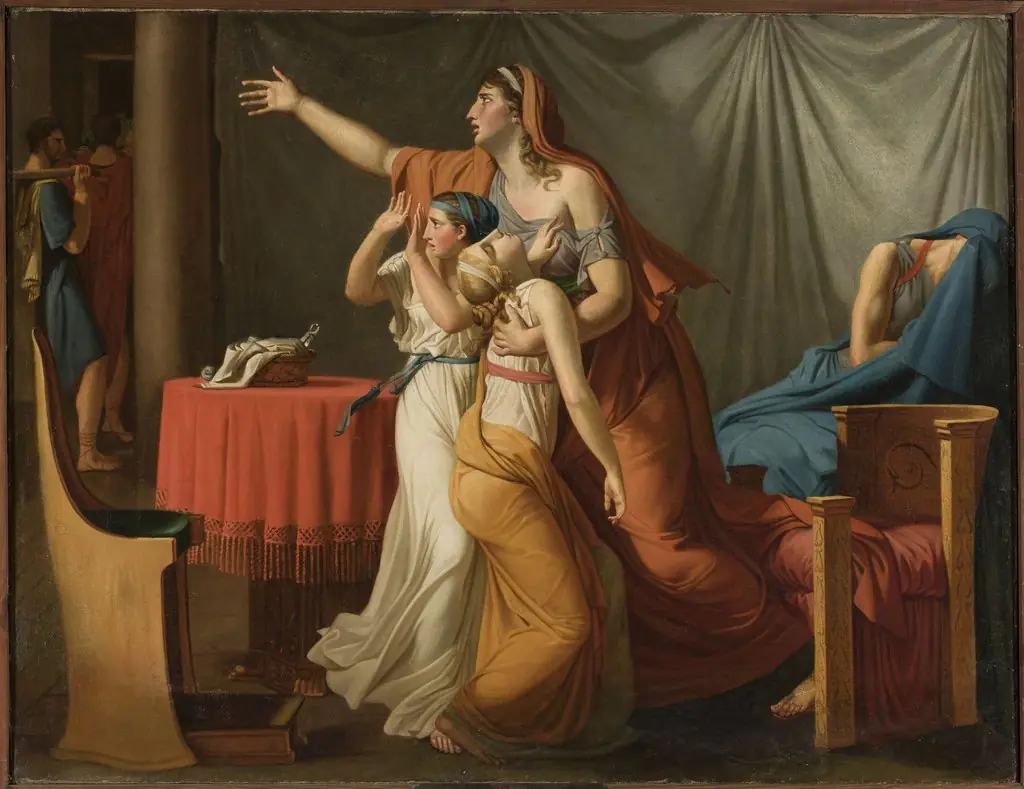 Lictors bring to Brutus the bodies of his sons
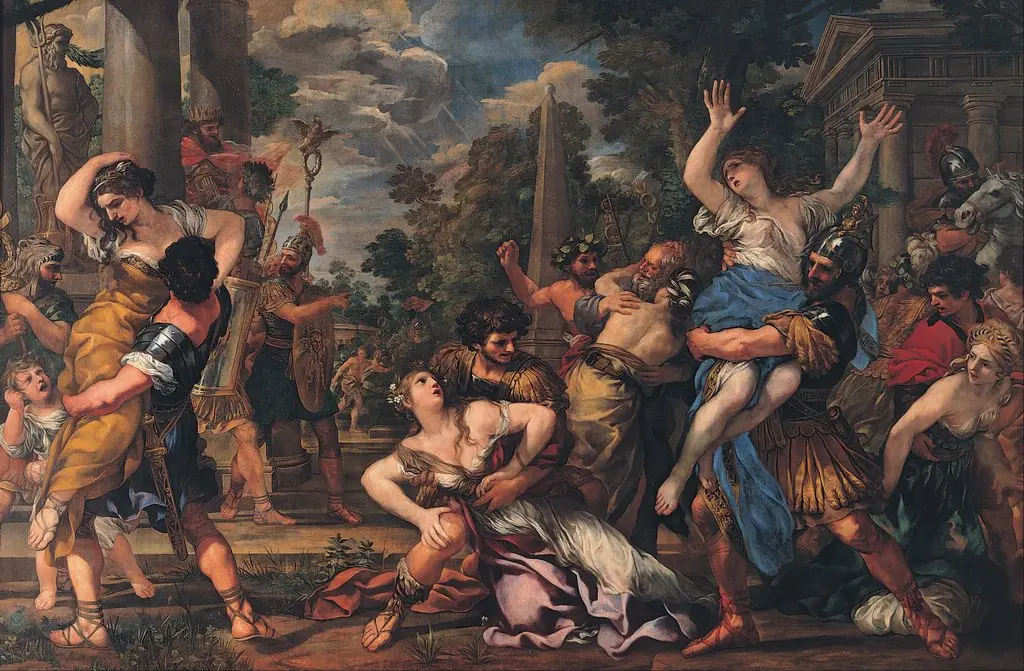 Rape of the Sabines
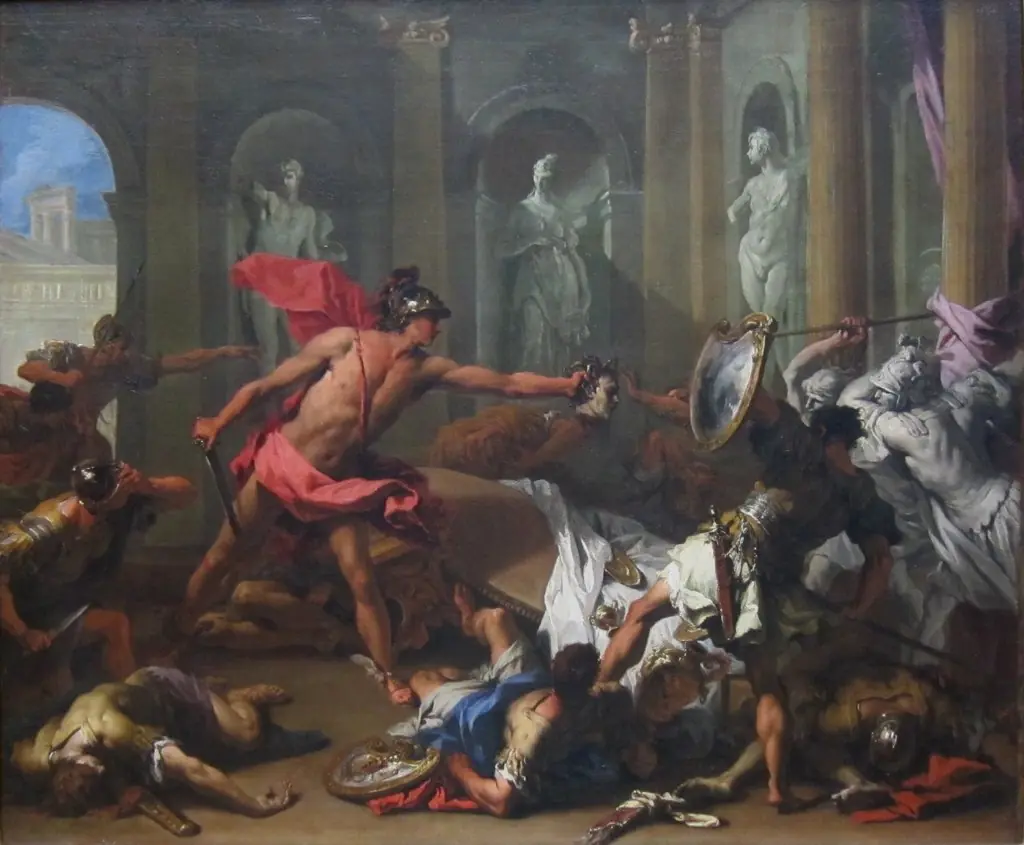 Perseo affronta Fineo con la testa di Medusa
 Coriolanus Taking Leave of his Family
 Scipio Africanus Freeing Massiva
 The Death of Virginia