Artwork
The Birth of Minerva
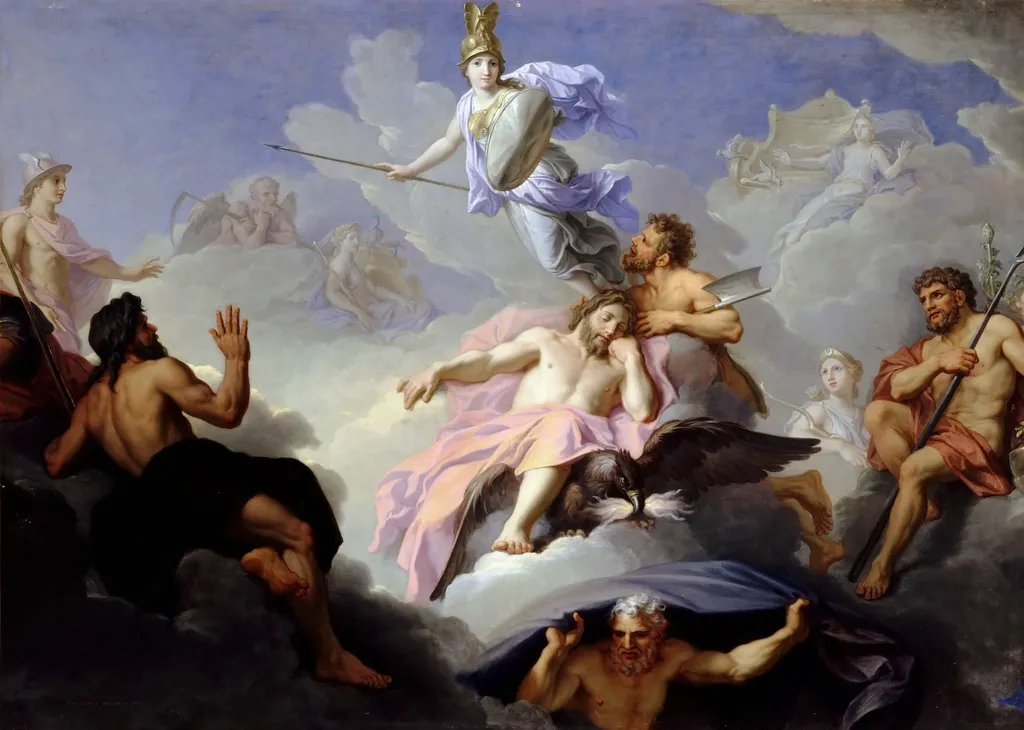
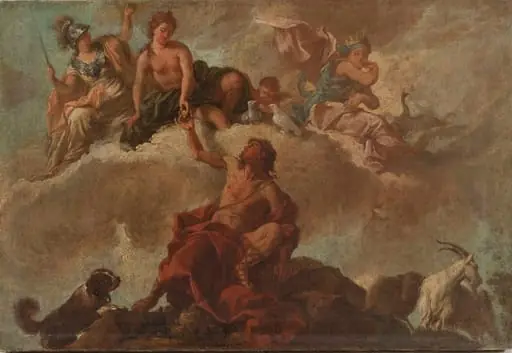
The Birth of Minerva is an oil painting by the French Classical Baroque artist René-Antoine Houasse. It dates from 1694 and is held in the collection of the Palace of Versailles.
About this work
Subject & Meaning
The Birth of Minerva (1688) by René‑Antoine Houasse portrays the mythic emergence of the goddess Minerva, fully armored, rising from a cloud.
The Birth of Minerva (1688) by René‑Antoine Houasse portrays the mythic emergence of the goddess Minerva, fully armored, rising from a cloud. The composition includes a shield, helmet, Jupiter, Mercury and other attributes such as a javelin and a sleeping figure, all rendered in oil on canvas (130 × 184 cm). These elements reference the birth story in which Minerva springs from Jupiter’s head, symbolising wisdom and strategic warfare.
Commissioned under Louis XIV, the painting served as an allegory of royal authority and was housed in the Palace of Versailles collection. Its iconography blends mythological narrative with political symbolism, emphasizing the monarch’s patronage of enlightened power.
Technique & Style
Created in 1688, The Birth of Minerva is an oil painting executed on a canvas support. The work measures 130 cm in height and 184 cm in width. As a mythological allegory by René-Antoine Houasse, the piece depicts the deity Minerva emerging fully armed from Jupiter's brain, surrounded by figures such as Mercury and Diana.
The composition utilizes the oil medium to render specific attributes including a shield, helmet, and javelin amidst clouds and celestial elements. The painting remains part of the collection at the Palace of Versailles, originally commissioned for the court of Louis XIV.
History & Provenance
René-Antoine Houasse executed The Birth of Minerva in 1688. The oil painting, measuring 130 cm by 184 cm, was originally owned by Louis XIV of France. It depicts the mythological birth of Minerva from the head of Jupiter, featuring figures such as Vulcan, Mercury, and Diana.
The work currently resides in the Museum of the History of France at the Palace of Versailles. It is cataloged under multiple inventory numbers, including MV 7120, INV 5376, and MR 1818, within the national collections of the châteaux of Versailles and Trianon.
The painting is housed in the Museum of the History of France within the Palace of Versailles. Its accession numbers recorded in the French cultural database are MV 7120, INV 5376 and MR 1818. The work entered the royal collection under Louis XIV and remains part of the institution’s permanent holdings. The piece is catalogued as a mythological oil on canvas created in 1688 by René-Antoine Houasse.
Legacy
The Birth of Minerva, executed in oil in 1688 by René-Antoine Houasse, entered the French royal collection and was installed at the Palace of Versailles, where it functioned as part of the decorative program celebrating mythological themes. Its presence in the royal archives and later inclusion in the Museum of the History of France illustrate the sustained appreciation of Houasse’s mythological narratives. Contemporary inventories record the work under the title “Minerve Naissante Toute Armée du Cerveau de Jupiter,” indicating its continued identification with Minerva’s birth motif.
The painting’s longevity in state holdings has contributed to scholarly discussions of 17th‑century French allegory and its influence on later decorative cycles.
Overview
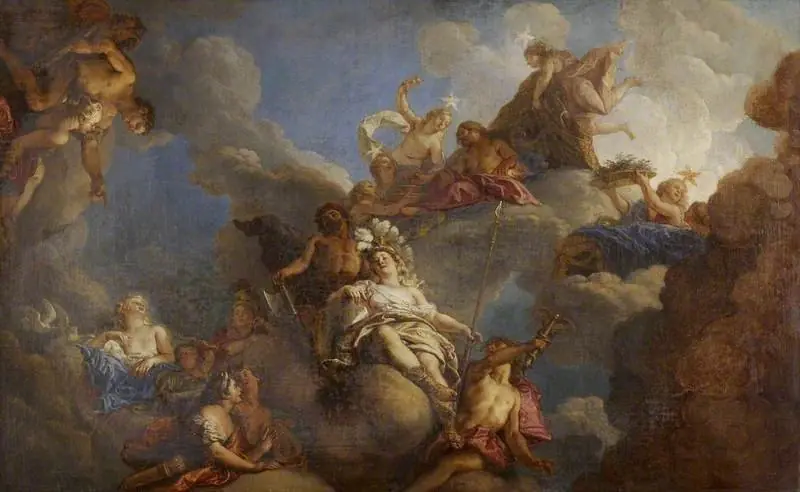
René-Antoine Houasse's The Birth of Minerva, an oil painting from 1694, portrays a significant scene from classical mythology. This work exemplifies the French Classical Baroque movement, showcasing the artist's approach to grand narrative painting. It forms part of a larger sequence of works by Houasse dedicated to the myths of Athena/Minerva, and it is housed within the collection of the Palace of Versailles.
Own this work as a print
Artist & collection
Artist
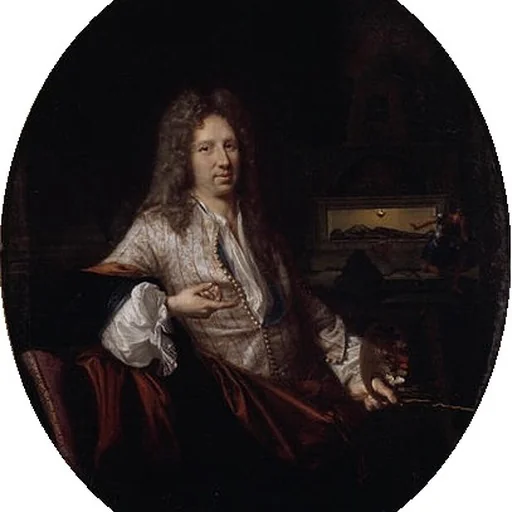
René-Antoine Houasse (c. 1645–1710) was a decorative French painter. He was a pupil of Charles Le Brun, under whose direction he worked at the Manufacture des Gobelins, and with whom he worked on the decoration of the…

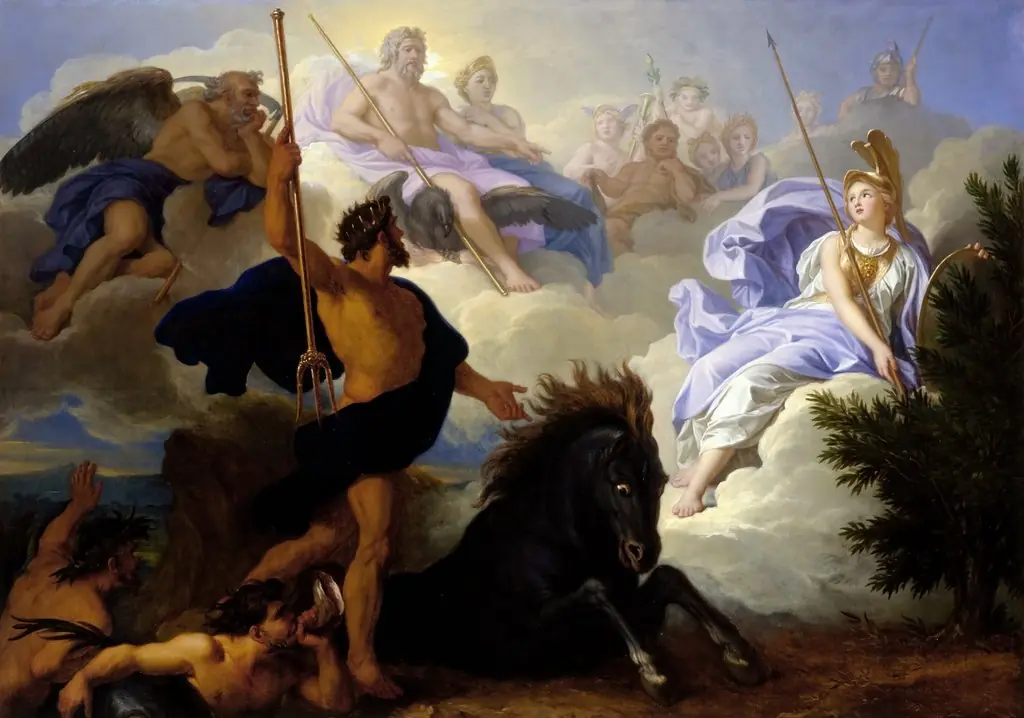 Dispute between Minerva and Neptune over the Naming of the City of Athens
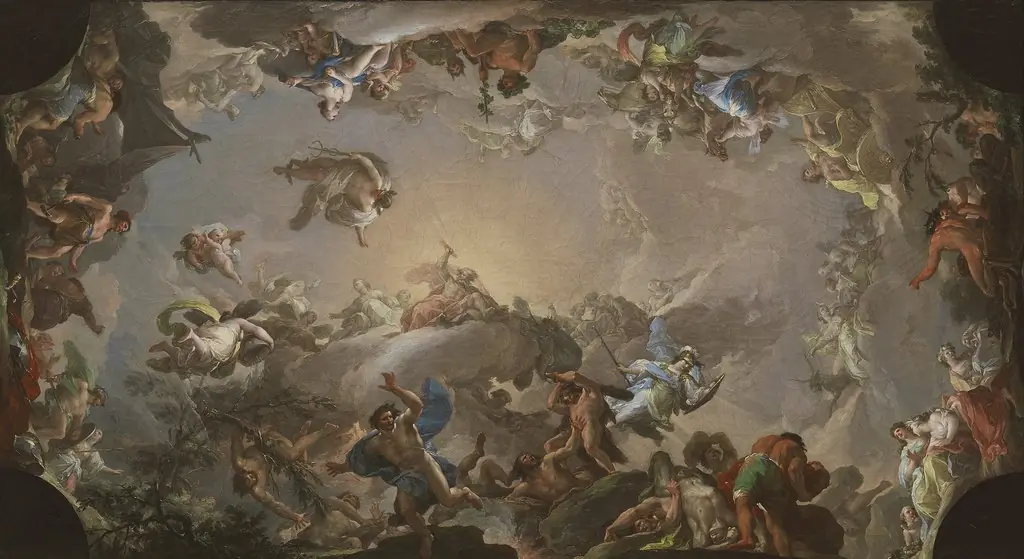 Olympus: The Fall of the Giants
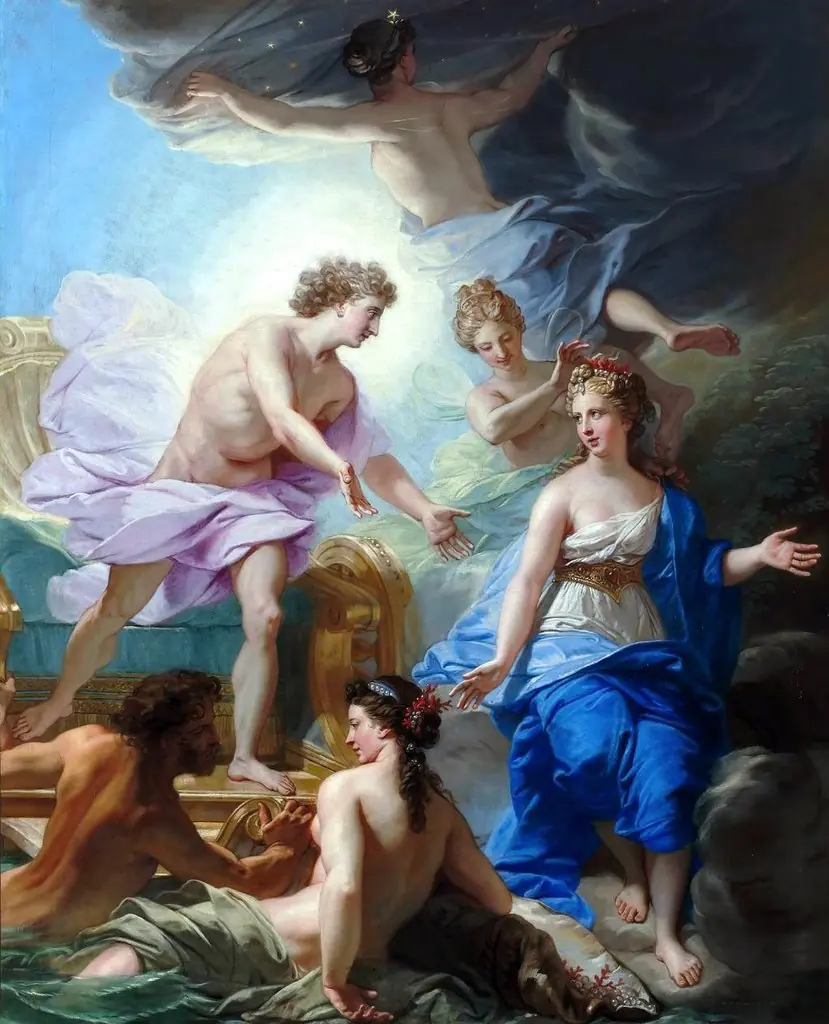 Apollo and Thetis
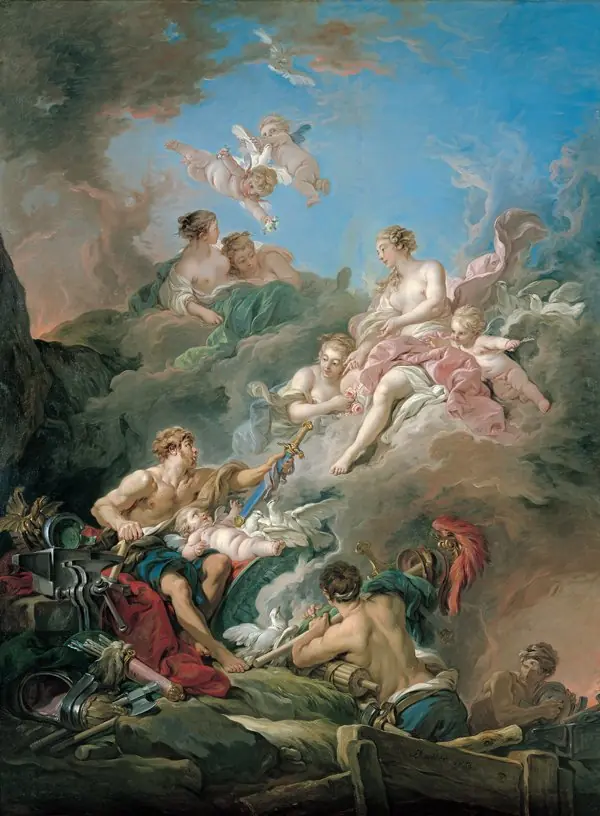 Venus at Vulcan's Forge
 Triumful credinței
 Aurora
 Sketch for a Ceiling Fresco
 Old Testament Figures in Paradise
 Old Testament Figures in Paradise
 Mars Being Disarmed by Venus
 Judecata lui Paris
- The Triumph of Minerva