Artwork
Joseph and Potiphar's Wife
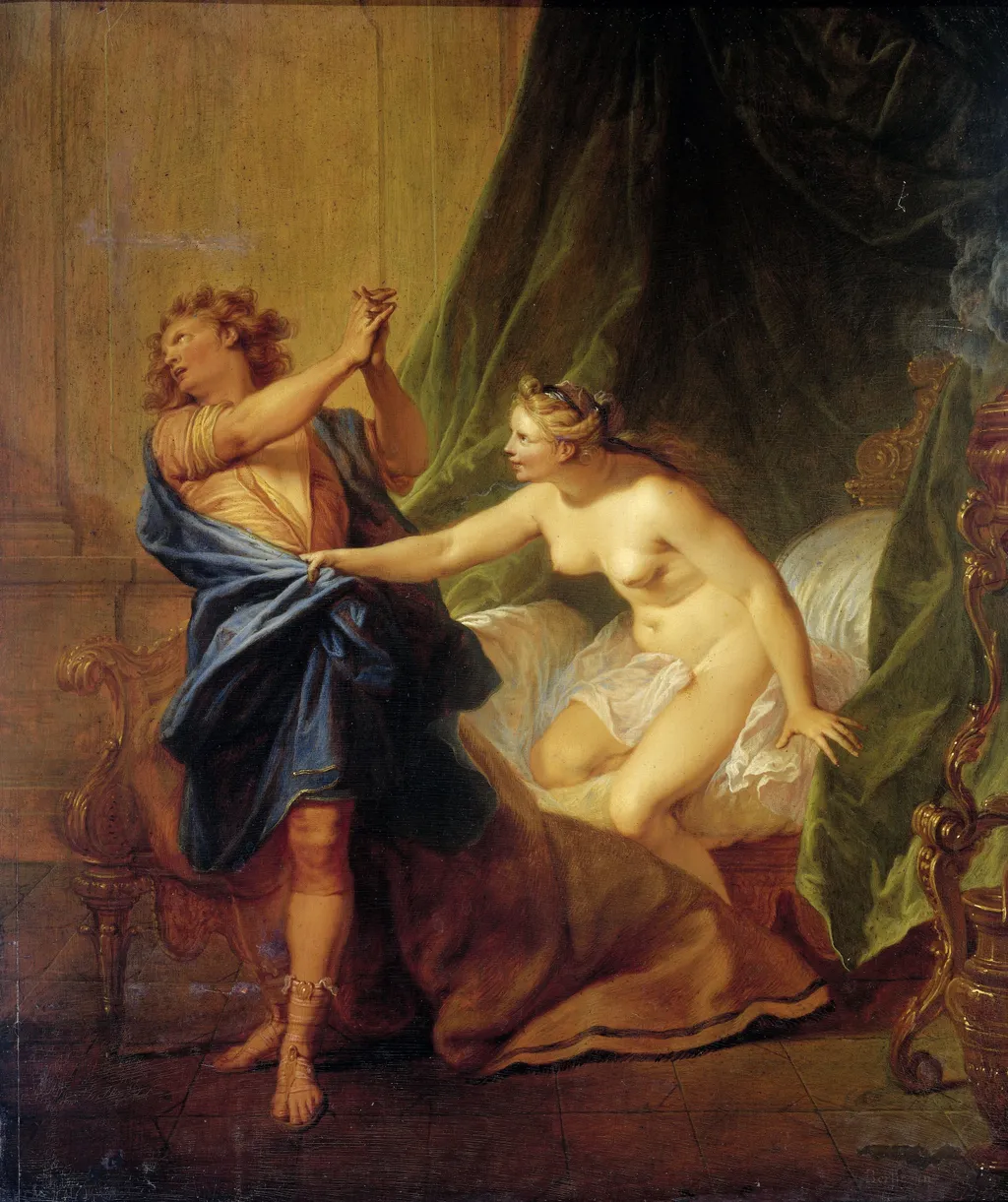
Joseph and Potiphar's Wife is an oil painting by the Rococo painting artist Nicolas Bertin. It dates from 1700 and is held in the collection of the Kabinet van Heteren Gevers.
About this work
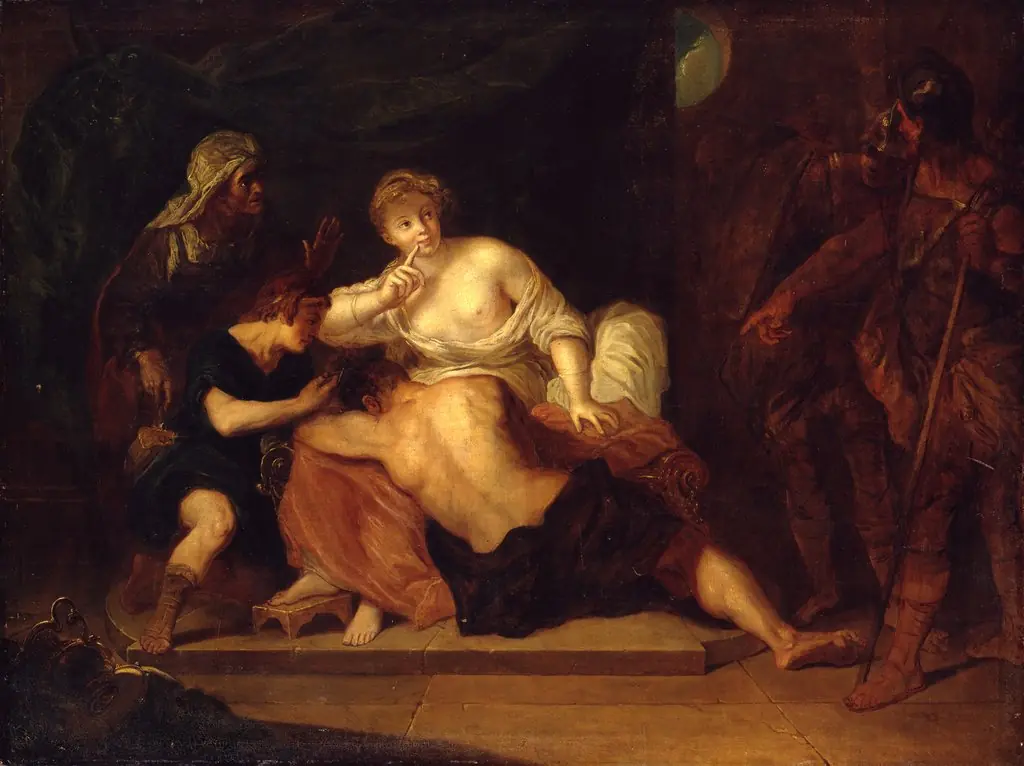
Potiphar's wife reaches from her canopy bed and seizes Joseph by his cloak, her body bared in demand. Nicolas Bertin painted this small panel, 38.5 by 32 centimetres, in 1699 as a pendant to his Susanna and the Elders, also in Amsterdam. He distilled the biblical scene into an intimate work made for a private collector's cabinet.
Subject & Meaning
The work depicts the biblical episode from Genesis in which Potiphar’s wife (named Zuleika in Islamic tradition) attempts to seduce Joseph while he recoils.
The work depicts the biblical episode from Genesis in which Potiphar’s wife (named Zuleika in Islamic tradition) attempts to seduce Joseph while he recoils. Bertin contrasts the clothed, standing Joseph, shown with waist-length titian hair and an overcoat, against the nude, smiling Zuleika, who lounges on a canopy bed. Her exposed breasts, navel, and headband signal her seductive intent, while the bedroom setting, pillows, and brasero (censer) with smoke evoke an intimate, morally fraught atmosphere. The scene symbolizes the triumph of chastity over temptation, a common moral lesson in religious art.
Technique & Style
The painting is executed in oil paint on an oak panel, a support common for small cabinet pictures. Measuring 38.5 by 32 cm, it exemplifies the Rococo movement through its elegant, intimate composition and refined handling. Bertin employs smooth brushwork to delineate contrasts in texture and form, notably between the clothed male figure of Joseph and the nude body of Potiphar's wife.
The formal qualities, graceful poses, detailed bedroom setting, and emphasis on narrative drama, are consistent with Rococo's taste for sensuous, theatrical subjects.
History & Provenance
Nicolas Bertin painted _Joseph and Potiphar's Wife_ in Paris in 1699, according to both the work's inscription and institutional records. The painting entered the collection of Adriaan Leonard van Heteren Gevers and later became part of the Kabinet van Heteren Gevers, a group of works eventually held by the Rijksmuseum. The work remains in the Rijksmuseum's collection.
No specific commission or further ownership chain beyond the Van Heteren Gevers collection is documented in the available sources.
Joseph and Potiphar's Wife is held in the collection of the Rijksmuseum in Amsterdam, as part of the Kabinet van Heteren Gevers. The painting was formerly owned by Adriaan Leonard van Heteren Gevers. No specific inventory/accession number or exhibition history is recorded in the provided sources.
Overview
Nicolas Bertin completed Joseph and Potiphar's Wife in 1699, an oil painting on panel measuring 38.5 by 32.4 centimeters. This intimate work, now part of the Rijksmuseum collection, illustrates a dramatic moment from the Book of Genesis. It was conceived as a cabinet picture, intended for private contemplation rather than large-scale public display, reflecting a shift in artistic patronage at the turn of the eighteenth century.
Context
Joseph and Potiphar's Wife forms a pair with Bertin's Susanna and the Elders, also from 1699 and housed at the Rijksmuseum. Both works exemplify a late 17th-century French trend toward small-scale religious narratives that explored morally ambiguous or potentially erotic biblical themes. These "cabinet pictures" catered to a growing demand among private collectors for intimate, collectible artworks that could be enjoyed in domestic settings.
Own this work as a print
Artist & collection