Artwork
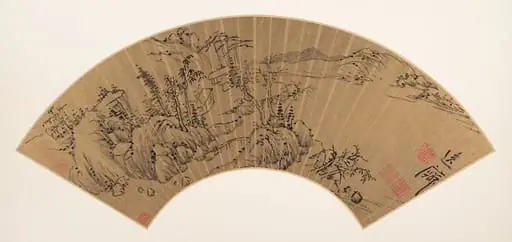
清 任薰 高士臨風 扇面|Scholar in the Wind
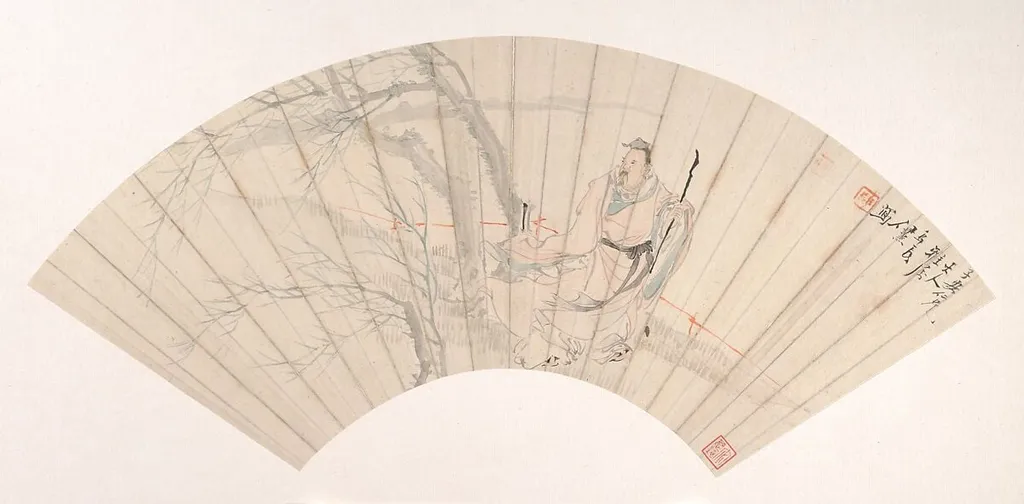
清 任薰 高士臨風 扇面|Scholar in the Wind is an ink painting by the Impressionist artist Ren Xun. It dates from 1880 and is held in the collection of the Metropolitan Museum of Art.
- Accession no.
- 1986.267.45
About this work
Subject & Meaning
The "高士" (gaoshi) is a classical Chinese cultural type representing a virtuous, reclusive scholar who withdraws from worldly affairs to commune with nature.
The painting depicts a man, identified by the title as a "Scholar in the Wind" (高士臨風). The "高士" (gaoshi) is a classical Chinese cultural type representing a virtuous, reclusive scholar who withdraws from worldly affairs to commune with nature. The "臨風" (facing the wind) element evokes the literary tradition of scholars standing in the breeze to express lofty ideals, moral integrity, and a free-spirited detachment from society.
Rendered on an alum-paper fan leaf, the work belongs to the long-standing Chinese literati tradition of fan paintings, in which scholars and artists depicted reclusive figures to convey personal philosophy and aesthetic refinement. The wind-touched scholar serves as an emblem of moral character and cultivated solitude, themes central to literati self-expression.
The subject is catalogued simply as a "man," consistent with the spare, single-figure composition typical of late-Qing scholar imagery.
Technique & Style
Executed in 1880, this work by Ren Xun utilizes ink and color applied to alum paper. The piece originated as a folding fan but has been mounted as an album leaf, a common method for preserving such ephemeral supports. The composition depicts a solitary male figure within a landscape setting, rendered with the delicate handling characteristic of fan paintings. The physical object measures 16.7 cm in height and 23.8 cm in width.
History & Provenance
Scholar in the Wind is a folding fan mounted as an album leaf, painted in ink and color on alum paper by Ren Xun in 1880. The work measures 16.7 cm in height and 23.8 cm in width and was produced in China. It portrays a man.
The painting is held by the Metropolitan Museum of Art, where it is catalogued as a painting within the museum’s holdings. No specific accession number, acquisition date, or exhibition history is documented in the available sources, and no prior provenance or loan records are attested in the sourced material.
Overview
Ren Xun’s fan painting, dated to around 1880 in the late Qing period, presents a solitary scholar poised on a craggy outcrop. Executed on alum‑paper mounted as a folding‑fan leaf, the work measures only a few centimeters across, inviting close, handheld viewing rather than wall display.
Context
Fan paintings served both functional and aesthetic purposes, often exchanged as gifts among scholars. Ren Xun’s work aligns with this tradition, embodying the era’s emphasis on brush mastery and the integration of poetry, painting, and calligraphy within a compact, intimate object.
Artist & collection


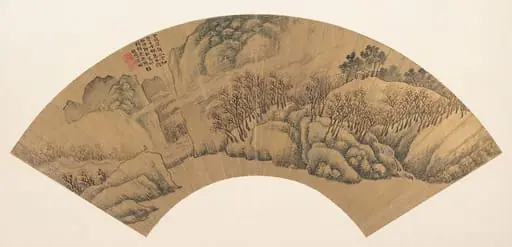 明 吳彬 翠壁丹楓 扇|Azure Cliff with Red Maples
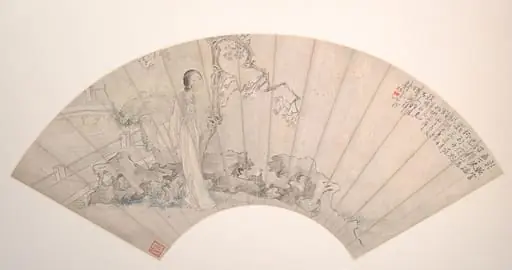 清 錢慧安 仕女圖 摺扇|Woman in a garden
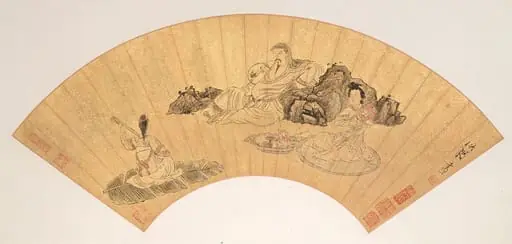 明 陳洪綬 山水花鳥人物圖 扇冊|Landscapes and Flowers
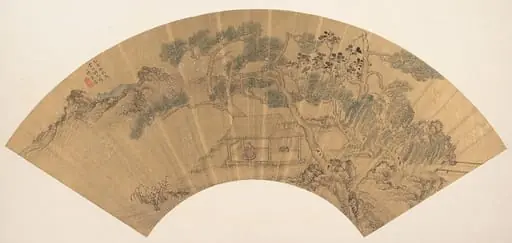 明 陳季淳 山水人物圖 扇頁|Landscape with figure
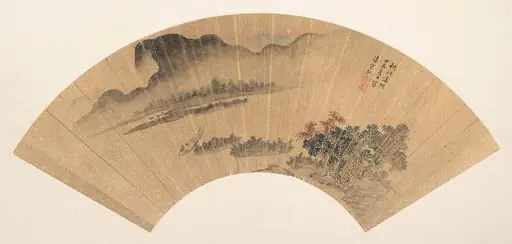 明/清 潘雲馭 秋江落照 扇|Setting Sun on the Autumn River
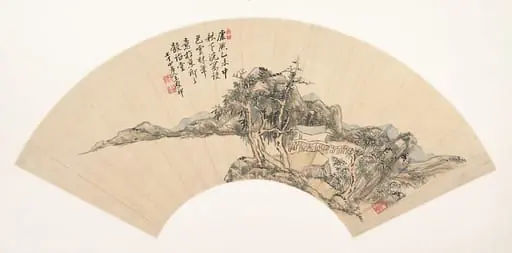 清 倣王原祁 倪雲林筆意山水 扇面|Landscape in the Style of Ni Zan
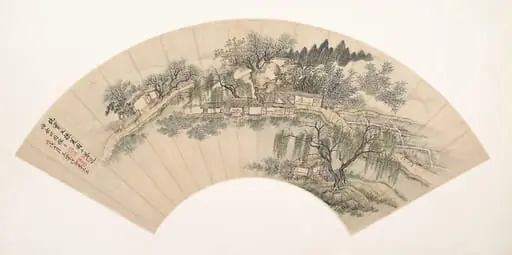 清 佚名 倣王翬 倣仇實父採菱圖 扇|Gathering Water Chestnuts
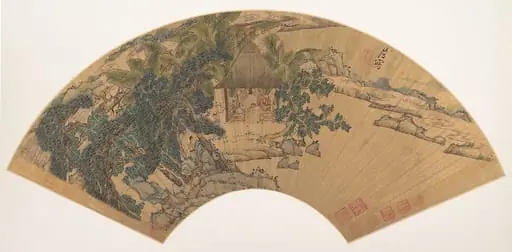 明 陳洪綬 山水圖 扇|Landscape
 明 鄒之麟 山水圖 扇面|Landscape