Artwork
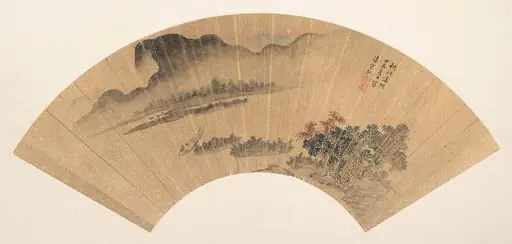
清 孫榮 觀鵝圖 扇頁|Two Scholars and Boy with Goose
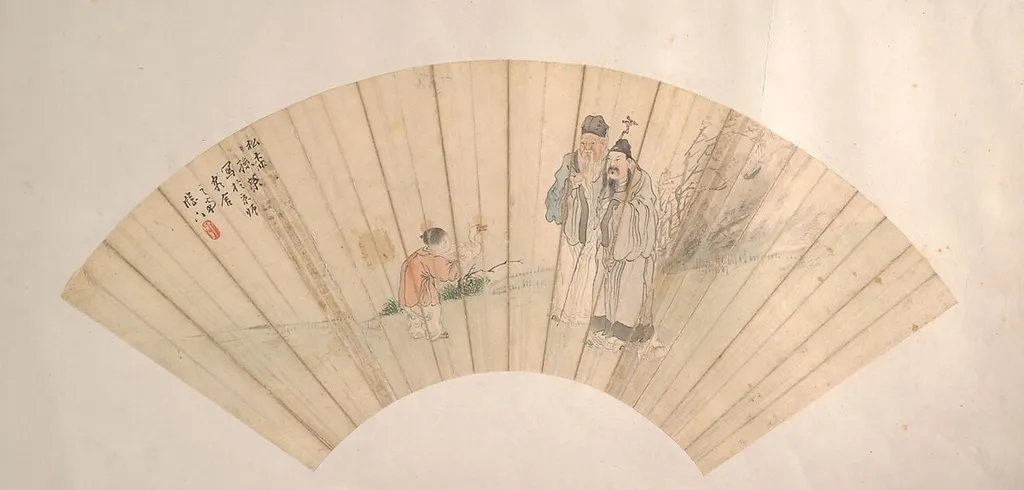
清 孫榮 觀鵝圖 扇頁|Two Scholars and Boy with Goose is an ink painting by the Chinese Orthodox School artist Sun Rong. It dates from 1849 and is held in the collection of the Metropolitan Museum of Art.
About this work
Subject & Meaning
The work titled 清 孫榮 觀鵝圖 扇頁, also known as Two Scholars and Boy with Goose, portrays a scene that includes two scholars and a boy accompanied by a goose.
The work titled 清 孫榮 觀鵝圖 扇頁, also known as Two Scholars and Boy with Goose, portrays a scene that includes two scholars and a boy accompanied by a goose. According to the catalog entry, the depicted elements are a boy, a goose, and a man, and the piece is classified as a landscape genre painting created in 1849 in China. The subject thus combines human figures with a waterfowl within a domestic or scholarly setting, reflecting a moment of observation or interaction.
The painting’s iconography is limited to these figures, with no further symbolic interpretation provided in the available documentation.
Technique & Style
Executed in 1849 by Sun Rong, the work is a fan-mounted album leaf painted in ink and color on silk. The silk support, originally a folding fan, has been remounted in album format, a standard preservation practice for Chinese fans in museum collections. The medium combines monochrome ink with applied color, allowing the artist to render the figures of two scholars, a boy, and a goose with tonal washes and pigment accents.
The fan-shaped format imposes a constrained composition, directing the viewer's eye across a compact pictorial field while preserving the intimacy associated with the fan tradition.
History & Provenance
Two Scholars and Boy with Goose was created by Sun Rong in 1849, a date confirmed across the cataloguing record and the Wikidata entry for the work. The painting, executed in ink and color on silk as a fan mounted as an album leaf, was produced in China. It is now held in the collection of the Metropolitan Museum of Art, where it remains located.
The available records do not document an earlier ownership chain, a commissioning party, or any intermediate provenance between its 1849 creation and its present institutional home.
The fan leaf painting titled Two Scholars and Boy with Goose, created by Sun Rong in 1849, is currently held in the collection of the Metropolitan Museum of Art. The work, classified as a painting depicting a landscape with figures, is part of the museum's holdings of Chinese art. While the specific accession or inventory number is not detailed in the provided records, the piece is confirmed to be located at the Metropolitan Museum of Art in New York.
No specific exhibition history or loan records are documented in the available sources, though the work's presence in this major institution ensures its accessibility for scholarly study and potential display within the museum's permanent or special exhibitions.
Overview
Created in 1849 by the Qing dynasty artist Sun Rong, Two Scholars and Boy with Goose is a fan leaf mounted as an album leaf, executed in ink and color on silk. The composition depicts a tranquil landscape scene featuring two scholars in long robes seated beneath a tree, observing a young attendant holding a goose near a pond. Sun Rong employs fine, dry brushstrokes to render the goose's plumage, achieving a delicate texture that emphasizes the bird's calm demeanor.
The work reflects the literati tradition of the mid-19th century, where scenes of scholarly leisure and interaction with nature served as vehicles for expressing refinement and philosophical contemplation. While the specific patron remains unrecorded, the intimate scale and refined execution suggest the piece was likely intended as a personal gift or a demonstration of the artist's skill in capturing both human interaction and natural detail. This work exemplifies Sun Rong's contribution to the continuation of traditional Chinese painting styles during the late Qing period, focusing on the harmonious relationship between figures and their environment.
Context
The inclusion of geese in Chinese painting holds a long tradition, often symbolizing various virtues such as loyalty, marital fidelity, and a desire for a peaceful, secluded life. Sun Rong's depiction aligns with this established artistic vocabulary, placing his work within a broader cultural context where such natural elements frequently carry deeper layers of meaning beyond mere representation.
Artist & collection

 清 任頤 童子水牛 扇面|Herdboy and Buffalo
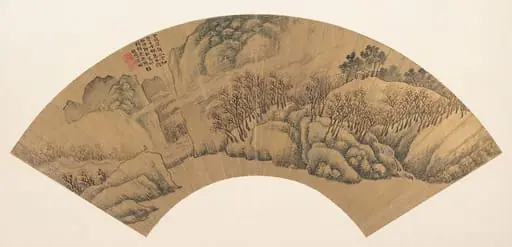 明 吳彬 翠壁丹楓 扇|Azure Cliff with Red Maples
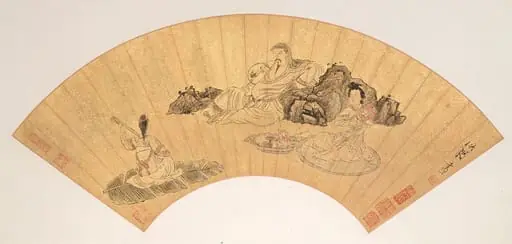 明 陳洪綬 山水花鳥人物圖 扇冊|Landscapes and Flowers
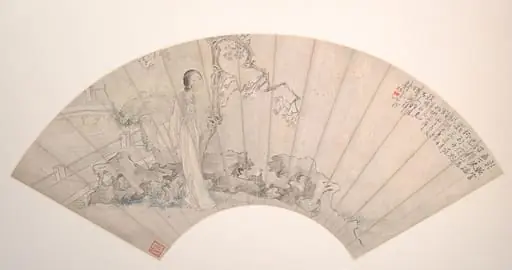 清 錢慧安 仕女圖 摺扇|Woman in a garden
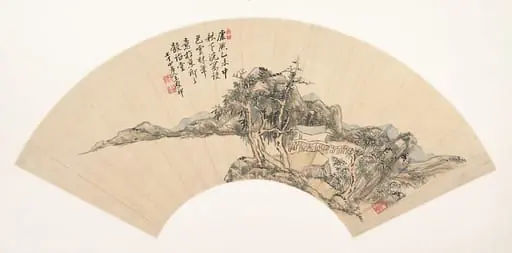 清 倣王原祁 倪雲林筆意山水 扇面|Landscape in the Style of Ni Zan
 清 佚名 倣王翬 倣仇實父採菱圖 扇|Gathering Water Chestnuts
 清 佚名 倣王鑑 倣惠崇山水圖 扇|Landscape in the Style of Huichong
 明 陳季淳 山水人物圖 扇頁|Landscape with figure
 清 惲壽平 花卉圖 摺扇|Carnations and amaranthus
 明/清 潘雲馭 秋江落照 扇|Setting Sun on the Autumn River