Artwork
清 佚名 倣王翬 倣仇實父採菱圖 扇|Gathering Water Chestnuts
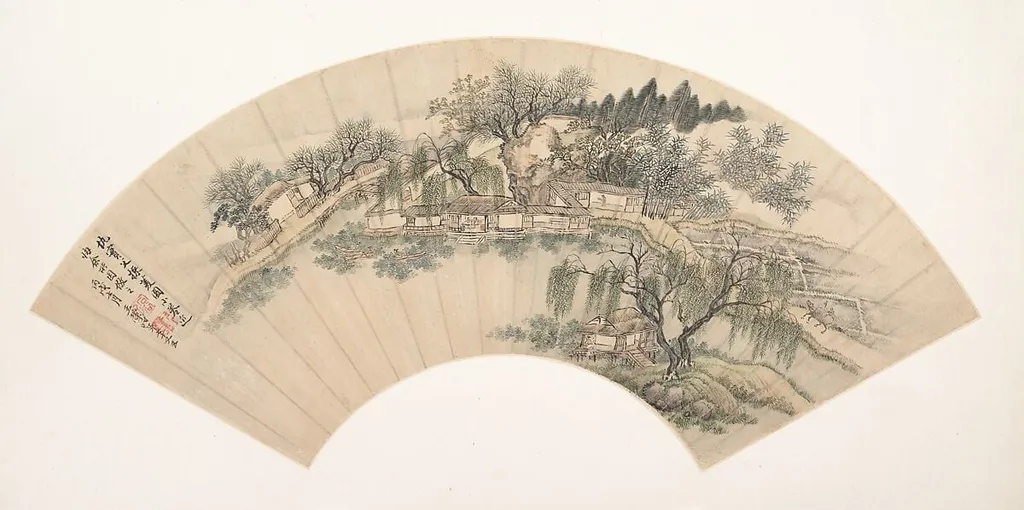
清 佚名 倣王翬 倣仇實父採菱圖 扇|Gathering Water Chestnuts is an ink painting by the Baroque artist Wang Hui. It is held in the collection of the Metropolitan Museum of Art.
About this work
Technique & Style
8 centimeters, a proportion typical of fan-leaf mounting that accommodates a sweeping landscape vista.
Executed in ink and color on paper, the work takes the form of a folding fan mounted as an album leaf, a format that shapes its elongated horizontal composition. The painting measures 17.1 by 50.8 centimeters, a proportion typical of fan-leaf mounting that accommodates a sweeping landscape vista. The handling is consistent with the layered, descriptive brushwork associated with the Wang Hui and Qiu Ying lineages the artists cite as models, using ink and color to render the boats and houses that animate the scene. The piece is held in the Metropolitan Museum of Art's collection.
History & Provenance
The work was produced in 1805 in China as a folding fan mounted as an album leaf, executed in ink and color on paper. It is attributed to the painter Wang Hui and depicts a boat and a house within a landscape genre. The piece entered the collection of the Metropolitan Museum of Art, where it remains on display.
Its creation is documented in contemporary records dating the work to the early nineteenth century, and its dimensions measure 17.1 cm by 50.8 cm. The painting’s provenance is limited to its acquisition by the museum, with no earlier ownership records currently identified.
The work is held in the collection of the Metropolitan Museum of Art, New York. Its Wikidata entry records the object’s dimensions as 17.1 cm in height and 50.8 cm in width and confirms its place within the museum’s holdings. The painting is catalogued under the accession category of Chinese paintings and is described as a folding fan mounted as an album leaf.
Context
An anonymous Qing-period folding fan, dated 1805, exemplifies the practice of copying the late-Ming master Wang Hui. The work, recorded in the Metropolitan Museum of Art collection, portrays a riverine landscape with a boat and a house, a motif noted in both the internal catalogue entry and the Wikidata record. Scholarship on the piece emphasizes its role within the tradition of倣 (imitation) painting, illustrating how 19th-century artists engaged with earlier models to demonstrate technical skill and scholarly familiarity with canonical styles.
Its inclusion in a major museum collection underscores continued interest in Qing landscape art and the enduring influence of Wang Hui's compositional strategies.
Overview
This anonymous Qing Dynasty painting, "Gathering Water Chestnuts," is rendered with ink and color on paper, originally forming part of a folding fan before being mounted as an album leaf. The work demonstrates an artist's study of earlier styles, specifically those of Wang Hui and Qiu Shifu. It presents a tranquil landscape scene, characteristic of traditional Chinese painting, focusing on daily life amidst nature.
Subject & Meaning
The composition portrays a serene riverine landscape where individuals in small boats are engaged in gathering water chestnuts. Along the water's edge, houses are nestled among slender willow trees, creating a harmonious blend of human activity and natural scenery. This depiction of quiet daily life within a picturesque setting reflects a common theme in Chinese art, celebrating the peaceful coexistence of humanity and the environment.
Artist & collection


 清 王翬 倣巨然燕文貴山水圖 卷|Landscape in the Style of Juran and Yan Wengui
 清 王翬 太行山色圖 卷|The Colors of Mount Taihang
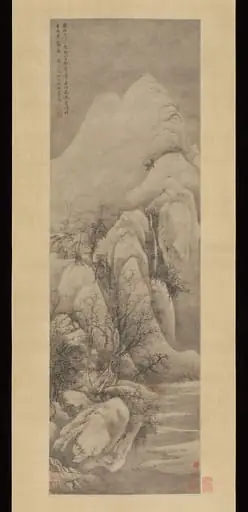 清 王翬 倣李成雪霽圖 軸|Snow Clearing: Landscape after Li Cheng
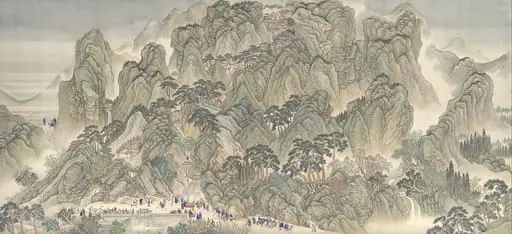 清 王翬等 康熙南巡圖 (卷三: 濟南至泰山) 卷|The Kangxi Emperor's Southern Inspection Tour, Scroll Three: Ji'nan to Mount Tai
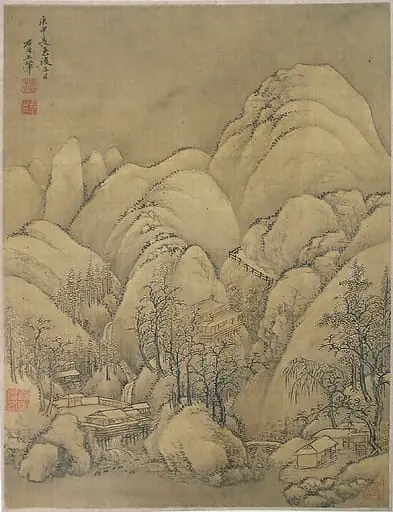 清 佚名 倣王翬 倣李成山水圖 軸|Landscape after Li Cheng
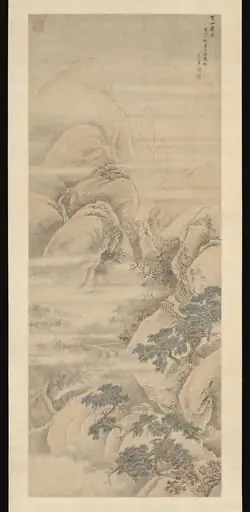 清 (傳)王翬 雪景山水圖 軸|Snowscape
 清 佚名 倣王翬 倣李公麟草堂圖 軸|Landscape in the Style of Li Gonglin
 王翬、楊晉、顧昉、王雲、徐玫 仿古山水圖 冊 紙本|Landscapes after old masters
 明 吳彬 翠壁丹楓 扇|Azure Cliff with Red Maples
 清 佚名 倣王鑑 倣惠崇山水圖 扇|Landscape in the Style of Huichong
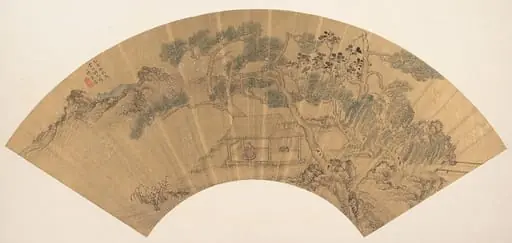 明 陳季淳 山水人物圖 扇頁|Landscape with figure
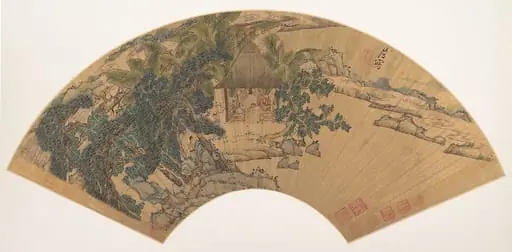 明 陳洪綬 山水圖 扇|Landscape
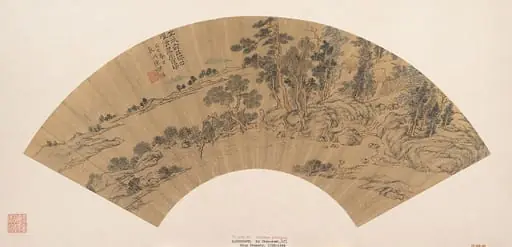 明 陳祼 茂樹清泉圖 扇|Recluse washing his feet in a stream
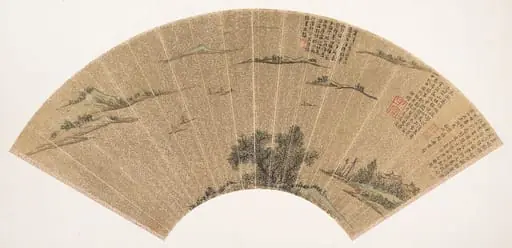 明 文徵明 太湖群嶼圖 扇面|View of Lake Tai
 清 王時敏 倣黃子久筆意山水 扇頁|Landscape after Huang Gongwang
 清 倣王原祁 倪雲林筆意山水 扇面|Landscape in the Style of Ni Zan