Artwork
Iconografica Rappresentatione della Inclita Città di Venezia (Iconongraphic Representation of the Illustrious City of Venice)
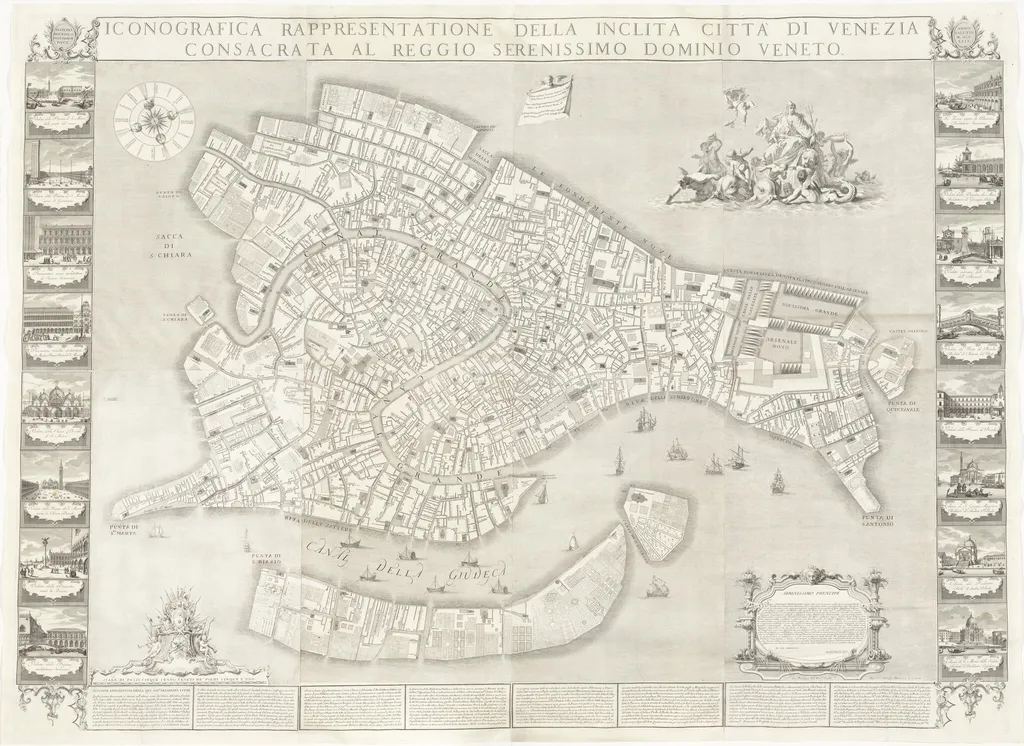
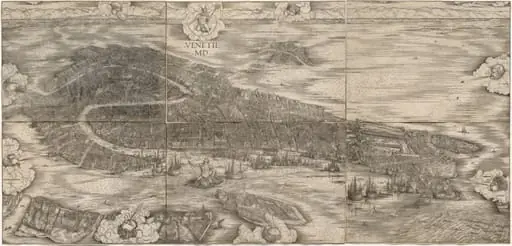
Iconografica Rappresentatione della Inclita Città di Venezia (Iconongraphic Representation of the Illustrious City of Venice) is an ink print by the Baroque artist Sebastiano Ricci. It dates from 1729 and is held in the collection of the National Gallery of Art.
About this work
Overview
Executed in etching and engraving, it presents the city as a dense network of canals, streets, and architecture, arranged with topographical precision.
Created in 1729 by Sebastiano Ricci, this large-scale print comprises twenty joined sheets of laid paper, forming a detailed panoramic view of Venice. Executed in etching and engraving, it presents the city as a dense network of canals, streets, and architecture, arranged with topographical precision. The work functions as both a cartographic record and a visual tribute, emphasizing Venice’s urban complexity through intricate line work and careful composition.
Subject & Meaning
The print depicts Venice not merely as a geographic entity but as a symbol of civic pride. Surrounding the central map are vignettes of prominent landmarks, churches, bridges, and palaces, each labeled in Italian. These marginal illustrations serve to highlight the city’s cultural and architectural achievements, reinforcing its status as a leading maritime republic. The inclusion of ships and figures suggests a living, active urban environment.
Technique & Style
Ricci employed fine etched lines and engraved details to render the city’s textures and spatial depth. Shading and cross-hatching define building facades and waterways, creating a sense of volume without perspective distortion. The precision of the lines reflects the technical demands of mapmaking, while the decorative marginalia reveal an artistic sensibility that blends documentation with embellishment, typical of early 18th-century Venetian print culture.
History & Provenance
Commissioned during Venice’s late period of cultural prominence, the print likely served diplomatic or commercial purposes, possibly as a gift for foreign dignitaries or a souvenir for wealthy travelers. Its multi-sheet format suggests it was intended for display, perhaps mounted on a wall. No definitive record of its original owner exists, but its survival in multiple institutional collections indicates enduring interest in its representation of the city.
Context
Produced at a time when Venice’s political influence was waning, the print reflects a desire to preserve and celebrate its urban identity. Similar panoramic views were popular among European audiences fascinated by the city’s unique topography. The work aligns with a broader trend in cartography that merged scientific accuracy with artistic presentation, particularly in Italian cityscapes of the Baroque era.
Legacy
The print remains a key visual source for understanding Venice’s 18th-century urban fabric. Its detailed depiction of canals, bridges, and buildings has aided historians in reconstructing lost structures and tracing urban development. Though not widely known outside scholarly circles, it continues to inform exhibitions and studies on Venetian topography, serving as a reference for both art and architectural historians.
Own this work as a print
Artist & collection
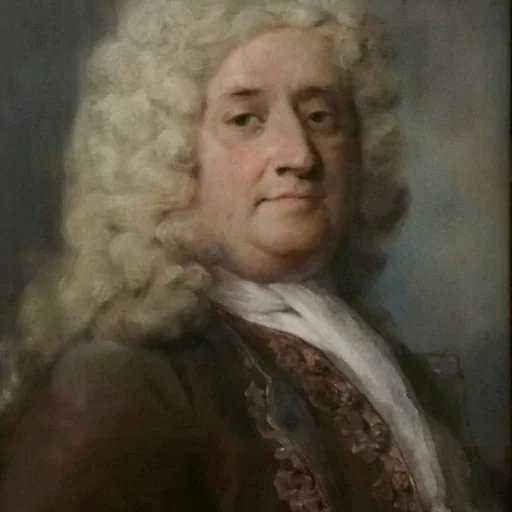
Artist
Sebastiano Ricci (1 August 1659 – 15 May 1734) was an Italian Baroque painter of the late Baroque period in Venetian painting.






![Santa Maria Maggiore from "Prospectus Locurum Urbis Romae Insign[ium]", by Lievin Cruyl](https://artifactworldgallery.com/img/lievin-cruyl--santa-maria-maggiore-from-prospectus-locurum-urbis-romae-ins--552492caf03c6a55-w320.webp)