Artwork
The Exaltation of the True Cross
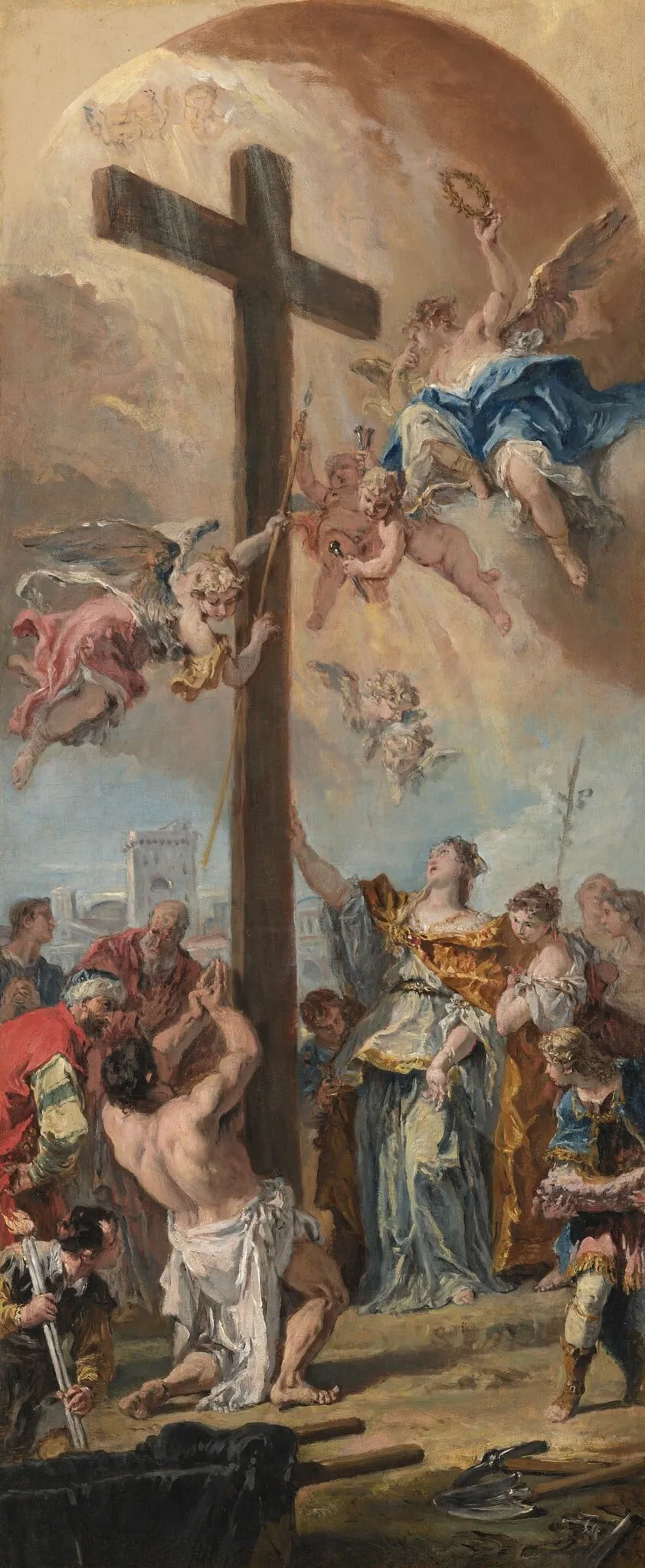
The Exaltation of the True Cross is an oil painting by the Baroque artist Sebastiano Ricci. It dates from 1733 and is held in the collection of the National Gallery of Art.
About this work
History & Provenance
While the work was part of the Stroganov holdings amassed between 1880 and 1890, it does not appear in known sales catalogues for that collection.
Sebastiano Ricci created the oil-on-canvas painting The Exaltation of the True Cross in 1733. The work entered the ownership of Count Grigory Stroganov in Rome, where it was held until at least 1929, though it does not appear in specific sale catalogues from his collection amassed circa 1880–1890. By 1927, the painting was in the possession of Count Alessandro Contini Bonacossi in Rome.
It was subsequently purchased in 1931 by the Samuel H. Kress Foundation in New York, a transaction documented by Alfred M. Frankfurter in 1932. Finally, the Kress Foundation transferred the artwork as a gift to the National Gallery of Art in Washington, D.C., in 1939, where it remains part of the Kress Collection.
The painting is currently held in the collection of the National Gallery of Art in Washington, D.C., specifically within the Samuel H. Kress Collection. Its provenance traces from Count Grigory Stroganov in Rome to Count Alessandro Contini Bonacossi by 1927. The Samuel H. Kress Foundation purchased the work in 1931, subsequently gifting it to the National Gallery of Art in 1939.
Documentation for these transactions includes a 1932 publication regarding the Kress collection and photographic records sent to the Frick Art Reference Library in 1969. While the work was part of the Stroganov holdings amassed between 1880 and 1890, it does not appear in known sales catalogues for that collection. The provided sources do not list specific public exhibition history beyond its inclusion in collection catalogs.
Legacy
The Exaltation of the True Cross entered the National Gallery of Art in 1939 through the Samuel H. Kress Collection, cementing its status as a notable work within a major American museum. Early scholarly attention is evident in Alfred M. Frankfurter’s 1932 description of the Kress holdings, which highlighted the painting and its pendant as key examples of 18th‑century Venetian art. The work’s provenance, including its documented presence in the Kress collection and subsequent gift to the NGA, is recorded in the gallery’s archives and the Kress Collection Digital Archive.
Its depiction of Helena Augusta and its 1733 date are noted in the National Gallery’s catalog, underscoring its enduring relevance in studies of Sebastiano Ricci.
Overview
Sebastiano Ricci's 'The Exaltation of the True Cross,' executed in 1733, is an oil on canvas depicting the veneration of the relic by a dynamic crowd. The composition centers on a massive wooden cross, elevated high above the figures, which serves as the primary focal point and source of illumination. Above, a host of angels floats in a luminous, golden atmosphere, contrasting with the earthly scene below.
In the foreground, a woman in purple robes kneels in prayer, her posture emphasizing devotion. The work exemplifies Ricci's mature Venetian style, characterized by a vibrant palette, fluid brushwork, and a sophisticated handling of light that creates a sense of atmospheric depth rather than flatness. Painted during the artist's later career, this piece reflects the transition from the dramatic intensity of the High Baroque to the lighter, more decorative sensibilities of the Rococo.
The painting captures a moment of religious triumph, utilizing diagonal lines and swirling movement to guide the viewer's eye upward from the kneeling faithful to the celestial realm, reinforcing the spiritual significance of the True Cross.
Subject & Meaning
The central narrative unfolds with a large crowd actively elevating a monumental wooden cross. Below this focal point, a woman in purple kneels with clasped hands, representing Helena Augusta. She is traditionally credited with discovering the True Cross, the relic believed to be the cross on which Jesus was crucified, an event celebrated as the Exaltation of the Cross.
Technique & Style
Ricci's use of oil on canvas imbues the scene with dramatic illumination. The colossal wooden cross appears to radiate an intense, fiery glow, drawing the viewer's eye. Above, angels are depicted with a golden luminescence, contributing to the ethereal atmosphere. The artist's skillful rendering of light creates a sense of depth and vibrancy, avoiding flatness.
Artist & collection

Artist
Sebastiano Ricci (1 August 1659 – 15 May 1734) was an Italian Baroque painter of the late Baroque period in Venetian painting.

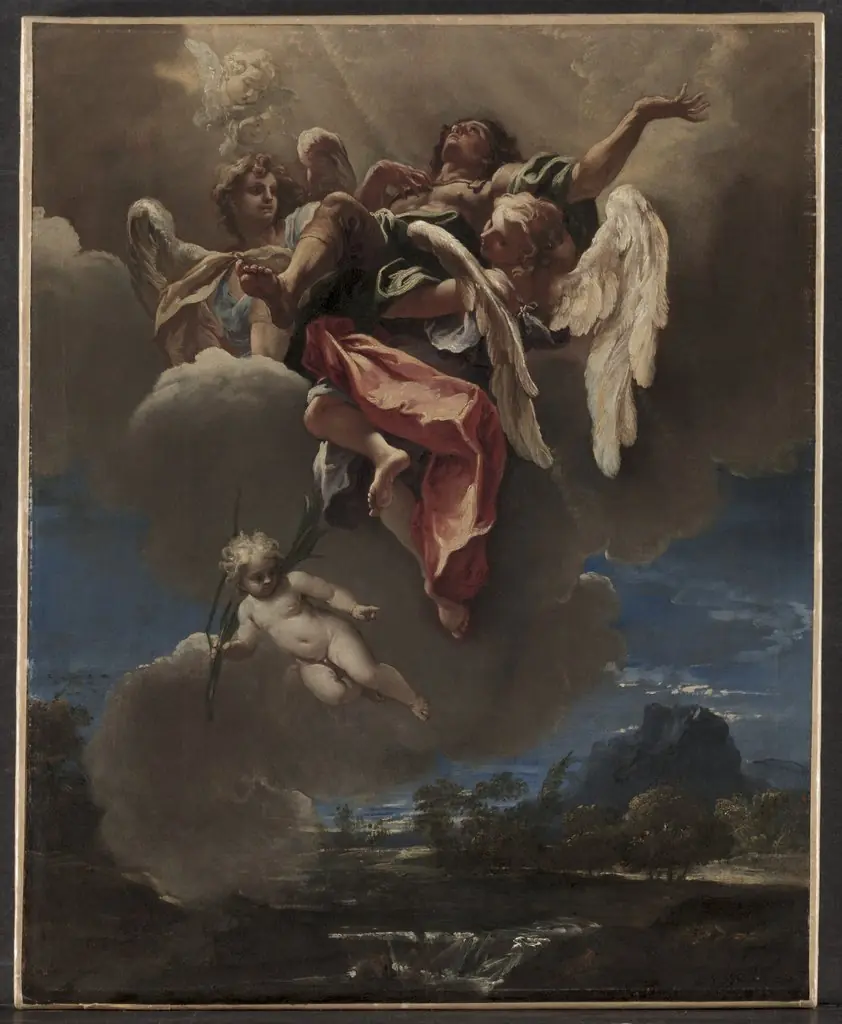
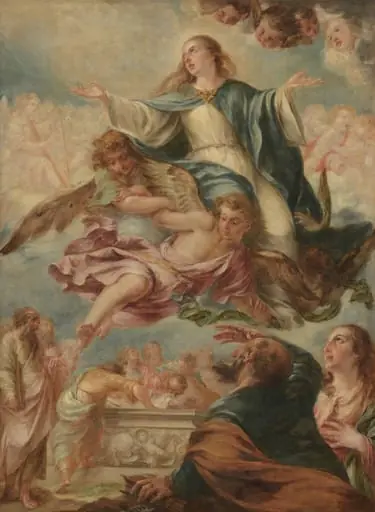
- The Assumption of the Virgin
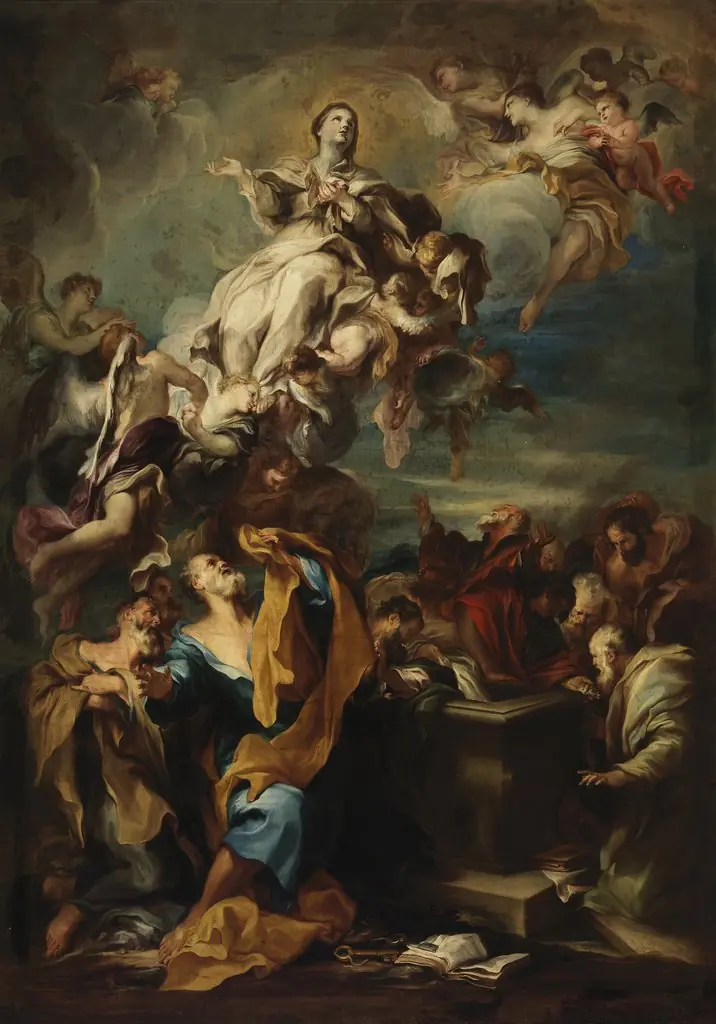 The Assumption of the Virgin
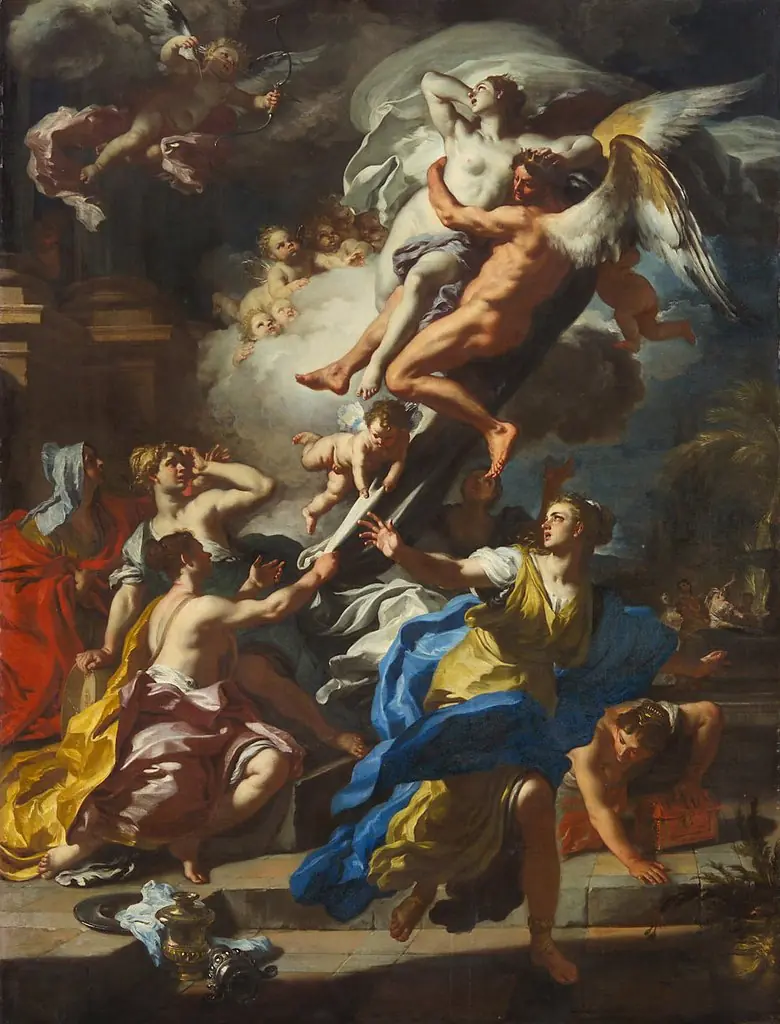 Boreas is robbing Orethyia
 Marter der Hl. Dorothea
 The Glorification of Saint Odile
 The Virgin and Child Enthroned, with Angels and Two Saints
 Nobility Offering the Imperial Russian Children to Minerva
 Madonna and Child with Saint Anne
 The Martyrdom of the Seven Sons of Saint Felicity
 The Virgin and Child Enthroned with Saints
 Het martelaarschap van de zeven broers, de zonen van de heilige Felicitas