Artwork
The Virgin and Child Enthroned with Saints
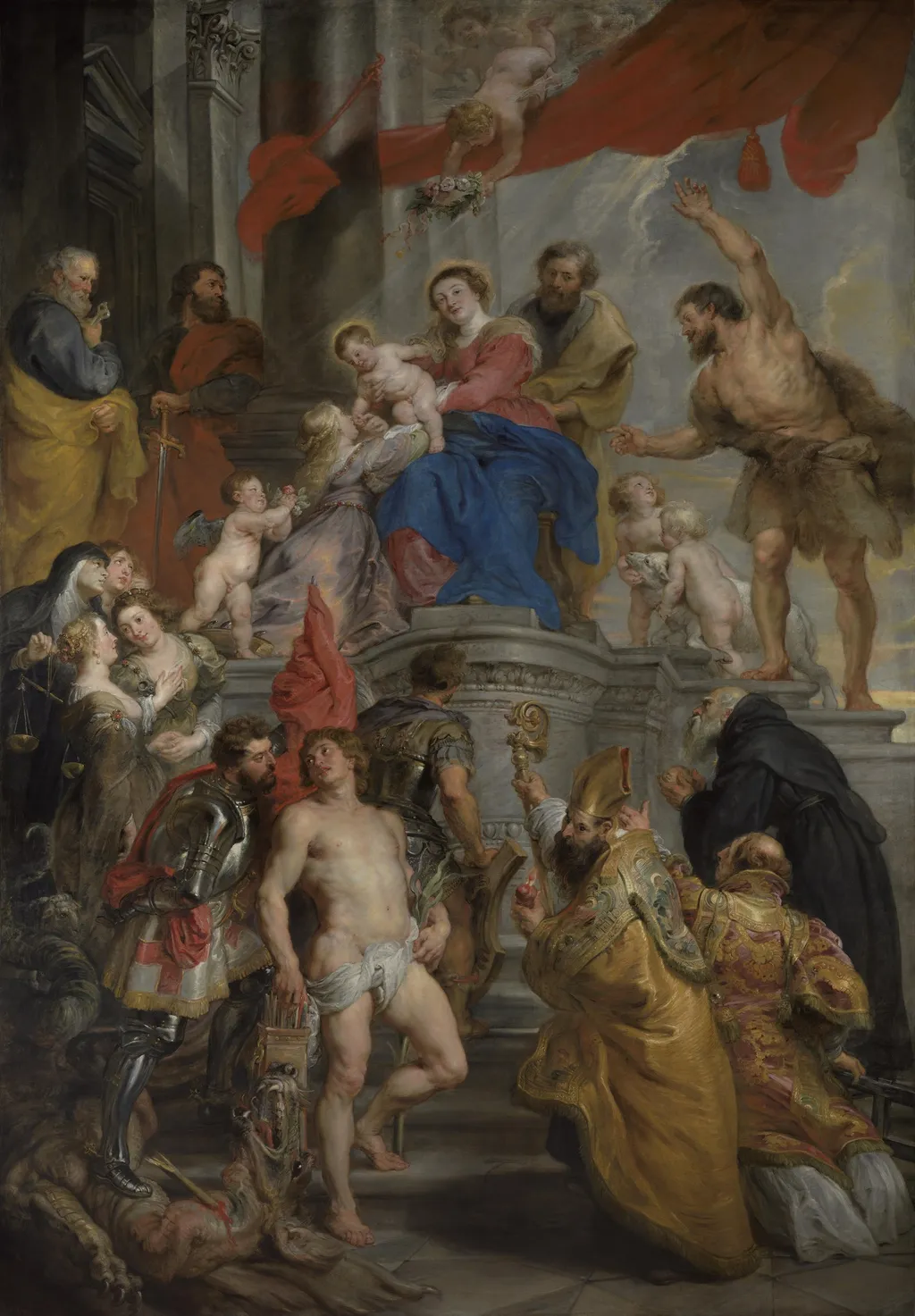
The Virgin and Child Enthroned with Saints is an oil painting by the Flemish Baroque painting artist Peter Paul Rubens. It dates from 1628 and is held in the collection of the Vlaamse Kunstcollectie.
About this work
Subject & Meaning
The painting depicts the Madonna and Child enthroned, surrounded by saints.
The painting depicts the Madonna and Child enthroned, surrounded by saints. Its main subject is the mystic marriage of Saint Catherine of Alexandria, a vision in which the saint receives a ring from the Christ Child as a symbol of her spiritual union with Christ. The ring is a key symbolic element in this scene.
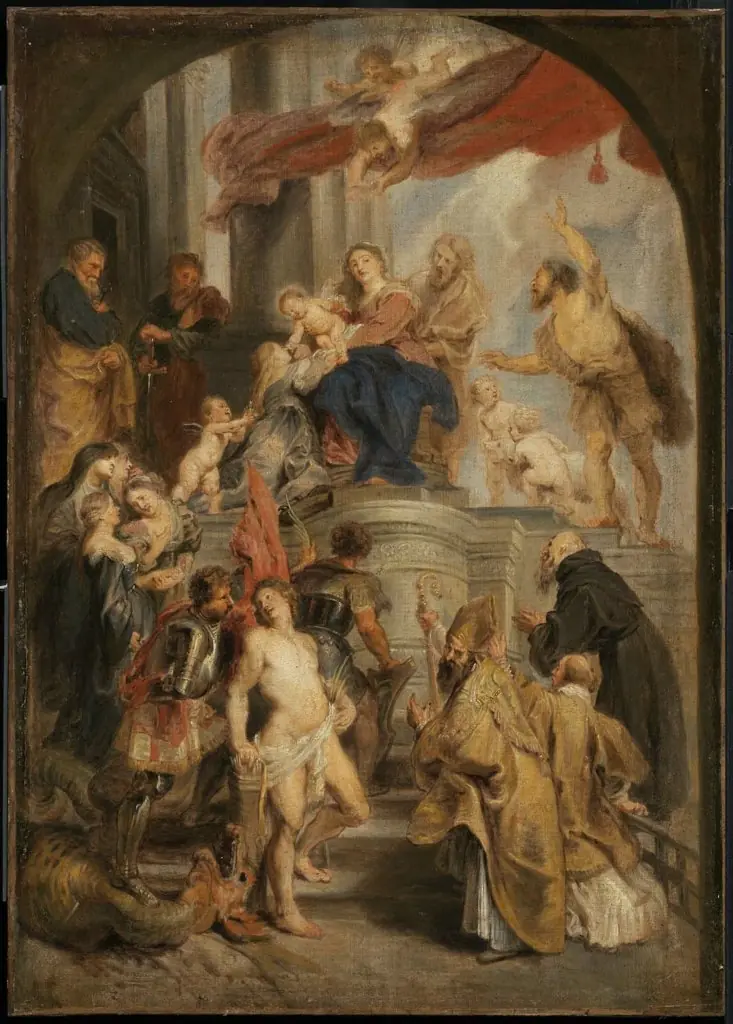
The work is based on an earlier composition, a colour sketch for the altar of the Church of the Augustinian Fathers in Antwerp, indicating its origins in a specific ecclesiastical commission for the Augustinian order.
History & Provenance
The triptych was commissioned for the high altar of the Church of the Augustinian Fathers in Antwerp, documented by a 1628 contract naming Rubens as the principal painter and stipulating collaboration with Jacob Jordaens and Anthony van Dyck.
By 1803 the panels had been transferred to the Royal Museum of Fine Arts Antwerp, where the work remains. Ownership passed from the Augustinian church to the museum during the French occupation’s secularization of ecclesiastical holdings.
The Virgin and Child Enthroned with Saints is currently held by the Royal Museum of Fine Arts Antwerp and the Sint-Augustinuskerk, as part of the Vlaamse Kunstcollectie. The work was created in 1628 and depicts the mystic marriage of Saint Catherine of Alexandria. While the painting is associated with locations in Paris, its primary institutional homes are the Antwerp museum and the church. No specific accession numbers or detailed exhibition history dates are provided in the available records.
Overview
Created in 1628 by the Flemish painter and diplomat Peter Paul Rubens, this oil on canvas presents a densely populated religious tableau. The Virgin Mary, clothed in blue, sits upon a throne with the infant Christ, while a multitude of saints and figures surround them in a dynamic, almost theatrical arrangement. The work is housed in the Royal Museum of Fine Arts in Antwerp.
Technique & Style
Rubens employs the hallmarks of Flemish Baroque: vigorous movement, rich, saturated hues, and a dramatic play of light and shadow. The crowded scene is rendered with fluid brushwork that unifies the multitude of figures, while the contrasting drapery and occasional nudity heighten visual tension. The background’s cloudscape and rocky outcrop add depth and a sense of divine atmosphere.
Context
Produced in the early 17th‑century Catholic resurgence, the work exemplifies the Counter‑Reformation’s emphasis on vivid, accessible imagery to inspire piety. Rubens, active as both artist and diplomat, infused the composition with diplomatic grandeur, using opulent attire and armor to echo contemporary courtly culture while reinforcing theological themes.
Own this work as a print
Artist & collection
Artist
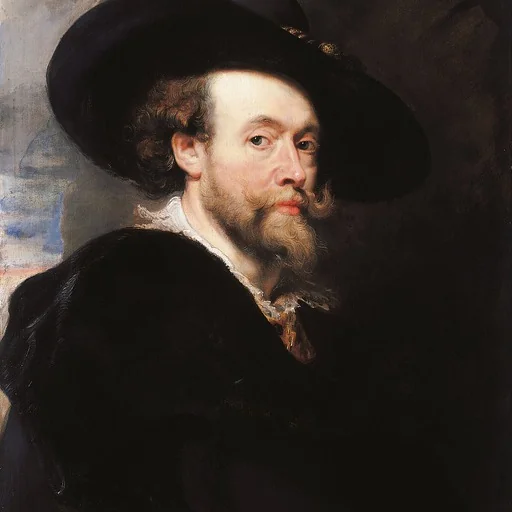
Sir Peter Paul Rubens ( ROO-bənz; Dutch:; 28 June 1577 – 30 May 1640) was a Flemish artist and diplomat.
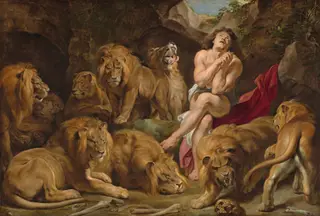
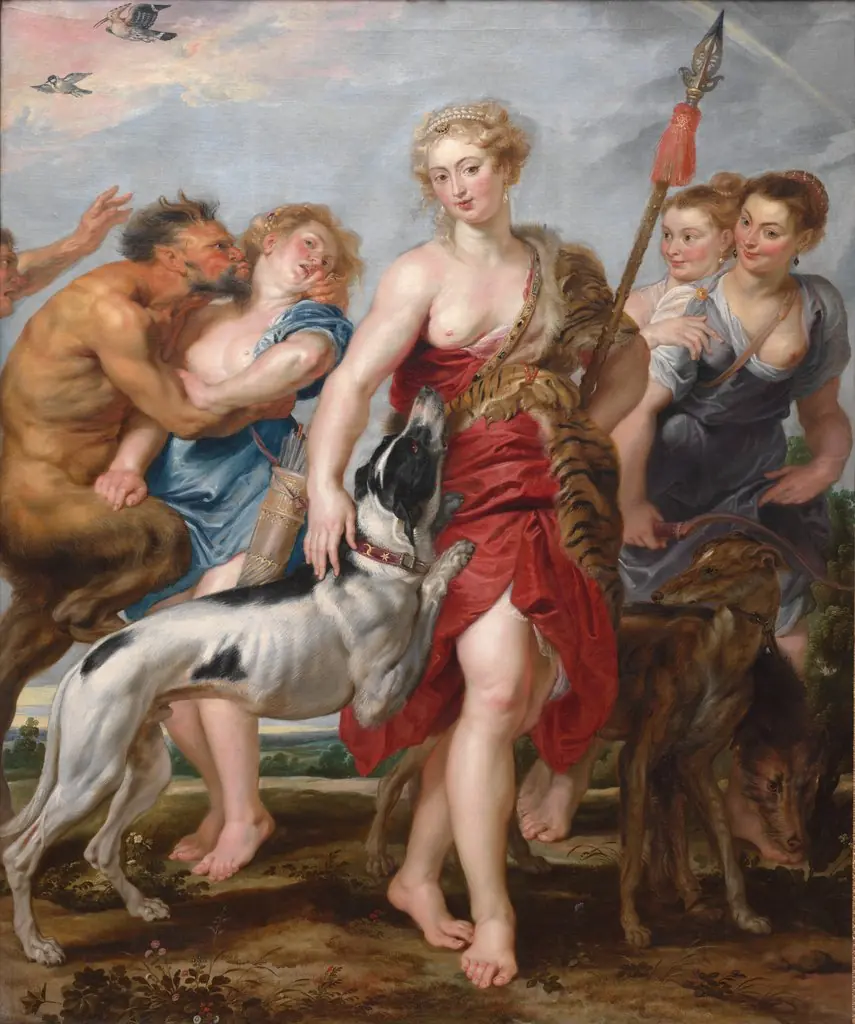
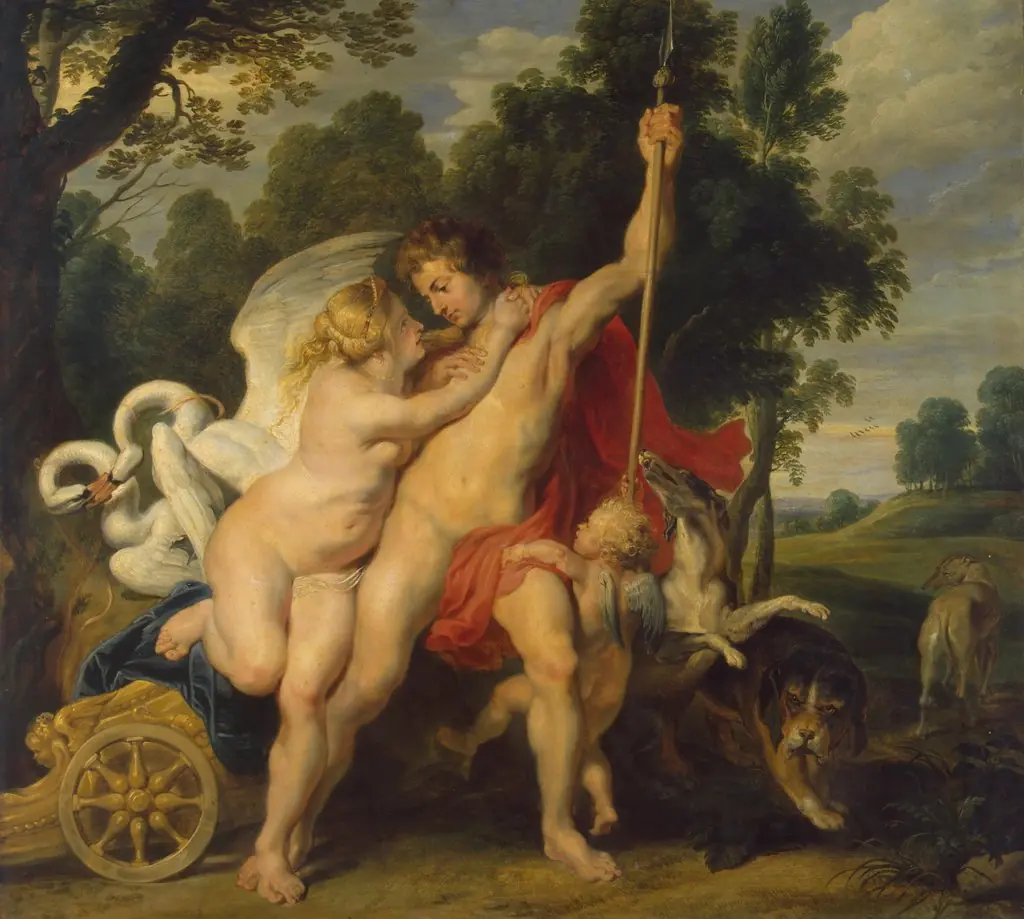
- Virgin and Child Adored by Saints
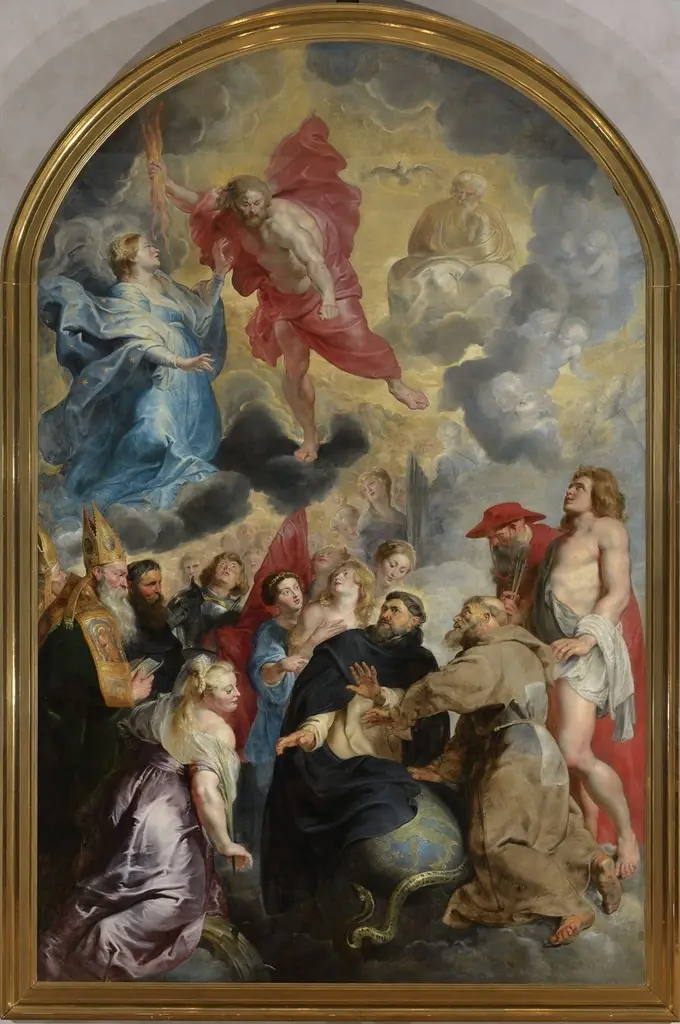 Saint Dominic and Saint Francis Protecting the World from the Wrath of Christ
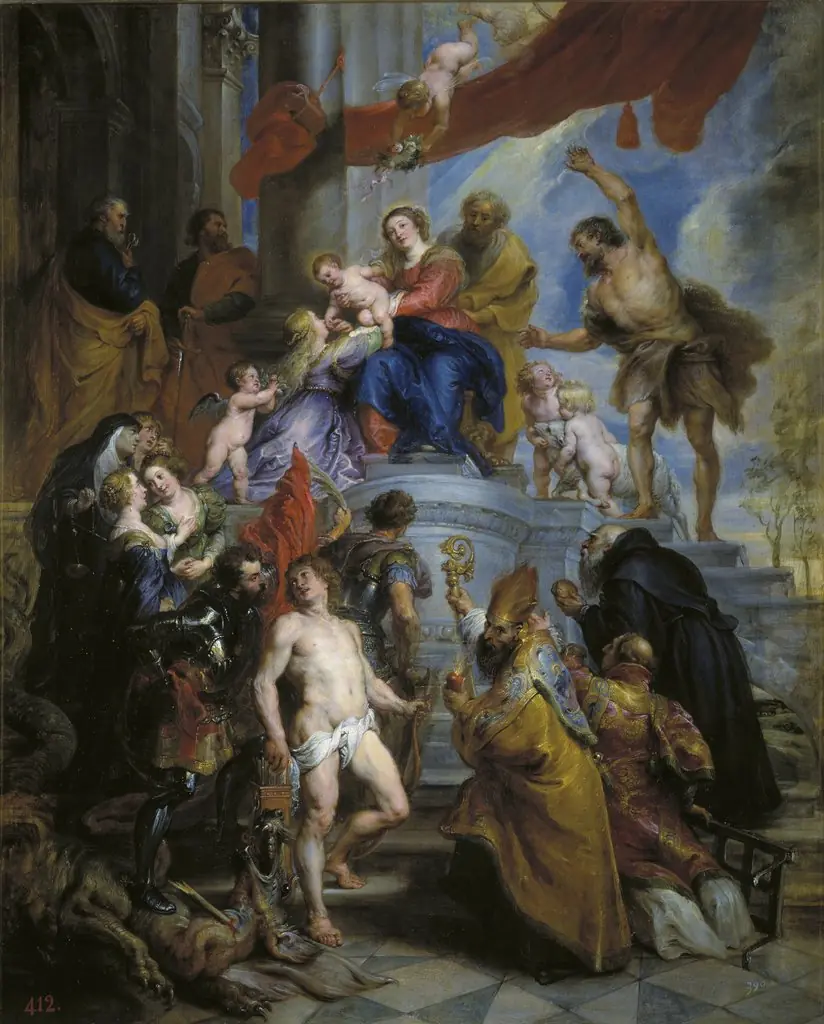 The Holy Family surrounded by Saints
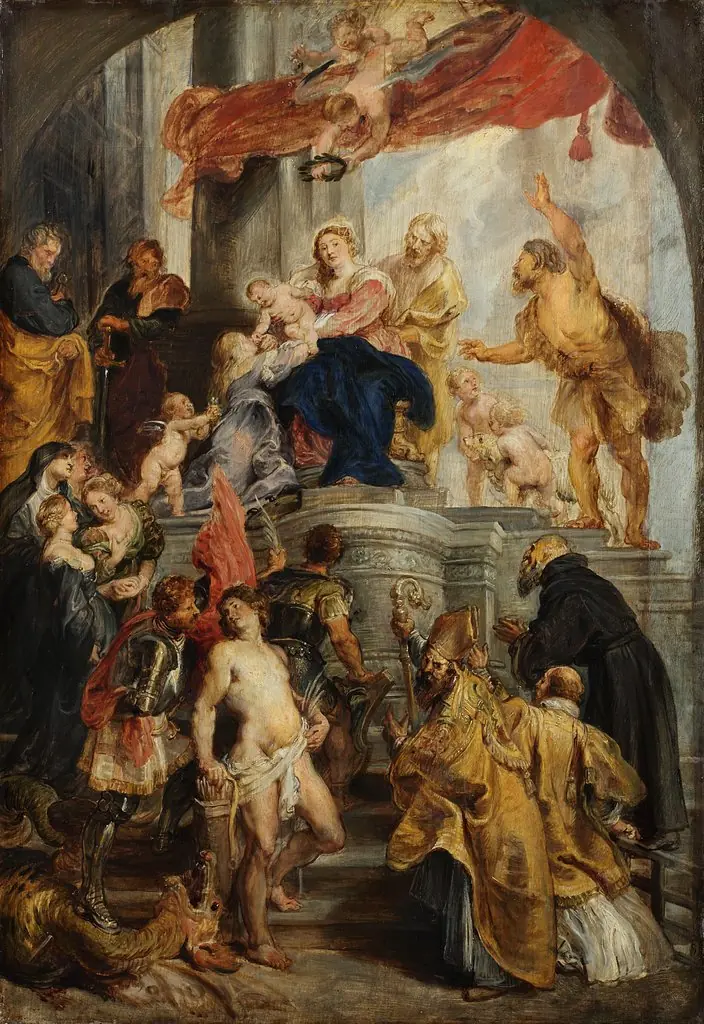 The Virgin and Child Enthroned with Saints by Peter Paul Rubens
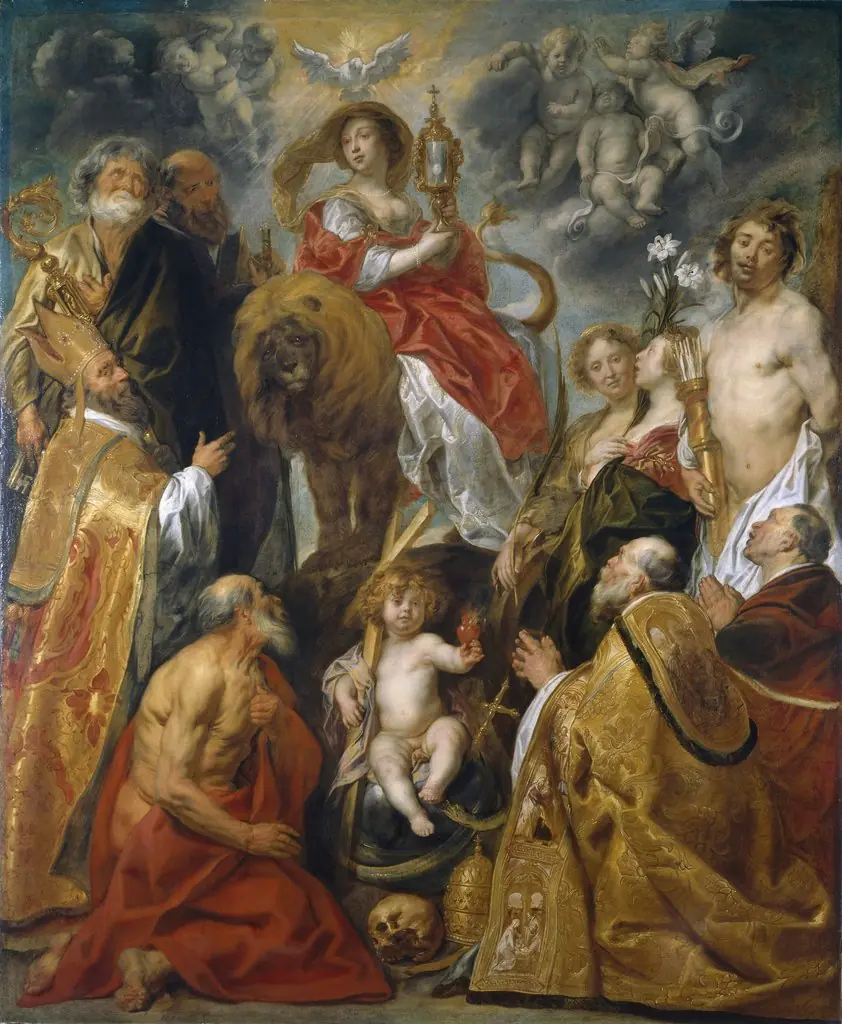 The Veneration of the Eucharist
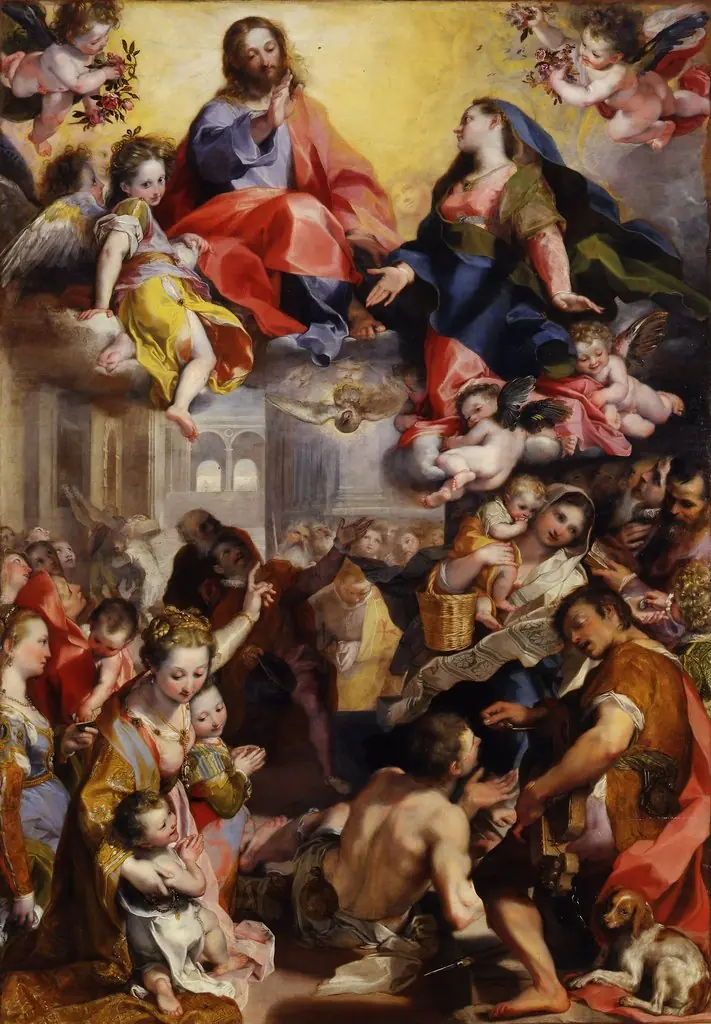 Madonna of the people
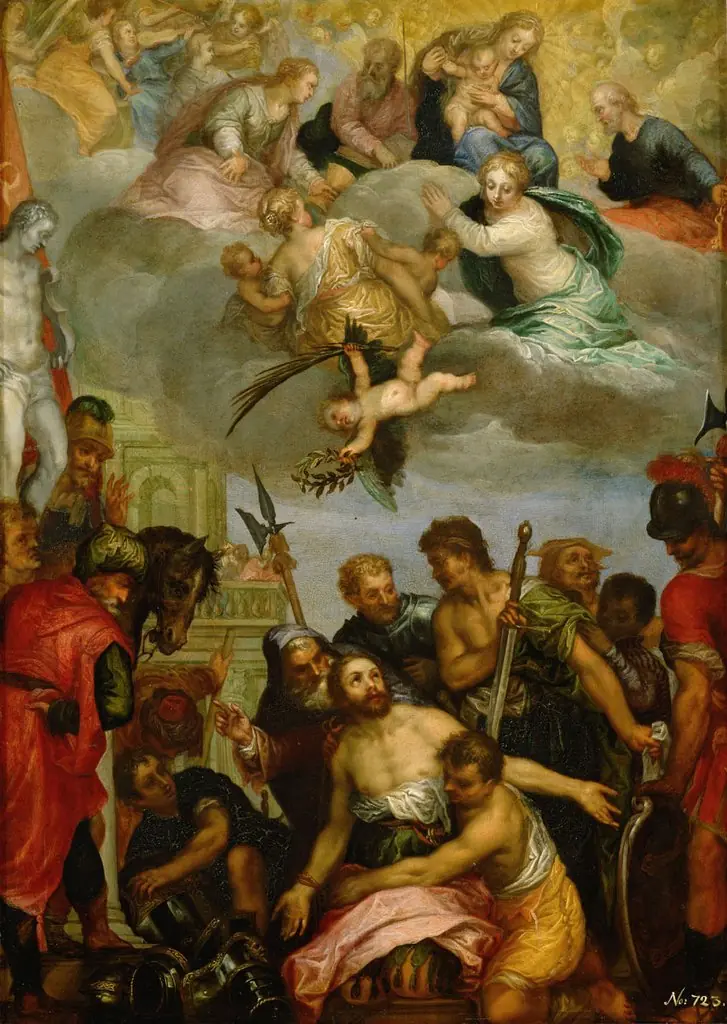 Martyrium des Hl. Georg
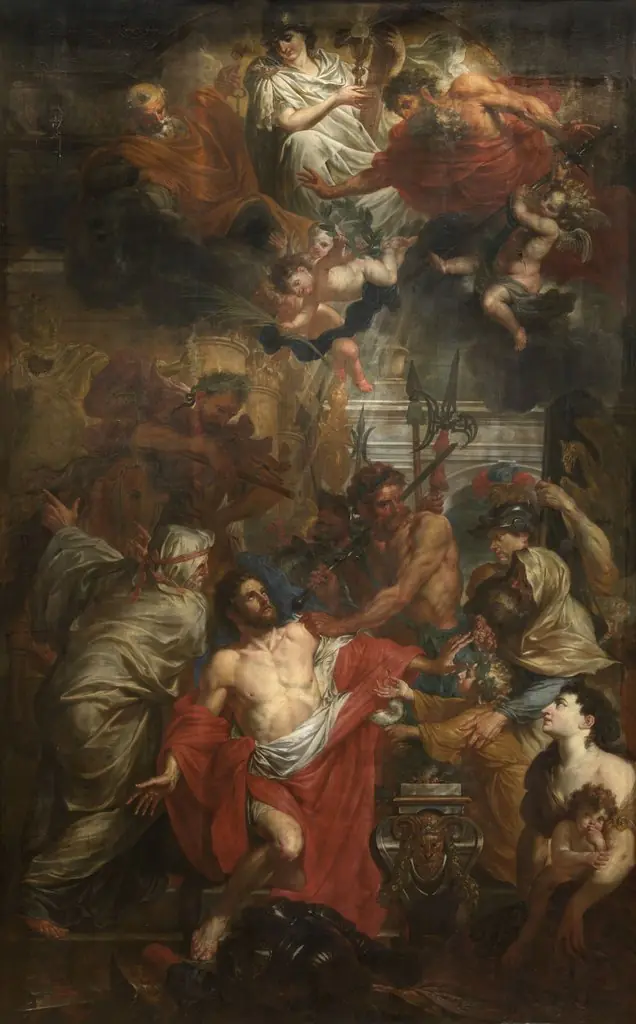 The Martyrdom of Saint George
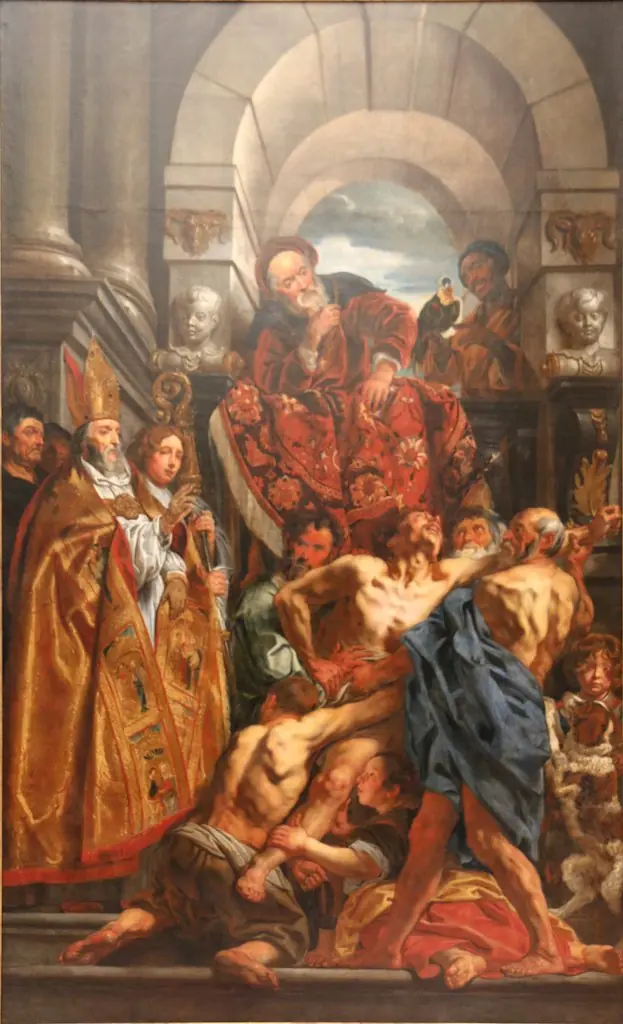 De heilige Martinus geneest een bezetene
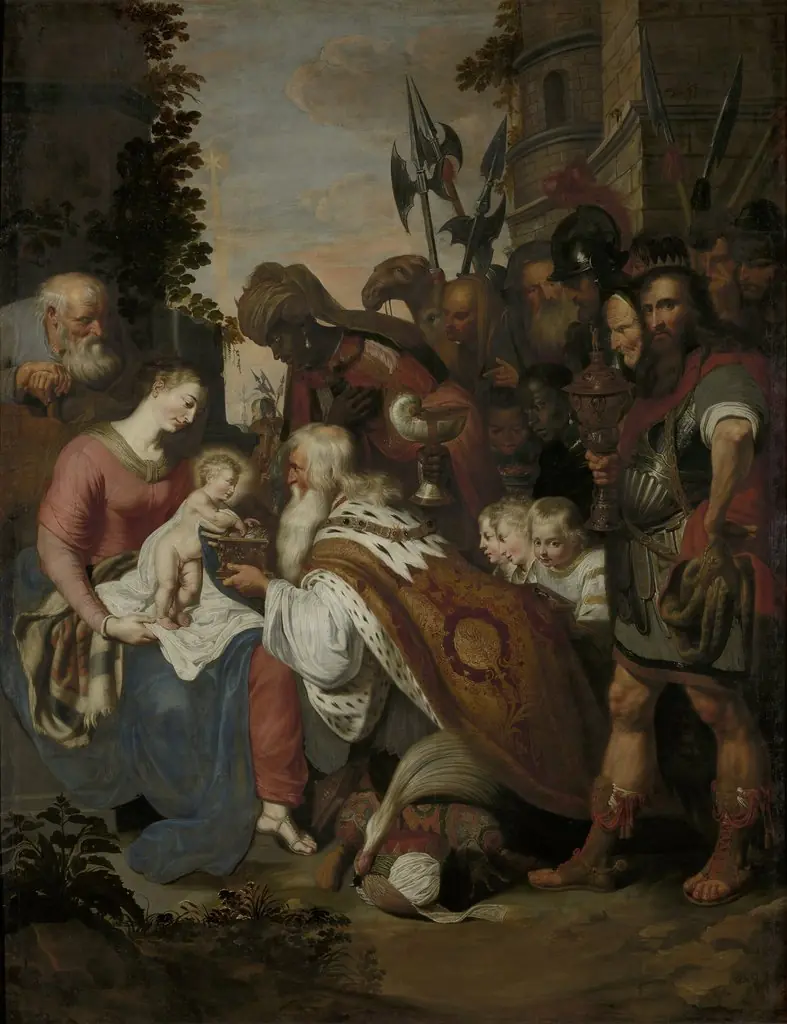 The Adoration of the Magi
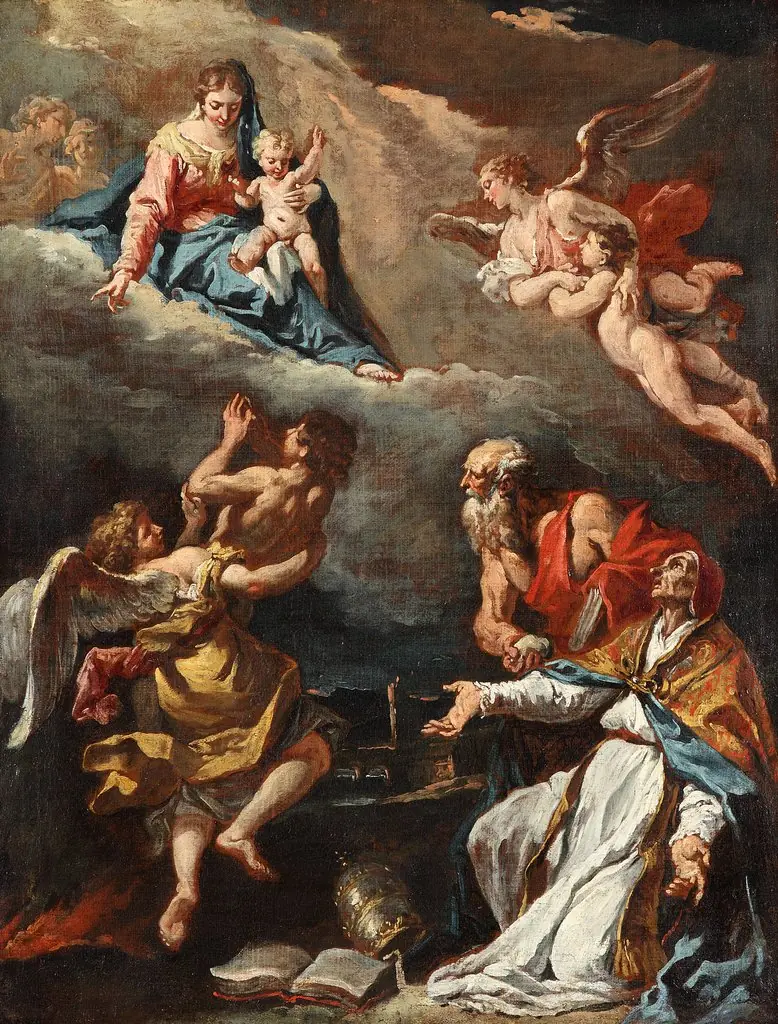 Die Fürbitte des Heiligen Gregor für die Seelen im Fegefeuer
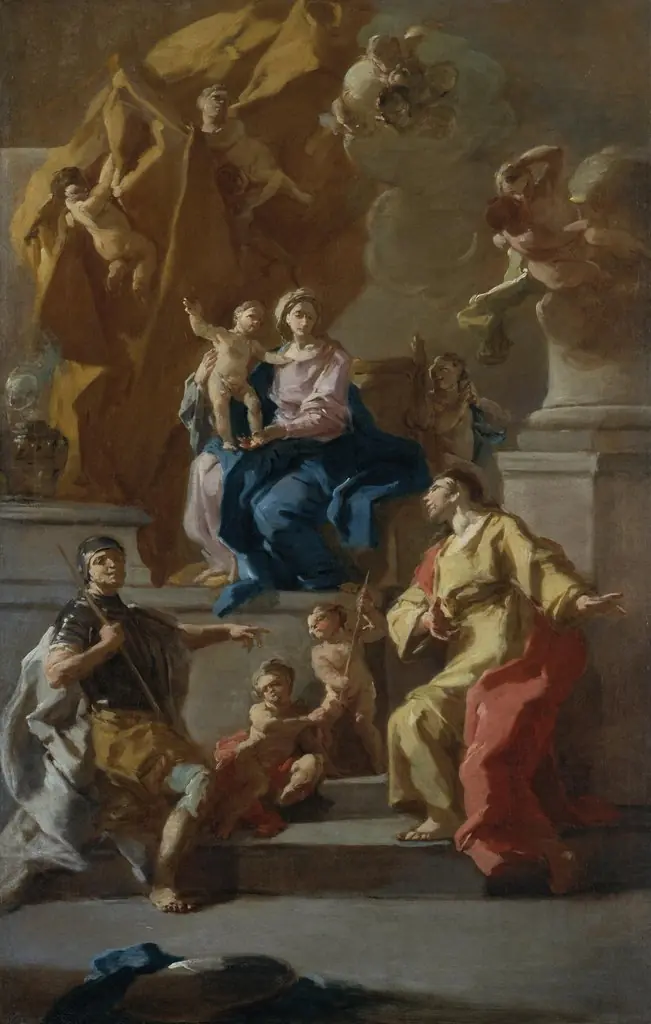 The Virgin and Child Enthroned, with Angels and Two Saints