Artwork
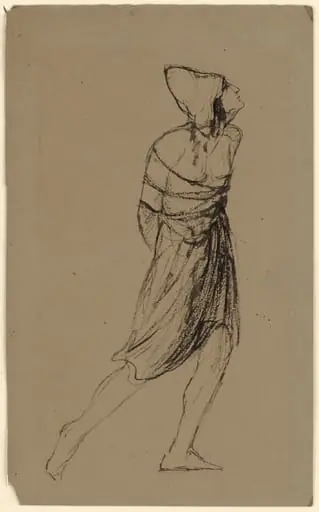
A Study of Miranda for "The Tempest"
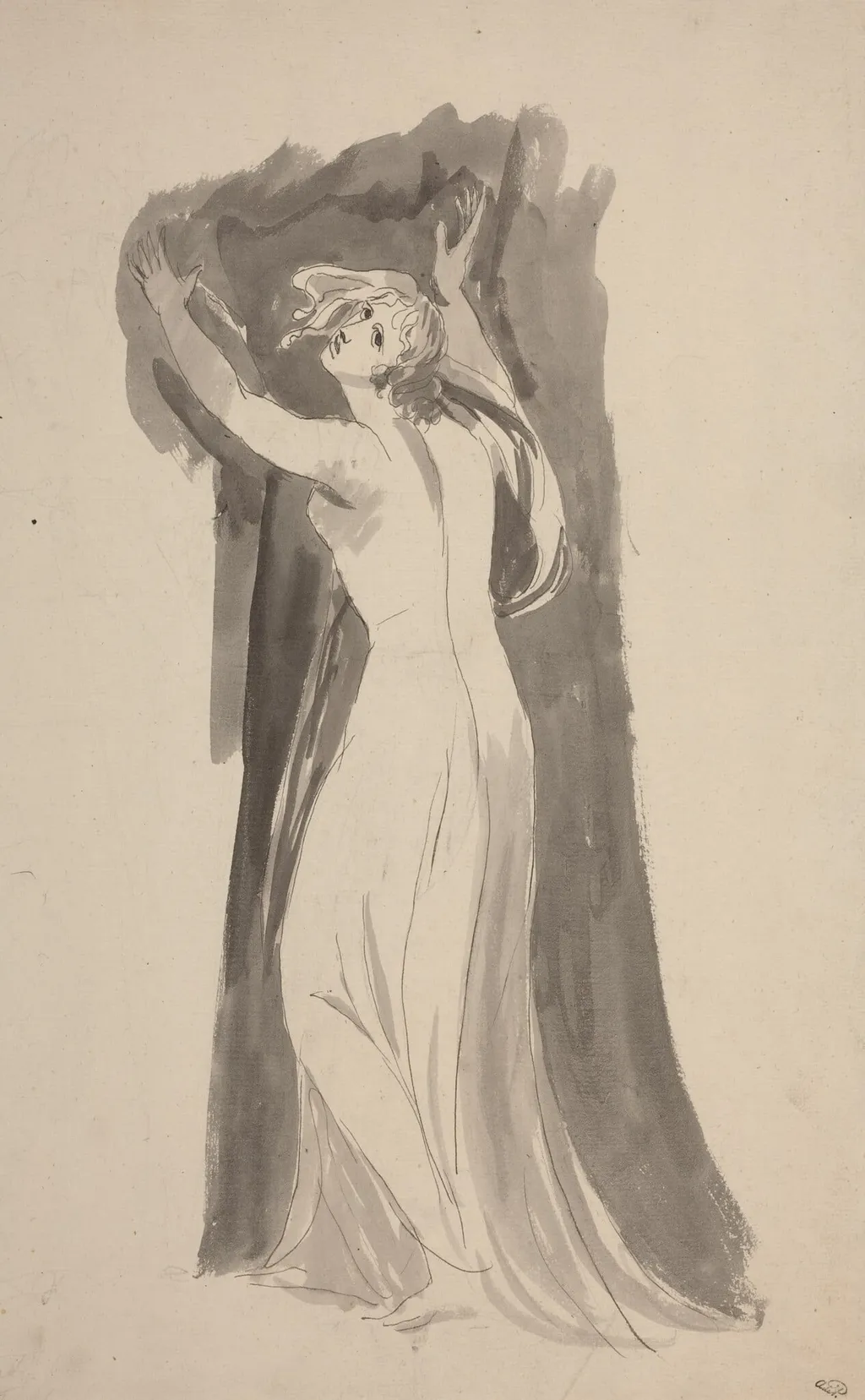
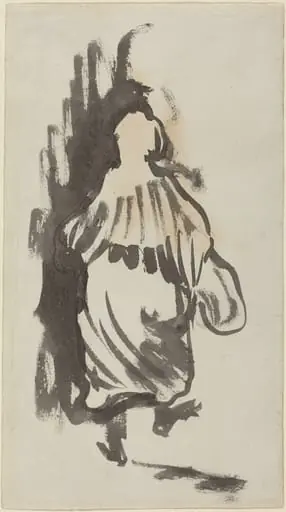
A Study of Miranda for "The Tempest" is an ink drawing by the Romanticist artist George Romney. It dates from 1786 and is held in the collection of the National Gallery of Art.
- Inscription
- Inscribed:by later hand, center verso in brown ink: No. 40; by later hand, lower center verso in graphite: The Tempest; by later hand, lower right verso in graphite: 35
About this work
Overview
A Study of Miranda for "The Tempest" is a drawing by George Romney, created around 1786. It is executed in pen and black ink with gray wash over graphite on laid paper.
Subject & Meaning
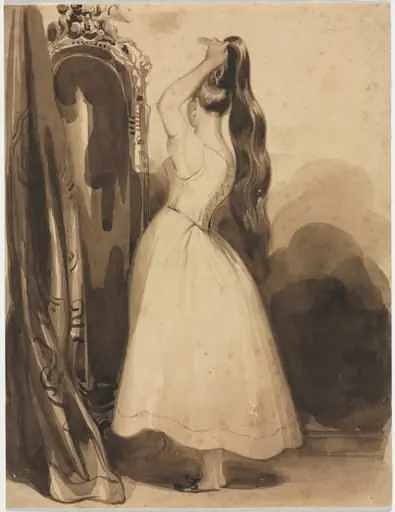
The drawing depicts a woman, likely Miranda from Shakespeare's The Tempest, with her arms raised and a cloth draped over her head. Her body is turned to the side, and her face is indistinct.
Technique & Style
The sketch is characterized by quick, rough lines and expressive shading, with dark ink and light gray wash used to convey movement and form. Details are minimal, suggesting a focus on capturing the overall pose and gesture.
Context
The drawing appears to be a preparatory study for a larger work, likely a painting or illustration of a scene from The Tempest.
Own this work as a print
Artist & collection
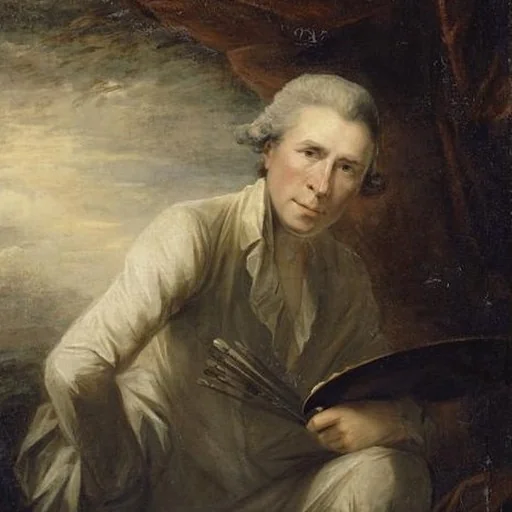
Artist
George Romney (26 December 1734 – 15 November 1802) was an English painter. He was the most fashionable artist of his day, painting many leading society figures – including his artistic muse, Emma Hamilton, mistress of Lord Nelson.