Artwork
The Blindfolding of Cupid
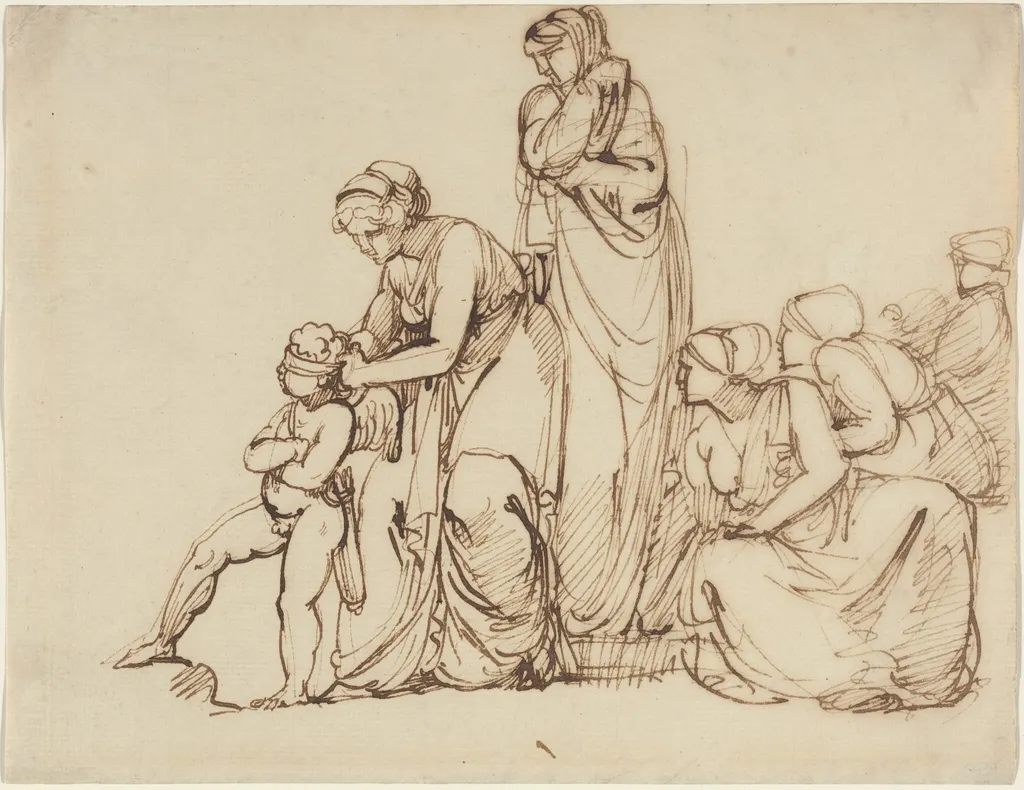
The Blindfolding of Cupid is an ink drawing by the Romanticist artist George Romney. It dates from 1797 and is held in the collection of the National Gallery of Art.
- Inscription
- Inscribed:by later hand, lower right verso in graphite: 5680 / A Kauffman
About this work
Overview
George Romney’s 1797 drawing titled The Blindfolding of Cupid is executed in pen and brown ink on laid paper. The work presents a loosely rendered group scene, centered on a woman in a long dress holding a child, with another woman attending a small boy, a dog nearby, and additional figures gathered in the background.
Subject & Meaning
Although the title invokes the mythological figure Cupid, the composition captures an intimate, everyday moment rather than a dramatic narrative. The blindfolded Cupid is implied rather than depicted, suggesting themes of love’s subtle, unseen influence within ordinary domestic activity.
Technique & Style
Romney employs rapid, sketchy lines and varied ink shading to model the drapery and convey the play of light across forms. The use of brown ink on laid paper creates tonal depth without color, emphasizing gesture and movement over precise detail.
History & Provenance
Created in the late eighteenth century, the drawing reflects Romney’s practice of producing preparatory sketches that could later develop into larger painted works. Its survival on paper indicates it was likely retained as a study rather than a finished commission, offering insight into the artist’s creative process during this period.
Own this work as a print
Artist & collection
Artist
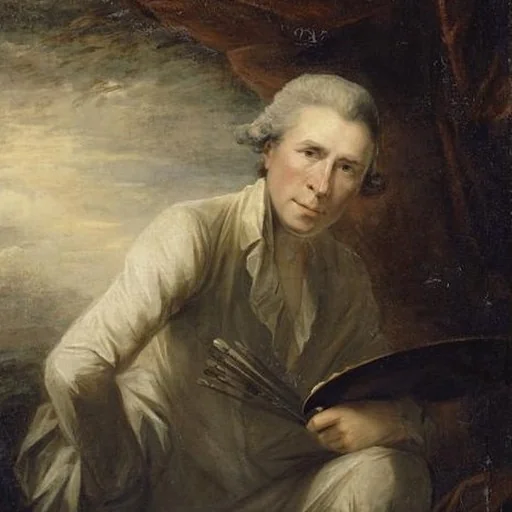
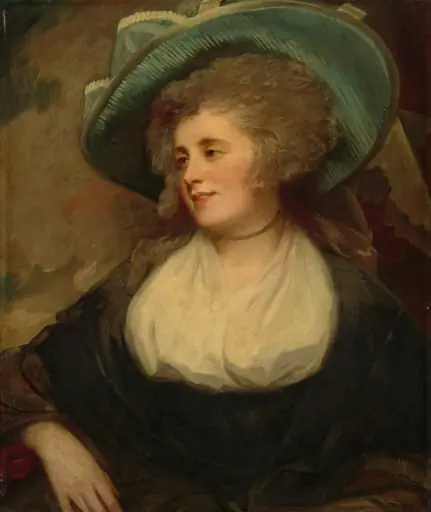
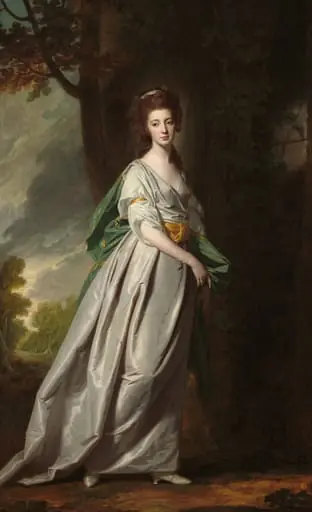
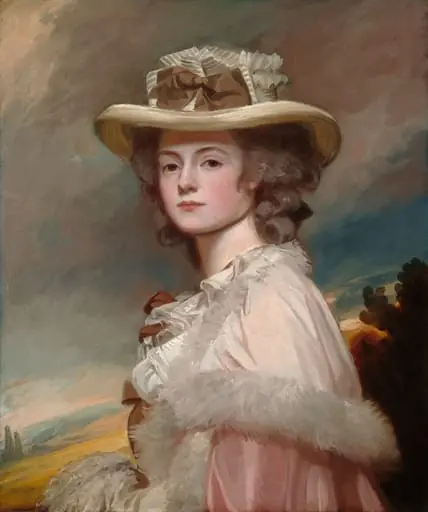
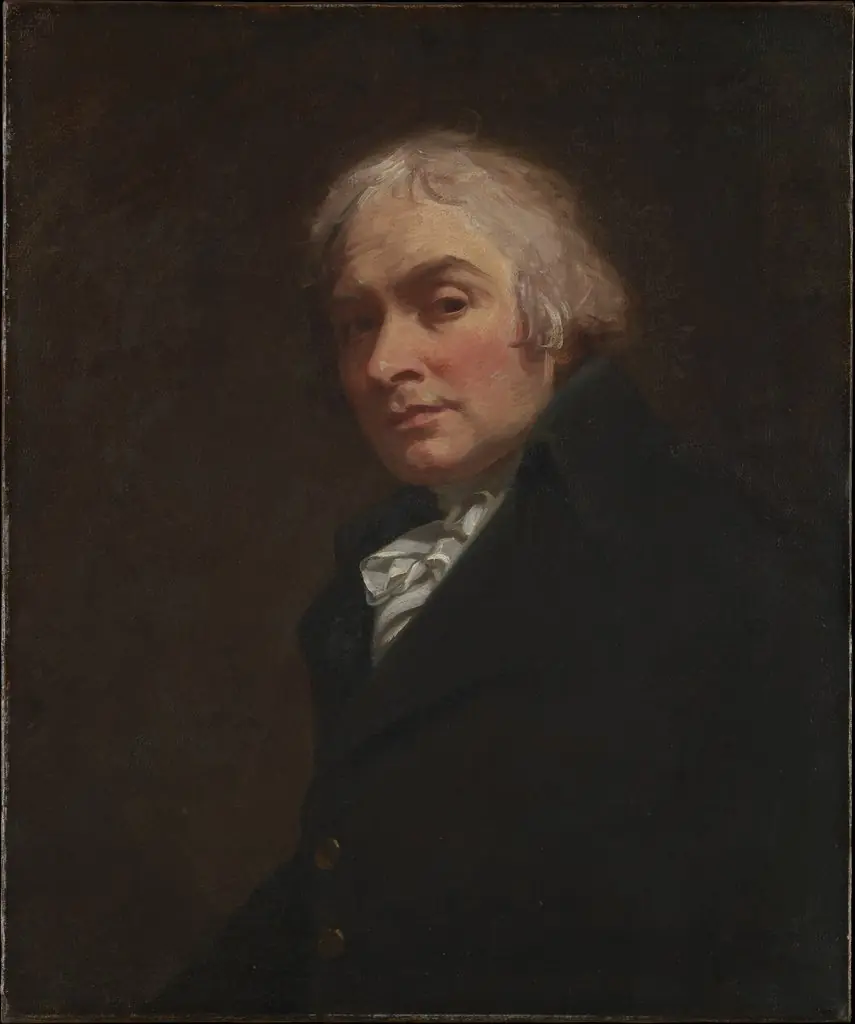
George Romney (26 December 1734 – 15 November 1802) was an English painter. He was the most fashionable artist of his day, painting many leading society figures – including his artistic muse, Emma Hamilton, mistress of Lord Nelson.

- Mother and Child Flanked by Two Standing Figures
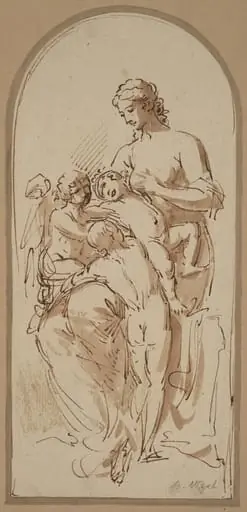 Charity
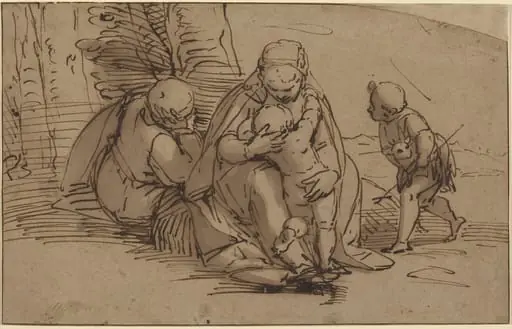 Holy Family with Infant Saint John
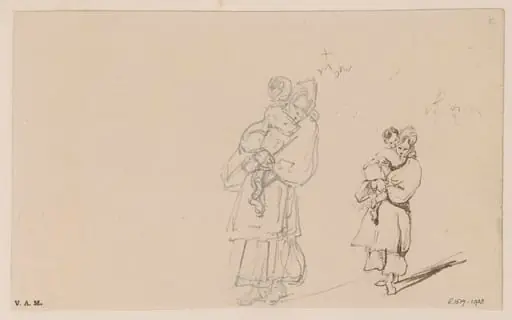 Two drawings of a boatwoman holding a child
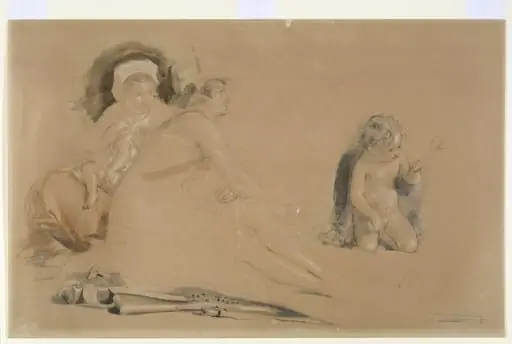 The Peep o'Day Boy
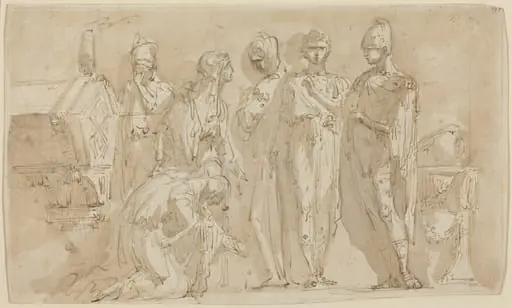 Coriolanus before the Women of Rome
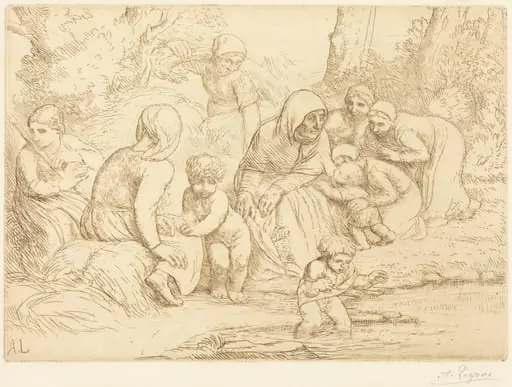 Summer (L'ete)
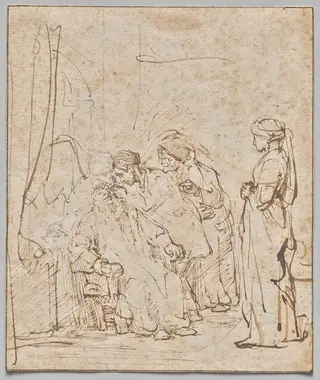 Tobias Healing His Father's Blindness
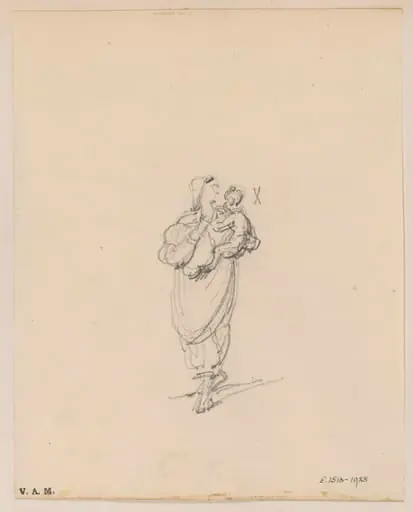 An Indian woman holding a child
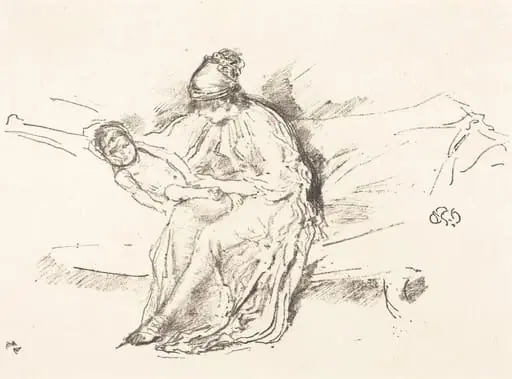 Mother and Child, No. 4
 Pietà (3e planche) (Pietà) (third plate)
 Untitled