Artwork
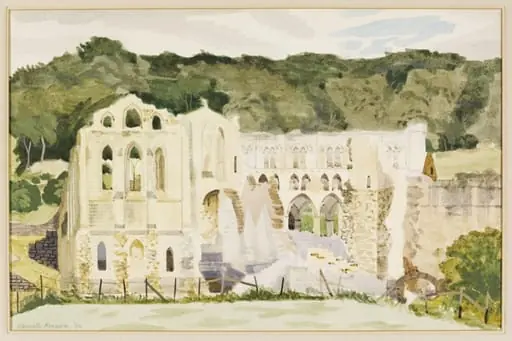
The approach from the Valley, Rievaulx
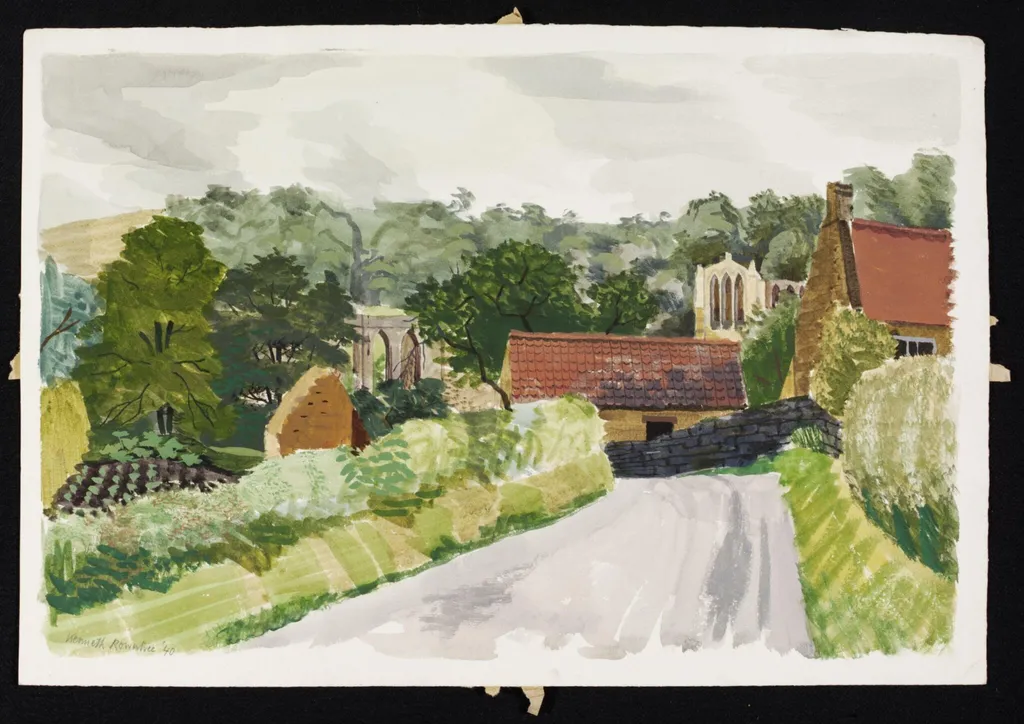
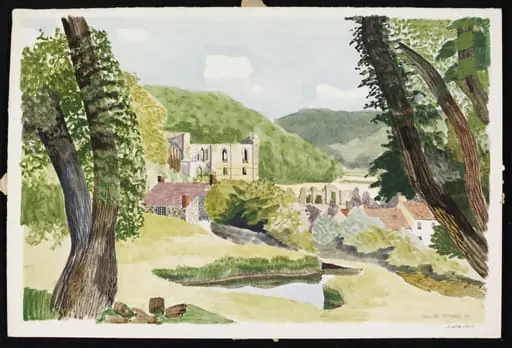
The approach from the Valley, Rievaulx is a watercolor work on paper by the Regionalist artist Rowntree. It dates from 1940 and is held in the collection of the Victoria and Albert Museum.
About this work
Overview
Painted in 1940, this watercolour is one of many works produced for the Recording Britain project, a government-backed initiative to preserve visual records of the British landscape during wartime. Created under the auspices of the Pilgrim Trust and the Ministry of Labour and National Service, the piece was part of a broader effort to safeguard cultural memory amid fears of destruction or irreversible change from modernization and conflict.
Subject & Meaning
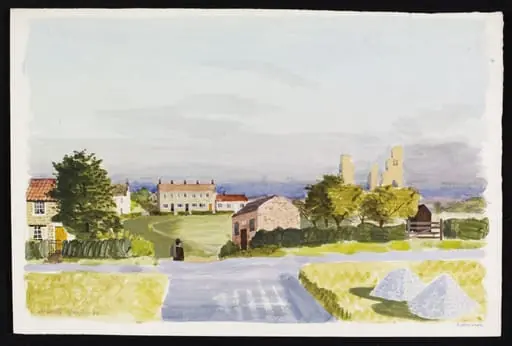
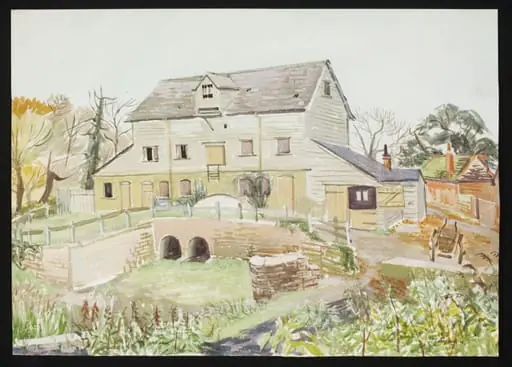
A winding path leads toward a modest stone church with a tall tower, flanked by rustic buildings and a stone bridge over a stream.
The scene captures the quiet approach to Rievaulx Abbey through a rural valley, emphasizing solitude and continuity. A winding path leads toward a modest stone church with a tall tower, flanked by rustic buildings and a stone bridge over a stream. These elements reflect a pastoral ideal, chosen not for grandeur but for their quiet endurance, symbolizing resilience and rootedness during a time of national uncertainty.
Technique & Style
The artist employed loose, fluid brushwork to convey the softness of light and the organic contours of the landscape. Washes of muted greens and browns dominate, with subtle highlights of white suggesting sunlit stone and path. The watercolour medium allows for transparency and delicate layering, enhancing the sense of atmosphere and stillness without sharp definition or dramatic contrast.
History & Provenance
Commissioned as part of the Recording Britain project, the work was overseen by Sir Kenneth Clark and funded by the Pilgrim Trust. It was created under a wartime employment scheme designed to support artists while documenting vulnerable sites. The painting entered institutional collections following its completion, eventually becoming part of the Victoria and Albert Museum’s holdings, where it remains accessible for study and public viewing.
Context
During the Second World War, Britain faced threats to its historic fabric from bombing and rapid development. The Recording Britain project emerged as a cultural countermeasure, commissioning artists to record landscapes, architecture, and vernacular scenes deemed at risk. This watercolour reflects a national impulse to preserve identity through visual testimony, prioritizing quiet, everyday places over monuments.
Legacy
The Recording Britain collection endures as a significant archive of mid-20th-century British topography. This watercolour contributes to a broader understanding of how art was mobilized for cultural preservation during crisis. Its restrained aesthetic and focus on ordinary rural life continue to inform scholarly and public appreciation of wartime art’s role in sustaining collective memory.
Artist & collection