Artwork
Maharaja Anup Singh of Bikaner (reigned 1669–98) Receives a Courtier
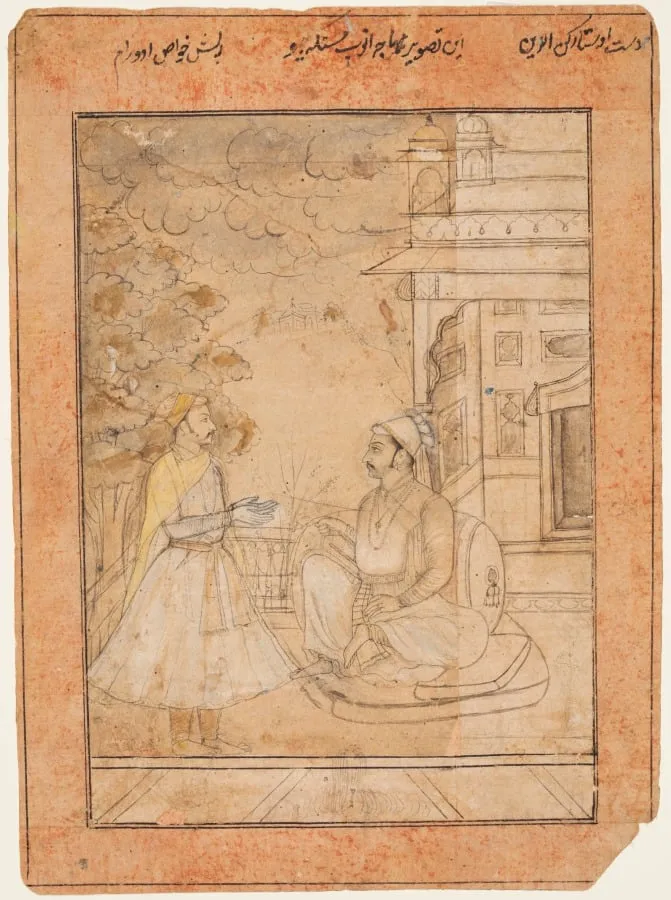
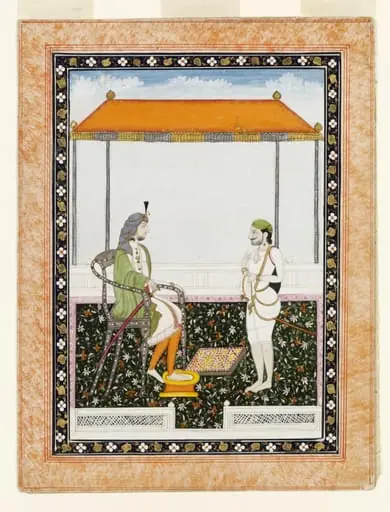
Maharaja Anup Singh of Bikaner (reigned 1669–98) Receives a Courtier is an unspecified painting by the Baroque artist Ruknuddin. It dates from 1690 and is held in the collection of the Cleveland Museum of Art. This early‑modern Rajput painting, dated to around 1690, portrays Maharaja Anup Singh of Bikaner seated on a modest throne.
- Accession no.
- 2018.191
- Credit line
- Purchase and partial gift from the Catherine and Ralph Benkaim Collection; Severance and Greta Millikin Purchase Fund
About this work
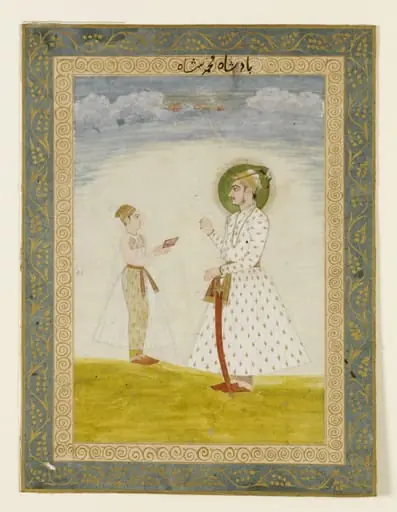
You see a ruler in a red robe sitting on a low throne, a man kneeling before him with hands pressed together.
You see a ruler in a red robe sitting on a low throne, a man kneeling before him with hands pressed together.
This is Maharaja Anup Singh of Bikaner, painted around 1690. The tiny gold dots on his robe and the delicate lines of his turban show how carefully the artist worked. The scene feels quiet, almost like a private moment in a busy court.
Look up other works from the Rajput kingdom of Bikaner to see more of these intimate royal portraits.
Overview
This early‑modern Rajput painting, dated to around 1690, portrays Maharaja Anup Singh of Bikaner seated on a modest throne. He wears a richly dyed red robe, while a courtier kneels before him, hands clasped in a gesture of deference. The composition captures a quiet, almost private exchange within the royal court, offering a glimpse of courtly protocol.
Subject & Meaning
The central figure is the Bikaner ruler Anup Singh, whose presence is emphasized by his regal attire and posture. The kneeling attendant, rendered with bowed shoulders and folded hands, underscores the hierarchical relationship and the ritual of homage that defined Rajput court culture. The scene suggests a moment of personal audience rather than a formal ceremony.
Technique & Style
Executed by the court painter Ruknuddin, the work displays the refined brushwork characteristic of the Bikaner atelier. Minute gold flecks adorn the Maharaja’s robe, while the turban is delineated with delicate, precise lines. The palette is restrained, focusing on subtle tonal variations that convey texture and depth without overt dramatization.
History & Provenance
Ruknuddin, a noted member of the Bikaner artistic lineage and second cousin of fellow painter Nur Muhammad, created the portrait as part of the court’s visual documentation of its rulers. The painting remains an important example of the atelier’s output, reflecting the familial transmission of skill within the region’s artistic community.
Artist & collection