Artwork
Berkenrode Castle
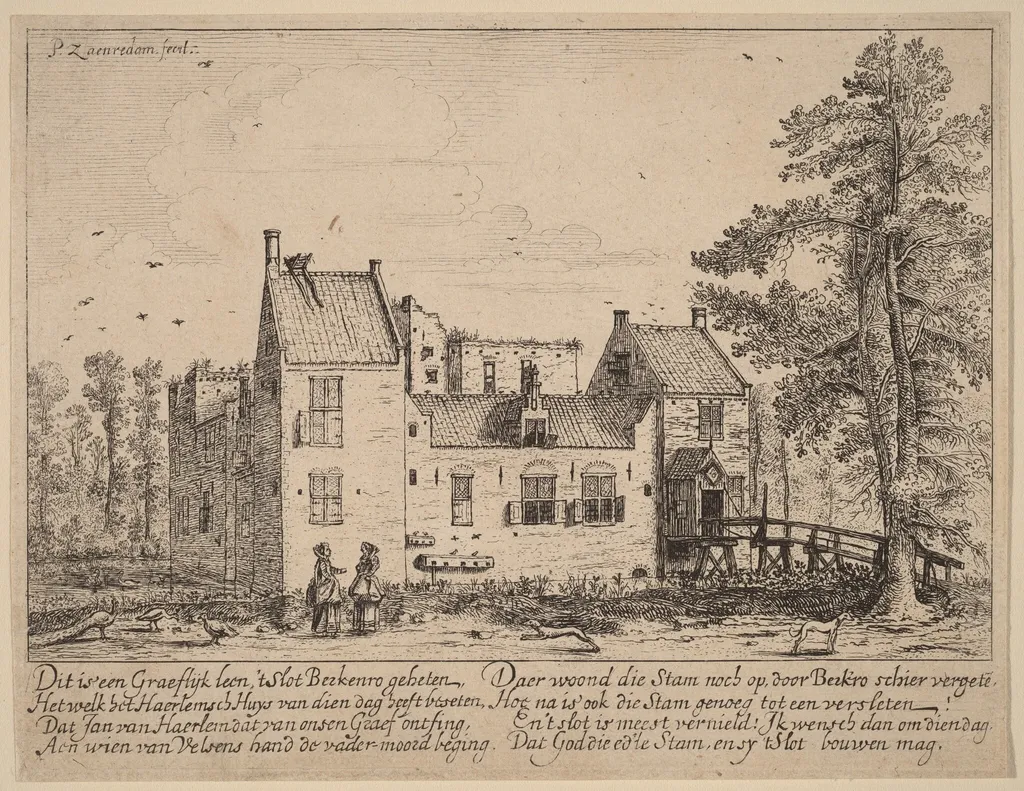
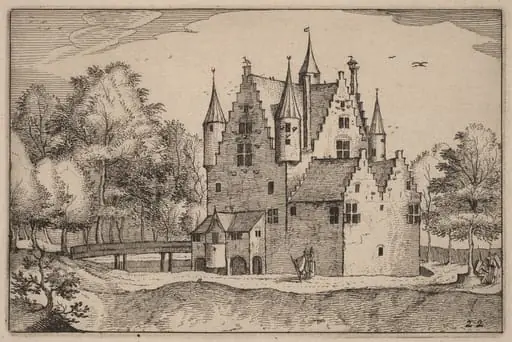
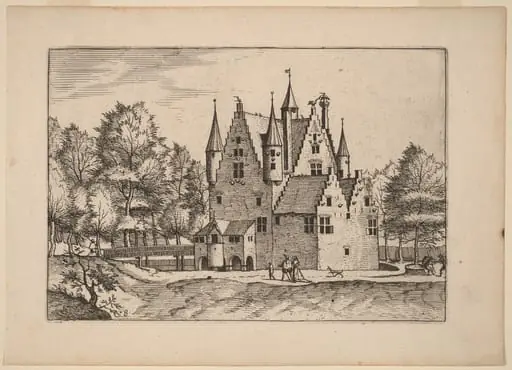
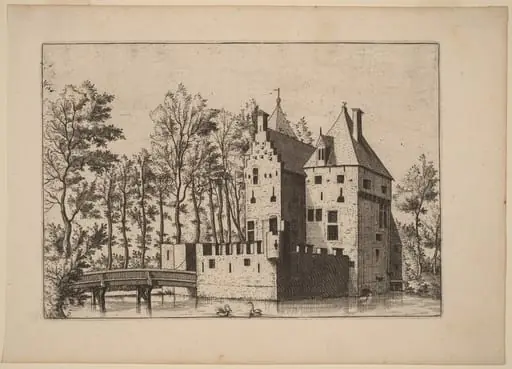
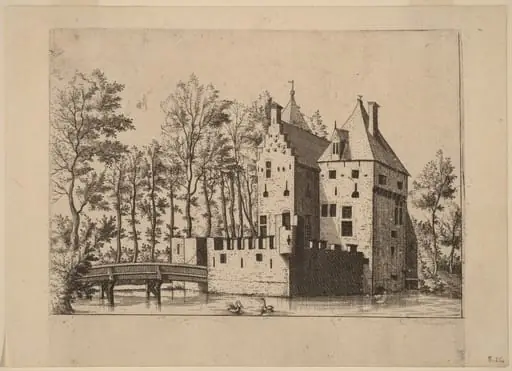
Berkenrode Castle is an ink print by the Baroque artist Pieter Jansz Saenredam. It dates from 1628 and is held in the collection of the National Gallery of Art. Pieter Jansz.
About this work
Overview
The work exemplifies his disciplined approach to architectural representation, using fine lines to convey structure and atmosphere.
Pieter Jansz. Saenredam produced this engraving on laid paper around 1628, depicting Berkenrode Castle and its surrounding village. Though best known for his church interiors, Saenredam also turned his attention to secular architecture, rendering buildings with careful attention to proportion and spatial clarity. The work exemplifies his disciplined approach to architectural representation, using fine lines to convey structure and atmosphere.
Subject & Meaning
The scene shows a modest Dutch village cluster around a castle, with three narrow dwellings, a distant church steeple, and a small bridge leading to one house. Two figures in plain attire stand near the center, and a dog rests on the ground, suggesting quiet daily life. The composition emphasizes order and stillness, reflecting a preference for tranquil, unembellished rural existence rather than grandeur or narrative drama.
Technique & Style
Saenredam employed fine, controlled engraving lines to model form and depth, creating a sense of solidity in the buildings despite their linear construction. Subtle shading and precise hatching mimic the effects of light and shadow, lending the scene a painterly quality. The use of laid paper and meticulous detail aligns with contemporary printmaking practices that sought to elevate engraving beyond mere reproduction.
History & Provenance
The engraving dates to the early phase of Saenredam’s career, before his renowned church interiors. It likely originated as a standalone print, possibly commissioned or circulated among collectors interested in Dutch topography. No definitive record of its early ownership survives, but its survival in multiple institutional collections suggests it was valued for its technical precision and quiet realism.
Context
In the 1620s, Dutch artists increasingly turned to landscape and architectural subjects as symbols of civic pride and regional identity. Saenredam’s focus on ordinary structures, castles, churches, houses, reflected a broader cultural shift away from mythological or religious grandeur toward the dignity of everyday environments, aligning with the values of the emerging Dutch Republic.
Legacy
Though less celebrated than his later church interiors, this engraving demonstrates Saenredam’s consistent commitment to architectural accuracy and compositional restraint. His method influenced subsequent generations of Dutch printmakers who sought to capture the built environment with clarity and calm, reinforcing the aesthetic of measured observation that defined much of Dutch Golden Age art.
Own this work as a print
Artist & collection

Artist
Pieter Janszoon (abbr. Jansz.) Saenredam (9 June 1597 – buried 31 May 1665) was a painter of the Dutch Golden Age, known for his distinctive paintings of whitewashed church interiors such as Interior of St Bavo's Church…

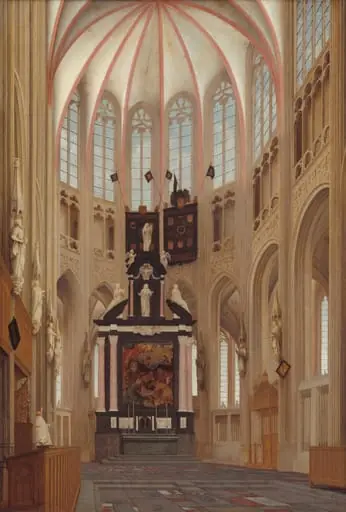 Cathedral of Saint John at 's-Hertogenbosch
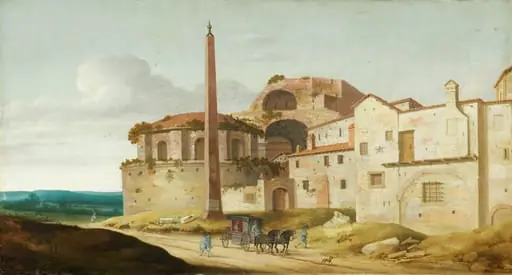 Church of Santa Maria della Febbre, Rome
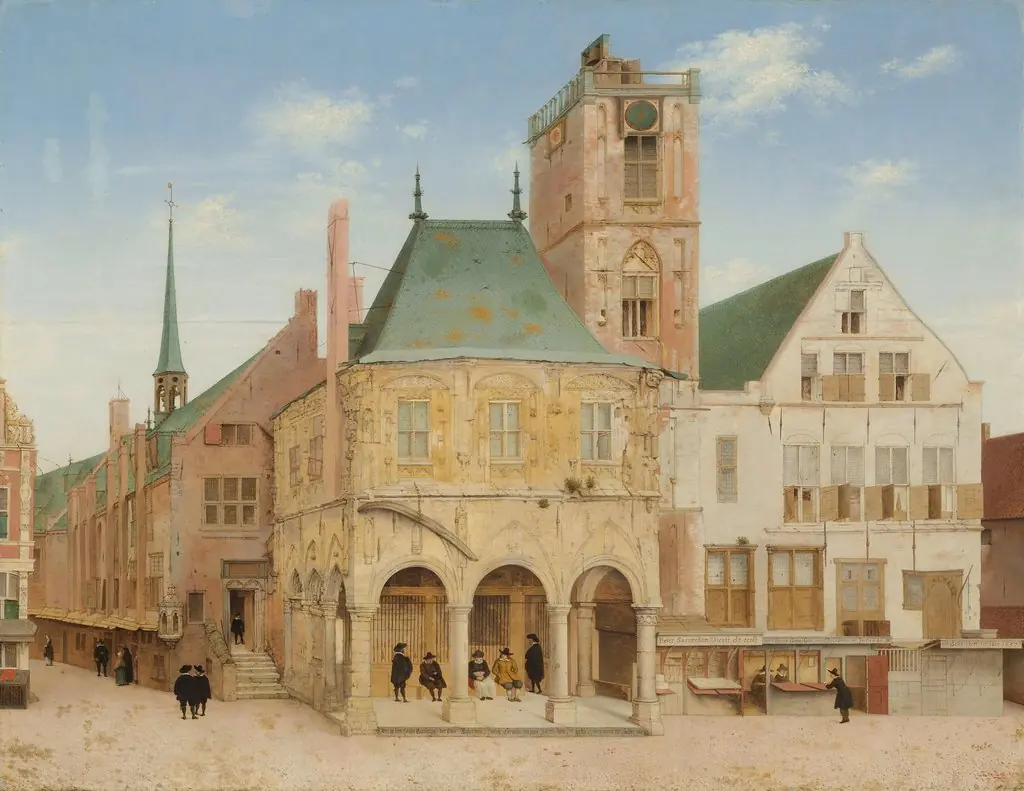 The Old Town Hall of Amsterdam
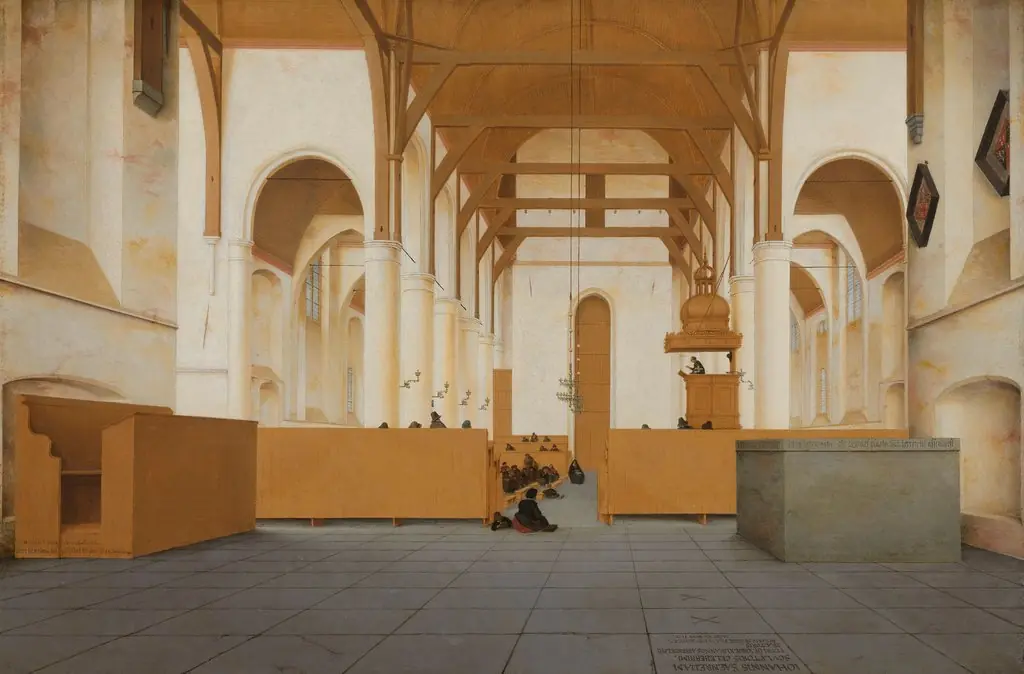 Interior of the Sint-Odulphuskerk in Assendelft
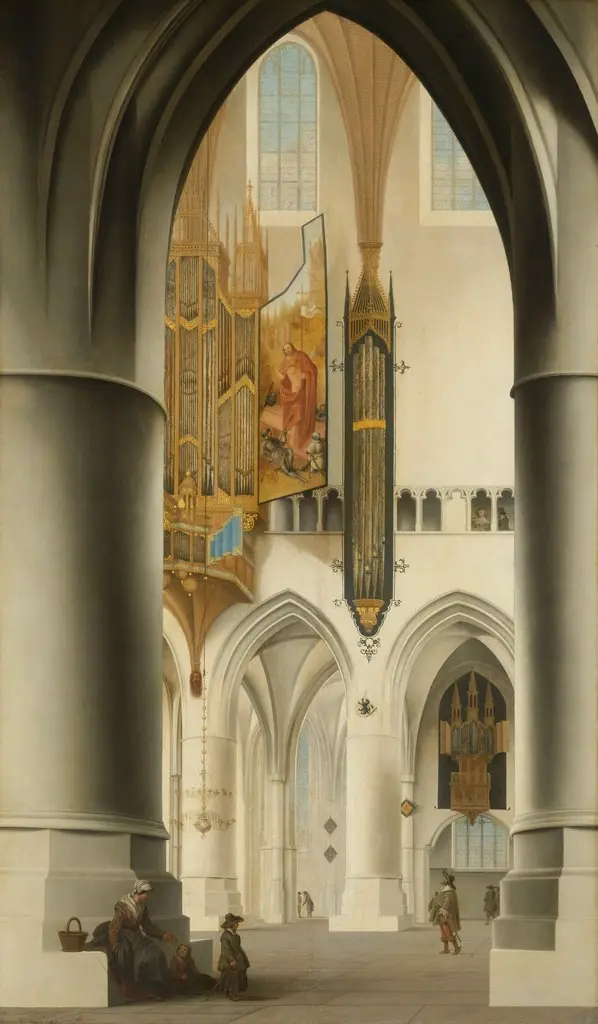 Interior of the Church of St Bavo in Haarlem
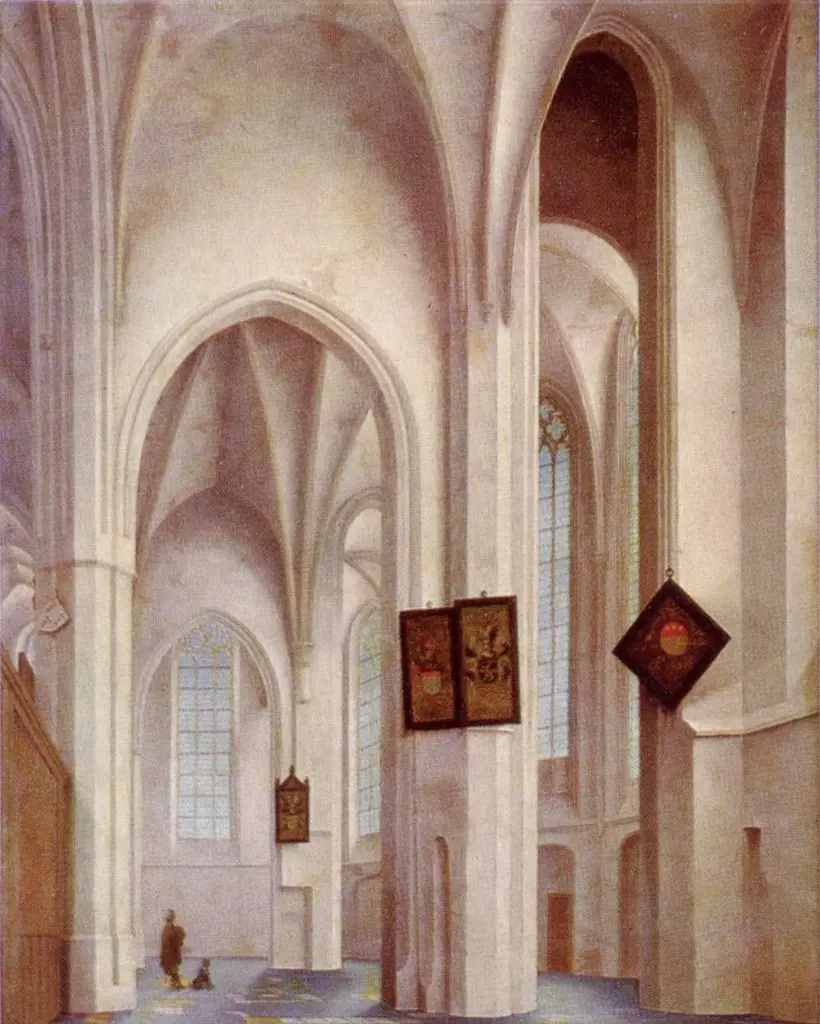 interior view of the church St. Jacobs in Utrecht
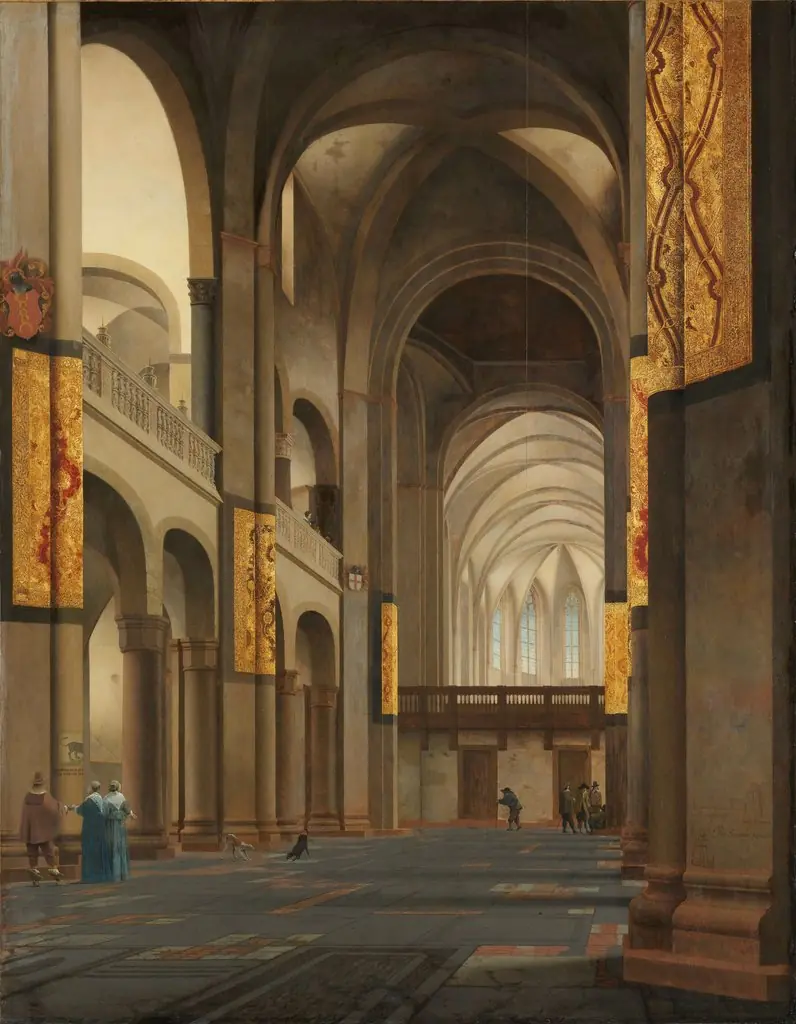 The Nave and Choir of the Mariakerk in Utrecht, seen from the West
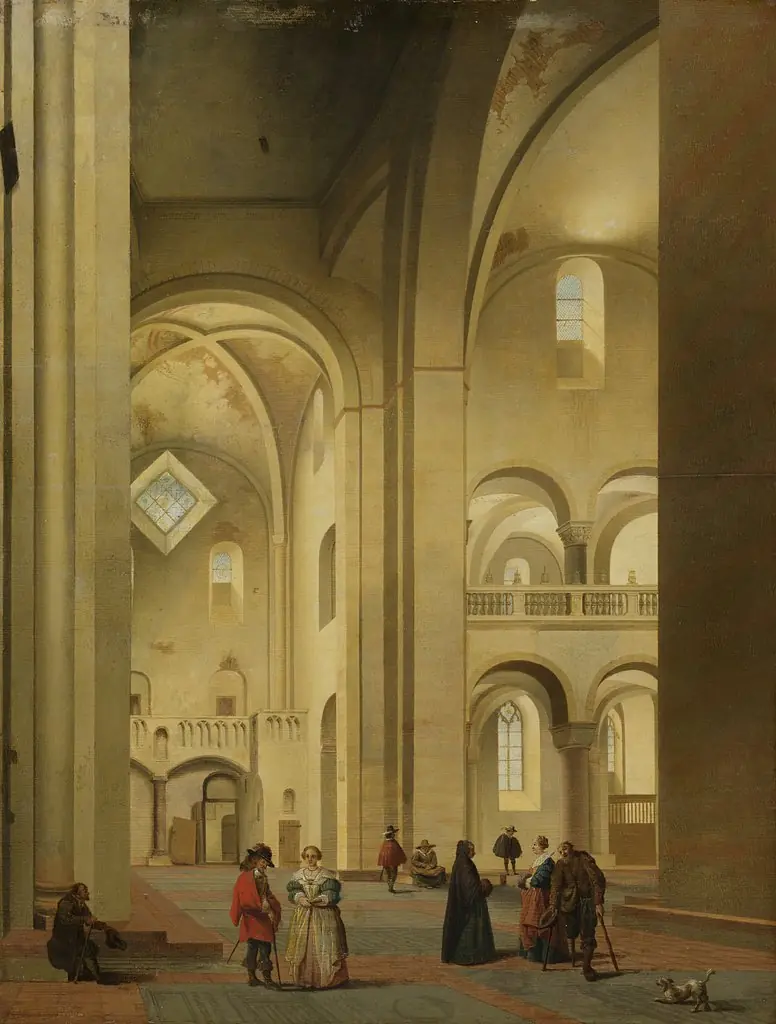 The transept of the Mariakerk in Utrecht, seen from the northeast