Artwork
Saint-Antoine: Il doit y avoir quelque part des figures primordiales dont les corps ne sont que les images (Saint Anthony: "Somewhere there must be primordial shapes whose bodiesare only images")
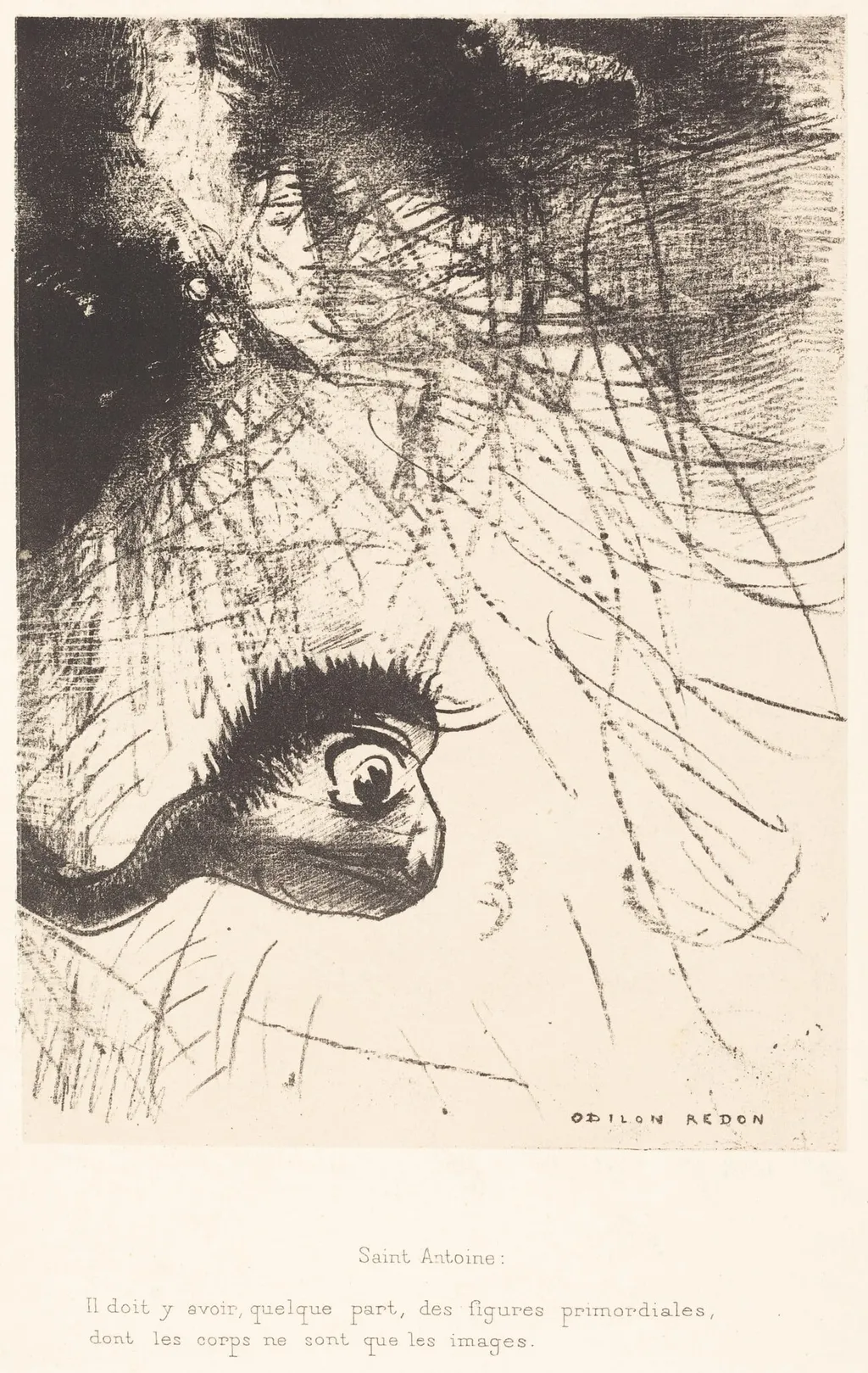
Saint-Antoine: Il doit y avoir quelque part des figures primordiales dont les corps ne sont que les images (Saint Anthony: "Somewhere there must be primordial shapes whose bodiesare only images") is an ink print by the Impressionist artist Odilon Redon. It dates from 1889 and is held in the collection of the National Gallery of Art.
About this work
Overview
Saint-Antoine is a 1889 lithograph by Odilon Redon, housed at the National Gallery of Art, Washington. The work depicts a ghostly, shadowy figure with distinct, unsettling features.
Subject & Meaning
The subject, Saint Anthony, is rendered in an unconventional, eerie manner: a spiky-crowned figure with wide, staring eyes, partially obscured by darkness. The title's text suggests the existence of primal, elusive forms that transcend tangible reality.
Technique & Style
The lithograph exhibits a deliberately rough, sketchy quality, with prominent scratches, smudges, and dark lines that evoke a sense of fading or melting. This style blurs the line between finished work and preliminary sketch.
History & Provenance
Created in 1889, the piece is part of the National Gallery of Art's collection in Washington, D.C., though specific acquisition details are not provided here.
Context
Saint-Antoine reflects Redon's exploration of the intersection between the spiritual and the subconscious, characteristic of his late 19th-century Symbolist leanings.
Legacy
While specific influences or direct descendants of Saint-Antoine are not detailed, it contributes to Redon's broader impact on early 20th-century artists experimenting with dreamlike, psychologically charged imagery.
Own this work as a print
Artist & collection

Artist
Odilon Redon (born Bertrand Redon; French: ; 20 April 1840 – 6 July 1916) was a French Symbolist draftsman, printmaker, and painter.

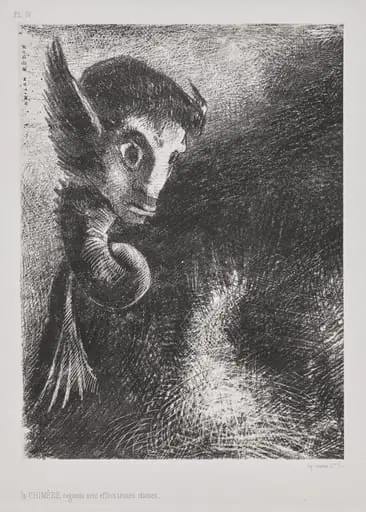 The Chimera Gazed at All Things with Fear
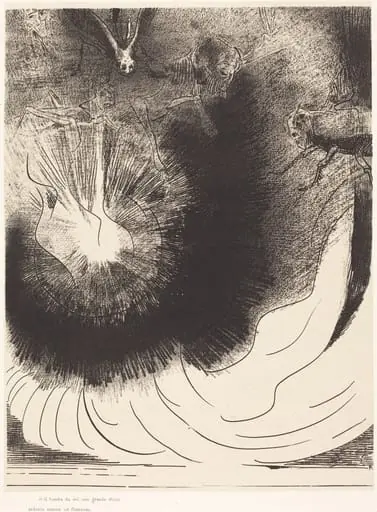 Et il tombe du ciel une grande etoile ardente (And there fell a great star from heaven burning as it were a lamp)
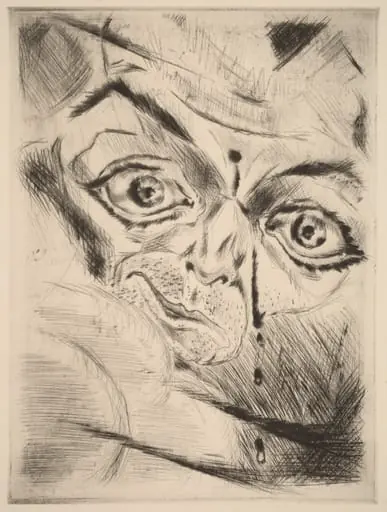 Peter with a Gunshot Wound in His Forehead
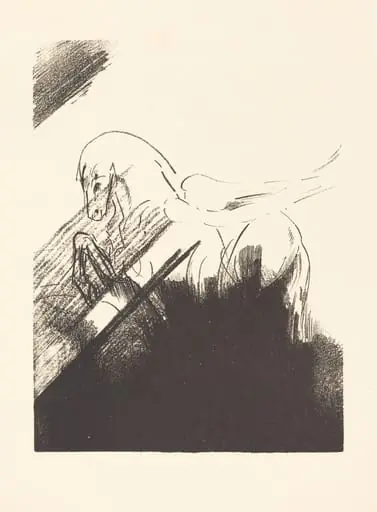 Cheval aile (Winged Horse)
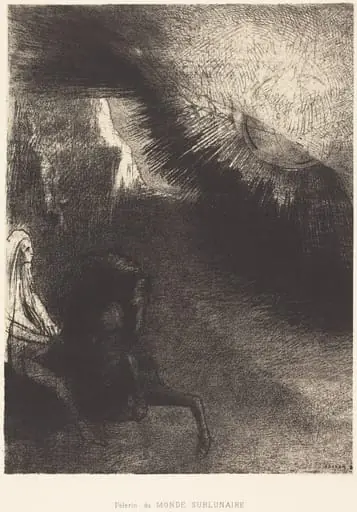 Pélerin du monde sublunaire (Pilgrim of the sublunary world)
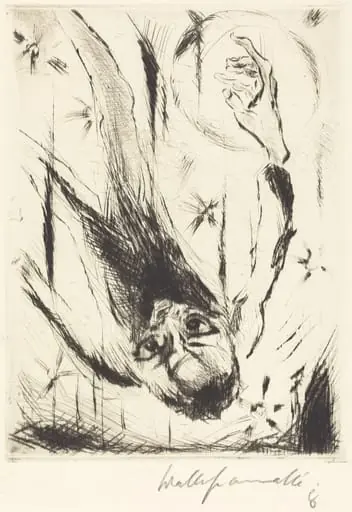 The Fall into Infinity
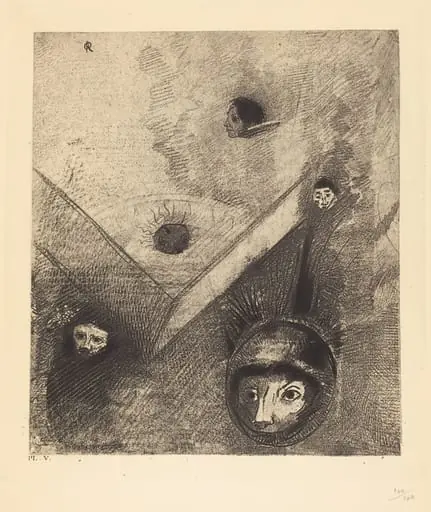 Sur le fond de nos nuits dieu de son doigt savant dessine un cauchemar multiforme et sans treve (On backdrop of our nights God with His knowing finger traces a multiform implacable nightmare)
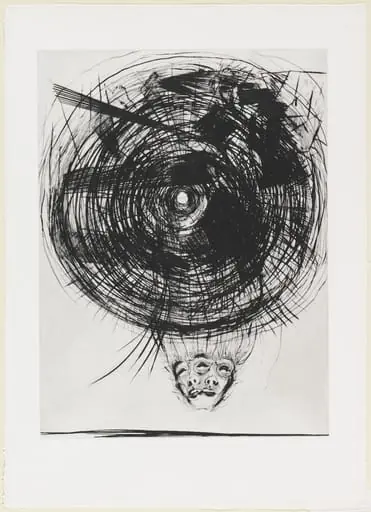 Untitled
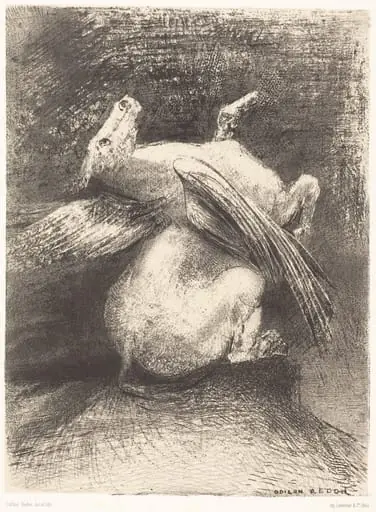 L'Aile impuissante n'eleva point la bete en ces noirs espaces (The impotent wing did not lift the animal into that black space
![Newborn in a Bonnet (Le nouveau-né au bonnet], by Eugène Carrière](https://artifactworldgallery.com/img/eugene-carriere--newborn-in-a-bonnet-le-nouveau-ne-au-bonnet--230a39adbc28b475-w320.webp) Newborn in a Bonnet (Le nouveau-né au bonnet]
Newborn in a Bonnet (Le nouveau-né au bonnet]