Artwork
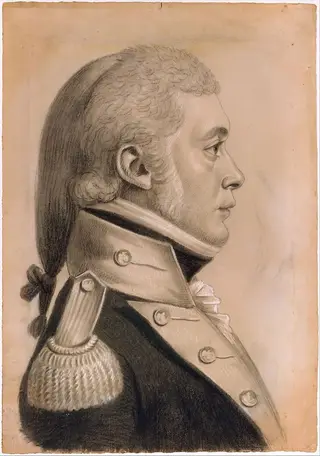
Captain Clarence Mulford
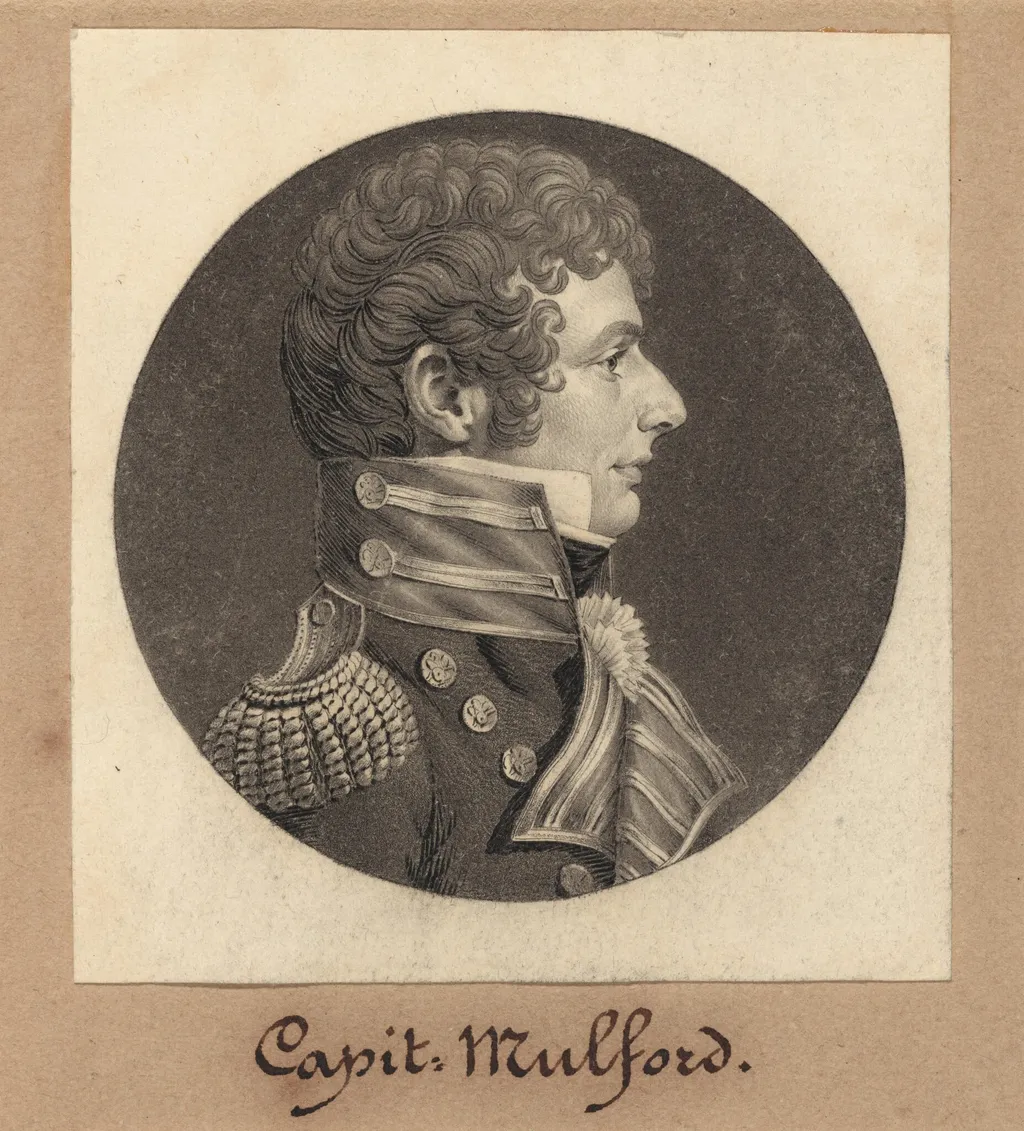
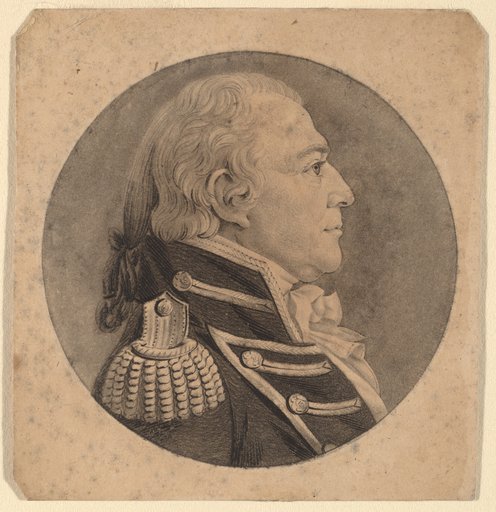
Captain Clarence Mulford is an ink print by the Romanticist artist Charles B. J. Févret de Saint-Mémin. It dates from 1809 and is held in the collection of the National Gallery of Art. This 1809 print by Charles B.
- Inscription
- Inscribed:lower center mount in black ink by unknown hand: Capit. Mulford.
About this work
Overview
This 1809 print by Charles B. J. Févret de Saint-Mémin portrays Captain Clarence Mulford in profile, rendered in mezzotint and engraving on wove paper. The image is mounted on a brown wove support, enhancing its tonal depth. The composition isolates the subject against a dark, circular field edged in light, focusing attention on the uniform and facial features without extraneous detail.
Subject & Meaning
Captain Mulford, a military officer, is depicted in full uniform, emphasizing his rank and service. The profile view, common in neoclassical portraiture, conveys dignity and restraint. The precision of the uniform’s embellishments suggests a desire to document his official identity, reflecting early 19th-century values of order, duty, and social standing.
Technique & Style
Févret de Saint-Mémin employed mezzotint for rich tonal gradations and engraving for fine linear detail, particularly in the uniform’s embroidery and buttons. The dark circular background enhances the subject’s relief, a hallmark of his portraiture. The technique demands meticulous handwork, revealing the artist’s skill in translating texture and form through ink and plate.
History & Provenance
Created in 1809 during Févret de Saint-Mémin’s time in the United States, the print likely served as a commissioned likeness for a military figure. The artist, a French émigré, specialized in portrait engravings for American elites. This work is part of a broader series documenting prominent individuals of the era, preserved in institutional collections.
Context
In early 19th-century America, engraved portraits were vital for disseminating images of public figures before photography. Févret de Saint-Mémin’s method aligned with European traditions but catered to a new republic’s interest in civic identity. His portraits functioned as both personal mementos and symbols of national character.
Legacy
The print exemplifies the technical rigor of pre-photographic portraiture and the role of printmaking in shaping public perception. Févret de Saint-Mémin’s approach influenced American engravers and contributed to the documentation of military and civic leaders during a formative period in U.S. history.
Own this work as a print
Artist & collection
Artist
Charles B. J. Févret de Saint-Mémin
Charles Balthazar Julien Févret de Saint-Mémin (French pronunciation: ; 1770–1852) was a French portrait painter and museum director.