Artwork
George Bond
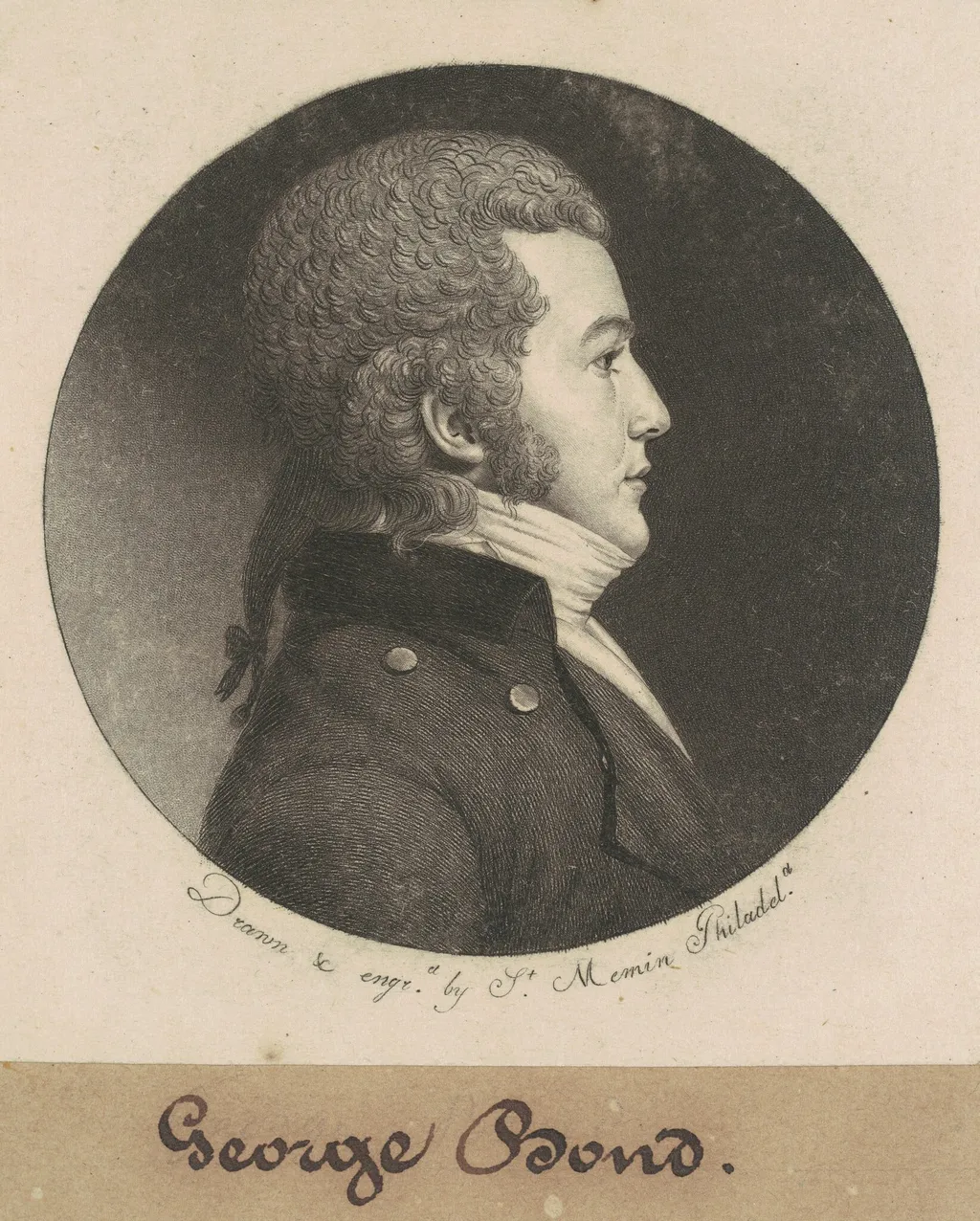
George Bond is an ink print by the Romanticist artist Charles B. J. Févret de Saint-Mémin. It dates from 1800 and is held in the collection of the National Gallery of Art.
- Inscription
- Inscribed:lower center in plate: Drawn & engrd. by St. Memin Philadela.; lower center mount in black ink by unknown hand: George Bond.
About this work
Overview
Saint-Mémin utilized a mechanical device known as a physionotrace to trace the sitter's silhouette, transferring the outline to copper plates for engraving.
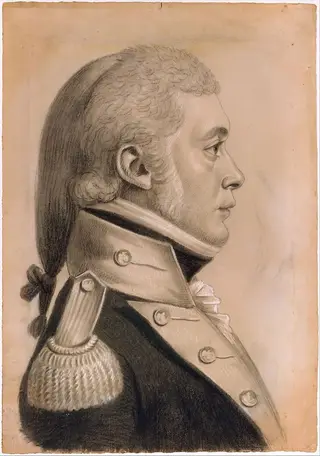
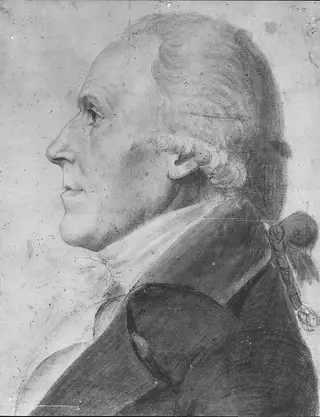
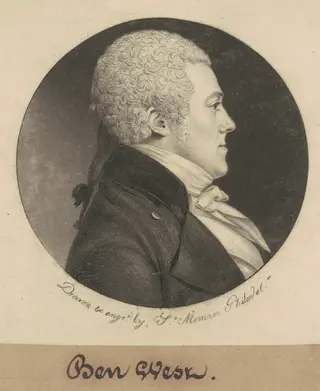
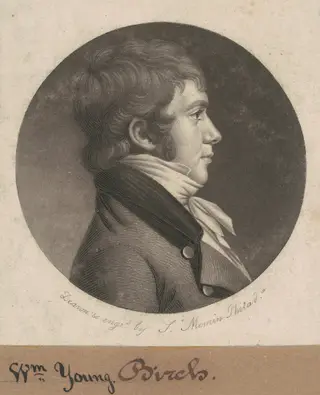
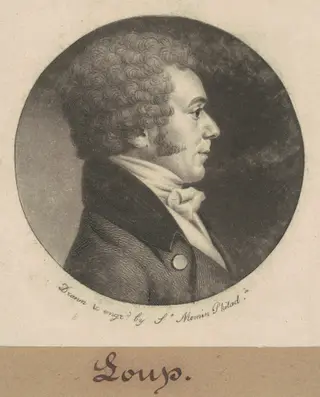
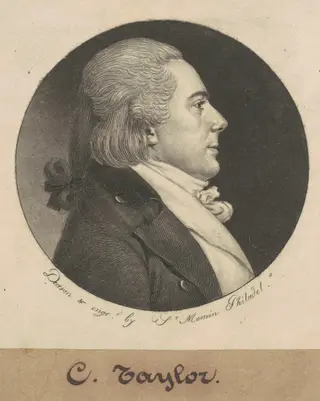
George Bond is a mezzotint and engraving executed in 1800 by Charles B. J. Févret de Saint-Mémin, depicting the subject in a bust-length profile against a stark, unadorned background. The work exemplifies the artist's distinctive neoclassical approach to portraiture, which he developed during his exile in the United States. Saint-Mémin utilized a mechanical device known as a physionotrace to trace the sitter's silhouette, transferring the outline to copper plates for engraving.
The resulting image relies on precise cross-hatching and fine line work to model the facial features, creating a sense of volume and texture without the use of color. The dark coat and white collar provide a sharp contrast that emphasizes the subject's profile. This print represents a significant chapter in Saint-Mémin's career, during which he produced hundreds of such portraits for American patrons, blending scientific observation with artistic convention to capture the likenesses of prominent figures in the early republic.
Subject & Meaning
The image depicts a gentleman’s head and shoulders, his features rendered with precise line work. He wears a dark coat and a white collar, which contrast sharply with the plain background, emphasizing his social standing. The portrait functions as a straightforward likeness, intended to convey the sitter’s identity and status to contemporary viewers.
Technique & Style
Saint‑Mémin combined mezzotint’s tonal richness with fine engraving lines, employing cross‑hatching and delicate scratches to model the face and clothing. The interplay of deep blacks and subtle grays creates a smooth skin texture and a sense of three‑dimensionality despite the print’s modest size. This hybrid approach was typical of early‑19th‑century American portrait prints.
History & Provenance
Created between 1798 and 1803, the print entered the Corcoran Collection, where it remains catalogued. Its provenance reflects the artist’s practice of producing multiple portrait prints for affluent patrons, a common commercial strategy for engravers of the era.
Context
During the turn of the 19th century, American portraiture often relied on small, affordable prints to disseminate images of prominent individuals. Saint‑Mémin, a French émigré, adapted European mezzotint techniques to meet the demand of a growing American market, producing works like this one for wealthy clients seeking personal likenesses.
Own this work as a print
Artist & collection
Artist
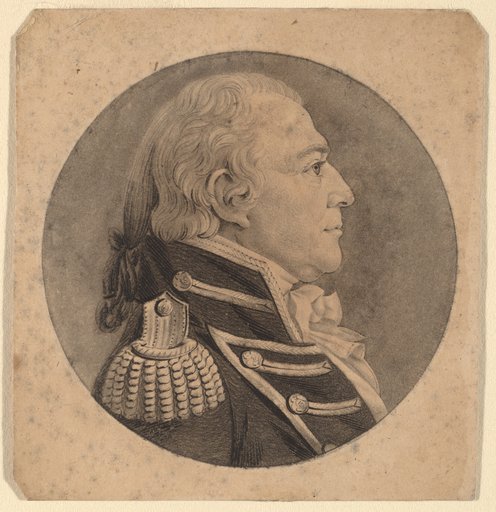
Charles B. J. Févret de Saint-Mémin
Charles Balthazar Julien Févret de Saint-Mémin (French pronunciation: ; 1770–1852) was a French portrait painter and museum director.