Artwork
Hore Browse Trist
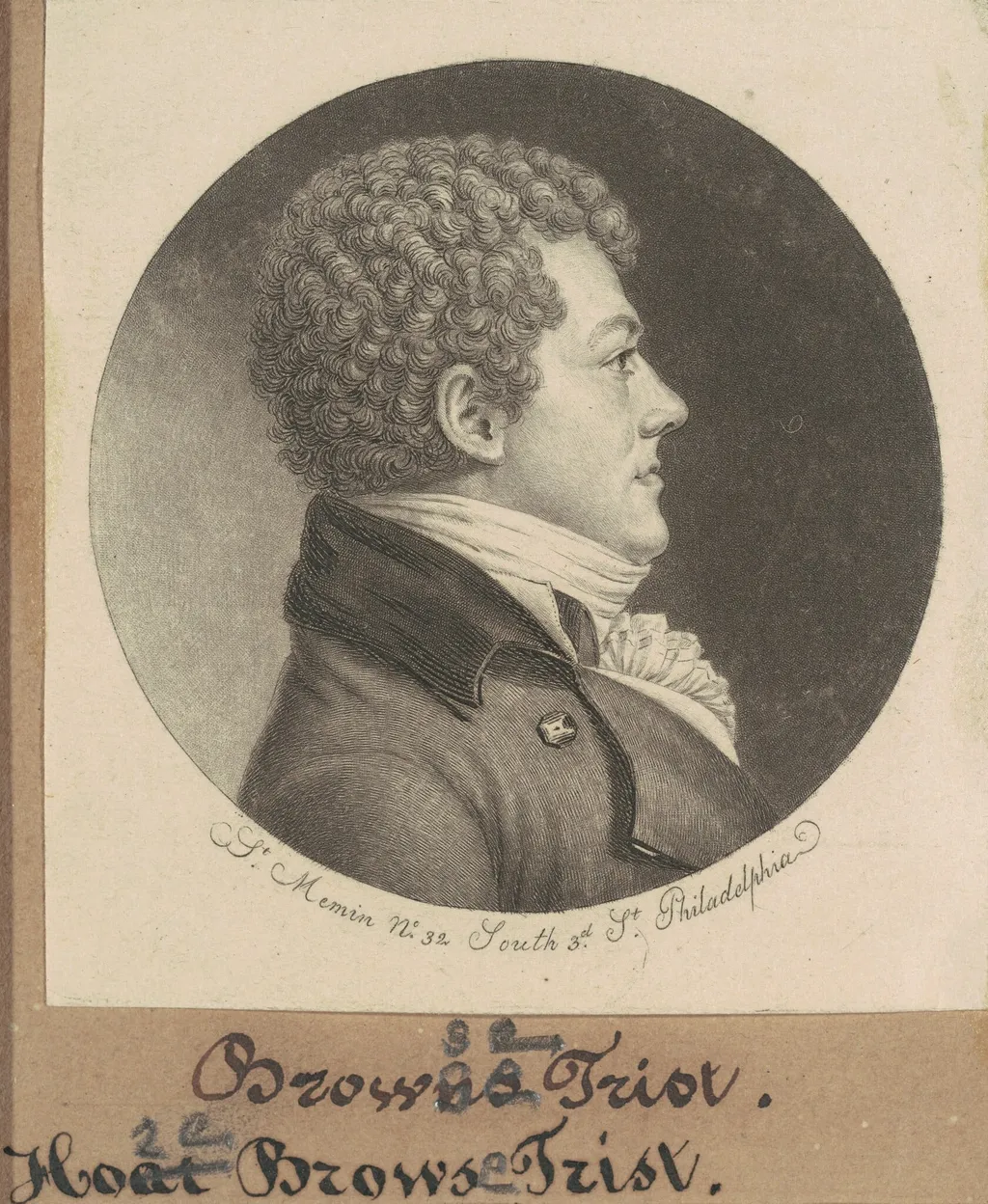
Hore Browse Trist is an ink print by the Romanticist artist Charles B. J. Févret de Saint-Mémin. It dates from 1798 and is held in the collection of the National Gallery of Art. Created in 1798, this print by Charles B.
- Inscription
- Inscribed:lower center in plate: St. Memin No. 32 South 3d. St. Philadelphia; lower center mount in black ink by unknown hand: Browns Trist. / Hoar Brows Trist.
About this work
Overview
Févret de Saint-Mémin combines mezzotint and engraving techniques on wove paper, mounted to a brown wove support.
Created in 1798, this print by Charles B. J. Févret de Saint-Mémin combines mezzotint and engraving techniques on wove paper, mounted to a brown wove support. It portrays Hore Browse Trist, a young man born in Philadelphia to a British soldier and an American Quaker. The work is a portrait study, notable for its quiet realism and technical precision, reflecting Saint-Mémin’s interest in capturing individual likeness through fine graphic detail.
Subject & Meaning
Hore Browse Trist, the subject, was the son of a British military officer and an American Quaker woman, embodying a cross-cultural lineage during a period of political tension between Britain and the United States. The portrait’s neutral expression and unadorned attire suggest a deliberate focus on personal identity rather than social status. It may reflect the artist’s engagement with individuals from mixed backgrounds in post-revolutionary America.
Technique & Style
Saint-Mémin employed mezzotint to achieve subtle gradations of tone, enhanced by fine engraving lines that define facial features and fabric folds. The monochromatic palette and restrained composition emphasize texture and form over ornamentation. The work demonstrates his mastery of printmaking as a tool for intimate portraiture, prioritizing accuracy and tonal nuance over dramatic effect.
History & Provenance
The print was produced during Saint-Mémin’s time in the United States, where he worked as a portraitist for the American elite. It entered the collection of the National Gallery of Art in Washington, D.C., where it remains part of its holdings in early American graphic art. Its survival in good condition reflects its significance as a record of both artistic practice and social diversity in the late 18th century.
Context
In the 1790s, Saint-Mémin was among a small group of European-trained artists documenting American sitters through portraiture. His prints often captured individuals from varied ethnic and political backgrounds, reflecting the nation’s emerging pluralism. This portrait of Trist, with his mixed heritage, aligns with broader cultural shifts in post-Revolutionary America, where identity was increasingly defined beyond inherited allegiance.
Legacy
Saint-Mémin’s prints, including this one, contributed to the development of American portraiture in print form. While not widely exhibited in his lifetime, his works are now valued for their historical documentation and technical refinement. This portrait of Hore Browse Trist endures as a quiet testament to the complexity of personal and familial identity in the early American republic.
Own this work as a print
Artist & collection
Artist
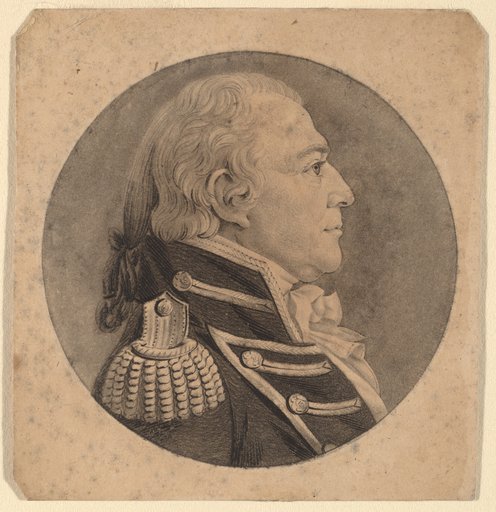
Charles B. J. Févret de Saint-Mémin
Charles Balthazar Julien Févret de Saint-Mémin (French pronunciation: ; 1770–1852) was a French portrait painter and museum director.