Artwork
Hyman Marks
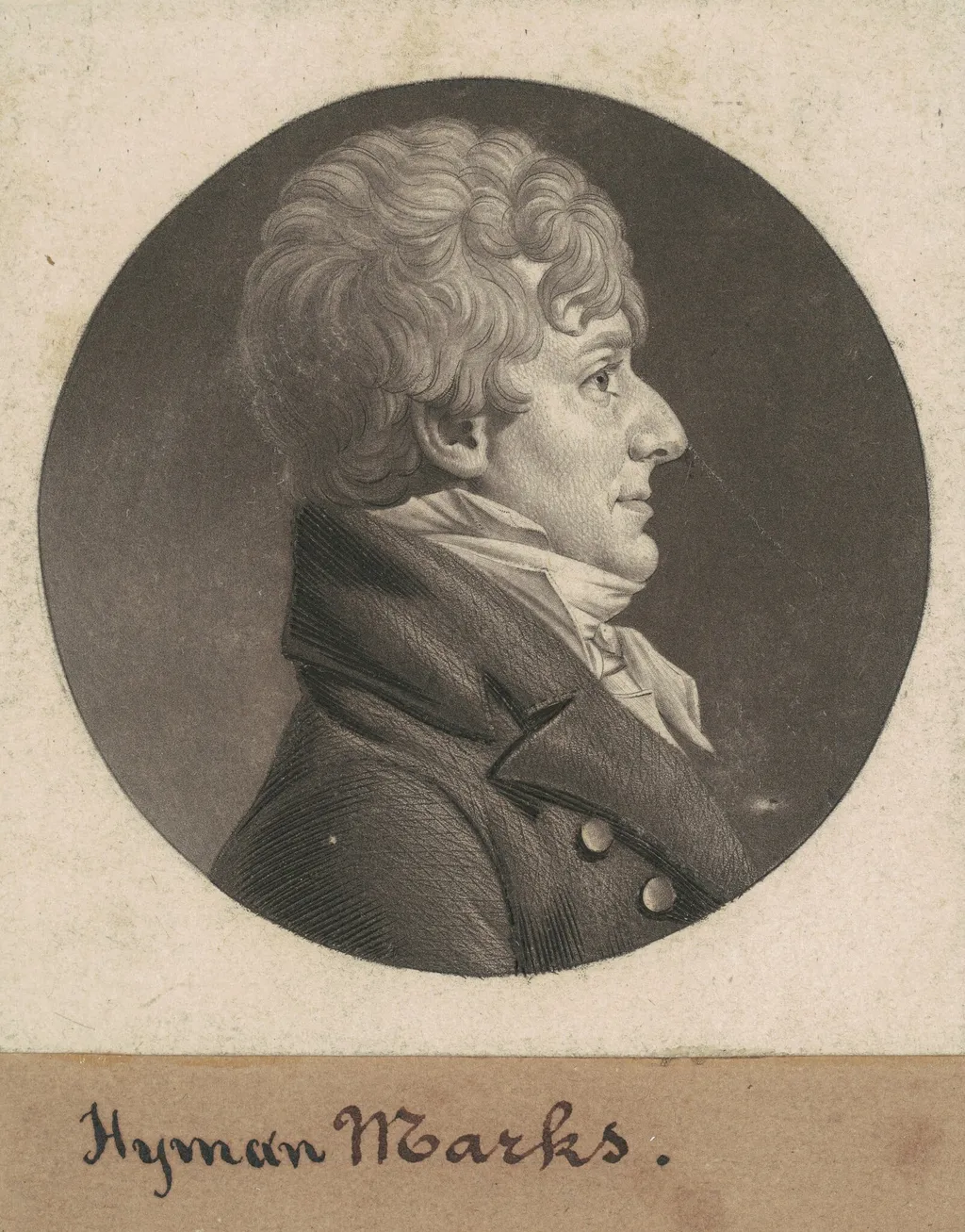
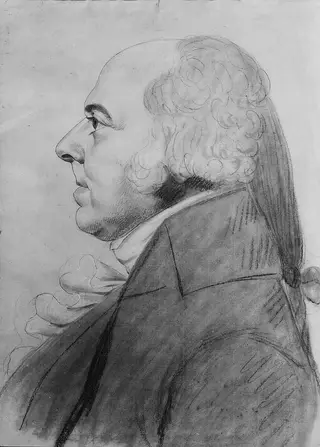
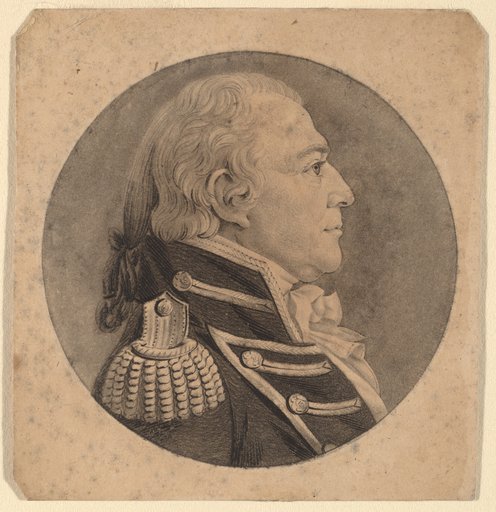
Hyman Marks is an ink print by the Romanticist artist Charles B. J. Févret de Saint-Mémin. It dates from 1805 and is held in the collection of the National Gallery of Art.
- Inscription
- Inscribed:lower center mount in black ink by unknown hand: Hyman Marks.
About this work
Overview
Marks is shown wearing simple, dark attire that contrasts with the light paper, emphasizing his serious expression and dignified bearing.
Created in 1805, this work is a mezzotint and engraving on wove paper depicting Hyman Marks, a prominent Jewish financier active in the United States during the early Republic. Executed by Charles B. J. Févret de Saint-Mémin, the portrait presents the sitter in a three-quarter view against a plain background, adhering to the neoclassical profile and bust conventions the artist favored during his American period. Marks is shown wearing simple, dark attire that contrasts with the light paper, emphasizing his serious expression and dignified bearing.
Saint-Mémin, a French émigré who settled in Philadelphia and New York, produced hundreds of such portraits using a physiognotrace to capture precise likenesses before rendering them in engraving or mezzotint. This specific print of Hyman Marks is historically significant as one of the few surviving visual records of a Jewish businessman from this era, documenting the integration of Jewish merchants into the American economic landscape. The work exemplifies Saint-Mémin's systematic approach to portraiture, prioritizing anatomical accuracy and character over idealization, and serves as a primary source for understanding the visual culture of early American commerce.
Subject & Meaning
The image portrays Marks in modest attire, his expression solemn and composed, emphasizing his professional stature rather than personal extravagance. As one of the few visual records of a Jewish financier from this period, the print offers insight into the social visibility of Jewish merchants within the broader economic landscape.
Technique & Style
Combining mezzotint’s rich tonal gradations with the linear precision of engraving, the artist achieves a nuanced surface that balances depth and clarity. The use of black ink on wove paper highlights subtle contrasts, while the mounting on a darker sheet frames the portrait and enhances its visual weight.
History & Provenance
The print was produced by Charles B. J. Févret de Saint‑Mémin, a French artist noted for his detailed portrait prints of notable individuals. Its survival in museum collections reflects both the artist’s reputation for high‑quality portraiture and the historical interest in documenting prominent financiers.
Context
Created during a time when Jewish participation in finance was expanding, the portrait aligns with a broader trend of documenting emerging economic elites. Saint‑Mémin’s focus on accuracy and dignity mirrors contemporary Enlightenment ideals about the individual’s role in society.
Legacy
Although not widely reproduced, the image remains a valuable reference for scholars studying the visual culture of Jewish business figures in the early 1800s, illustrating how print media contributed to the recognition of such individuals beyond their immediate circles.
Own this work as a print
Artist & collection
Artist
Charles B. J. Févret de Saint-Mémin
Charles Balthazar Julien Févret de Saint-Mémin (French pronunciation: ; 1770–1852) was a French portrait painter and museum director.