Artwork
Thomas Tingey
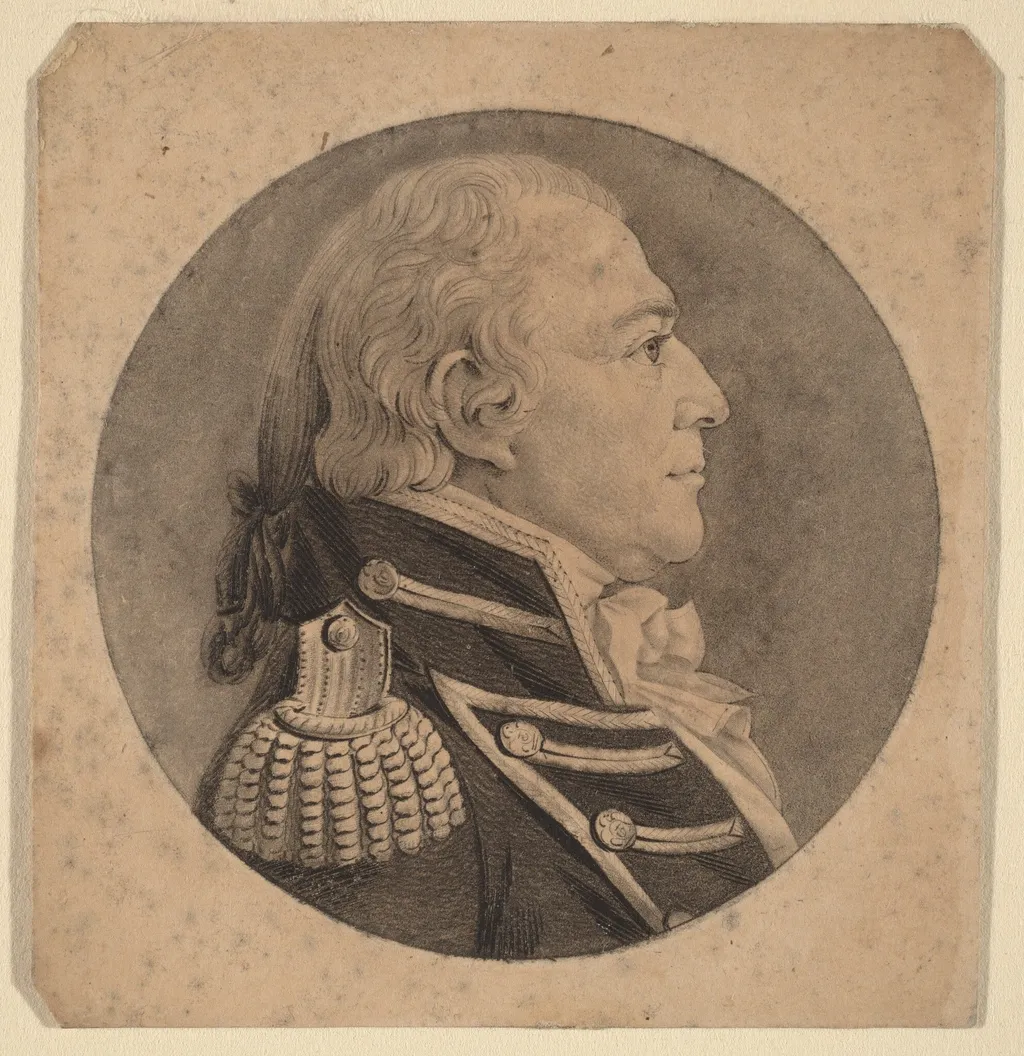
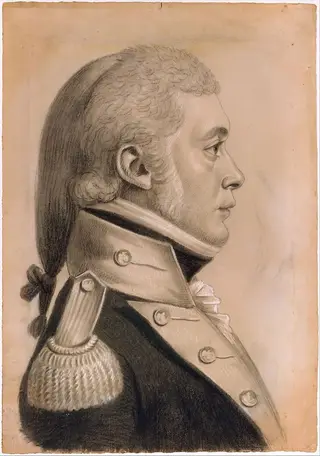
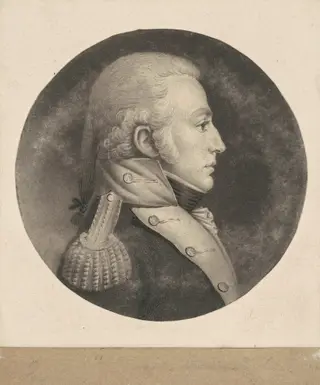
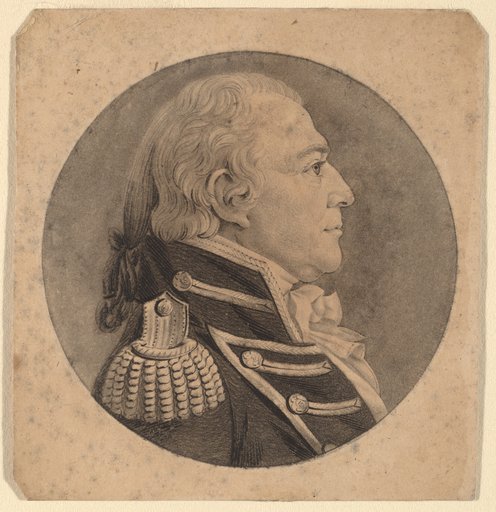
Thomas Tingey is an ink print by the Romanticist artist Charles B. J. Févret de Saint-Mémin. It dates from 1806 and is held in the collection of the National Gallery of Art.
About this work
Overview
The image captures Tingey in formal military attire, rendered with precise line work and tonal variation to suggest texture and depth.
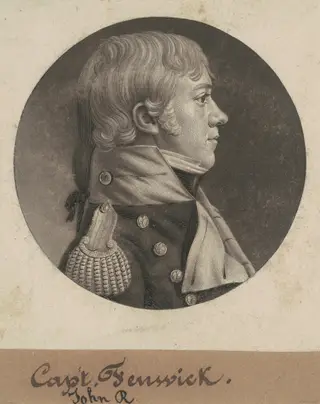
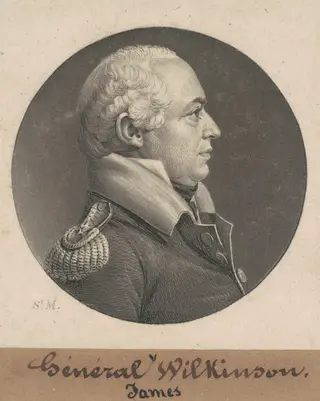
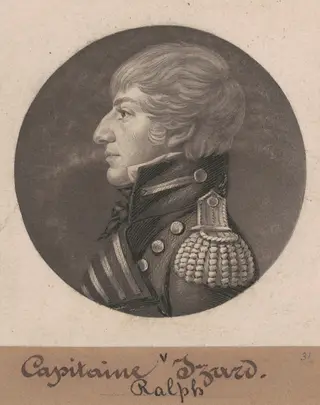
Created in 1806, this black-and-white print by Charles Balthazar Julien Févret de Saint-Mémin portrays Thomas Tingey, a U.S. naval officer. Executed in etching, engraving, and roulette on wove paper, the work belongs to a series of portraits Saint-Mémin produced in the United States after fleeing the French Revolution. The image captures Tingey in formal military attire, rendered with precise line work and tonal variation to suggest texture and depth.
Subject & Meaning
Thomas Tingey served in the American Revolution and later became commandant of the Washington Navy Yard, a key position in the early U.S. Navy. The portrait emphasizes his rank and authority through formal dress: a dark coat with gold buttons, a sash, and a powdered wig. His stern expression and strong jaw convey discipline and gravitas, aligning the image with ideals of military leadership in the young republic.
Technique & Style
Saint-Mémin employed etching and engraving to achieve fine detail, supplemented by roulette for textured effects on fabric and hair. The wove paper provided a smooth surface ideal for intricate lines. The circular frame, hand-drawn rather than mechanically ruled, lends an intimate, handcrafted quality. Subtle tonal gradations suggest volume without color, reflecting the conventions of portrait engraving in early 19th-century America.
History & Provenance
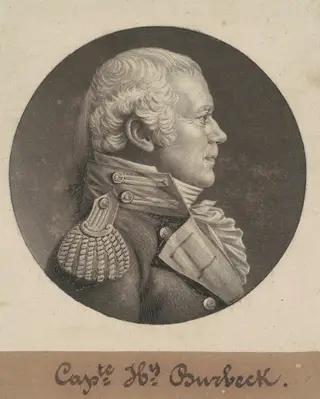
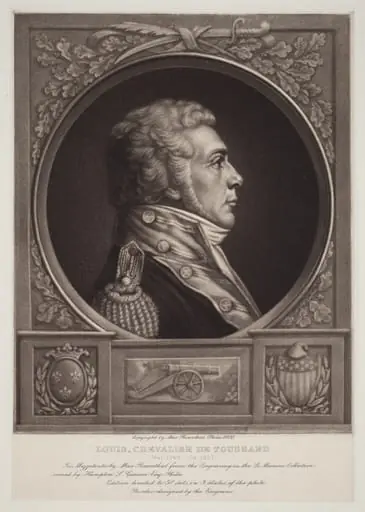
Saint-Mémin, a French émigré, established himself in the U.S. as a portrait engraver, producing likenesses of national figures including Washington and Jefferson. This portrait of Tingey was made during his active years in Washington, D.C., likely commissioned by the Navy or a private patron. Its survival reflects the value placed on documenting military leadership during the formative decades of the U.S. government.
Context
In the early 1800s, engraved portraits served as primary means of visual documentation for public figures, especially before widespread photography. Saint-Mémin’s work contributed to a national visual culture that sought to legitimize authority through standardized, dignified imagery. Tingey’s portrait fits within this trend, aligning naval leadership with the emerging identity of the American state.
Legacy
Saint-Mémin’s portraits, including this one, remain important records of early American leadership. While not widely exhibited today, they are preserved in institutional collections as examples of technical skill and historical documentation. The print offers insight into how military figures were visually constructed in the post-Revolutionary era, bridging European artistic traditions with American civic ideals.
Own this work as a print
Artist & collection
Artist
Charles B. J. Févret de Saint-Mémin
Charles Balthazar Julien Févret de Saint-Mémin (French pronunciation: ; 1770–1852) was a French portrait painter and museum director.