Artwork
酒井抱一筆 鶯白梅図|Bush Warbler (Uguisu) in a Plum Tree
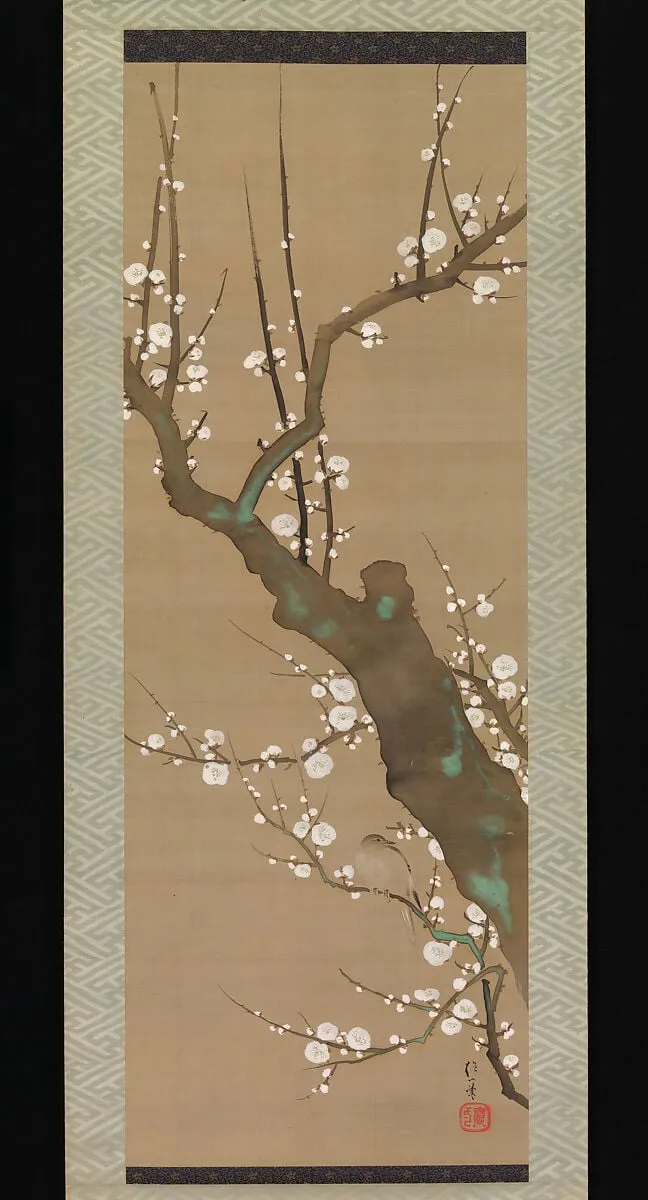
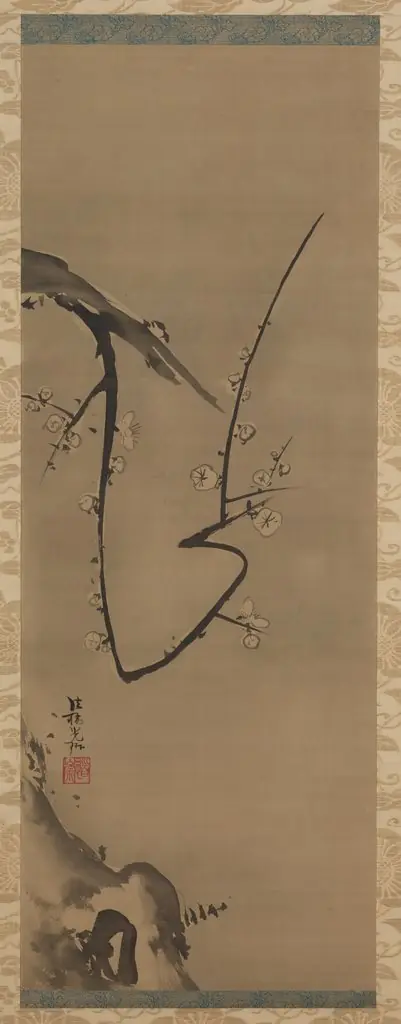
酒井抱一筆 鶯白梅図|Bush Warbler (Uguisu) in a Plum Tree is an ink painting by the Nihonga artist Sakai Hōitsu. It dates from 1814 and is held in the collection of the Metropolitan Museum of Art.
About this work
Technique & Style
Created in 1814, this hanging scroll by Sakai Hōitsu is executed in ink and color with gold on a silk support.
Created in 1814, this hanging scroll by Sakai Hōitsu is executed in ink and color with gold on a silk support. The work depicts a bush warbler (uguisu) in a plum tree, a bird-and-flower subject. The integration of gold alongside traditional pigments on silk reflects the decorative Rinpa qualities of the artist's style during this period, allowing delicate rendering of the bird and the plum branches against a luminous ground.
History & Provenance
Sakai Hōitsu created the hanging scroll Bush Warbler (Uguisu) in a Plum Tree in 1814. Executed in Japan, the work features ink, color, and gold on silk and depicts a bird and a tree. It is held in the collection of the Metropolitan Museum of Art in New York.
No specific details regarding the original commission, the identity of the first owner, or the subsequent chain of custody prior to its museum acquisition are provided in the available records, and the documentation does not include an accession number or exhibition history.
Overview
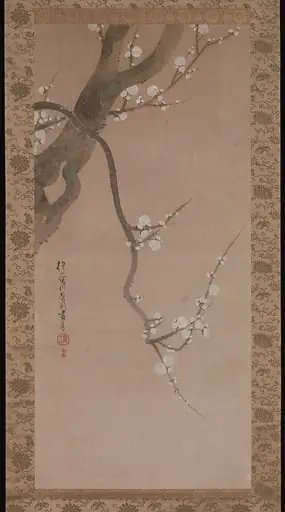
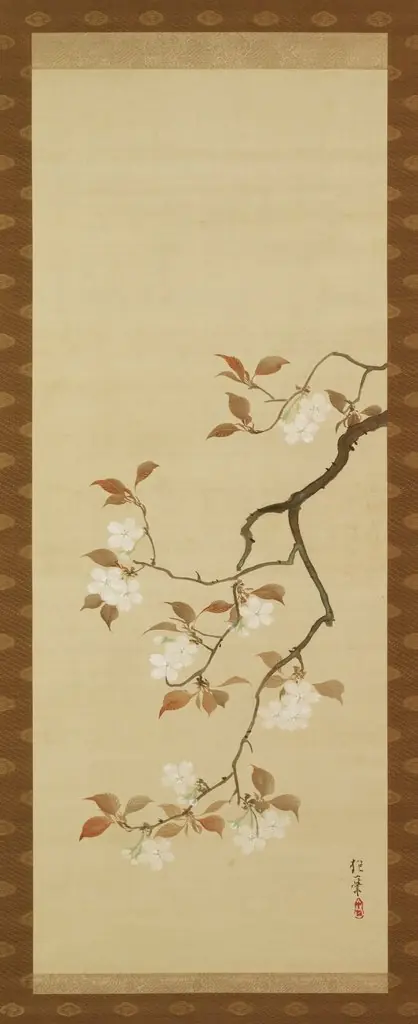
Sakai Hōitsu's 'Bush Warbler in a Plum Tree' (1814) is a hanging scroll executed in ink, color, and gold on silk. The composition centers on a single bush warbler perched on a gnarled plum branch that extends diagonally across the frame. The bird is depicted in profile, its dark plumage contrasting with the delicate, emerging leaves of the plum tree, which are rendered in soft greens with subtle red edges.
A shimmering gold leaf background fills the negative space, creating a luminous atmosphere that emphasizes the bird's presence without depicting a specific landscape setting. Created in 1814, this work exemplifies Hōitsu's role in the Rinpa school revival, blending the movement's traditional decorative aesthetics with a refined, naturalistic observation. The piece reflects the artist's mastery of the 'cutting' technique, where the gold ground interacts with the painted elements to suggest light and seasonality.
As a key example of early 19th-century Japanese painting, it demonstrates Hōitsu's ability to synthesize classical motifs with a fresh, poetic sensibility, marking a significant moment in his career as he reinterpreted the legacy of Ogata Kōrin.
Subject & Meaning
The artwork centers on an uguisu, or bush warbler, depicted with an open beak, suggesting its song. It rests on a gnarled plum branch, whose nascent leaves, tinged with red, signify the arrival of spring. This composition evokes a moment of serene natural beauty, characteristic of traditional East Asian art that often imbues flora and fauna with seasonal and poetic significance, inviting contemplation of the natural world.
Context
During the early 1800s, Japanese artists like Hōitsu often moved away from the bold, saturated colors seen in earlier periods. Instead, they increasingly favored a more subdued aesthetic, emphasizing delicate ink work and subtle washes. This shift allowed for a greater focus on atmospheric effects and the nuanced depiction of natural forms, aligning with a broader appreciation for quiet contemplation in art.
Artist & collection