Artwork
酒井抱一筆 柿図屏風|Persimmon Tree
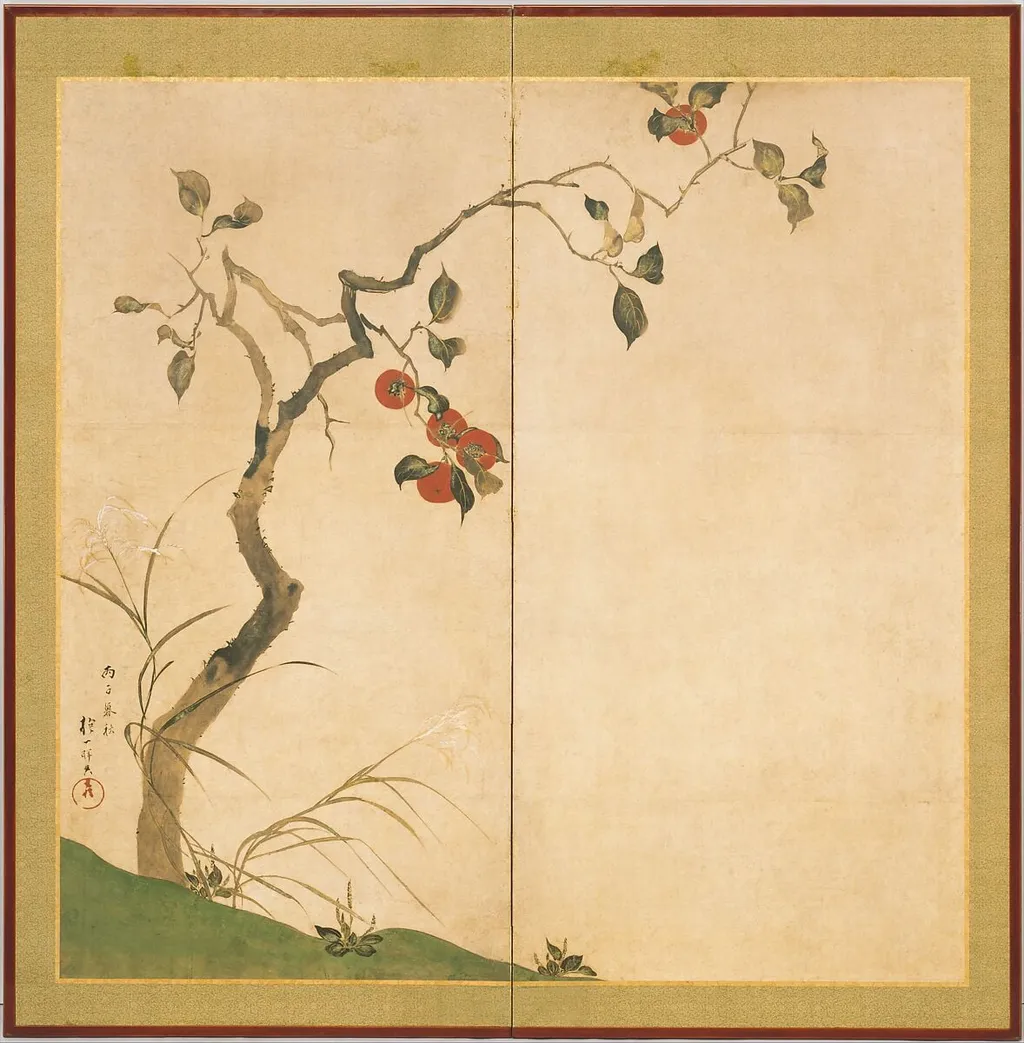
酒井抱一筆 柿図屏風|Persimmon Tree is an ink painting by the Nihonga artist Sakai Hōitsu. It dates from 1816 and is held in the collection of the Metropolitan Museum of Art.
About this work
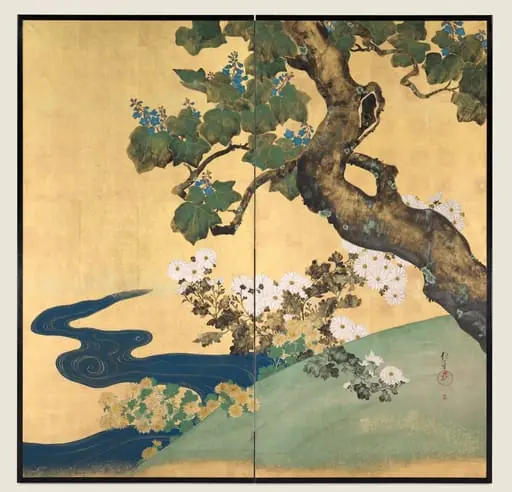
You see a single persimmon tree on a two-panel screen, its branches heavy with bright orange fruit.
Hōitsu painted this in 1816, right when Japan was closing its doors to the world. The tree feels quiet, almost alone, no people, no wind, just fruit hanging still. The leaves are done in quick, light strokes, like calligraphy.
If you like the way ink can feel alive, look up cross-hatching.
Subject & Meaning
Sakai Hōitsu's Persimmon Tree depicts a single, mature persimmon tree laden with fruit, rendered in ink and color on a two-panel folding screen.
Sakai Hōitsu's Persimmon Tree depicts a single, mature persimmon tree laden with fruit, rendered in ink and color on a two-panel folding screen. The subject focuses on the natural form of the tree and its harvest, presenting a straightforward landscape scene without additional narrative figures or complex allegorical settings. While the work emphasizes the aesthetic beauty of the persimmon and the tree's structure, the sources do not specify a deeper symbolic meaning or specific iconographic program beyond the depiction of the fruit and the tree itself.
Technique & Style
Created in 1816 by Sakai Hōitsu, this work is a two-panel folding screen executed with ink and color on paper. The composition focuses on a landscape genre subject, specifically depicting a persimmon tree laden with fruit. As a painted screen, the piece utilizes a flexible paper support mounted on a folding structure, a format traditional to Japanese decorative arts.
The application of both ink and mineral or organic pigments allows for a combination of linear definition and chromatic richness in rendering the botanical elements.
History & Provenance
The work titled Persimmon Tree is a two‑panel folding screen created in 1816 by Sakai Hōitsu using ink and color on paper. It portrays a persimmon tree and fruit, situating it within the landscape genre of Japanese painting. The piece is classified as a painting and is part of the Metropolitan Museum of Art’s collection, which records its inception as 1816. Its subject matter aligns with depictions of fruit and trees in the museum’s catalogue.
Overview
Sakai Hōitsu's Persimmon Tree (柿図屏風), created in 1816, is a two-panel folding screen rendered in ink and color on paper. This painting presents a solitary persimmon tree, its branches visibly heavy with ripe, bright orange fruit. The composition offers a quiet contemplation of nature, characteristic of the artist's refined aesthetic during the Edo period.
Context
Created in 1816, this screen emerged during a period when Japan was increasingly isolating itself from external influences. The nation's policy of sakoku, or 'closed country,' was firmly in place, limiting international exchange. This historical backdrop may subtly inform the artwork's quiet, self-contained quality, reflecting a broader cultural introspection during an era of national seclusion.
Artist & collection