Artwork
Activities of the Twelve Months (Tsukinami-e)
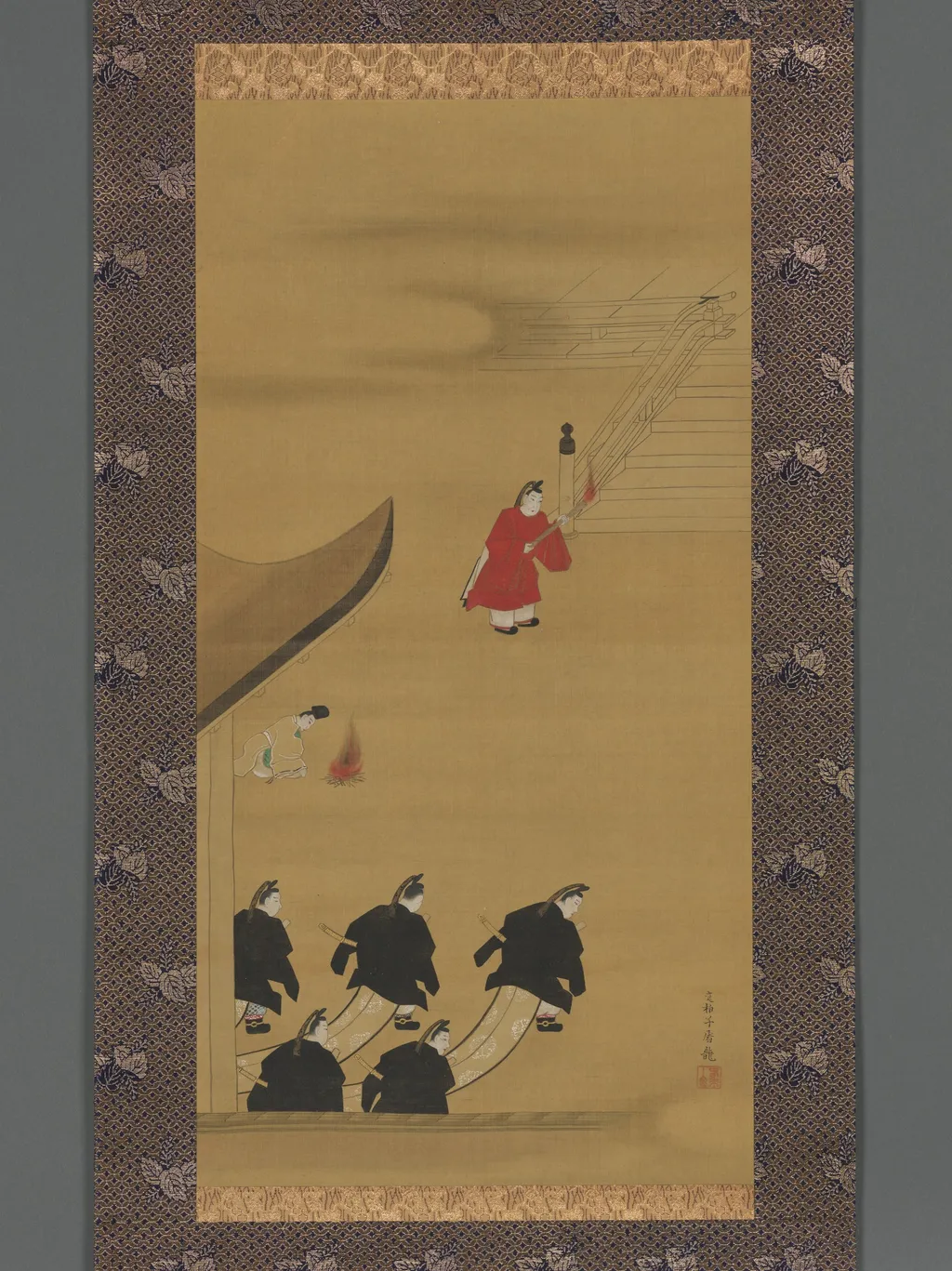
Activities of the Twelve Months (Tsukinami-e) is an unspecified painting by the Ukiyo-e artist Sakai Hōitsu. It dates from 1799 and is held in the collection of the Metropolitan Museum of Art.
About this work
History & Provenance
The work is held in the Metropolitan Museum of Art in New York, within its holdings of Japanese Edo-period painting.
Activities of the Twelve Months (Tsukinami-e) was painted in 1799 in Japan by the artist Sakai Hōitsu. It forms part of a series depicting seasonal activities, though specific commissioning details are not recorded. The work is held in the Metropolitan Museum of Art in New York, within its holdings of Japanese Edo-period painting. The available records do not disclose a specific accession number or a documented exhibition history.
Legacy
Sakai Hōitsu's Activities of the Twelve Months (Tsukinami-e), created in 1799, reflects the Edo-period Rinpa aesthetic that Hōitsu helped revive. Its seasonal motifs and cyclical structure are characteristic of the Rinpa school's synthesis of nature and design. The work's presence in the Metropolitan Museum of Art's collection has contributed to its reputation as an example of Hōitsu's revivalist approach to the Rinpa tradition, which bridged classical techniques with his own compositions.
Overview
This painting, titled Activities of the Twelve Months (Tsukinami-e), was created by Sakai Hōitsu in 1799. The work is part of a larger tradition depicting seasonal customs and daily life throughout the year. It is currently housed in the collection of The Metropolitan Museum of Art.
The scene features multiple figures engaged in various quiet pursuits, set against a backdrop suggesting a specific environment or event.
Subject & Meaning
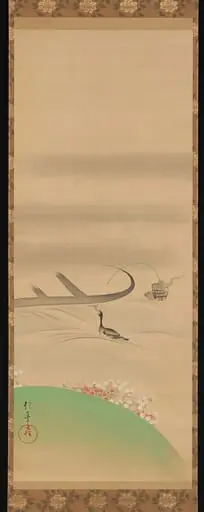
The composition presents several individuals, some cloaked in black robes, with one figure distinguished by a red garment. They are arranged dynamically, with both standing and seated postures, suggesting a moment captured in time. In the background, a large, curved structure, possibly a boat or a building's roof, frames the scene.
A smaller figure is depicted tending a fire, contributing to the sense of ongoing activity and daily ritual within an atmosphere of contemplation.
Own this work as a print
Artist & collection


- Standing Woman
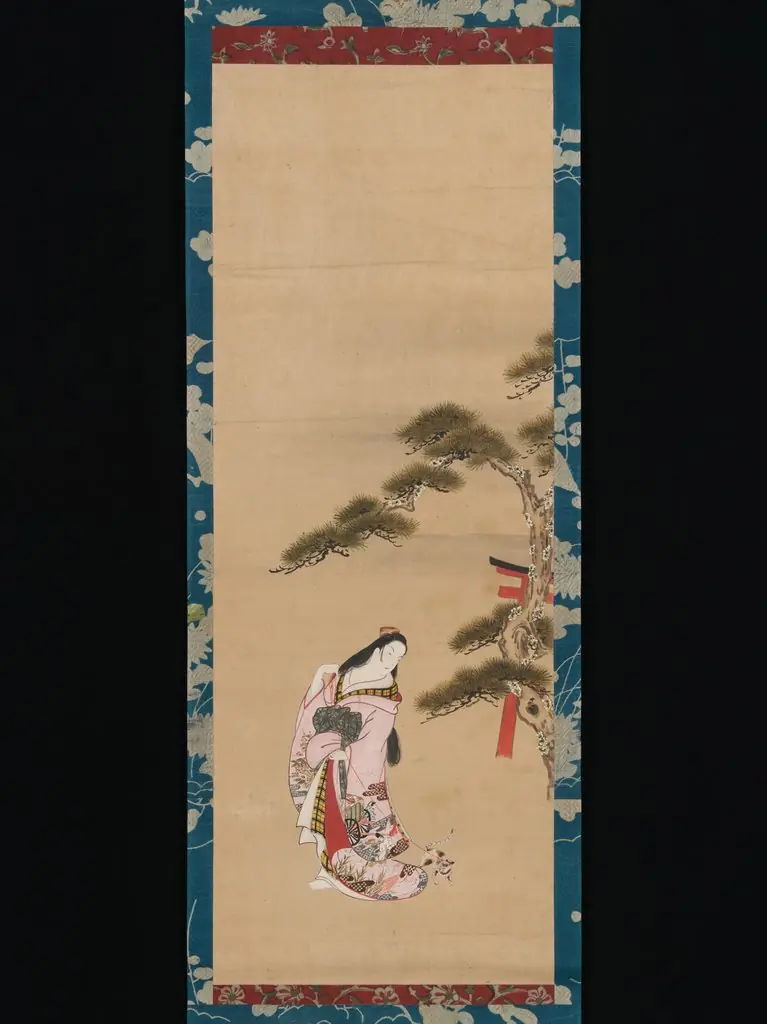 The Third Princess and a Cat, from the "New Herbs I" (Wakana I) chapter The Tale of Genji (Genji monogatari}
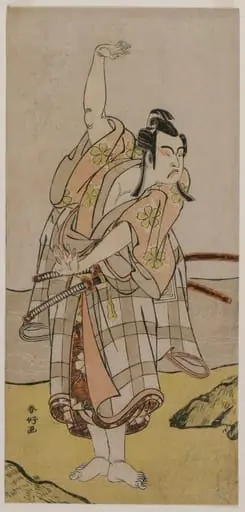 Actor Ichikawa Yaozō II as Sakuramaru
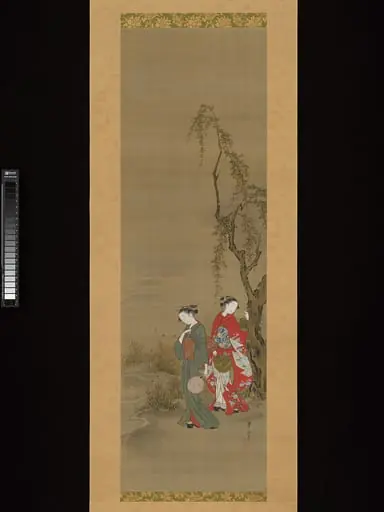 Untitled
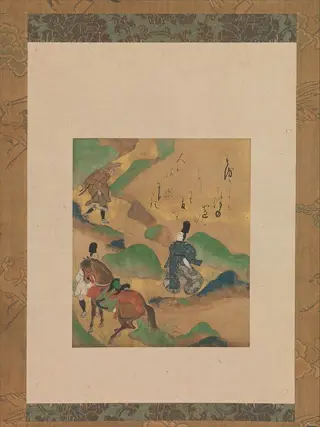 Untitled
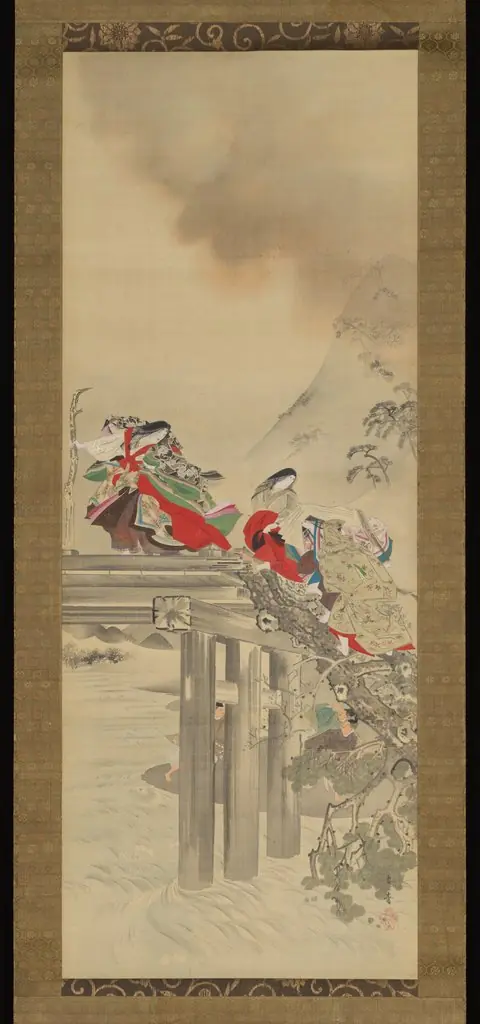 Lady Iga 伊賀局図 (Iga no tsubone zu)
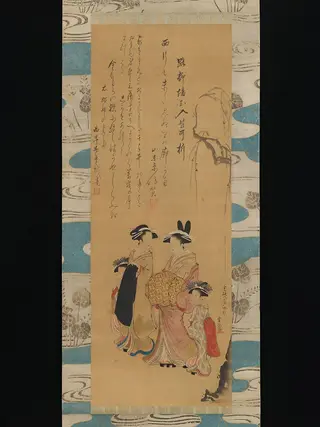 柳下美人図|Courtesan and her Attendants under a Willow Tree
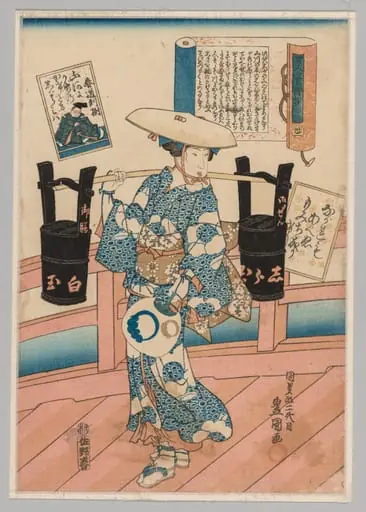 Harumichi no Tsuraki from the series A Pictorial Commentary on One Hundred Poems by One Hundred Poets, no. 31
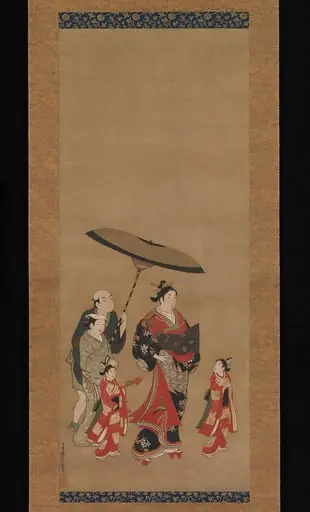 Untitled
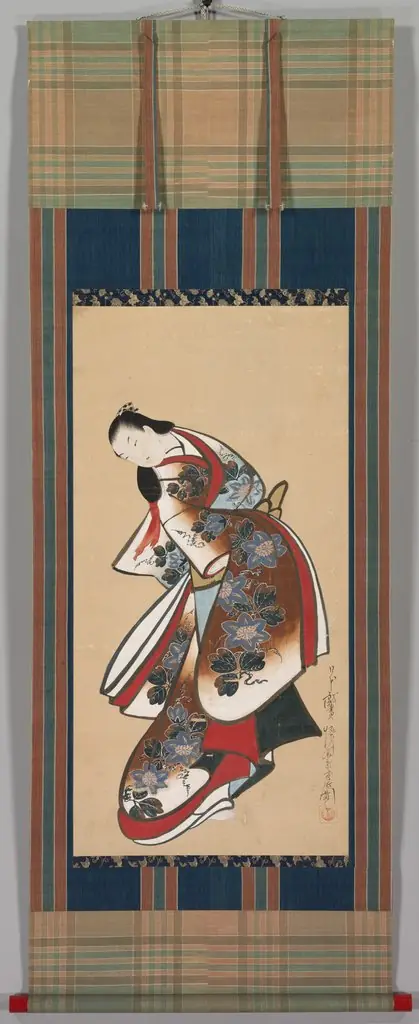 Courtesan
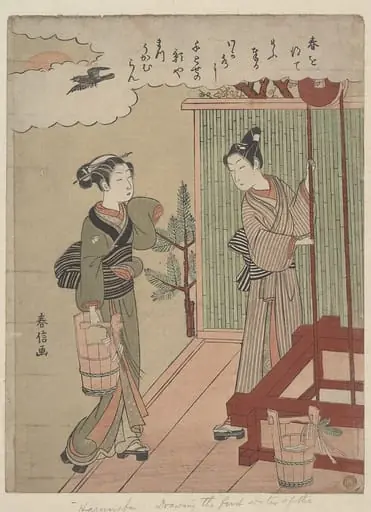 鈴木春信画 若水を汲む男女|Drawing the First Water of the New Year
 Standing Courtesan