Artwork
On the Viga, Outskirts of the City of Mexico
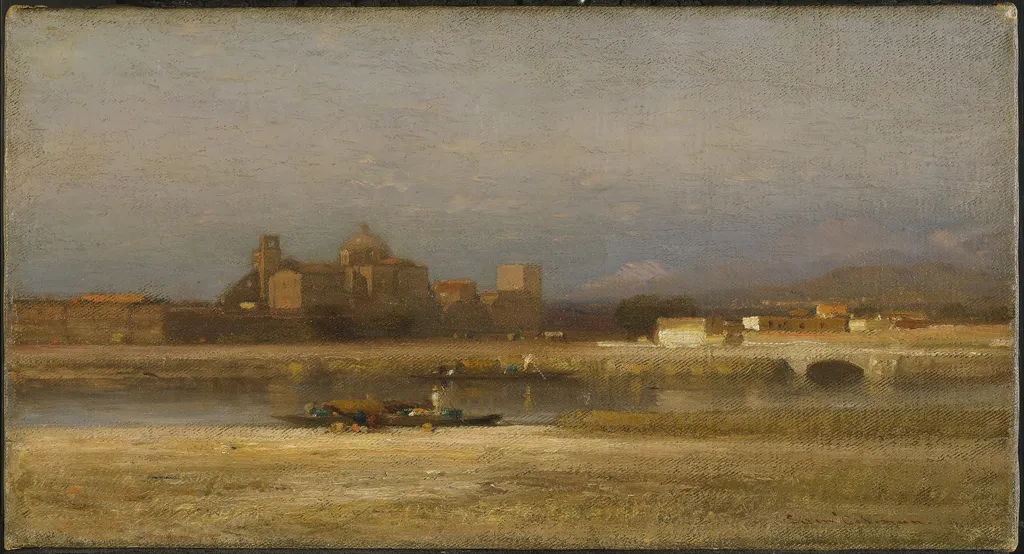
On the Viga, Outskirts of the City of Mexico is an oil painting by the American Impressionist artist Samuel Colman. It dates from 1896 and is held in the collection of the Brooklyn Museum.
About this work
Subject & Meaning
These elements together evoke the urban fringe and its natural surroundings, reflecting a landscape interpretation of the outskirts of the city.
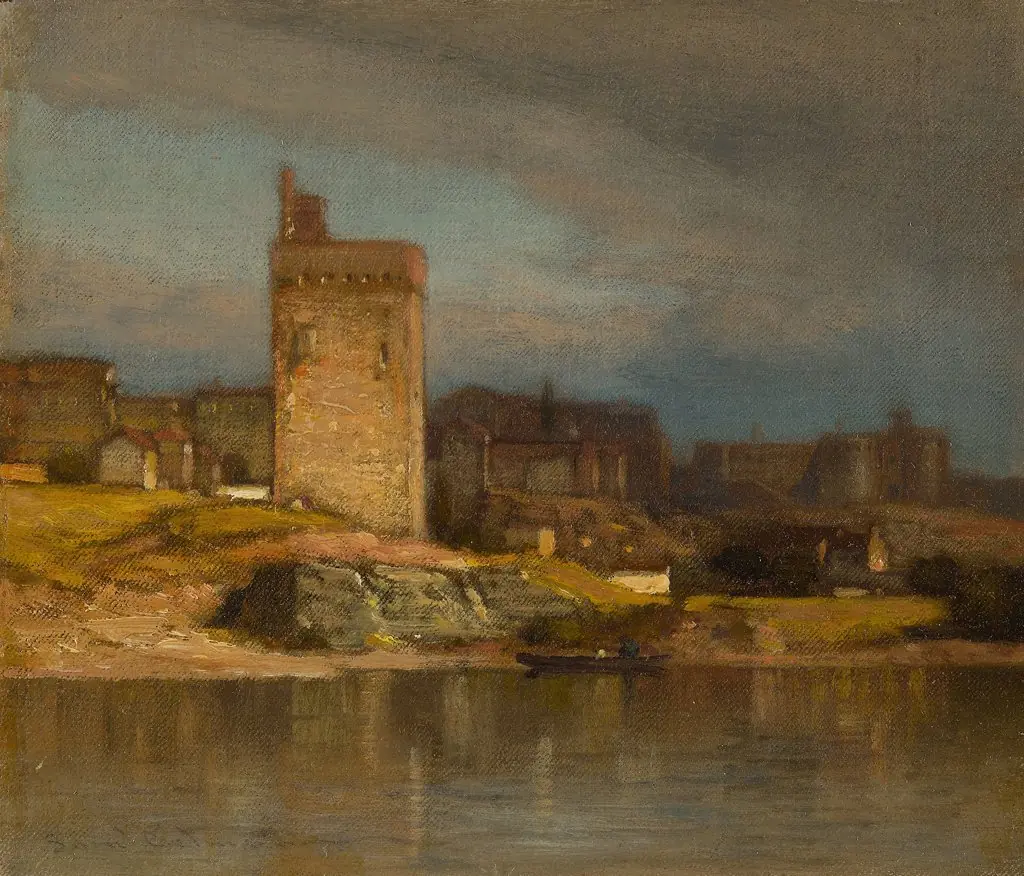
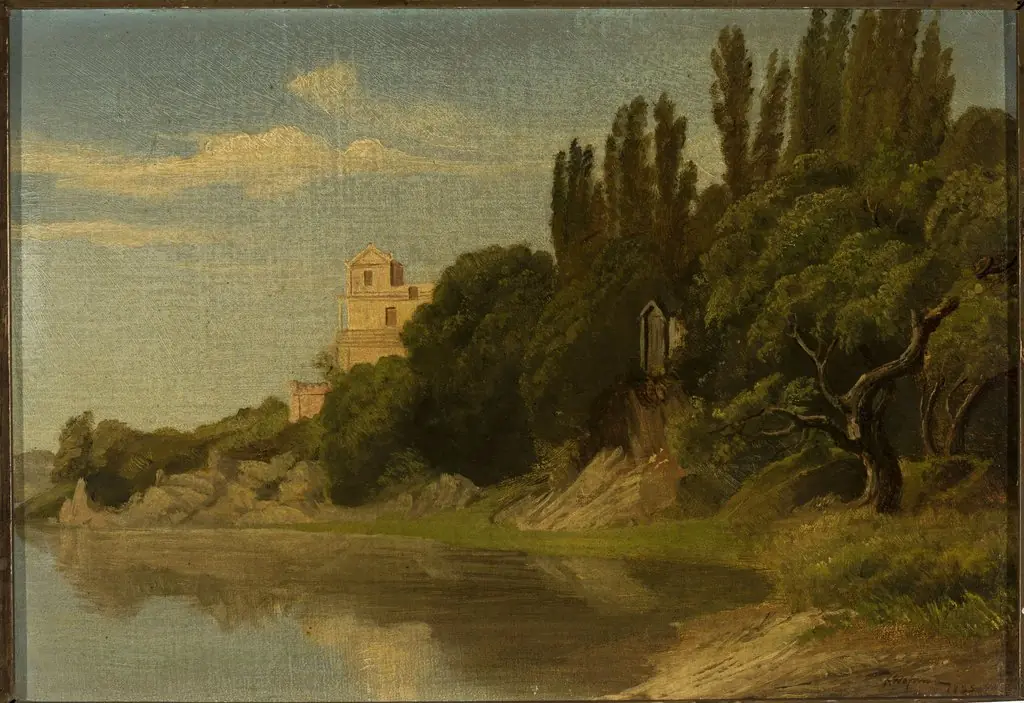
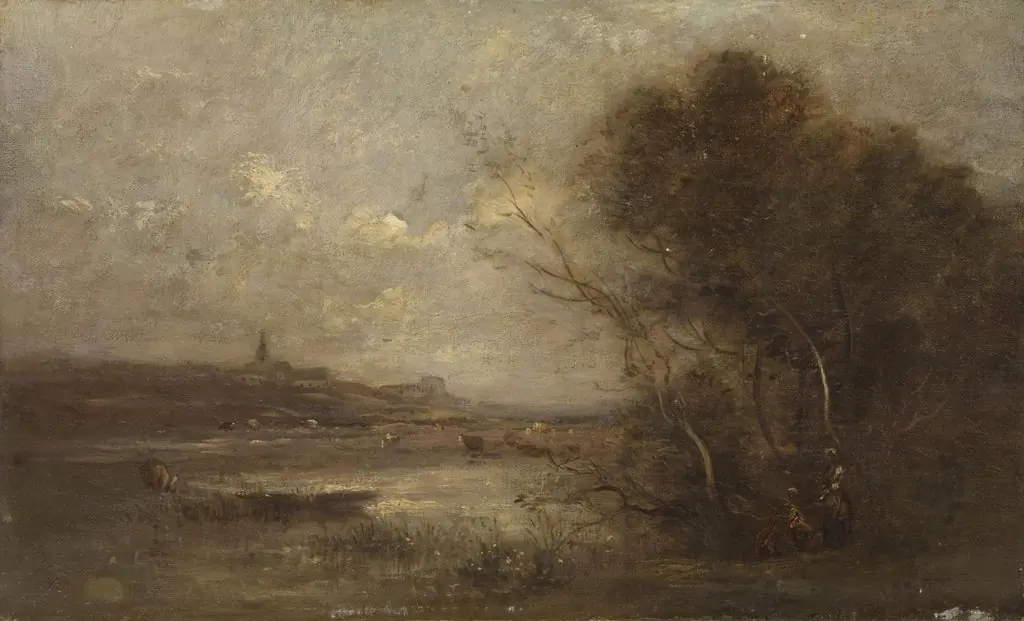
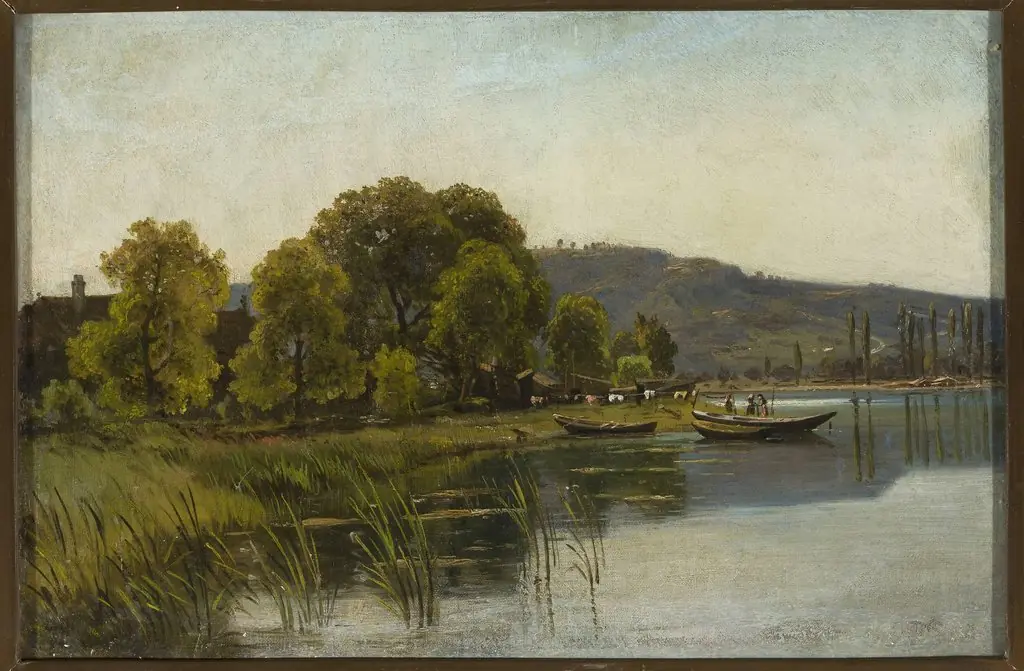
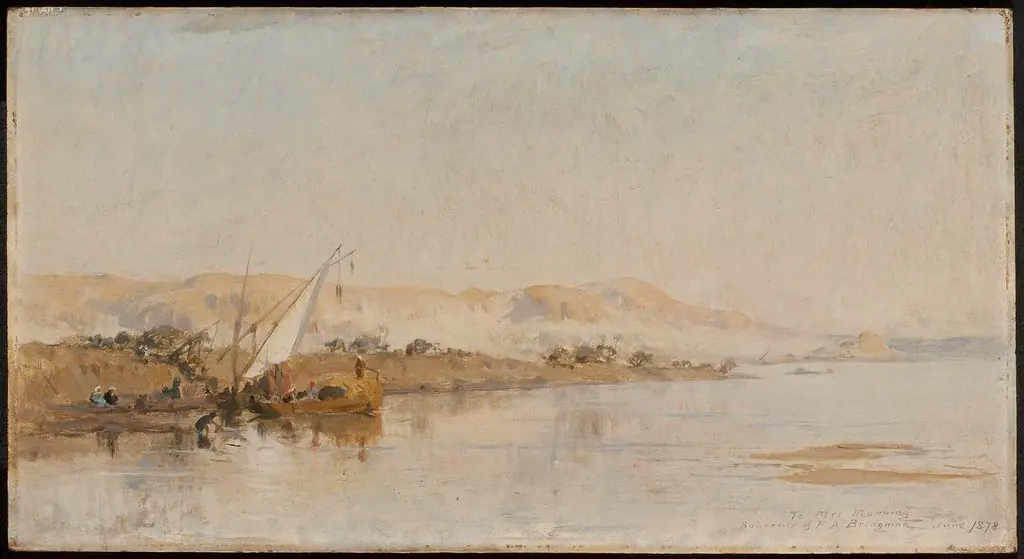
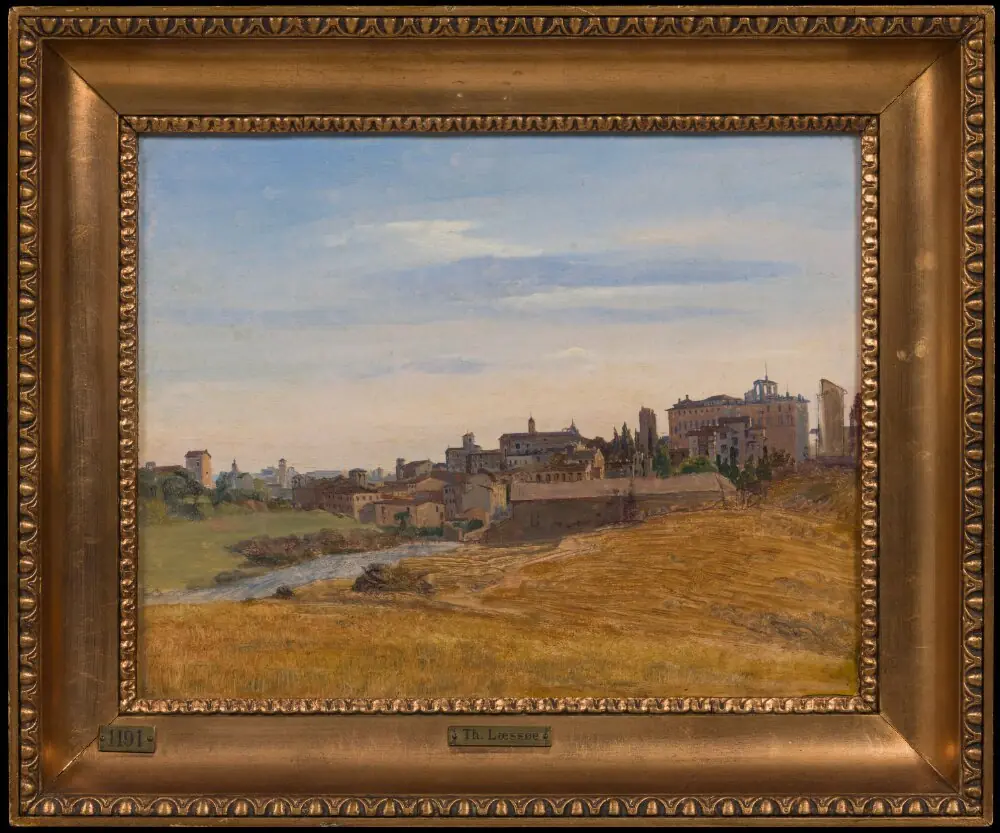
The work shows a view of the Viga River on the outskirts of Mexico City, featuring a bridge, sky, river, bark, a man, and a church building. These elements together evoke the urban fringe and its natural surroundings, reflecting a landscape interpretation of the outskirts of the city.
The depicted scene combines natural elements with built structures, suggesting a contemplation of urban expansion against a pastoral backdrop.
Technique & Style
The work is an oil painting executed on a canvas support, measuring 24.2 cm in height and 45.7 cm in width. Colman employed a fluid handling of oil paint to render the atmospheric effects of the landscape, with delicate transitions in the sky and reflections in the water. The composition balances naturalistic detail in the foreground foliage and riverbank with broader, atmospheric passages that suggest distance and scale.
Stylistically, the scene aligns with late nineteenth-century American landscape painting in its emphasis on luminous effects and quiet, picturesque motifs.
History & Provenance
Samuel Colman created the oil painting On the Viga, Outskirts of the City of Mexico in 1892. The work is executed in oil on canvas and measures 24.2 cm in height by 45.7 cm in width. It currently resides in the collection of the Brooklyn Museum.
The painting depicts a landscape scene featuring the Viga canal, including elements such as a river, bridge, barks, and a church building within the outskirts of Mexico City.
Legacy
Samuel Colman's 1892 landscape painting On the Viga, Outskirts of the City of Mexico, housed in the Brooklyn Museum, has been recognized for its atmospheric portrayal of urban peripheries and its role in early American Orientalist landscape painting. The work's depiction of Mexican topography contributed to 20th-century reassessments of transnational artistic exchange, influencing scholarship on cross-border visual cultures.
Overview
Samuel Colman’s 1896 oil on canvas, On the Viga, Outskirts of the City of Mexico, presents a quiet riverside scene on the periphery of Mexico City. The composition balances a modest boat, a spanning bridge, and a prominent church against a muted, overcast sky, inviting the viewer to contemplate the everyday landscape beyond the urban core.
Artist & collection
Artist
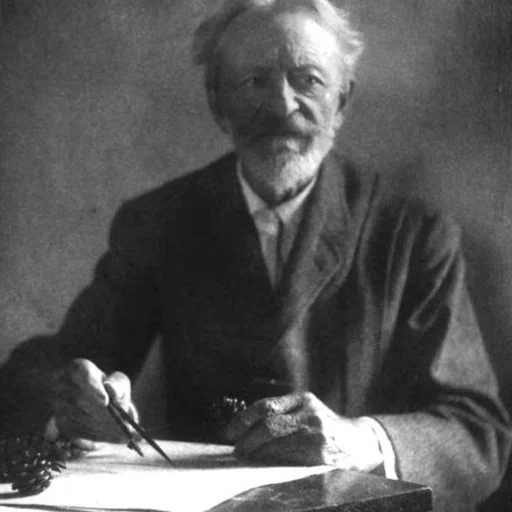
Samuel Colman (March 4, 1832 – March 26, 1920) was an American painter, interior designer, and writer, probably best remembered for his paintings of the Hudson River.