Artwork
The Building of Westminster Bridge
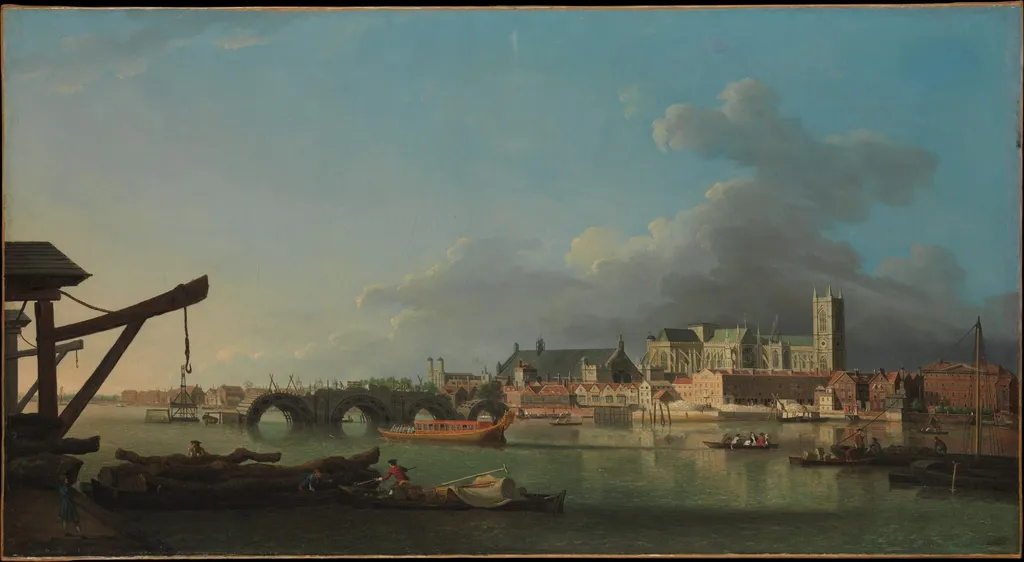
The Building of Westminster Bridge is an oil painting by the Rococo painting artist Samuel Scott. It dates from 1747 and is held in the collection of the Metropolitan Museum of Art.
About this work
Subject & Meaning
Samuel Scott's 1747 oil painting, 'The Building of Westminster Bridge,' visually documents the construction of the bridge over the River Thames.
Samuel Scott's 1747 oil painting, 'The Building of Westminster Bridge,' visually documents the construction of the bridge over the River Thames. The composition centers on the architectural progress of the bridge itself, integrating it with the surrounding urban and natural landscape. Iconographically, the work depicts the river populated by boats, alongside adjacent buildings and a cathedral, capturing a specific moment in London's infrastructural development.
The scene represents the intersection of human engineering and the existing cityscape, portraying the bridge as a dominant new feature within the established environment. By combining the active construction site with the flowing river and nearby structures, the painting serves as a historical record of the project's scale and its integration into the metropolitan fabric of mid-eighteenth-century London.
Technique & Style
Executed in 1747, Samuel Scott's The Building of Westminster Bridge is an oil painting applied to a canvas support. The work measures 61 cm in height by 112.7 cm in width, establishing a distinctively wide, panoramic format that accommodates the expansive river scene. This horizontal composition allows for the detailed depiction of the bridge's construction alongside surrounding architectural landmarks, including a cathedral, and various boats navigating the water.
The use of oil paint as the primary medium enables the rendering of atmospheric effects typical of Scott's topographical style, capturing the interplay between the built environment and the river. The piece is classified as a painting and currently resides in the collection of the Metropolitan Museum of Art.
History & Provenance
The Building of Westminster Bridge is a 1747 oil‑on‑canvas painting by Samuel Scott, classified as a work of the 18th‑century British school. The composition shows a boat, bridge, building, cathedral and river, measuring 61 cm by 112.7 cm. Its provenance leads from creation in 1747 to being part of the collection of the Metropolitan Museum of Art, where it remains. The work was produced during a period when British artists increasingly documented riverine infrastructure, reflecting contemporary architectural interests.
Samuel Scott's 1747 oil painting, The Building of Westminster Bridge, is held in the collection of the Metropolitan Museum of Art in New York. While the provided records confirm the work's location within this institution and its creation date, they do not specify a particular accession number or inventory code. Furthermore, the available documentation offers no details regarding the painting's exhibition history, such as specific shows, dates, or venues where the canvas has been publicly displayed since its inception.
Context
The Building of Westminster Bridge (1747) is an oil‑on‑canvas painting by Samuel Scott, classified as a topographical view of the Thames and housed in the Metropolitan Museum of Art. The work measures 61 × 112.7 cm and portrays a river scene with a boat, bridge, building, cathedral and river. Its creation date situates it within the early Georgian period, reflecting contemporary interest in documenting London’s infrastructure.
The available documentation does not include explicit critical reception or scholarly commentary, suggesting that reception history remains understudied.
Overview
Samuel Scott's 'The Building of Westminster Bridge,' executed in 1747, documents the early stages of constructing the first stone bridge across the River Thames at Westminster. The composition centers on the unfinished structure, where three massive arches rise from the riverbed, surrounded by scaffolding, piles of masonry, and laborers engaged in the engineering feat. To the left, a prominent wooden crane stands at the water's edge, illustrating the heavy machinery required for the project.
The background features the silhouette of Westminster Abbey and the surrounding London skyline, grounding the construction within its urban context. Scott, renowned as the 'British Canaletto' for his precise architectural views, utilizes this work to capture a pivotal moment in London's infrastructure history. The painting balances topographical accuracy with atmospheric depth, depicting the bustling river traffic of small boats navigating the construction zone.
Created shortly after the bridge's foundations were laid, the work serves as both a historical record and a celebration of modern engineering, highlighting Scott's mastery in rendering light, water, and complex architectural forms during the mid-eighteenth century.
Artist & collection

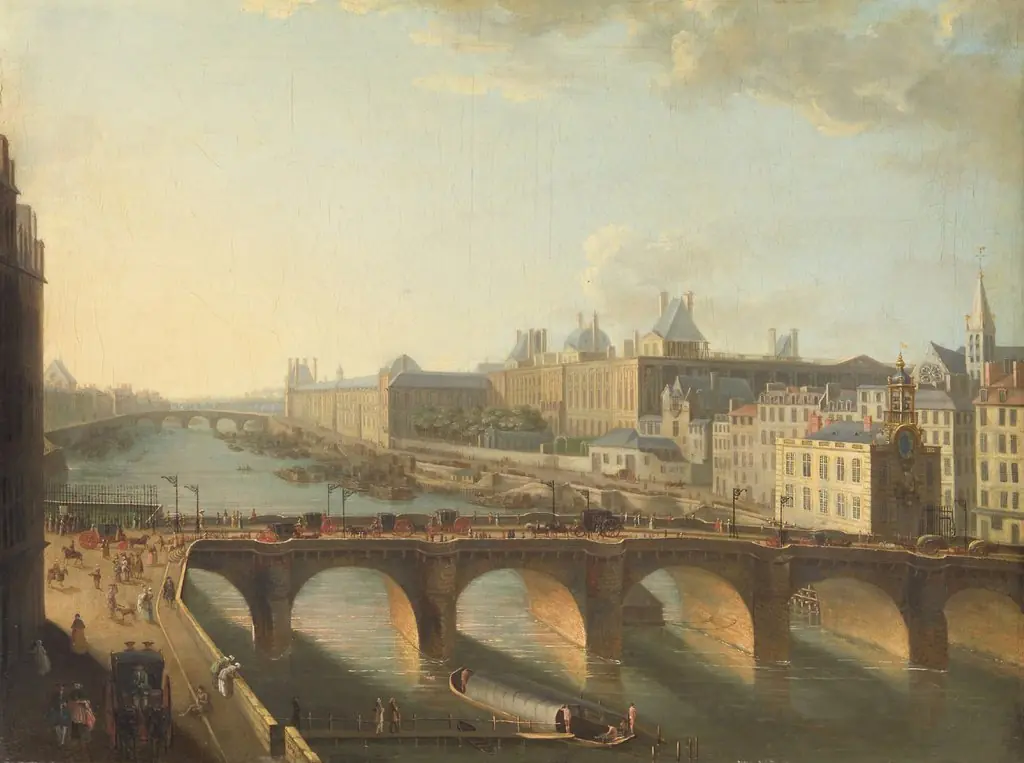 View of the Pont-Neuf in Paris from the Quai de la l’Horloge
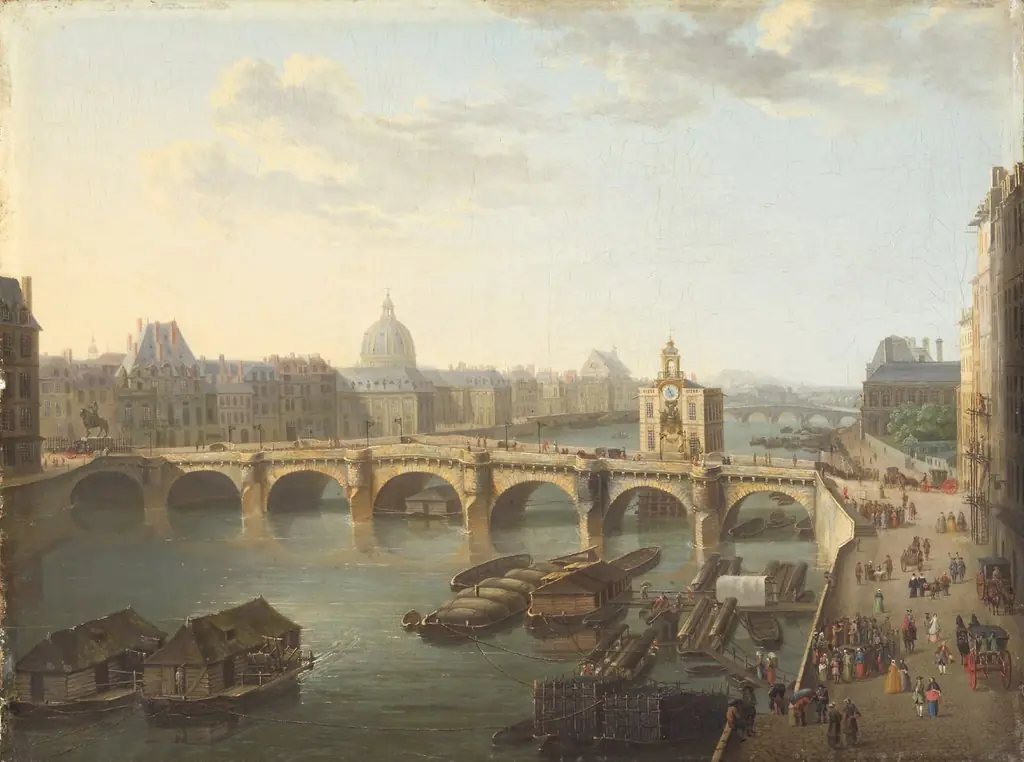 View of the Pont-Neuf in Paris from the Quai de la Mégisserie
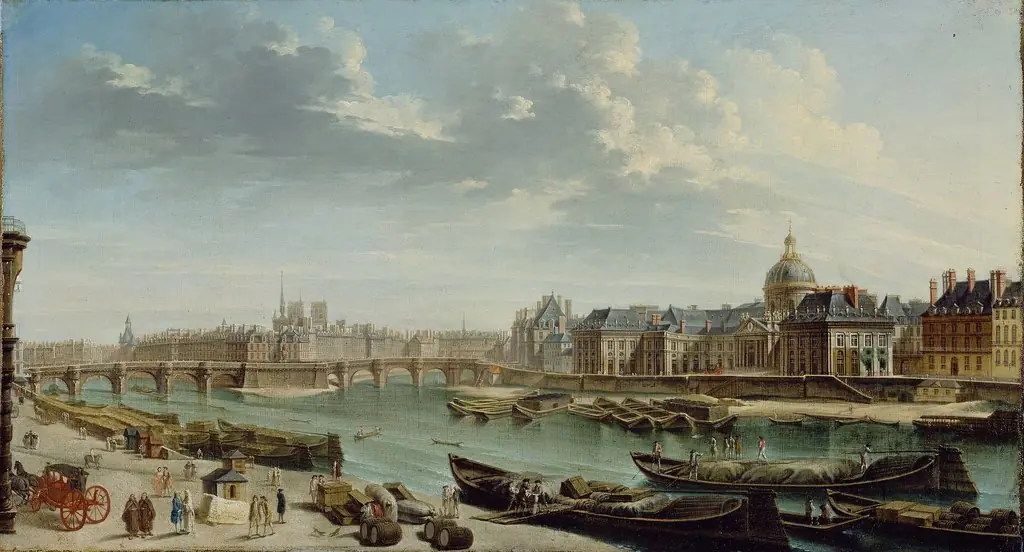 A View of Paris with the Ile de la Cité
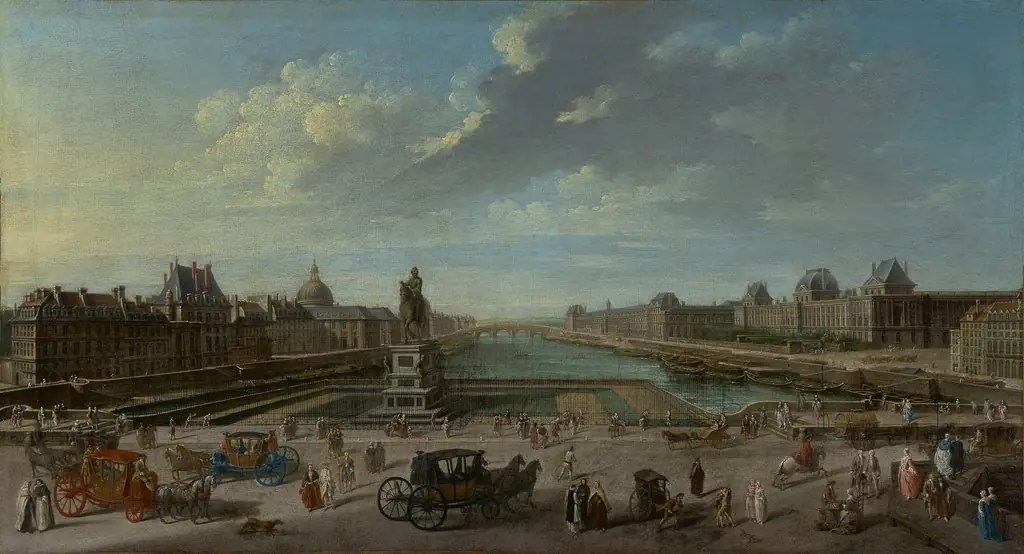 A View of Paris from the Pont Neuf
 Pont Royal seen from Quai Voltaire
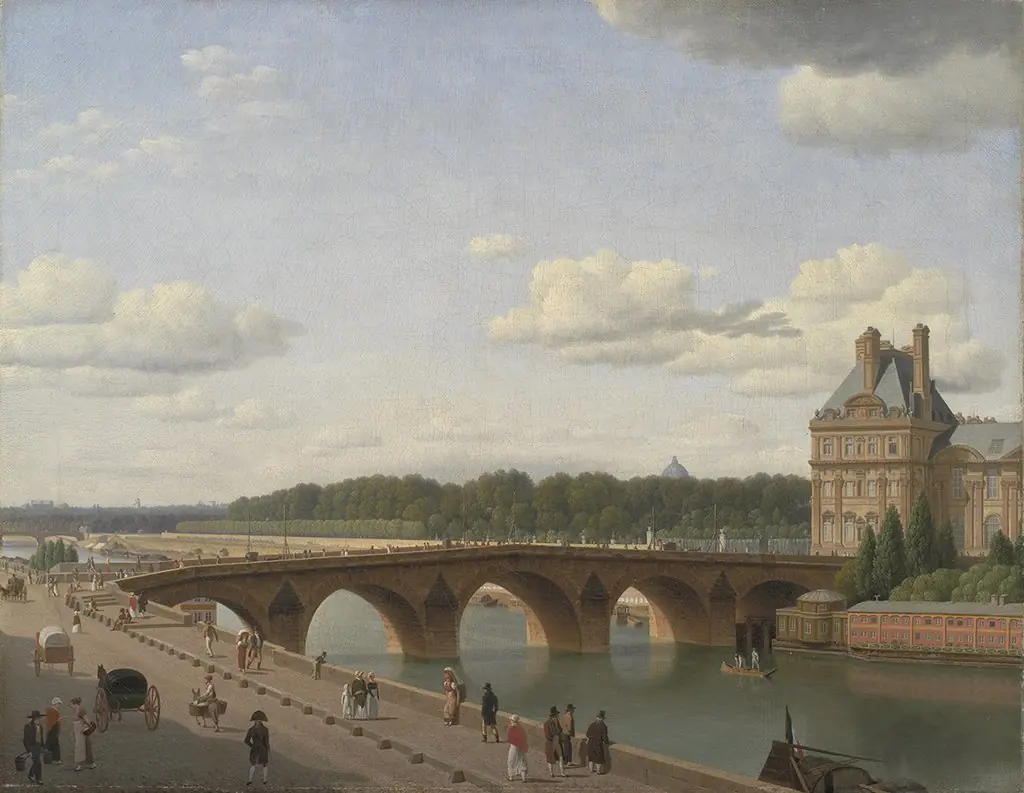 Pont Royal seen from Quai Voltaire
 Untitled
 Engelsburg und St. Peter in Rom
 A View of Place Louis XV
 Dresden from the Right Bank of the Elbe, below the Augustus Bridge
 View of the Castel Sant'Angelo in Rome
- The Thames at Westminster Abbey