Artwork
The Burial of Saint Martha
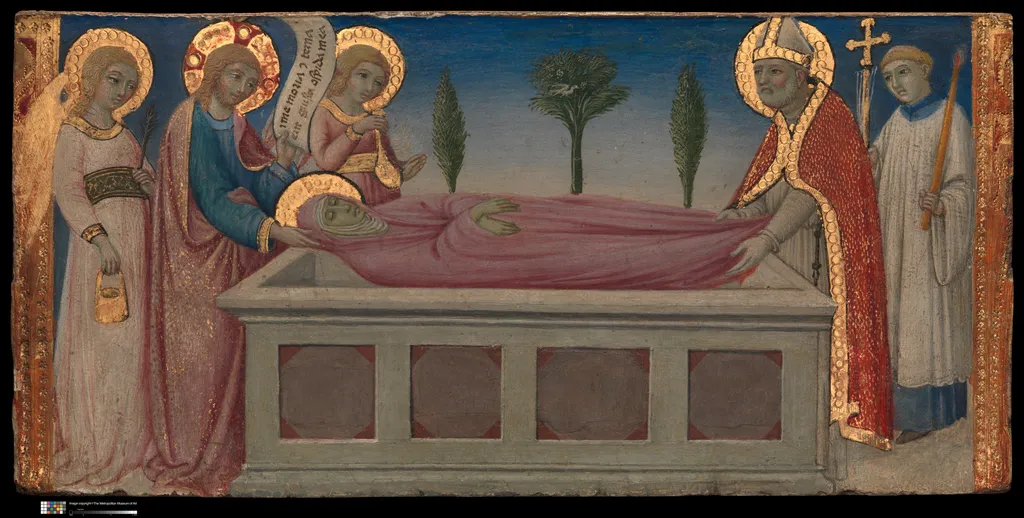
The Burial of Saint Martha is an unspecified painting by the Early Renaissance artist Sano di Pietro. It dates from 1460 and is held in the collection of the Metropolitan Museum of Art.
About this work
Subject & Meaning
The narrow horizontal format supports an episodic narrative reading, allowing the burial event to unfold across the panel's width.
The painting presents a religious narrative centered on Saint Martha, a female holy figure venerated in Christian tradition. Rendered as a small devotional panel, the work belongs to the genre of religious art and focuses on the burial of this saint, a subject drawn from hagiographic accounts of her death and interment. The composition pairs the saint with a generic female figure, emphasizing Martha's identity as a woman and reinforcing the gendered specificity of the saint's cult.
As a depiction of a saint's burial, the image participates in a broader iconographic tradition of honoring the death and entombment of holy figures, serving both as a devotional object and as a visual commemoration of Martha's sanctity. The narrow horizontal format supports an episodic narrative reading, allowing the burial event to unfold across the panel's width.
History & Provenance
The Burial of Saint Martha is a small religious panel painting by the Sienese artist Sano di Pietro, dated to 1460. The work was produced during the mid-fifteenth century, a period in which Sano di Pietro was active as a prolific painter and illuminator in Siena. Today the painting is held in the collection of the Metropolitan Museum of Art, where it is recorded with dimensions of 14 by 29.2 centimeters, consistent with its likely original function as a predella panel or small devotional object.
The sources do not specify the original commissioner, the circumstances of its creation, or the chain of ownership prior to its acquisition by the Metropolitan Museum of Art.
Legacy
Though not among Sano di Pietro’s most frequently reproduced works, The Burial of Saint Martha (1460) has quietly shaped the reception of late medieval Sienese devotional painting. Its intimate, horizontal format, measuring only 14 by 29.2 centimeters, became a point of reference for scholars tracing the evolution of small-scale private altarpieces in fifteenth-century Tuscany. The Metropolitan Museum of Art’s acquisition of the panel in 1912 further cemented its institutional significance, ensuring its inclusion in major exhibitions on Sienese art and its reproduction in survey texts on Quattrocento religious imagery.
While the work seldom garners the same attention as Sano’s larger polyptychs, its depiction of female sanctity and funerary ritual has drawn interest from historians examining gendered representations in Renaissance hagiography.
Overview
This panel painting, titled The Burial of Saint Martha, was completed by the Italian artist Sano di Pietro in 1460. It portrays a significant moment in Christian hagiography, depicting the final rites for Saint Martha. The work is presently part of the collection at The Metropolitan Museum of Art, offering insight into 15th-century Sienese religious art.
Technique & Style
Sano di Pietro employs a balanced composition and a palette that enhances the scene's serene quality. The figures are carefully arranged around the central sarcophagus, framed by a clear blue sky and sparse trees in the distance. This deliberate choice of color and spatial organization contributes to the painting's reverent tone, characteristic of the devotional works produced by the Sienese master.
Artist & collection
Artist
Sano di Pietro or Ansano di Pietro di Mencio (1405–1481) was an Italian painter of the Sienese school of painting.

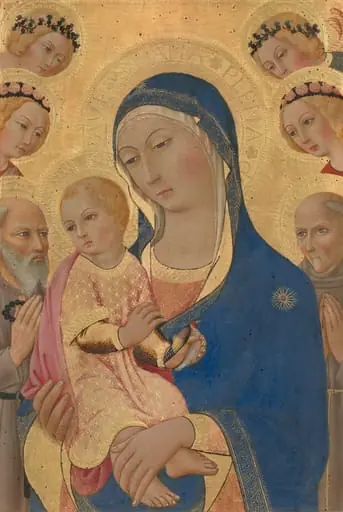 Madonna and Child with Saint Jerome, Saint Bernardino, and Angels
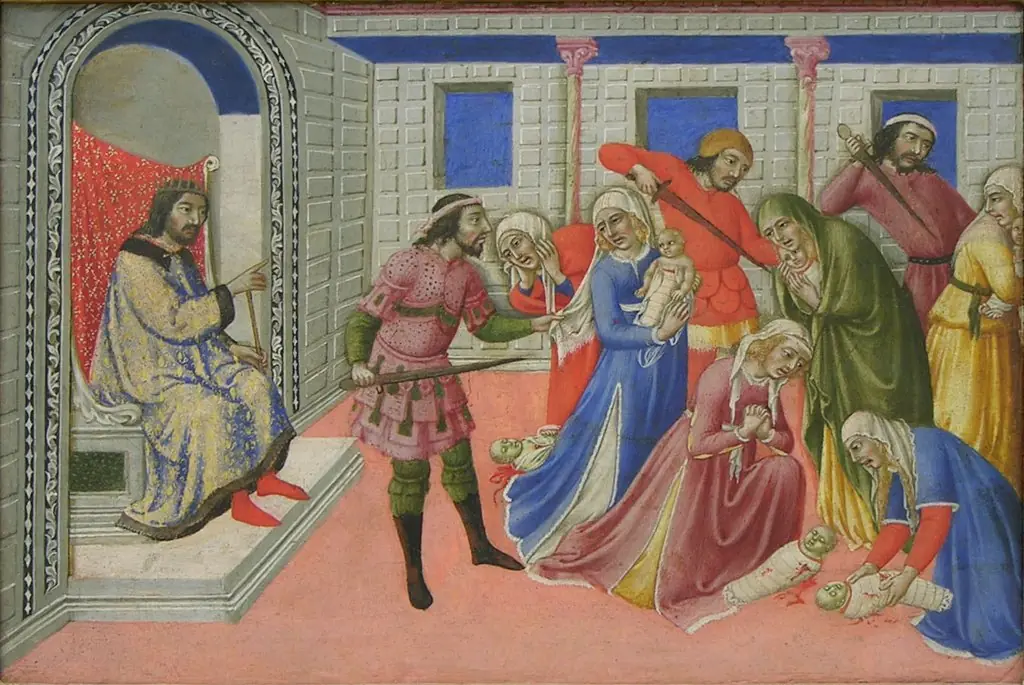 The Massacre of the Innocents
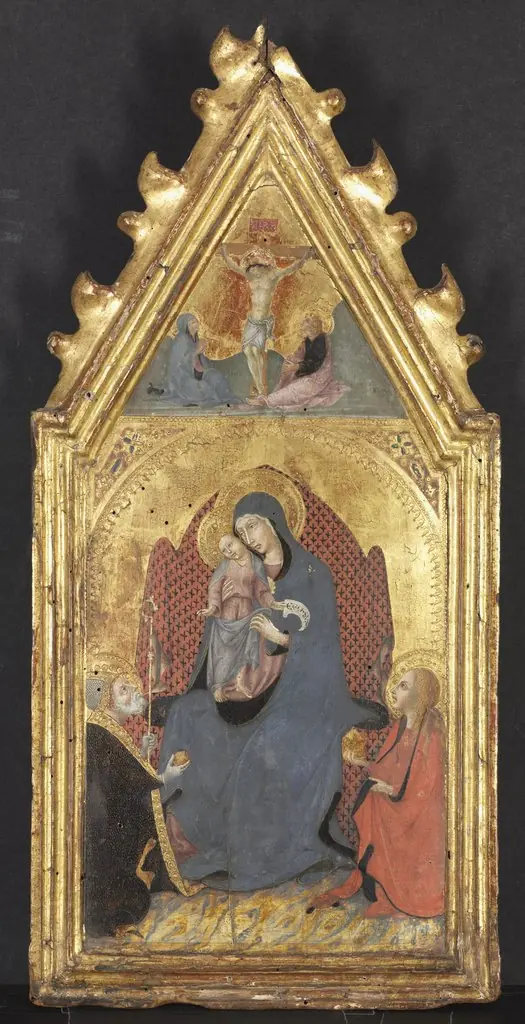 Virgin and Child Adored by Saints Mary Magdalene and Nicolas of Bari; Christ Crucified with the Virgin and Saint John the Evangelist
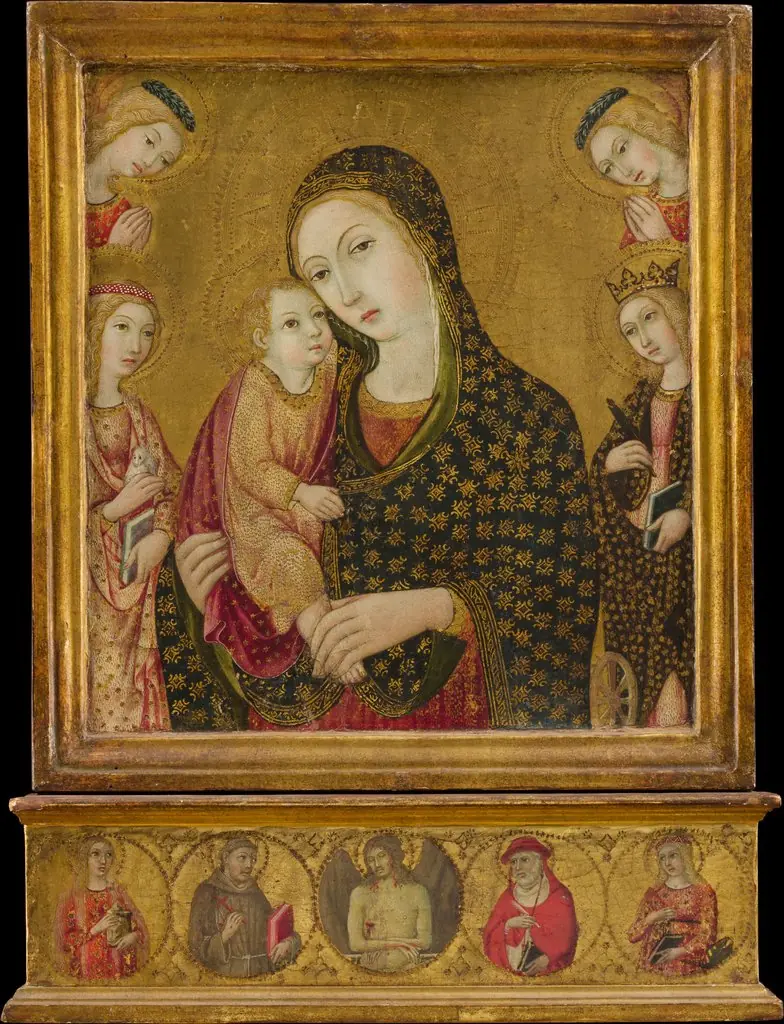 Madonna and Child with the Dead Christ, Saints Agnes and Catherine of Alexandria, and Two Angels
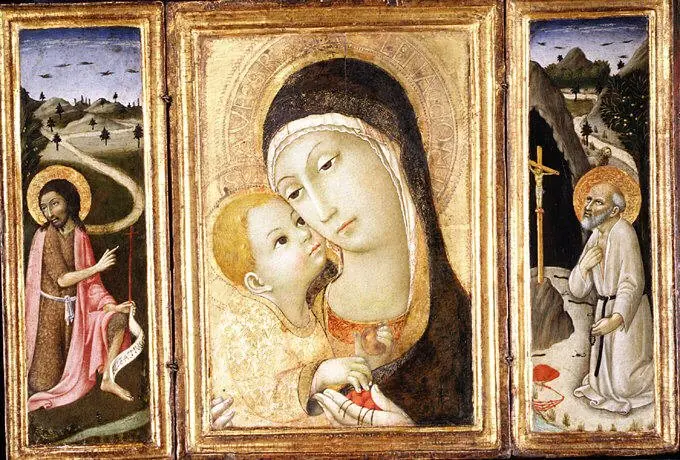 Madonna and Child; Saint John the Baptist; Saint Jerome
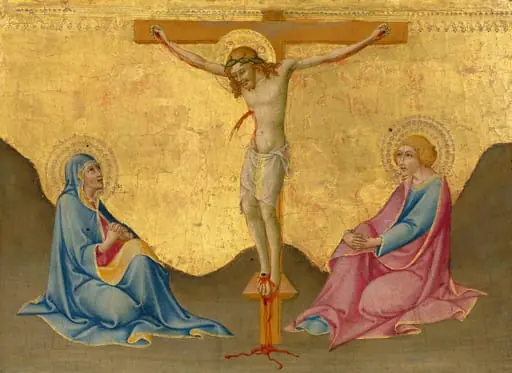 The Crucifixion
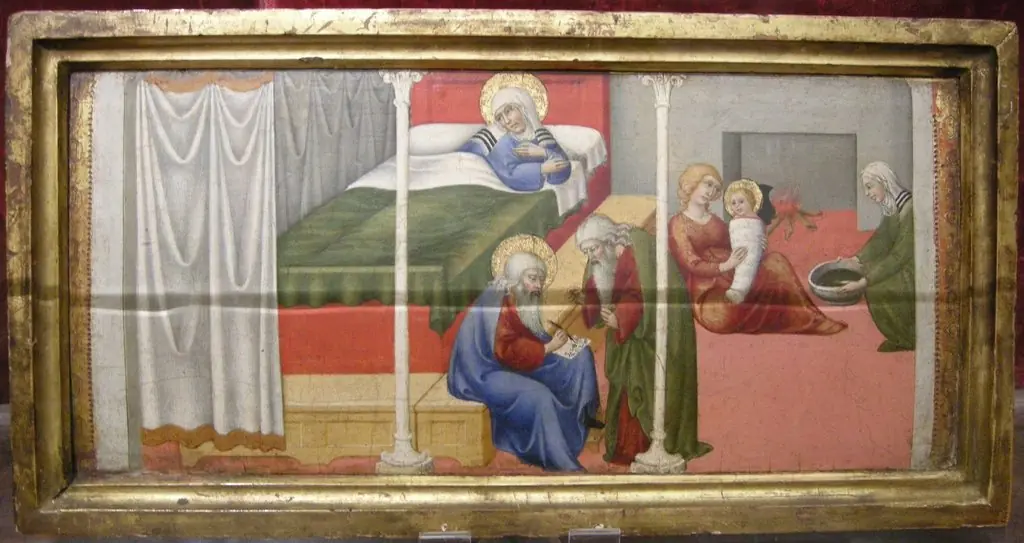 The Birth and Naming of Saint John the Baptist
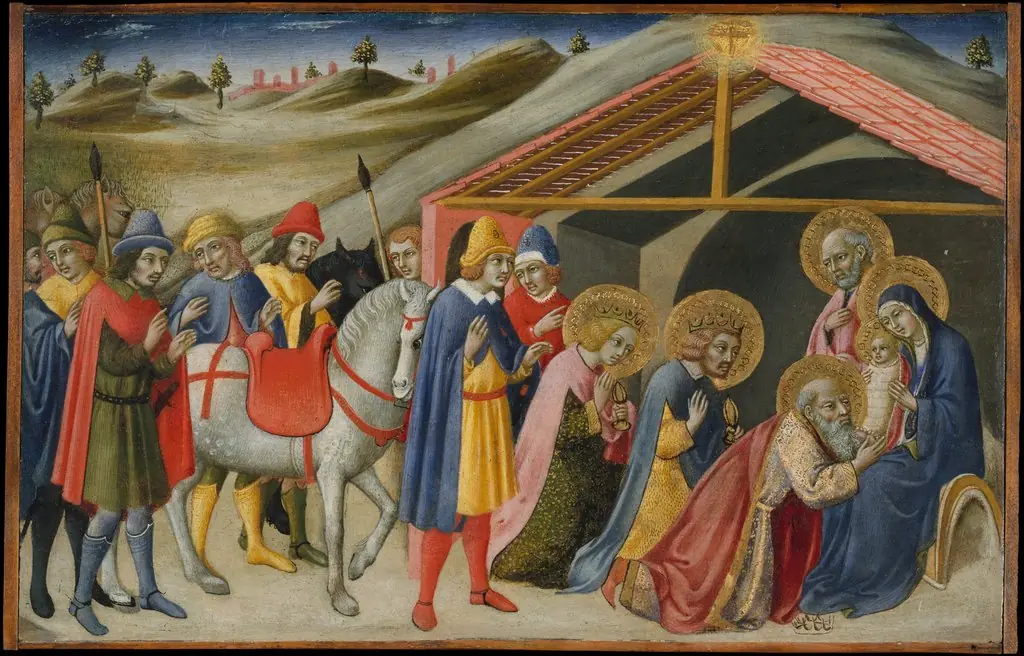 The Adoration of the Magi
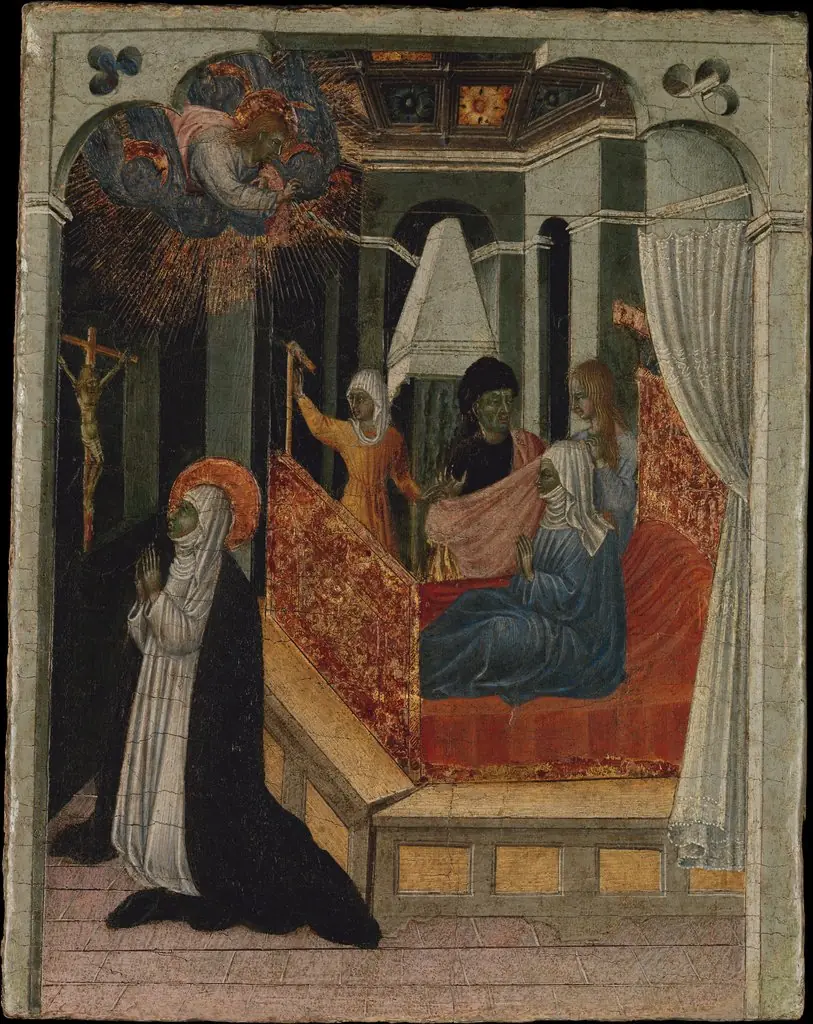
- Saint Catherine of Siena Beseeching Christ to Resuscitate Her Mother
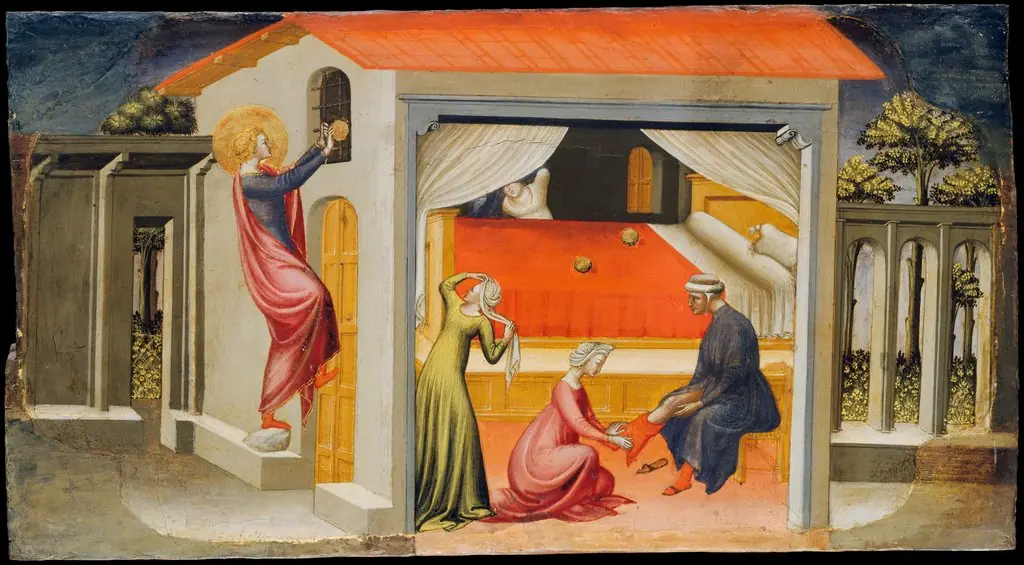 Saint Nicholas Providing Dowries
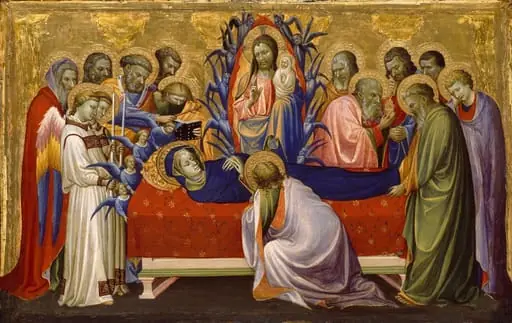 The Death of the Virgin
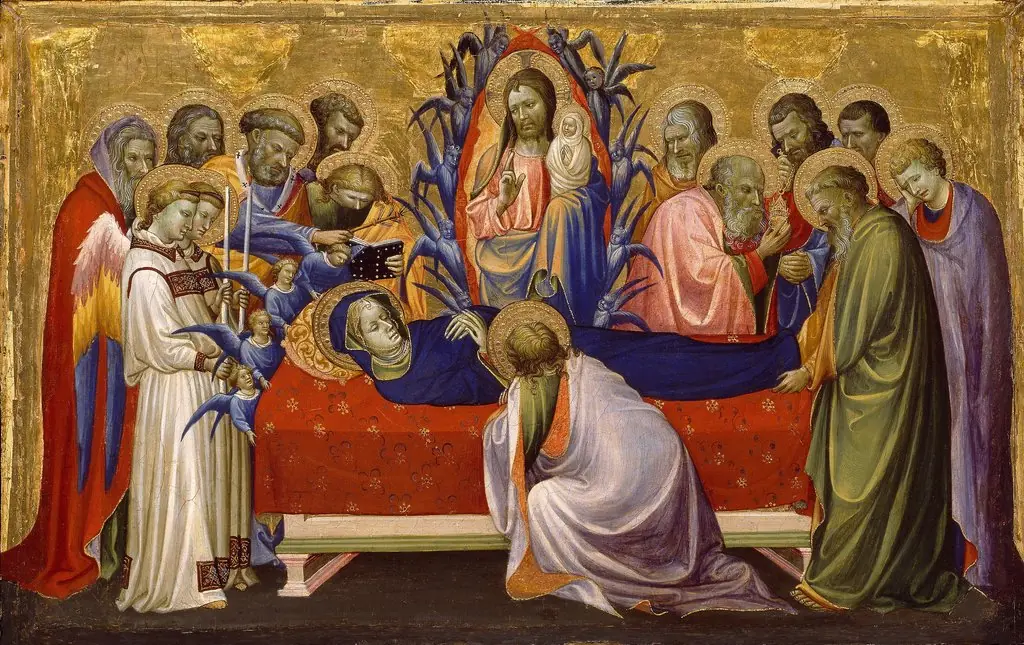 The Dormition of the Virgin
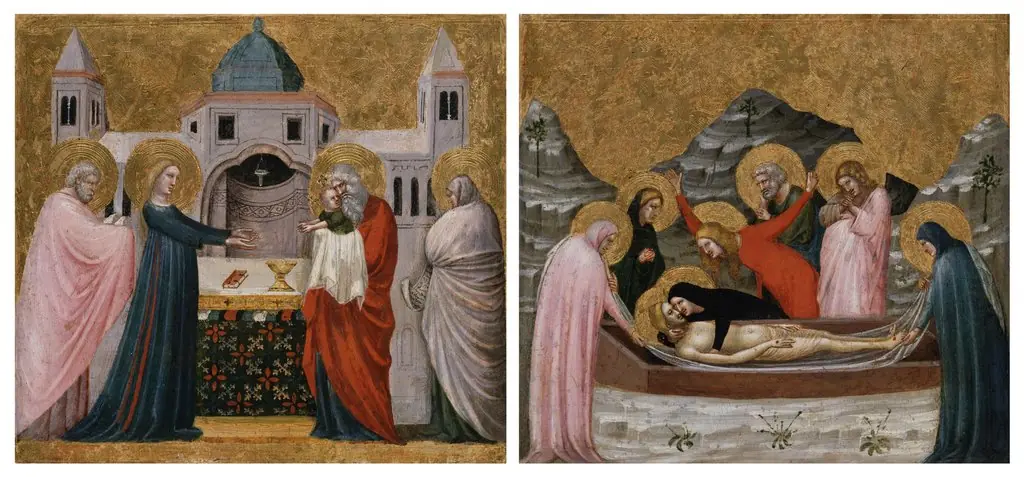 Two Scenes from the Life of Christ
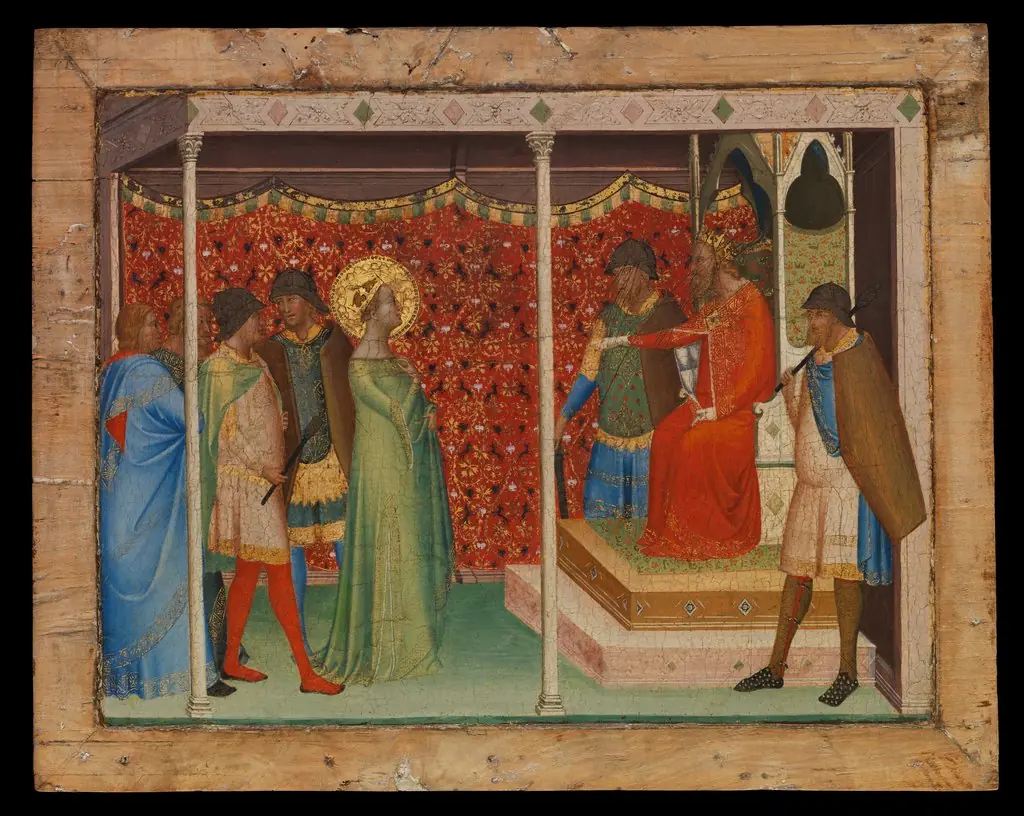 Saint Reparata before the Emperor Decius
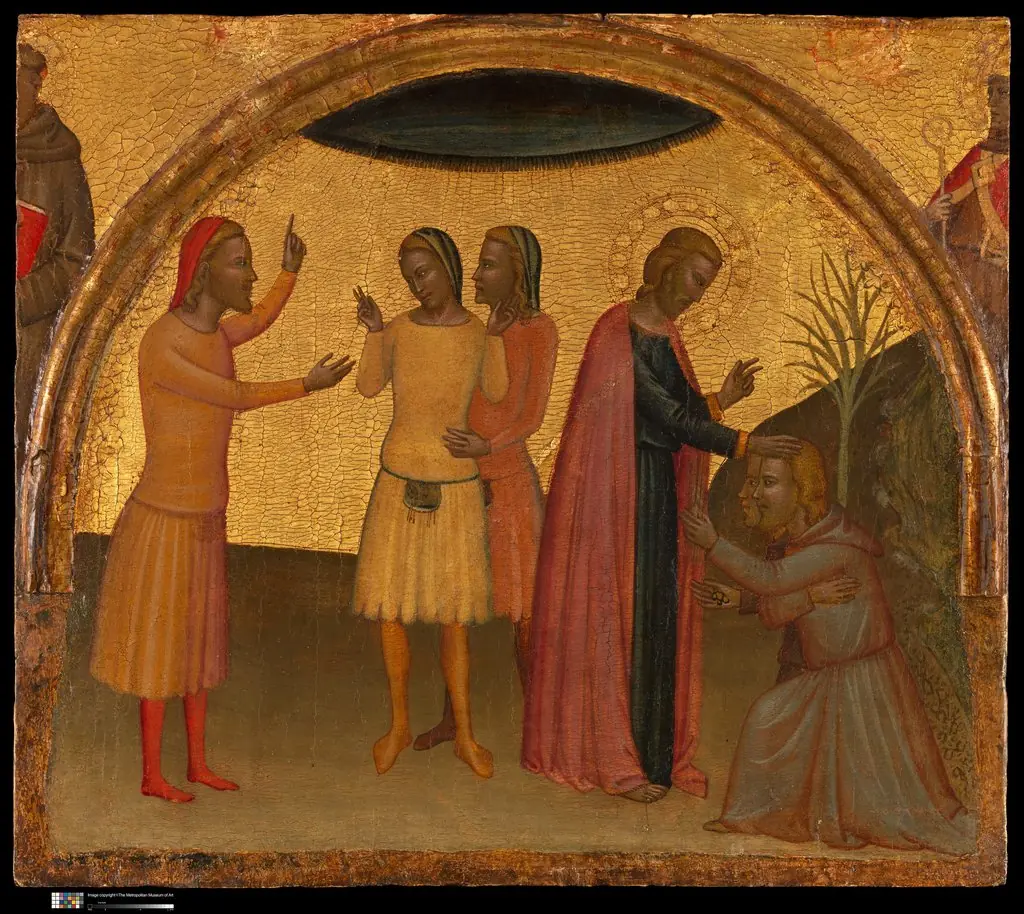 Saint John the Evangelist with Acteus and Eugenius
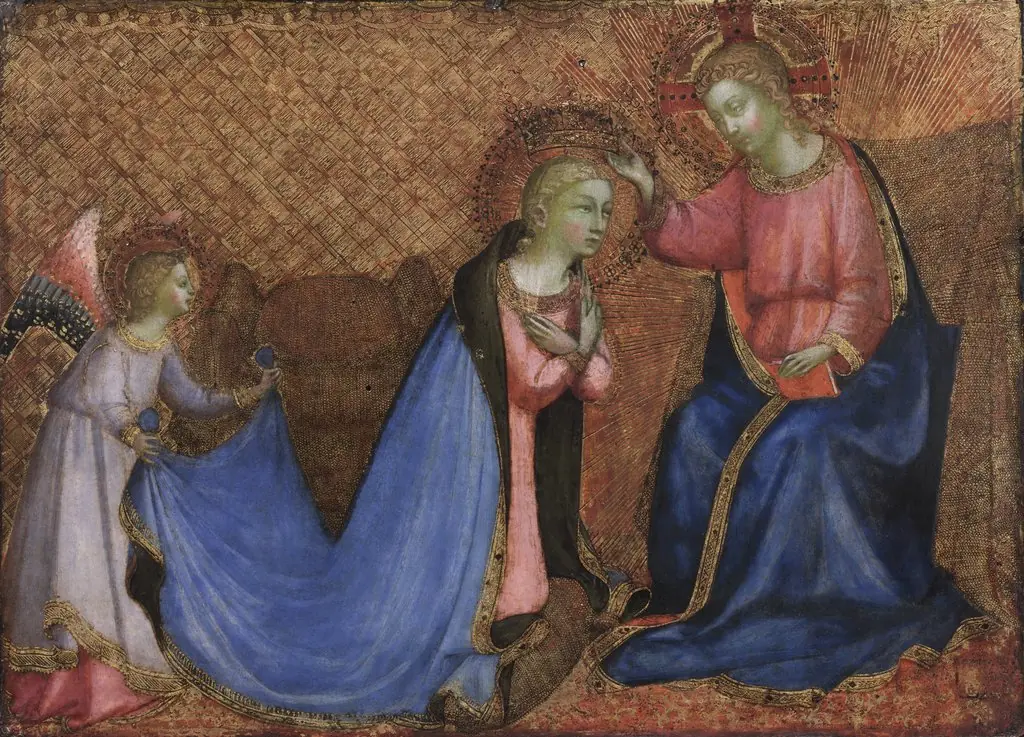 Coronation of the Virgin
![Scenes from the Passion of Christ: The Agony in the Garden [left panel], by Andrea Vanni](https://artifactworldgallery.com/img/andrea-vanni--scenes-from-the-passion-of-christ-the-agony-in-the-garden-le--2bad16de75eee8eb-w320.webp) Scenes from the Passion of Christ: The Agony in the Garden [left panel]
Scenes from the Passion of Christ: The Agony in the Garden [left panel]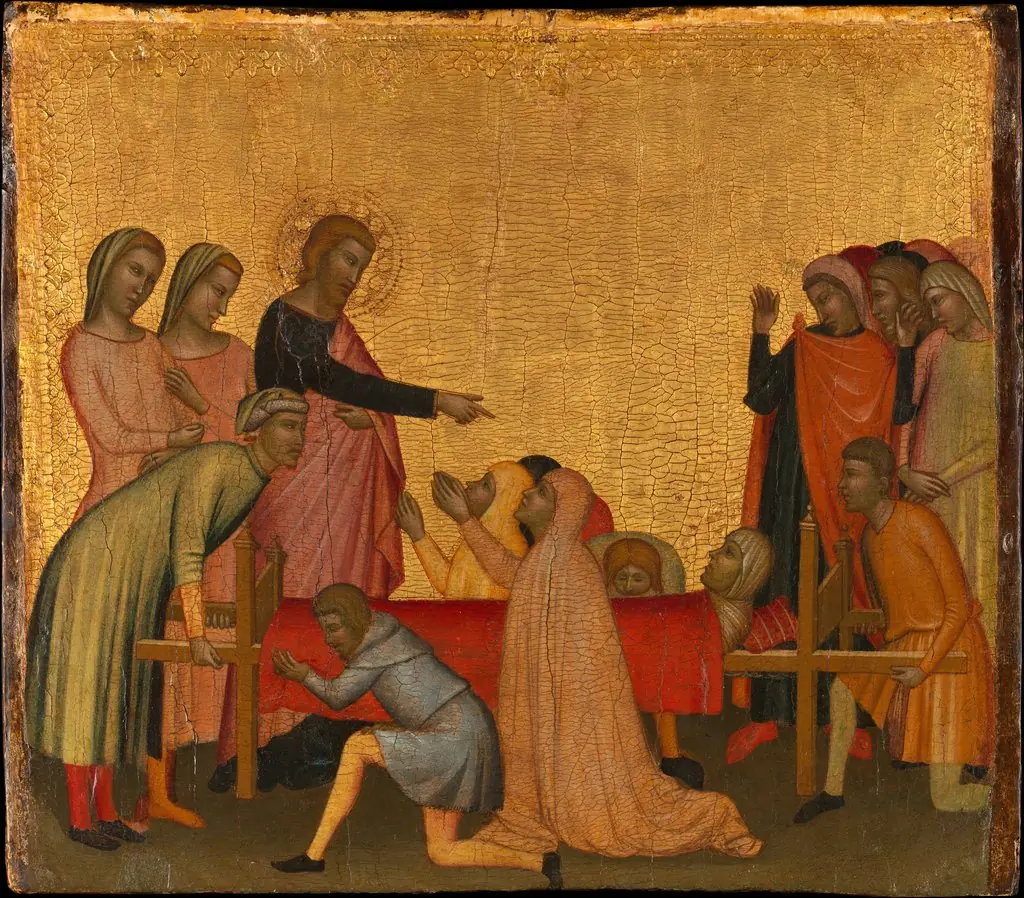 Saint John the Evangelist Raises Satheus to Life
 St. Stephen and St. Bruno
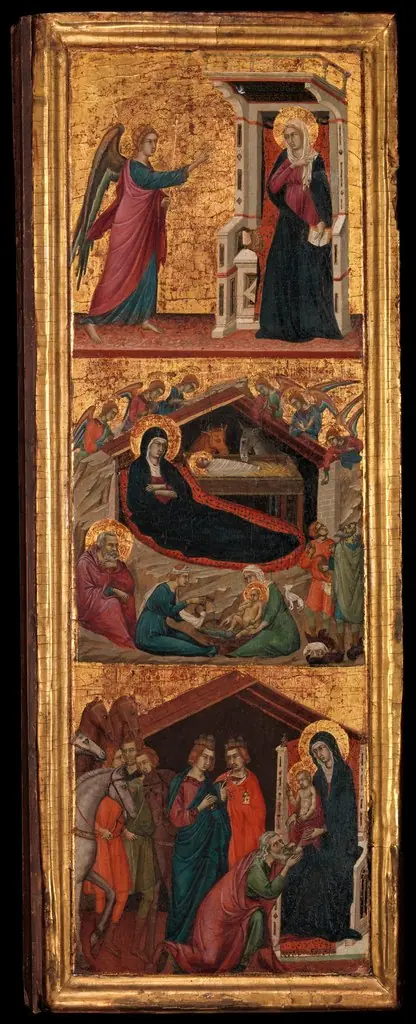 Saints and Scenes from the Life of the Virgin