Artwork
The Adoration of the Magi
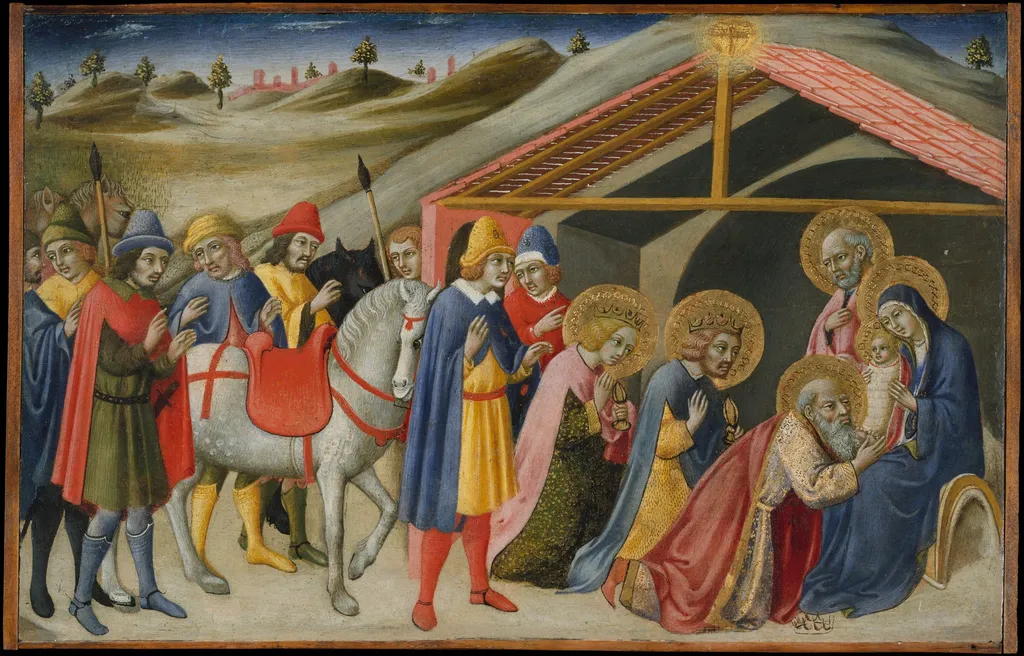
The Adoration of the Magi is an unspecified painting by the Early Renaissance artist Sano di Pietro. It dates from 1470 and is held in the collection of the Metropolitan Museum of Art.
About this work
Subject & Meaning
The painting depicts the biblical scene of the Magi presenting gifts to the infant Christ, a common devotional subject in quattrocento religious art.
The painting depicts the biblical scene of the Magi presenting gifts to the infant Christ, a common devotional subject in quattrocento religious art. Sano di Pietro includes traditional iconographic elements such as the kings, the Christ Child seated on Mary's lap, and the offering of gold, frankincense, and myrrh, each symbolizing Christ's kingship, priesthood, and sacrifice. The composition emphasizes the moment of recognition and reverence, highlighting the Magi's role as witnesses to the Incarnation and inviting contemplation of their prophetic insight into Christ's identity.
History & Provenance
Created in 1470 by the Sienese painter Sano di Pietro (Ansano di Pietro di Mencio), this panel depicts the Adoration of the Magi and measures 30.2 by 47.6 centimetres. Specific details of its original commission and early ownership are not recorded in the available sources. The painting is now held in the Metropolitan Museum of Art, New York, within its collection of European paintings; no accession number or exhibition history is documented in the available records.
Context
Sano di Pietro's The Adoration of the Magi portrays the biblical scene with the Magi presenting gifts to the Christ Child. Its composition reflects the devotional emphasis of fifteenth-century Sienese painting, in which earthly rulers pay homage to a divine infant. The work's inclusion in the Metropolitan Museum of Art's collection situates it within broader discussions of Sano di Pietro's role in Sienese artistic circles and of devotional imagery and patronage.
Overview
Painted in 1470, Sano di Pietro's The Adoration of the Magi is a quintessential example of mid-Quattrocento Sienese religious art. The composition centers on the Virgin Mary and the Christ Child, who are surrounded by the Three Kings presenting their gifts. Sano arranges the figures in a dense, semi-circular grouping that emphasizes the communal nature of the event rather than deep spatial recession, a characteristic of his style which prioritizes narrative clarity and decorative surface patterns over the rigorous perspective of Florentine contemporaries.
The figures are distinguished by vibrant robes in red, blue, and gold, creating a rhythmic visual harmony. A white donkey stands prominently near the center, serving as a traditional iconographic element linking the scene to the Flight into Egypt. The background features a simplified landscape with rolling hills, a small town, and a distinct red-roofed building, typical of the artist's tendency to integrate local Sienese architectural motifs into biblical settings.
Executed during the height of Sano's career, this work reflects his prolific output and his ability to maintain the conservative, devotional aesthetic of the Sienese school while adhering to the popular demand for accessible religious imagery in the late 15th century.
Technique & Style
Sano di Pietro employed a distinctive artistic style characterized by simple, defined shapes and areas of flat, unmodulated color. This approach eschews realistic detail in favor of clear forms and a vibrant palette. Bright hues stand out against a more subdued background, creating a visual clarity that enhances the narrative. The artist's method prioritizes legibility and devotional impact over naturalistic representation, a common characteristic of Sienese painting.
Own this work as a print
Artist & collection
Artist
Sano di Pietro or Ansano di Pietro di Mencio (1405–1481) was an Italian painter of the Sienese school of painting.

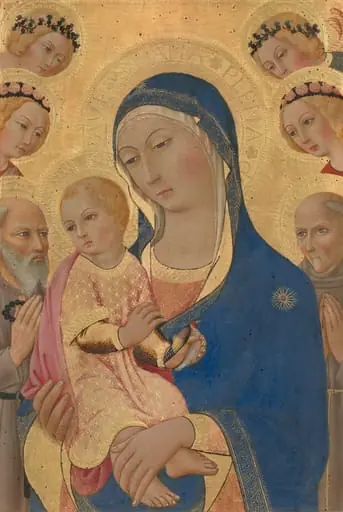 Madonna and Child with Saint Jerome, Saint Bernardino, and Angels
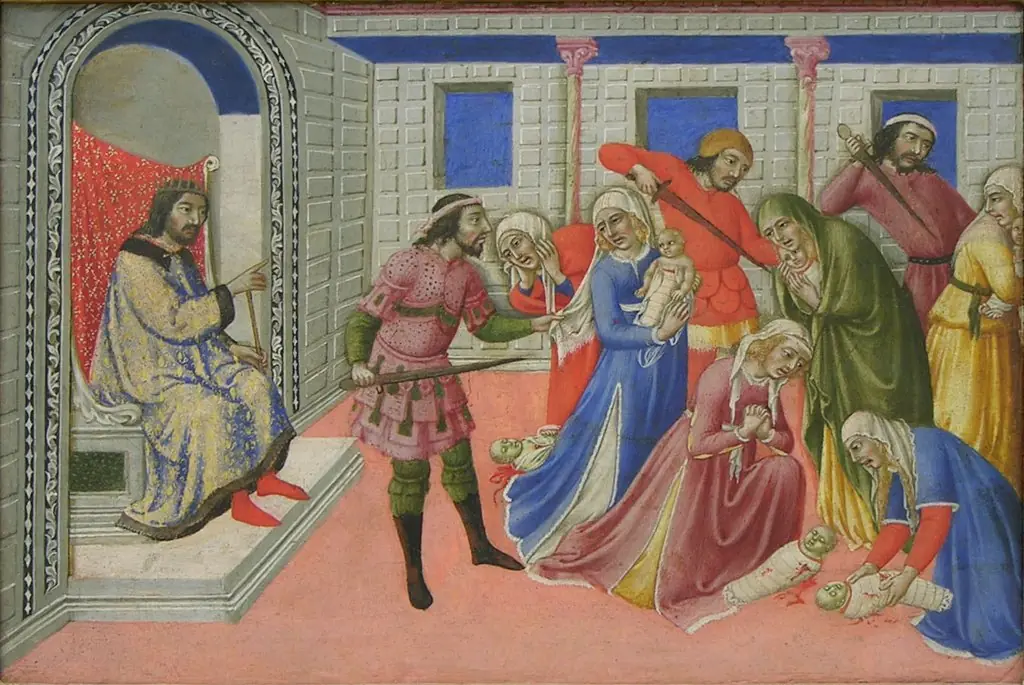 The Massacre of the Innocents
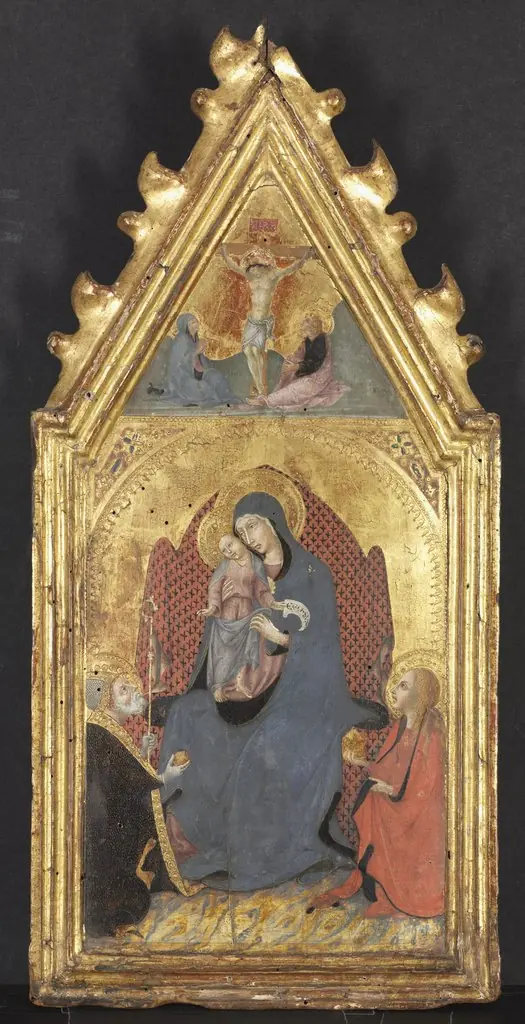 Virgin and Child Adored by Saints Mary Magdalene and Nicolas of Bari; Christ Crucified with the Virgin and Saint John the Evangelist
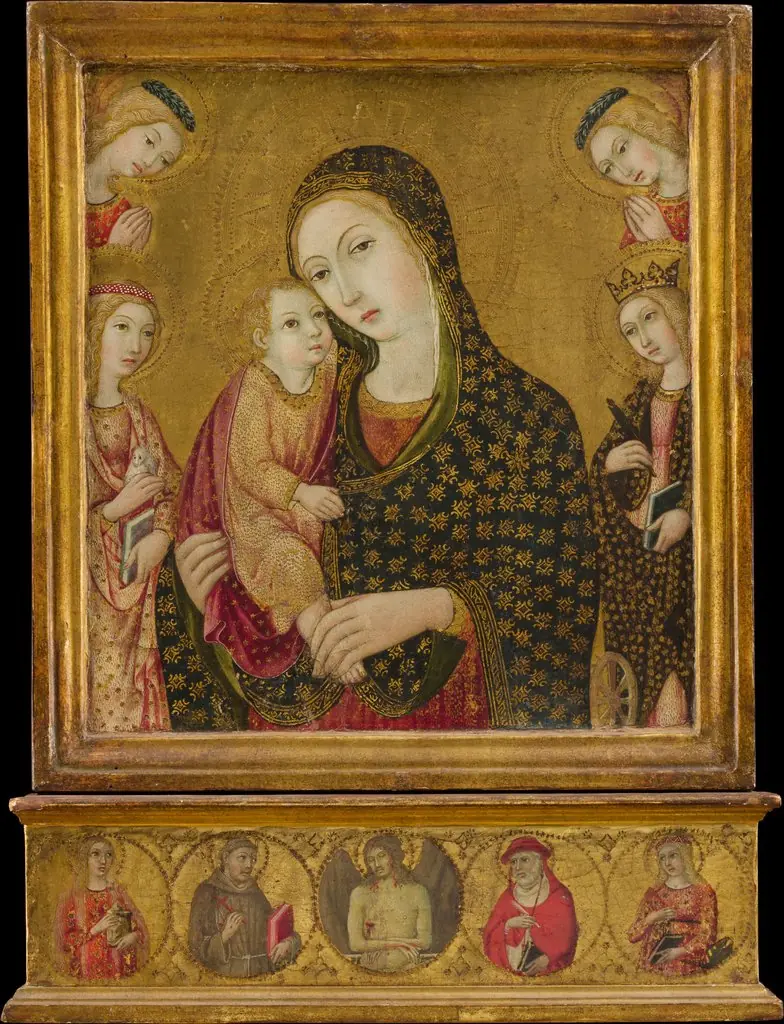 Madonna and Child with the Dead Christ, Saints Agnes and Catherine of Alexandria, and Two Angels
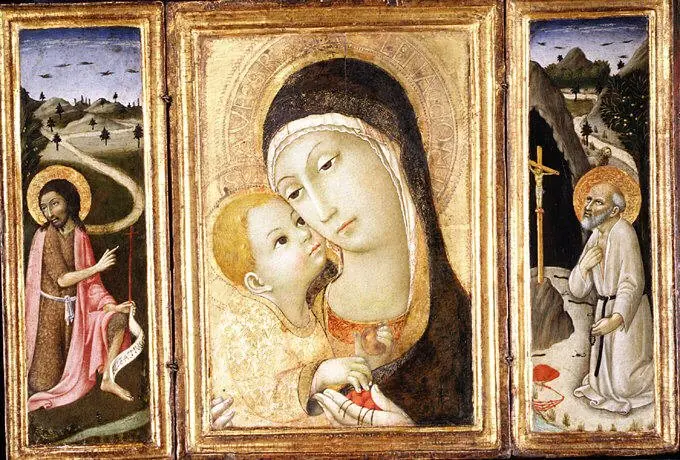 Madonna and Child; Saint John the Baptist; Saint Jerome
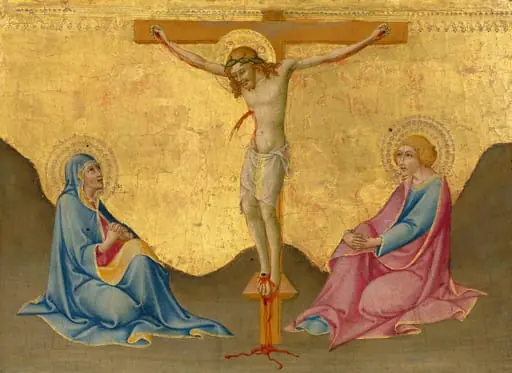 The Crucifixion
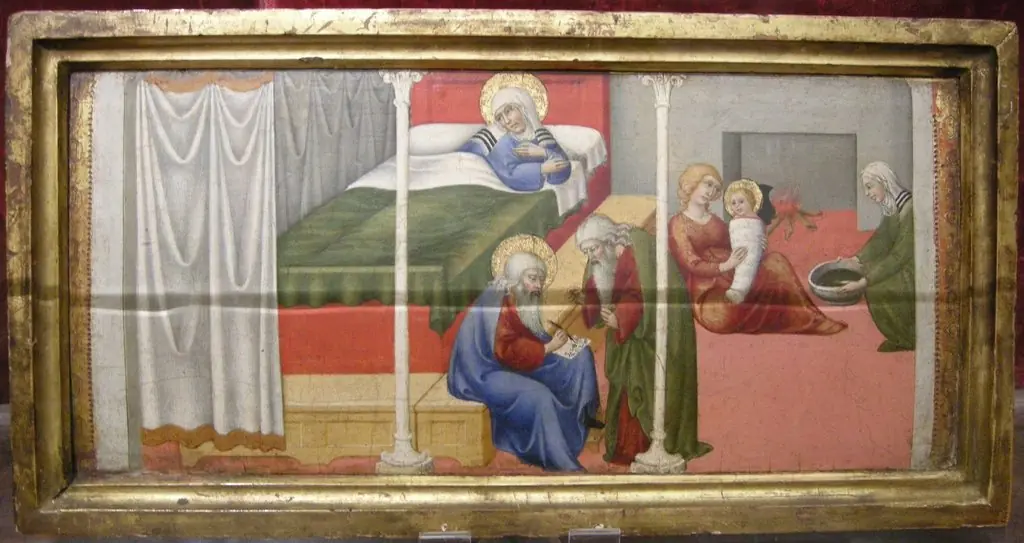 The Birth and Naming of Saint John the Baptist
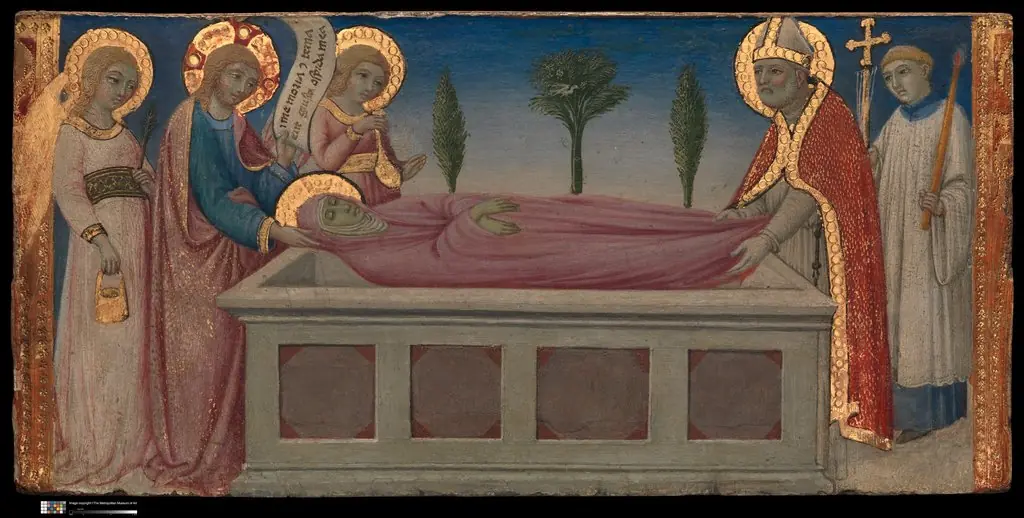 The Burial of Saint Martha
- The Adoration of the Magi
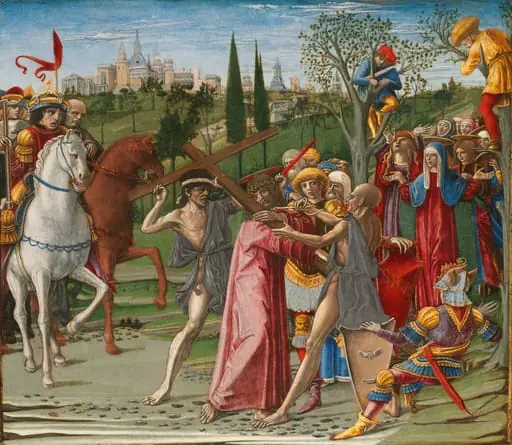 Christ Carrying the Cross
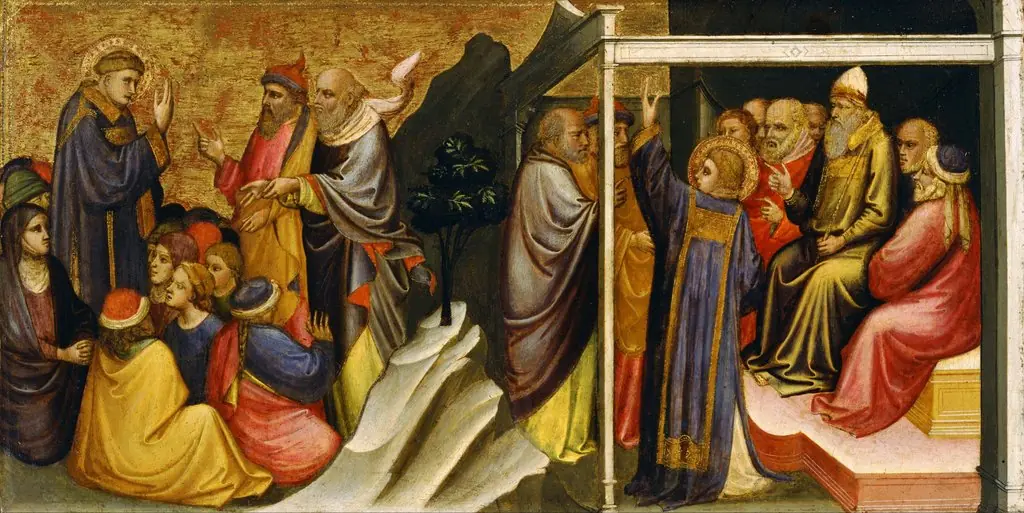 Predella Panel Representing the Legend of St. Stephen: St. Stephen Preaching
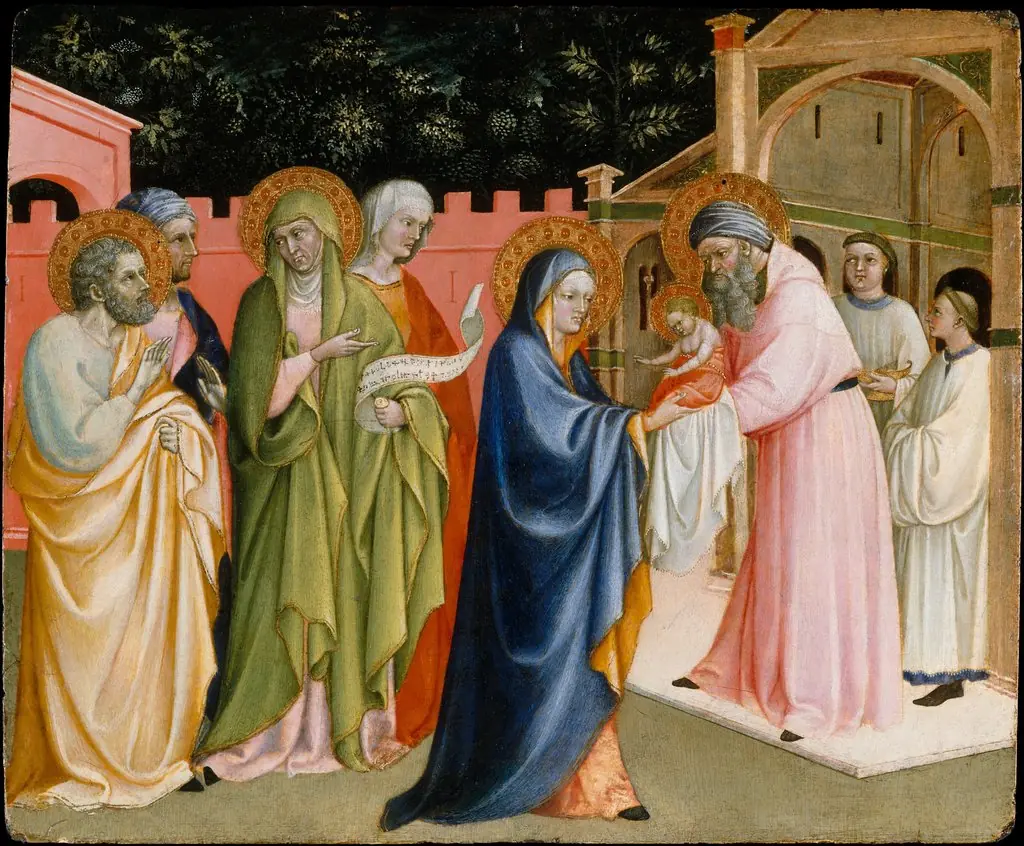 The Presentation in the Temple
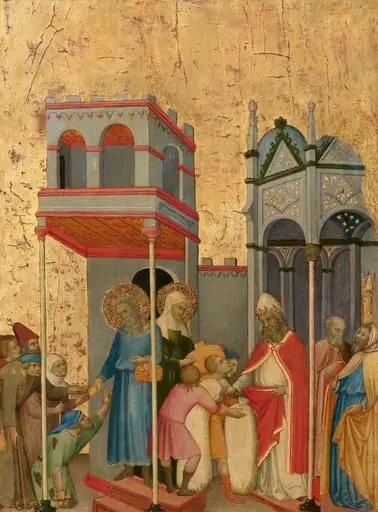 Joachim and Anna Giving Food to the Poor and Offerings to the Temple
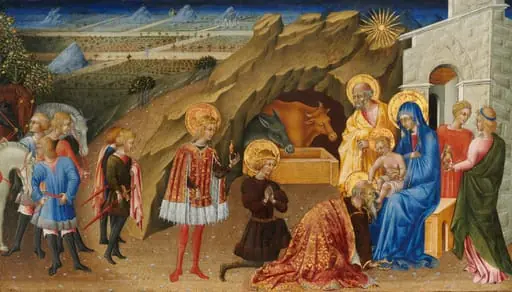 The Adoration of the Magi
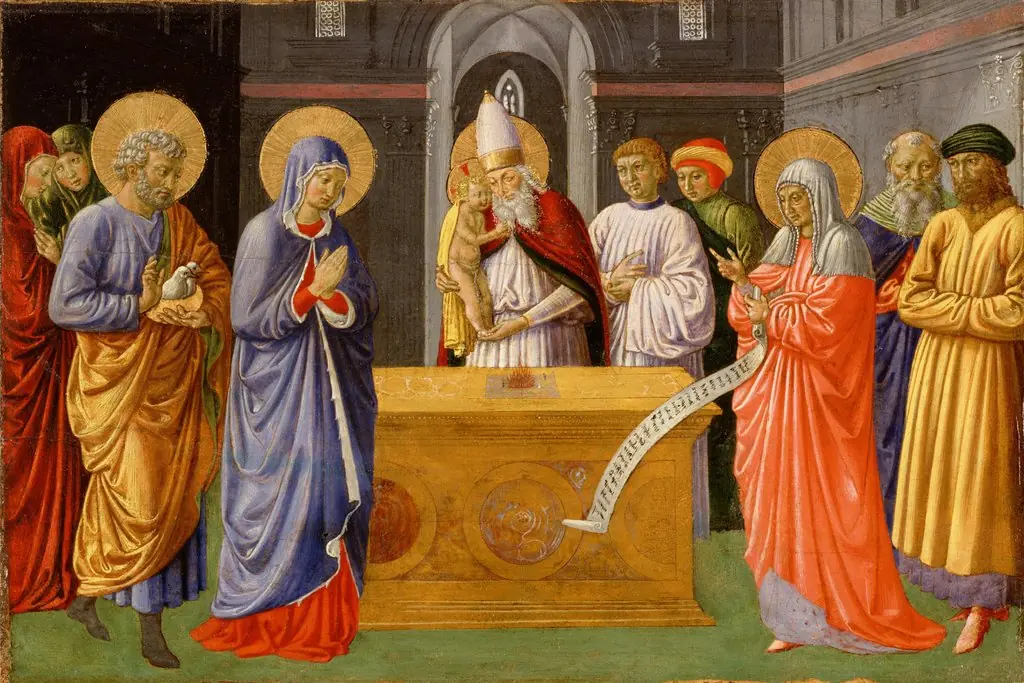 Purification of the Virgin
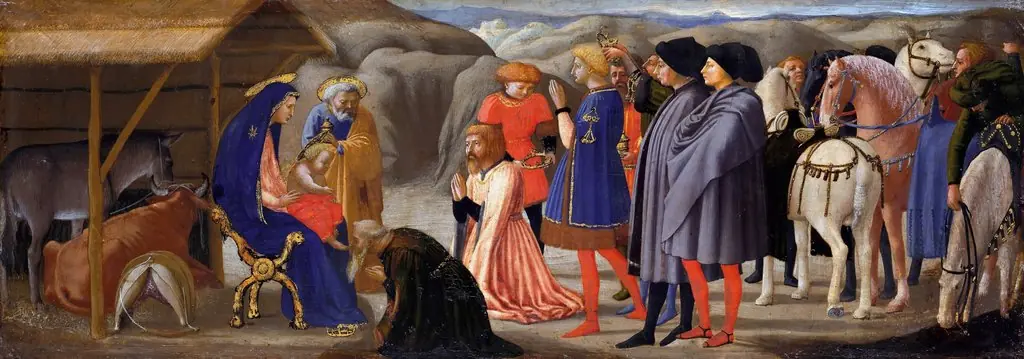 The Adoration of the Magi
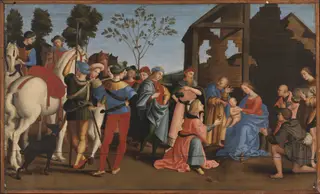 The Adoration of the Kings
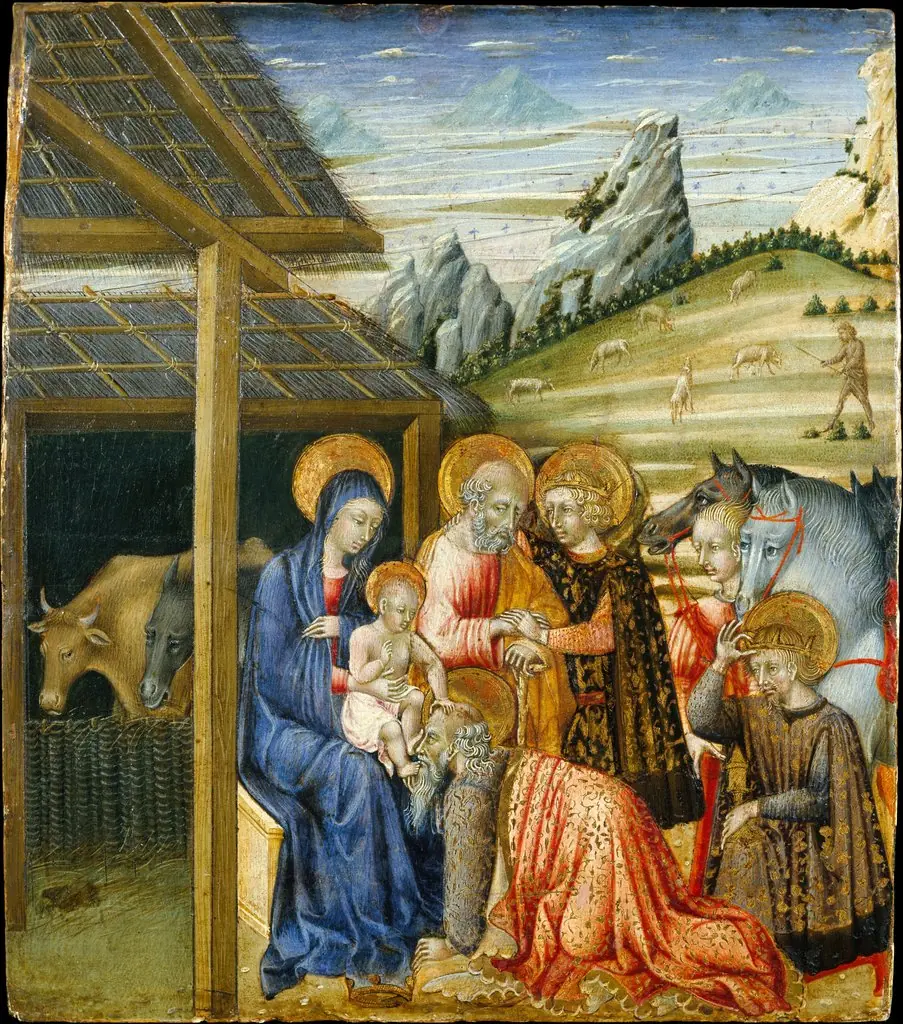 The Adoration of the Magi
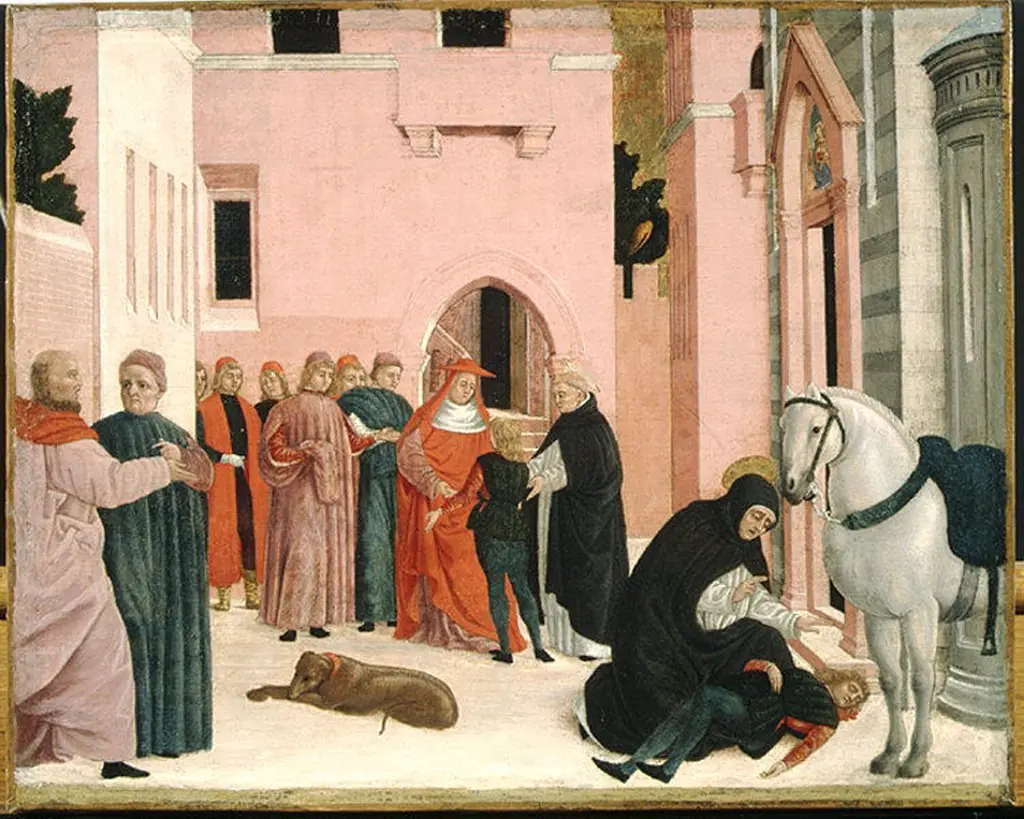 Saint Dominic Resuscitating Napoleone Orsini
 Christus vor Kaiphas