Artwork
Madonna and Child with Angels
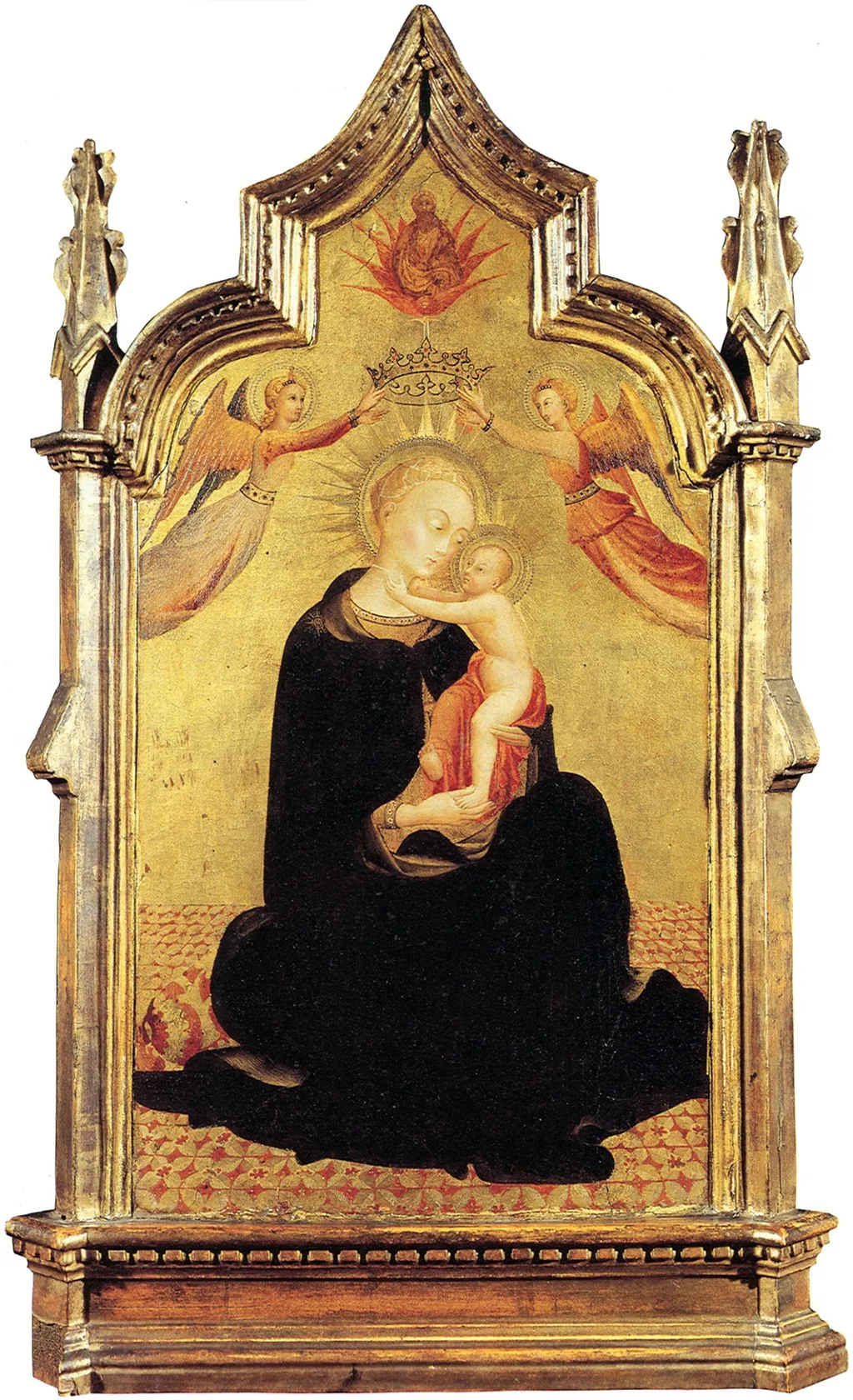
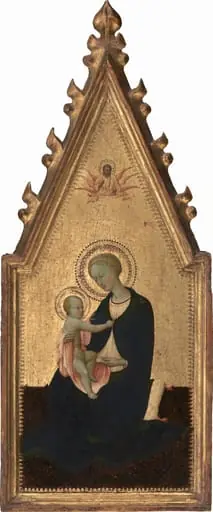
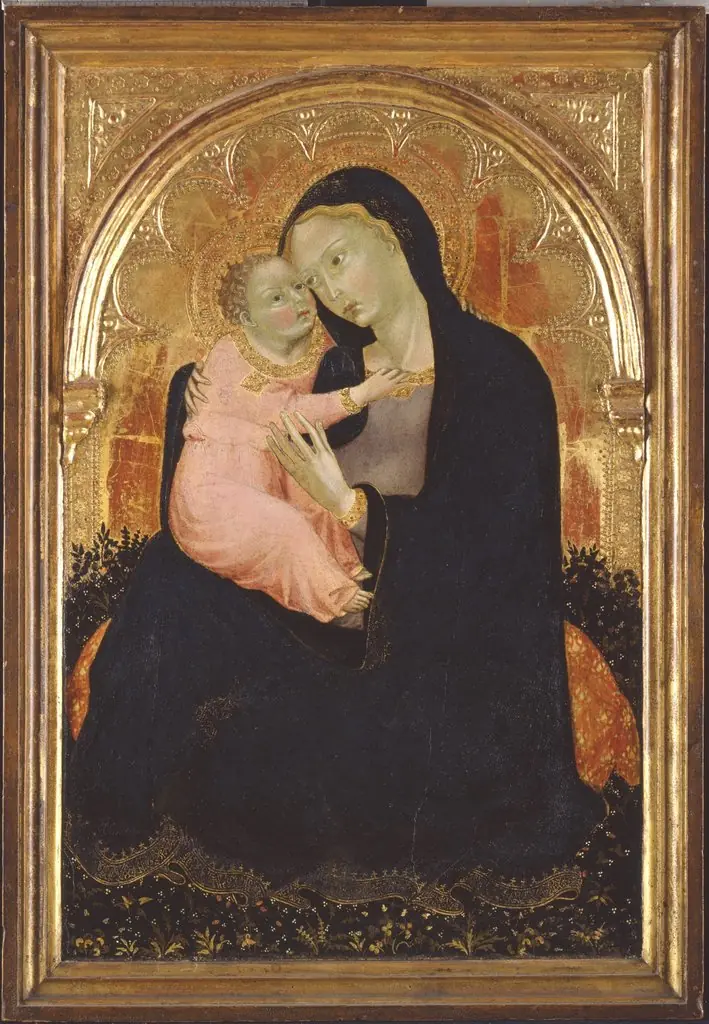
Madonna and Child with Angels is a tempera painting by the Early Renaissance artist Sassetta. It dates from 1445 and is held in the collection of the Metropolitan Museum of Art.
About this work
Subject & Meaning
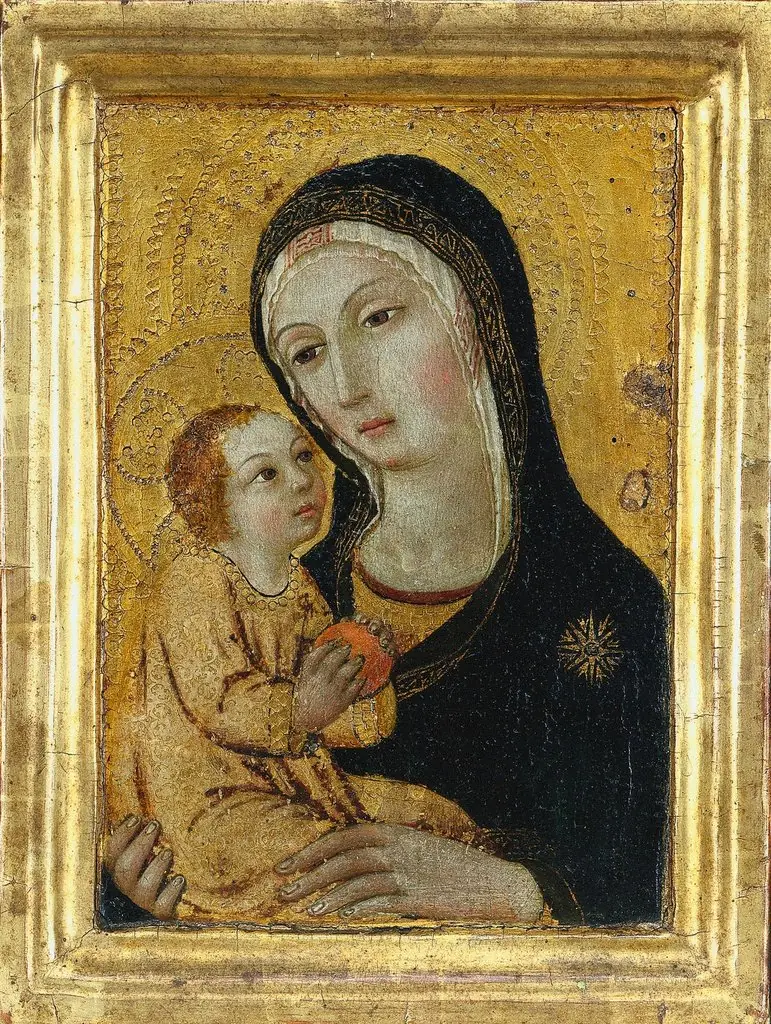
The painting, created by Sassetta in 1445, depicts the Virgin Mary cradling the infant Christ surrounded by angels.
The painting, created by Sassetta in 1445, depicts the Virgin Mary cradling the infant Christ surrounded by angels. This iconography follows the traditional Madonna and Child motif, with the angels serving as heavenly witnesses and intercessors, emphasizing the sacred nature of the scene. The inclusion of Mary and the Christ Child underscores the theological theme of the Incarnation, while the surrounding angels reinforce ideas of protection and divine communion.
Executed in tempera on panel, the work measures approximately 80.6 × 50.2 cm and is part of the Metropolitan Museum of Art collection.
Technique & Style
The painting employs tempera on panel, a medium characteristic of mid-fifteenth-century Italian panels, where pigments are mixed with egg yolk and applied to a gessoed wooden support. The handling reveals fine brushwork and delicate modeling of drapery, typical of Sassetta's refined approach, with luminous flesh tones and subtle transitions in light that convey three-dimensionality. Stylistically, the composition aligns with the International Gothic tradition, evident in the elongated figures, intricate gold detailing in the halos, and the rhythmic arrangement of the angels' wings.
The Virgin's serene expression and the Christ Child's gentle gesture reflect a devotional focus, while the spatial recession and naturalistic landscape elements demonstrate an emerging Renaissance influence.
History & Provenance
Madonna and Child with Angels was created by the Italian painter Sassetta, also known as Stefano di Giovanni, in 1445. Executed in tempera on panel, the work measures 80.6 cm in height and 50.2 cm in width. The painting depicts the Virgin Mary and the Christ Child accompanied by angels, fitting the religious genre for which the artist is renowned.
While the specific commissioning patron and the detailed chain of ownership prior to its current location are not detailed in the available records, the work is currently held in the collection of the Metropolitan Museum of Art. The creation date is firmly established as 1445, marking it as a significant example of mid-fifteenth-century Sienese painting.
Overview
Sassetta's Madonna and Child with Angels, painted in 1445, exemplifies the Sienese School of the early Renaissance. Executed in tempera, this religious panel depicts the Virgin Mary cradling the Christ Child, attended by two angels. It reflects the artist's prominent position within the Sienese tradition, which blended local stylistic elements with broader artistic developments of the period. The work is now part of The Metropolitan Museum of Art's collection.
Context
Sassetta was a leading figure of the Sienese School during the early Renaissance, a period characterized by a transition from medieval artistic conventions. His work, including this Madonna and Child, often featured religious narratives, a central theme in Sienese art. The school maintained a distinct identity, valuing decorative qualities and spiritual intensity, even as it selectively absorbed innovations in naturalism from centers like Florence, exemplified by artists such as Masaccio.
Artist & collection

Artist
Stefano di Giovanni di Consolo, known as il Sassetta (c. 1392–1450) was a Tuscan painter of the Renaissance, and a significant figure of the Sienese School. While working within the Sienese tradition, he innovated the…