Artwork
St. Francis Kneeling before Christ on the Cross
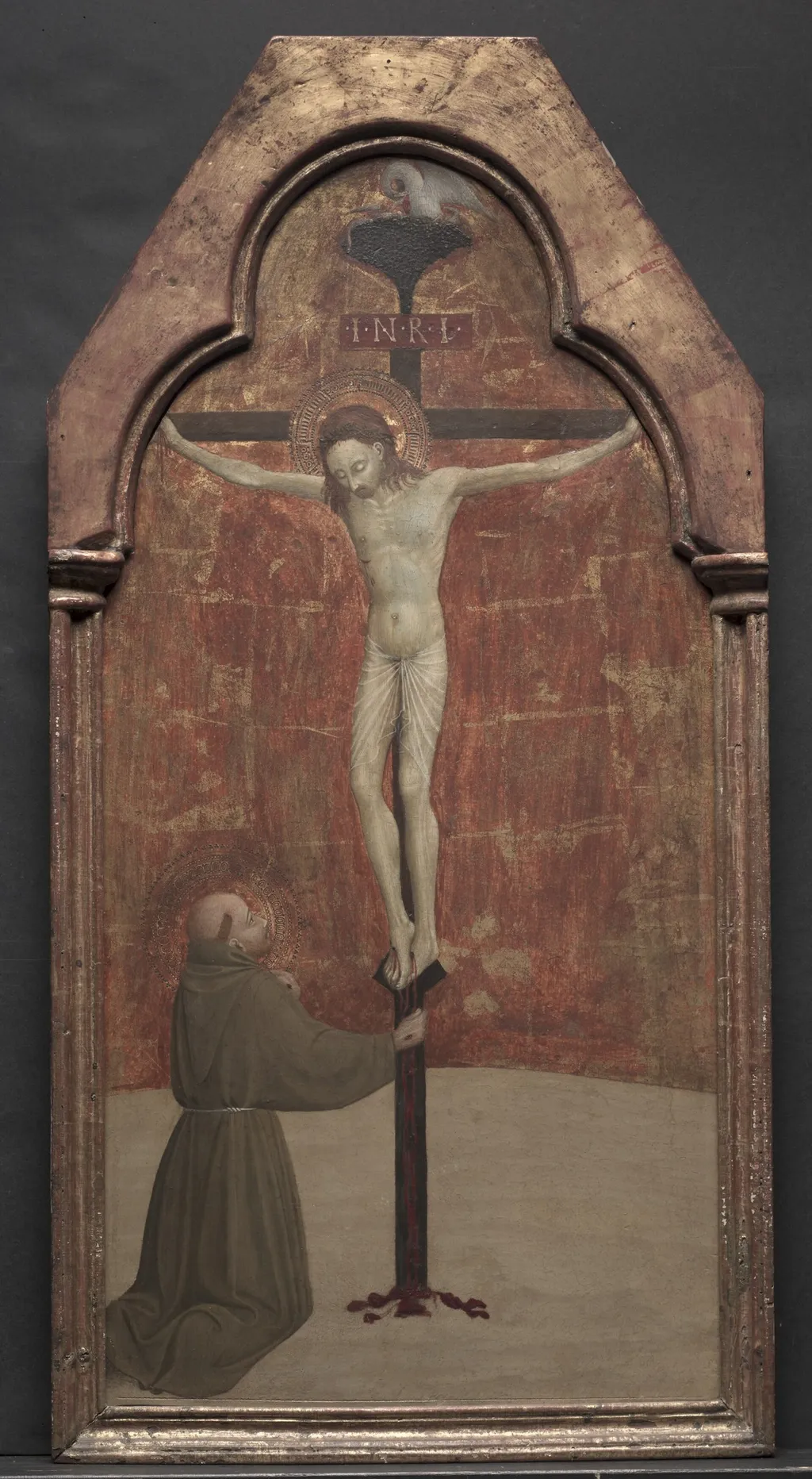
St. Francis Kneeling before Christ on the Cross is an unspecified painting by the Sienese School artist Sassetta. It dates from 1437 and is held in the collection of the Cleveland Museum of Art.
About this work
Subject & Meaning
The composition focuses entirely on this spiritual encounter, illustrating the saint's profound humility and mystical connection to the crucified Jesus.
Created in 1437 by the Italian artist Sassetta, this religious painting depicts a monk, identified by the work's title as Saint Francis, kneeling in devotion before Christ on the Cross. The composition focuses entirely on this spiritual encounter, illustrating the saint's profound humility and mystical connection to the crucified Jesus. As a piece of religious art from fifteenth-century Italy, the image serves as a visual representation of Franciscan piety, emphasizing the emotional and physical intensity of Francis's worship.
The specific iconography of the kneeling figure before the cross underscores themes of penance and the imitation of Christ's suffering, central tenets of the saint's life and the order he founded.
History & Provenance
St. Francis Kneeling before Christ on the Cross is a tempera painting attributed to the Italian artist Sassetta and dated to circa 1437, as indicated by the work’s inscription and stylistic analysis. Executed in Italy, the panel entered the Cleveland Museum of Art’s collection in 1962, where it bears the accession number 1962.36 and remains on view. No documentary evidence of an original patron or commission survives in the cited sources, and the provenance prior to its 1962 acquisition is not recorded.
The painting St. Francis Kneeling before Christ on the Cross by Sassetta is held in the collection of the Cleveland Museum of Art, located in Cleveland, Ohio. Within the museum's records, the work is identified by the accession number 1962.36. Created in 1437, this religious panel depicts a monk and remains part of the institution's permanent holdings.
The provided sources confirm its current location and inventory designation but do not list specific past exhibitions or loan history.
Context
Created in 1437 by the Italian painter Sassetta (1392–1450), St. Francis Kneeling before Christ on the Cross is a religious work that exemplifies the artist's contribution to 15th-century Italian painting. The piece, now held at the Cleveland Museum of Art, depicts a monk in a devotional posture, aligning with Sassetta's known focus on spiritual narratives and religious themes. While specific scholarly debates or critical reception details regarding this particular panel are not elaborated in the available sources, its attribution to Sassetta and its creation date place it firmly within the context of his mature period.
The work's dimensions and religious genre further situate it among the devotional objects produced in Italy during the early Renaissance, reflecting the era's artistic and spiritual priorities.
Overview
Sassetta's painting, St. Francis Kneeling before Christ on the Cross, created in 1437, exemplifies the Sienese School's devotional focus. This work by Stefano di Giovanni, a prominent figure in the Tuscan Renaissance, depicts a monk in profound prayer before the crucified Christ. It is currently housed in the collection of The Cleveland Museum of Art, offering insight into 15th-century Italian religious art.
Technique & Style
Sassetta's artistic approach in this piece merges the ornate qualities of the Gothic tradition with the emerging naturalism seen in Florentine painting, particularly from artists like Masaccio. The background's red wall with gold accents provides visual depth and texture. Through careful application of color and light, the artist cultivates an atmosphere of reverence, directing attention to the central figures and their spiritual interaction.
Artist & collection

Artist
Stefano di Giovanni di Consolo, known as il Sassetta (c. 1392–1450) was a Tuscan painter of the Renaissance, and a significant figure of the Sienese School. While working within the Sienese tradition, he innovated the…

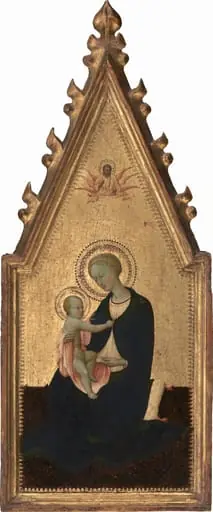
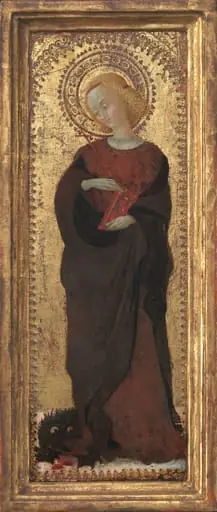
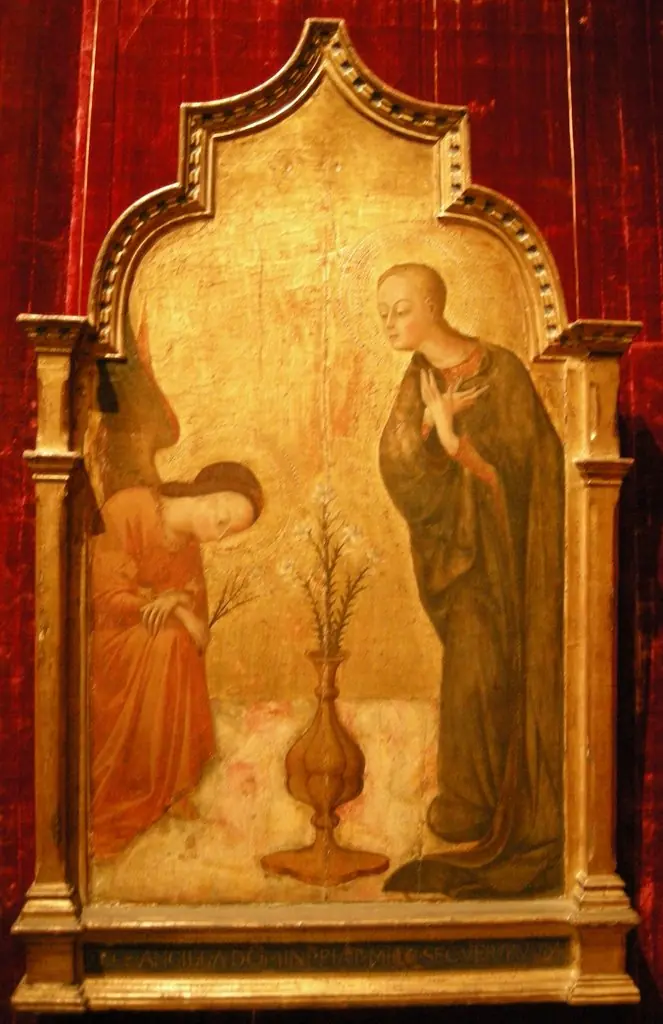
- Christ on the Cross
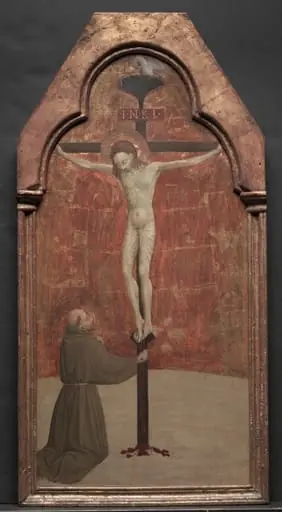 St. Francis Kneeling before Christ on the Cross
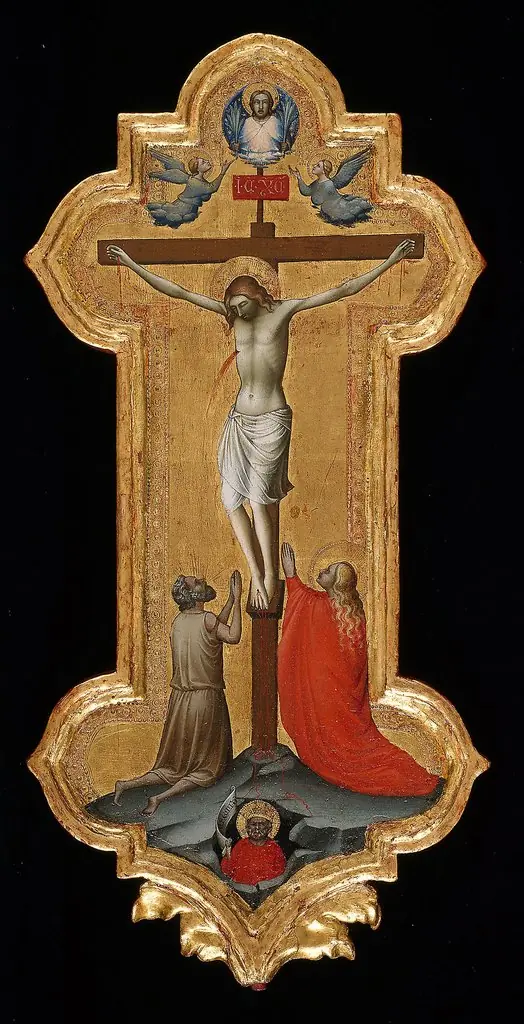 Processional Cross
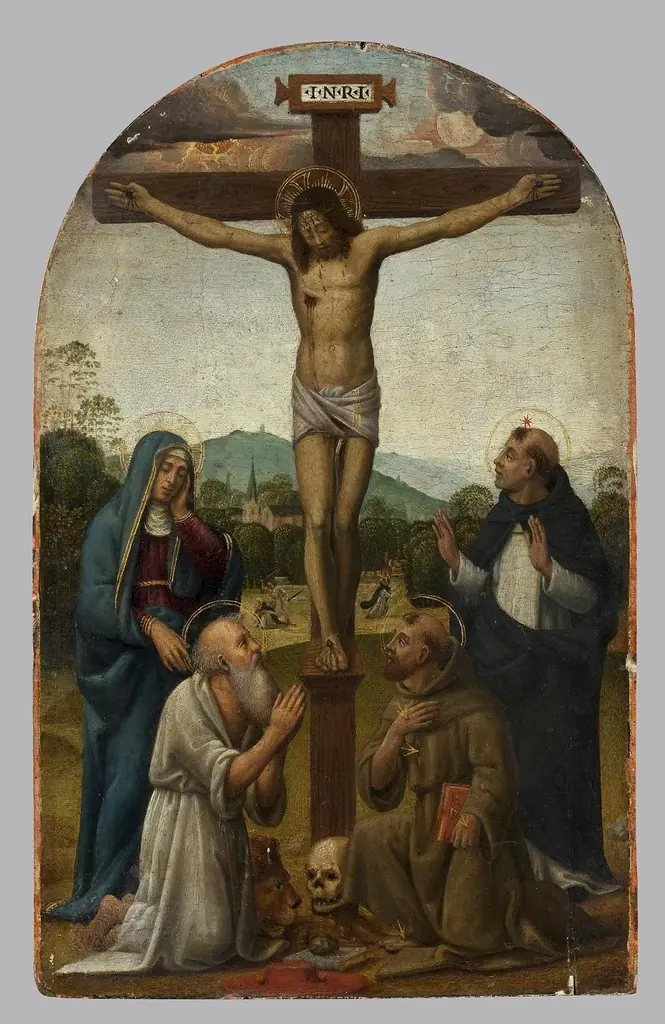 Crusifixion with the Virgin Mary and Sts Dominic, Jerome and Francis
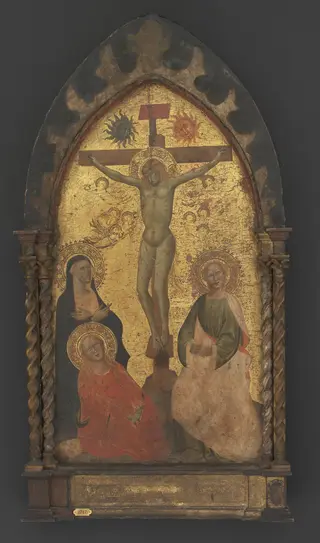 Christ on the Cross mourned by the Virgin Mary and Saints Mary Magdalene and John
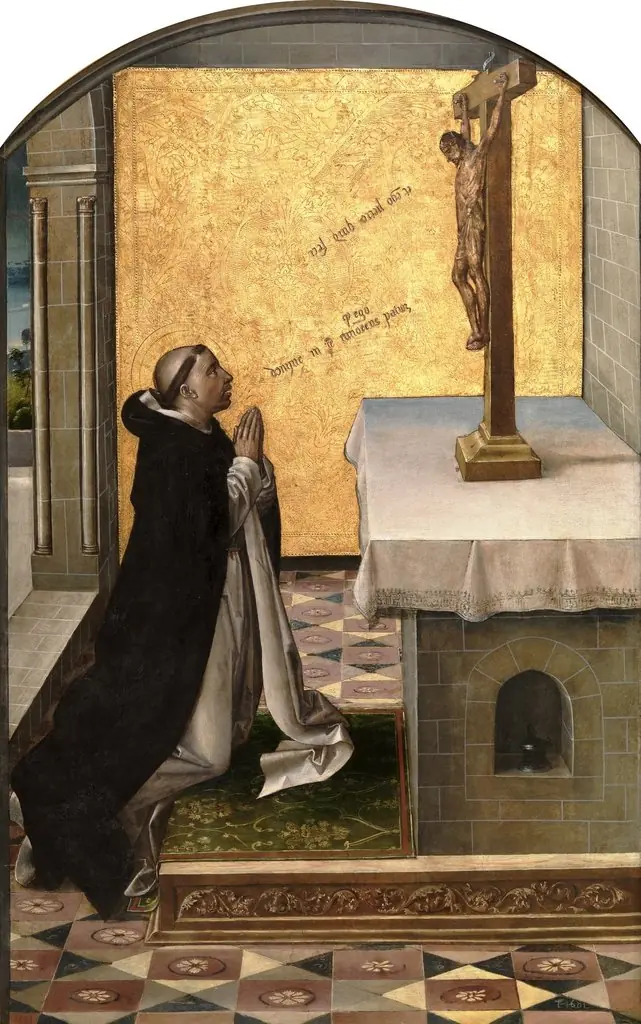 Saint Peter the Martyr praying
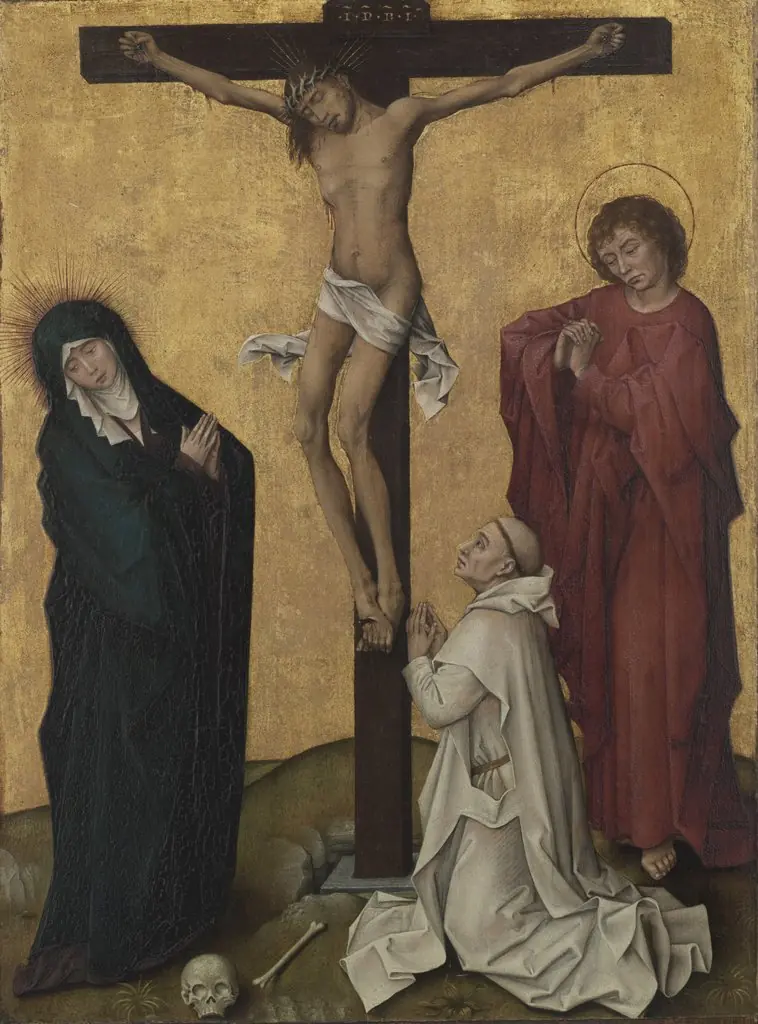 The Crucifixion with a Carthusian Monk
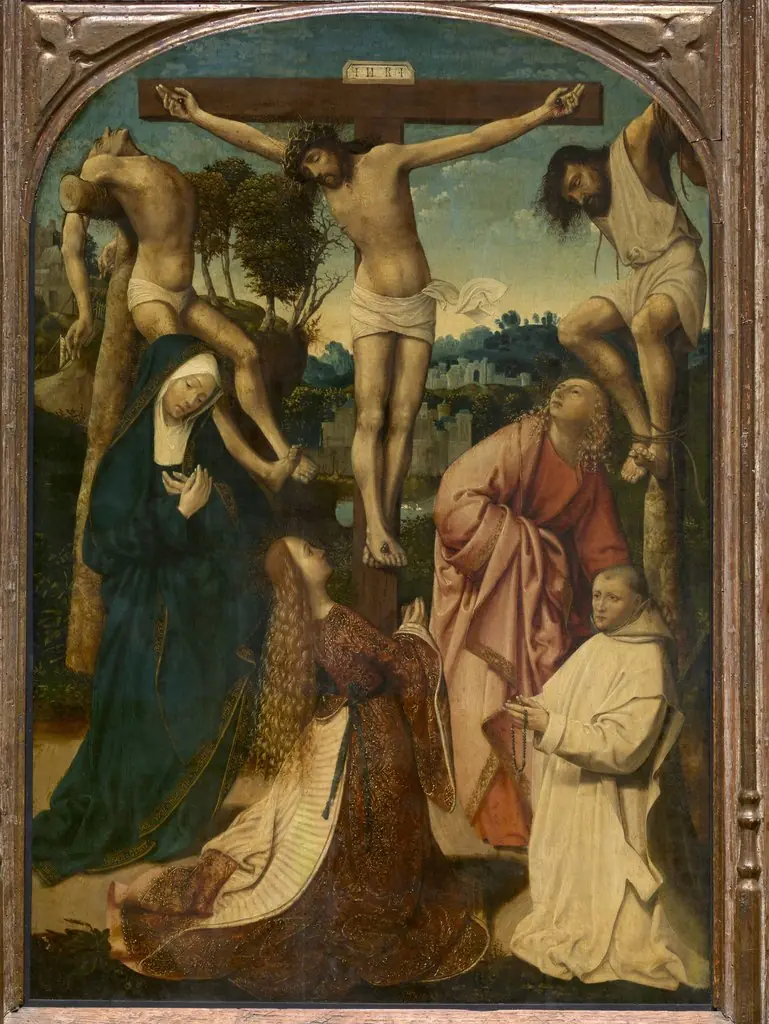 Crucifixion
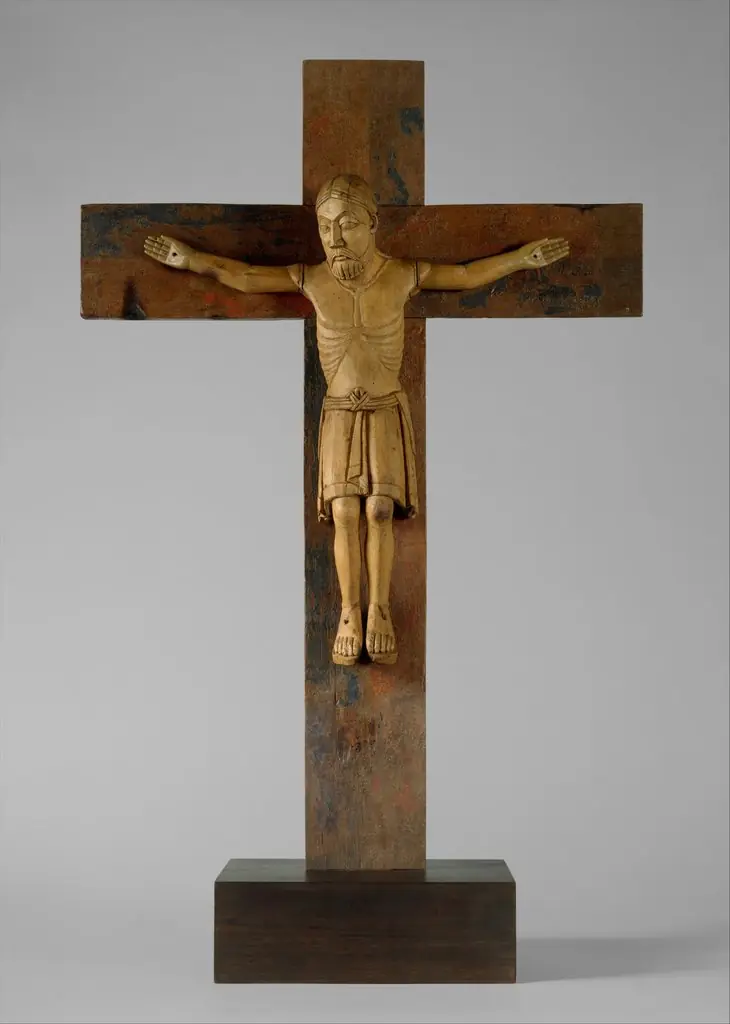 Christ on the Cross
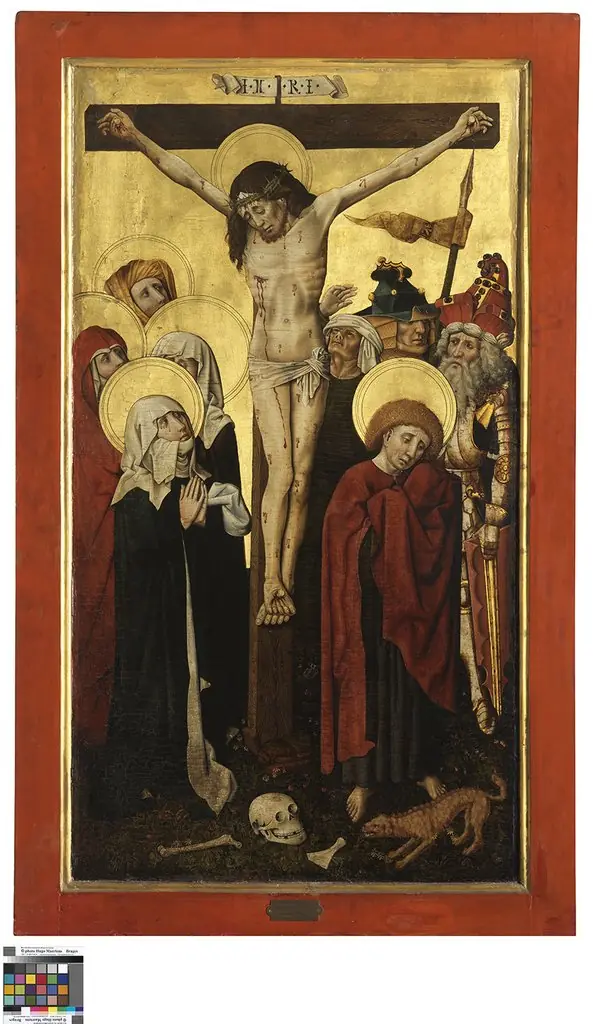 Crucifixion
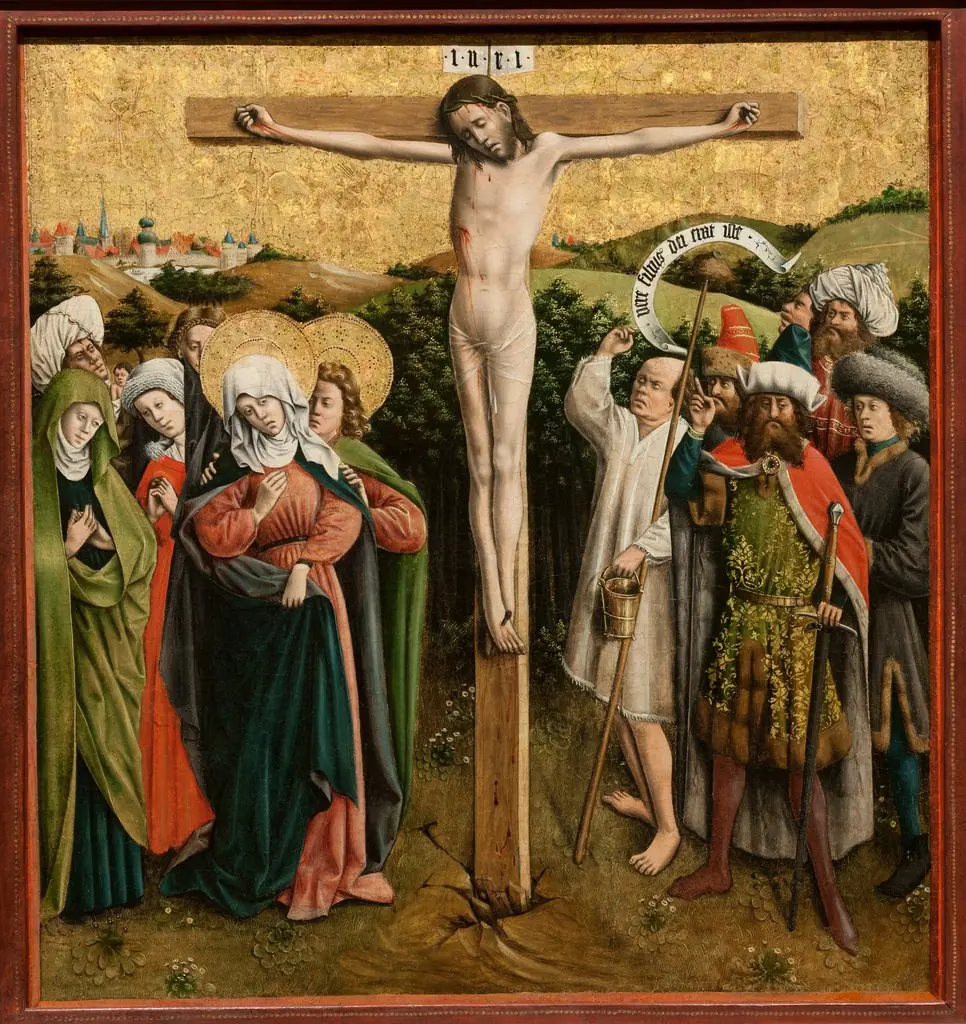 Altarpiece with The Passion of Christ
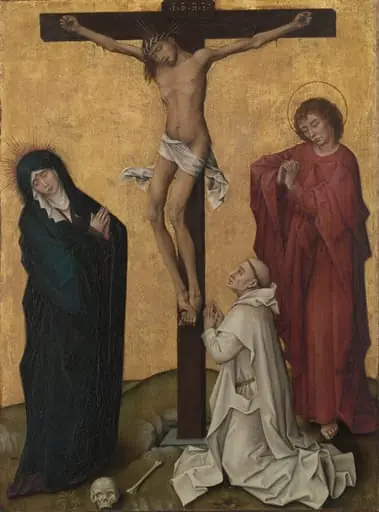 The Crucifixion with a Carthusian Monk