Artwork
Saint Apollonia
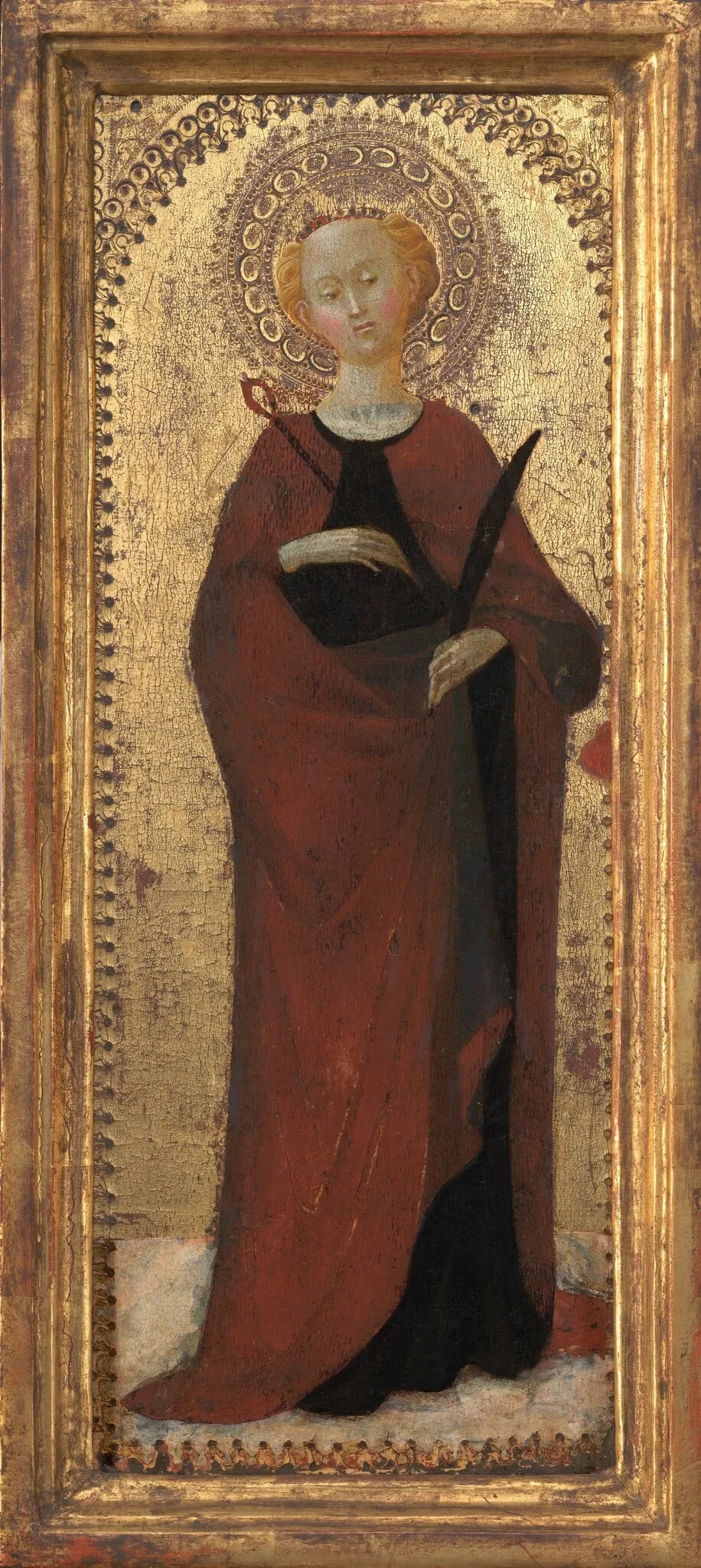
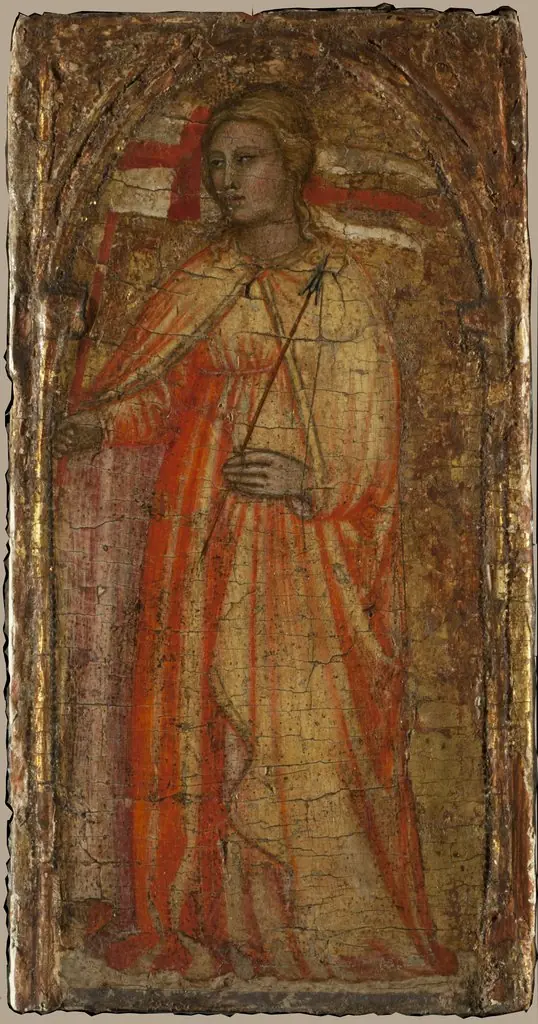
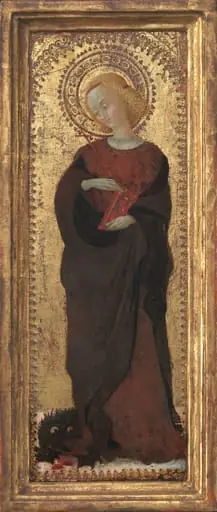
Saint Apollonia is a tempera painting by the Early Renaissance artist Sassetta. It dates from 1435 and is held in the collection of the National Gallery of Art.
About this work
Subject & Meaning
Originally functioning as a wing of a small portable triptych, the work belongs to the genre of religious art.
Executed in 1435 by Sassetta, this tempera panel explicitly depicts Saint Apollonia as its primary subject. Originally functioning as a wing of a small portable triptych, the work belongs to the genre of religious art. While the specific iconographic details of the saint's portrayal, such as traditional attributes like pincers or teeth, are not enumerated in the available records, the painting's identity is firmly established by its dedication to this specific martyr.
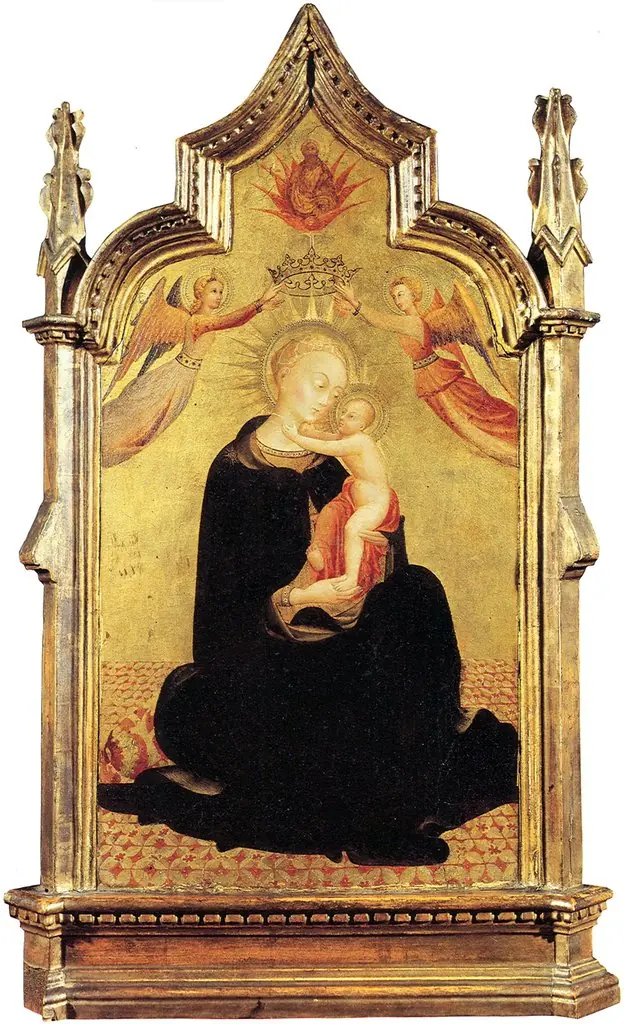
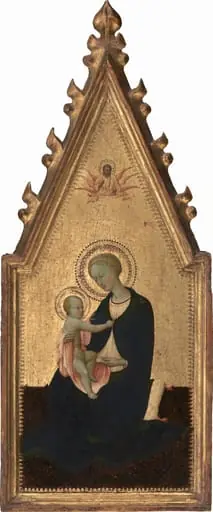
The piece was designed to operate in concert with a central panel featuring the Virgin and Child, suggesting a devotional context where the saint serves as an intercessory figure within a larger sacred narrative. The work currently resides in the National Gallery of Art as part of the Samuel H. Kress Collection.
Technique & Style
Saint Apollonia is executed in tempera on a poplar panel, a standard support for Italian panel painting of the period. The work was originally one of the wings of a small portable triptych, and like its companion pieces it would have been surmounted by painted gables, following established custom. The panel measures 28.6 cm in height by 11.3 cm in width, a narrow vertical format consistent with its function as a hinged wing flanking a central devotional image.
The Berlin central panel of the same triptych, later identified as the Virgin and Child Crowned by Angels, was transferred into the Berlin gallery from storerooms in 1885, having possibly entered the Solly collection before 1821, indicating that the wings shared a comparable early provenance and physical history.
History & Provenance
The work attributed to Sassetta was executed circa 1435 as tempera on poplar panel, forming the side wings of a small portable triptych. After an uncertain early ownership that may have included a German private collection in the nineteenth century, it entered the market via the London dealer Robert Langton Douglas in the early 1900s and was purchased by Dan Fellows Platt in March 1913. The painting remained in Platt's estate until 1939, when the trustees sold it to the Samuel H. Kress Foundation, which subsequently gifted the work to the National Gallery of Art in 1943.
Context
The panel, executed in tempera on poplar in 1435, portrays the martyr Saint Apollonia and forms part of a small portable triptych; after an uncertain early ownership it was acquired by Dan Fellows Platt in 1913 and later donated to the National Gallery of Art in 1943. Art historians have highlighted its significance for studying Sassetta's workshop practice and the development of early Renaissance triptychs, noting the close relationship between its composition and a corresponding panel in the Gemäldegalerie, Berlin. The work's classification as religious painting, its material and stylistic features, and its provenance illustrate the dispersal of early Italian art into American collections.
Legacy
The work's entry into the National Gallery of Art in 1943, through the Samuel H. Kress Foundation gift, placed Saint Apollonia within a premier public collection of early Italian art, reinforcing the painting's scholarly visibility. Its subsequent attribution and analysis, particularly the recognition of the NGA panels as wings of a portable triptych linked to a Berlin altarpiece, advanced understanding of Sassetta's workshop practice and the circulation of devotional images in the fifteenth century. This legacy is reflected in continued reference to the piece in studies of Italian Renaissance panel painting.
Overview
Sassetta, born Stefano di Giovanni di Consolo, created this painting titled Saint Apollonia around 1435. Executed in tempera on a poplar panel, the work exemplifies the artist's contribution to the early Renaissance in Siena. As a prominent figure of the Sienese School, Sassetta was known for integrating the region's established Gothic decorative aesthetics with the burgeoning naturalism championed by Florentine painters of his era.
Artist & collection

Artist
Stefano di Giovanni di Consolo, known as il Sassetta (c. 1392–1450) was a Tuscan painter of the Renaissance, and a significant figure of the Sienese School. While working within the Sienese tradition, he innovated the…