Artwork
Shield with Swan, Held by Woman
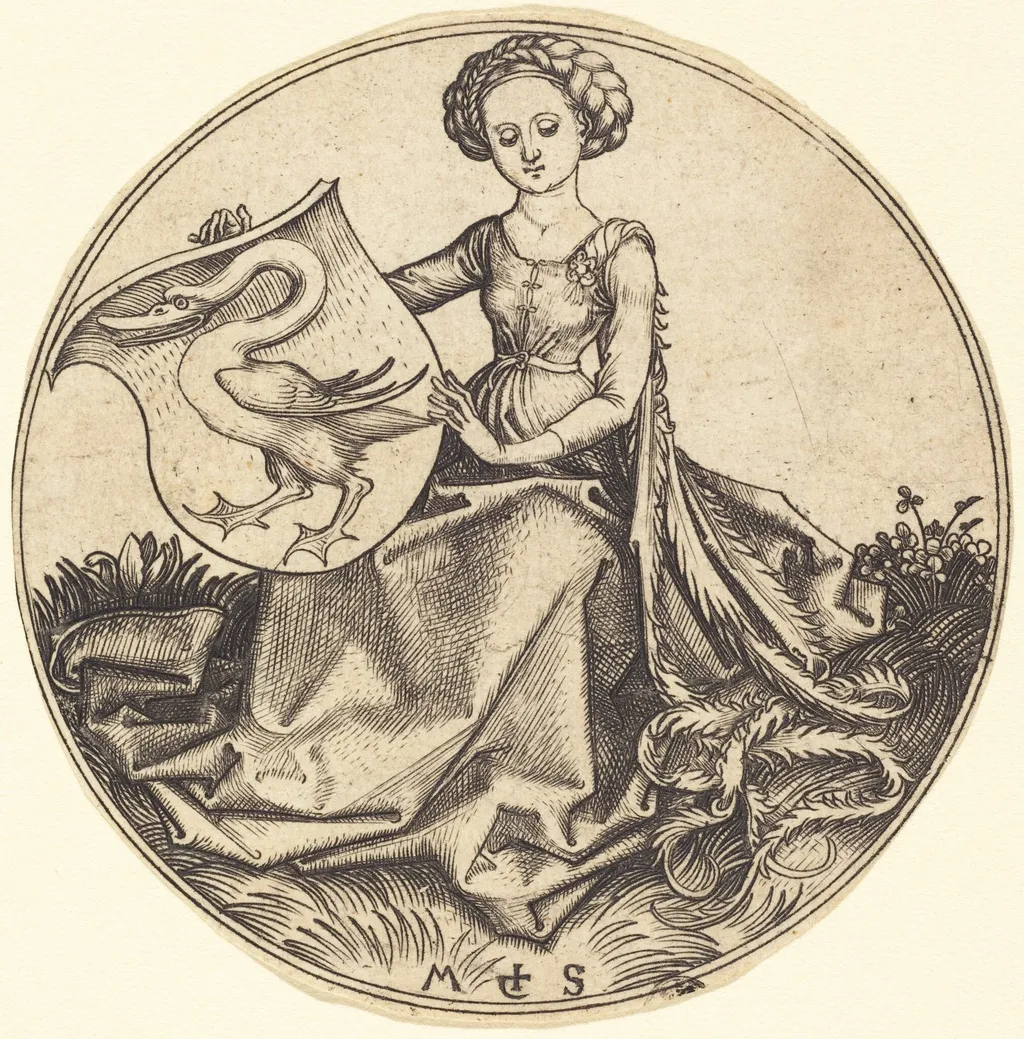
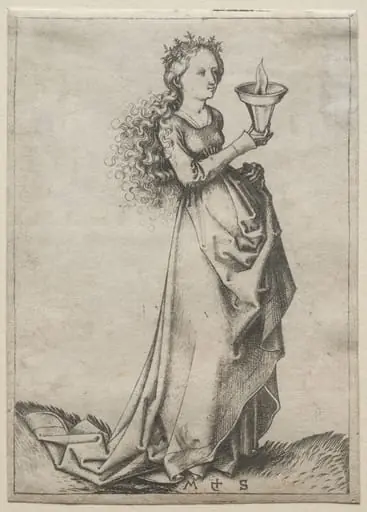
Shield with Swan, Held by Woman is an ink print by the Renaissance artist Martin Schongauer. It dates from 1485 and is held in the collection of the National Gallery of Art.
About this work
Overview
Executed in fine metalpoint lines on a copper plate, the work is one of 116 authenticated engravings by the artist, each bearing his distinctive monogram.
Created around 1485, this engraving by Martin Schongauer presents a solitary woman cradling a swan with outstretched wings. Executed in fine metalpoint lines on a copper plate, the work is one of 116 authenticated engravings by the artist, each bearing his distinctive monogram. Schongauer, active in Colmar, was among the earliest Northern European artists to elevate engraving to a refined artistic medium, setting standards for later printmakers.
Subject & Meaning
The figure, dressed in a simple, flowing robe and headband, holds the swan gently, its neck arched gracefully over her arm. The swan, often associated with purity or divine grace in medieval iconography, may symbolize virtue or spiritual harmony. The woman’s calm demeanor and the natural surroundings suggest an idealized, contemplative scene, possibly referencing chivalric or allegorical traditions without explicit narrative.
Technique & Style
Schongauer employed precise, controlled engraving lines to model form and texture. Delicate cross-hatching renders the swan’s feathers with lifelike density, while the folds of the woman’s gown are suggested through subtle, flowing contours. The background, populated with small birds and foliage, is rendered with minimal detail, enhancing the central figures’ prominence. The technique reflects his training in metalwork and his sensitivity to tonal gradation.
History & Provenance
The engraving survives as part of Schongauer’s extensive body of printed work, widely circulated across Europe in the late 15th century. Though no specific early ownership records are documented for this piece, his prints were collected by nobility and clergy, and later influenced artists including Dürer. The work’s survival in multiple impressions attests to its popularity and the durability of Schongauer’s engraving technique.
Context
In late 15th-century Alsace, engraving was emerging as a respected art form, distinct from painting and manuscript illumination. Schongauer’s work bridged the traditions of goldsmithing and fine art, responding to a growing market for devotional and decorative prints. His imagery often blended naturalistic observation with symbolic content, reflecting broader cultural interests in nature, virtue, and the divine.
Legacy
Schongauer’s technical precision and compositional clarity established a model for Northern Renaissance printmaking. His engravings, including this one, were studied and copied by younger artists, most notably Albrecht Dürer, who acknowledged his debt to Schongauer. The enduring quality of his line work ensured his influence persisted well into the 16th century, shaping the evolution of the medium across Europe.
Own this work as a print
Artist & collection
Artist
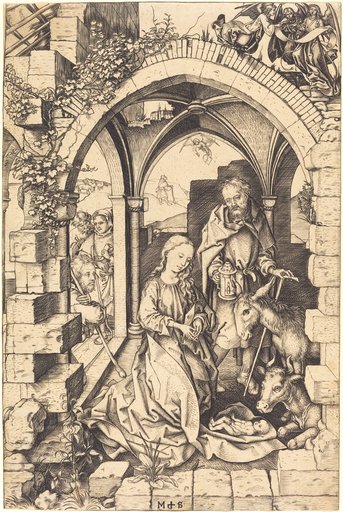
Martin Schongauer (c. 1450–1453, Colmar – 2 February 1491, Breisach), also known as Martin Schön ("Martin beautiful") or Hübsch Martin ("pretty Martin") by his contemporaries, was an Alsatian engraver and painter. He…