Artwork
Allegory
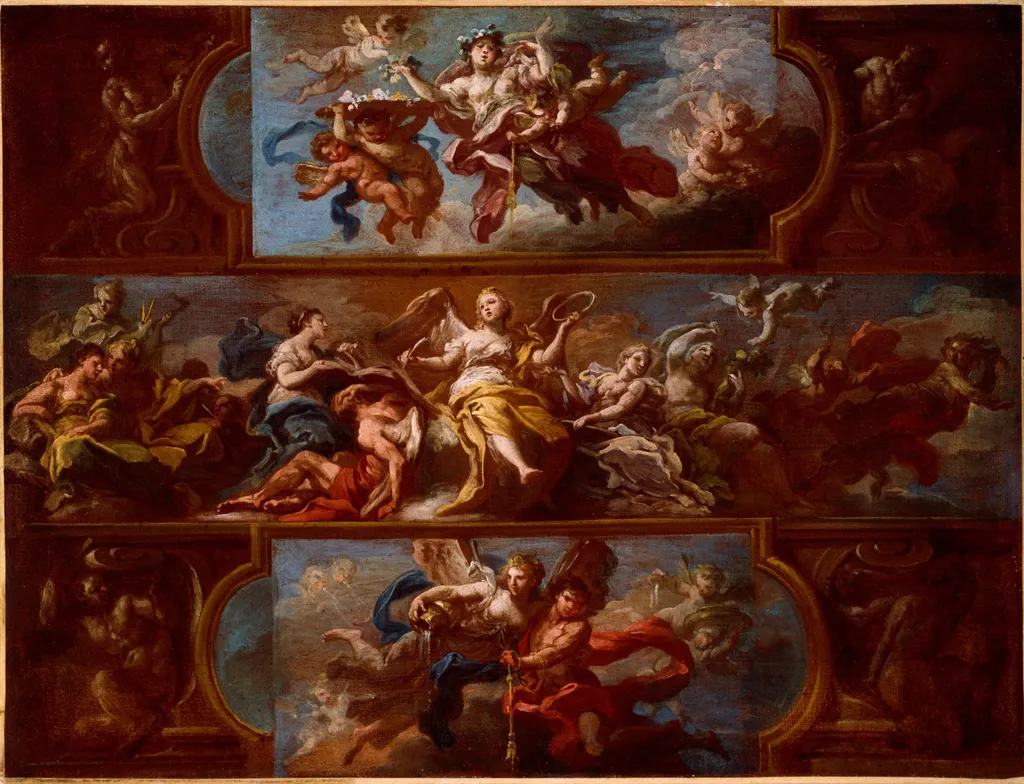
Allegory is an oil painting by the Late Mannerist artist Sebastiano Conca. It dates from 1730 and is held in the collection of the Museum of Fine Arts, Houston.
About this work
Overview
Sebastiano Conca’s Allegory, painted around 1730 in oil, is a complex composition divided into three horizontal registers.
Sebastiano Conca’s Allegory, painted around 1730 in oil, is a complex composition divided into three horizontal registers. Each layer presents a distinct figure surrounded by attendant characters, creating a layered narrative. The work resides in the Museum of Fine Arts, Houston, where its intricate arrangement invites prolonged observation. The medium allows for rich tonal transitions and fine detail, characteristic of early 18th-century Italian painting.
Subject & Meaning
The painting presents a symbolic arrangement rather than a literal scene. Three central figures, likely representing virtues or abstract concepts, are each flanked by allegorical attendants and cherubs. The upper register may signify divine inspiration, the middle earthly grace, and the lower terrestrial authority.
The figures’ gestures and groupings suggest a hierarchical progression, common in Baroque allegory, though the exact identities remain interpretive.
Technique & Style
Conca employs oil paint to achieve subtle gradations of light and texture, enhancing the three-dimensionality of figures and drapery. The composition is carefully structured into distinct bands, each with its own spatial logic. While not dominated by chiaroscuro, the work uses soft modeling and luminous color to distinguish forms.
The abundance of figures and decorative elements reflects the ornate aesthetic of the late Baroque period in Naples.
History & Provenance
Created in the 1730s, the painting likely originated in Conca’s Neapolitan studio, where he produced numerous allegorical and religious works for ecclesiastical and noble patrons. It entered the Museum of Fine Arts, Houston’s collection through documented acquisition, though its earlier ownership history prior to the 20th century remains partially obscure. Its preservation has allowed continued study of Conca’s allegorical approach.
Context
Conca worked during a period when allegorical painting remained central to Italian academic traditions, particularly in Naples and Rome. His style blended Venetian colorism with Roman compositional rigor. This painting reflects the era’s preference for symbolic narratives that conveyed moral or philosophical ideas through mythological and celestial imagery, aligning with broader European tastes in courtly and intellectual circles.
Legacy
Though not widely known outside specialist circles, Conca’s allegories contributed to the continuity of Baroque symbolic painting into the 18th century. His influence is seen in the work of later Neapolitan artists who maintained the genre’s conventions. This painting serves as a representative example of how allegory persisted in academic practice even as newer styles began to emerge in the decades before the Enlightenment.
Own this work as a print
Artist & collection

 Design for a ceiling piece with Aeneas and the four seasons in the corners
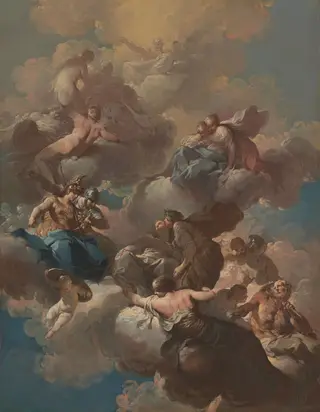 Sketch for a Ceiling Fresco
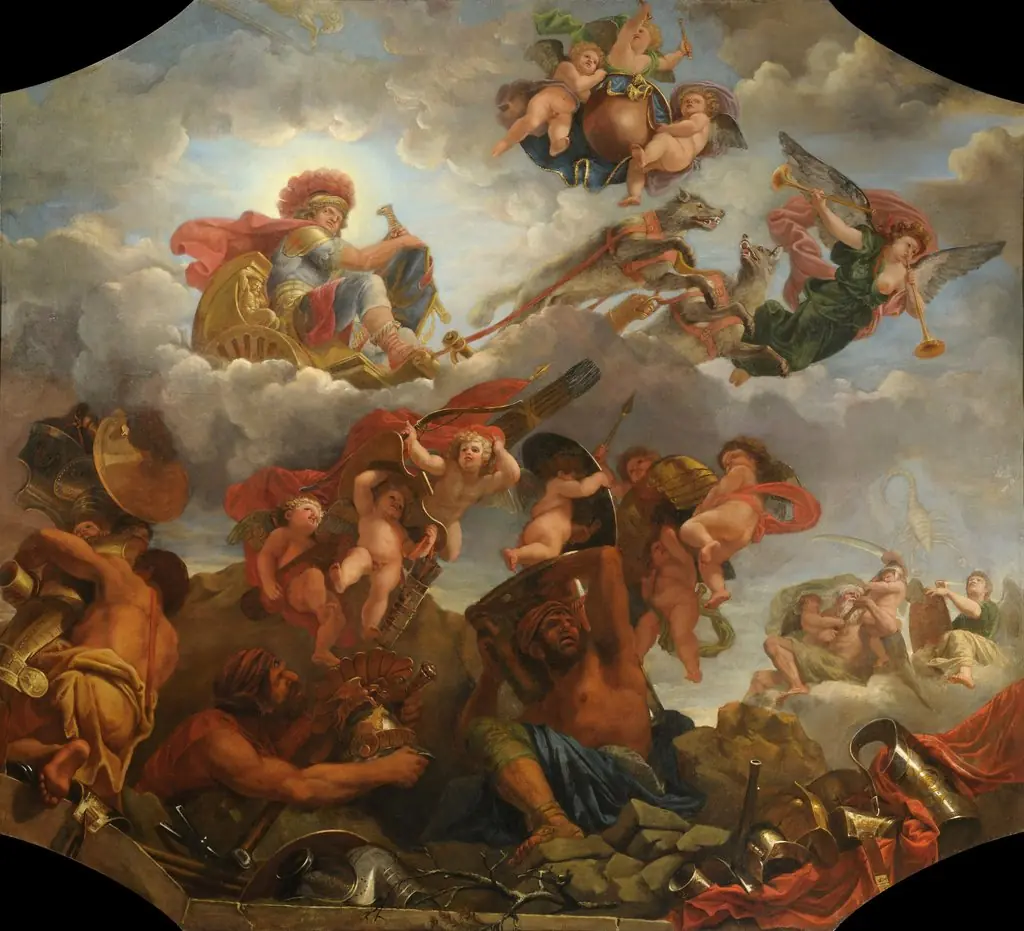 Mars on his chariot pulled by wolves
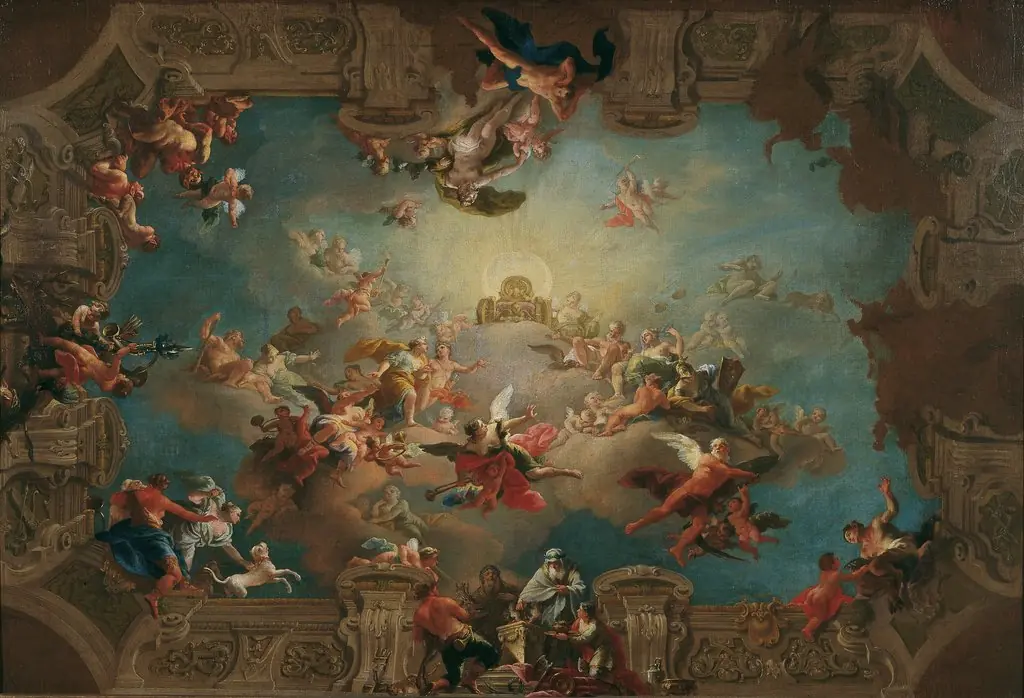 Diana's Admission to Olympus
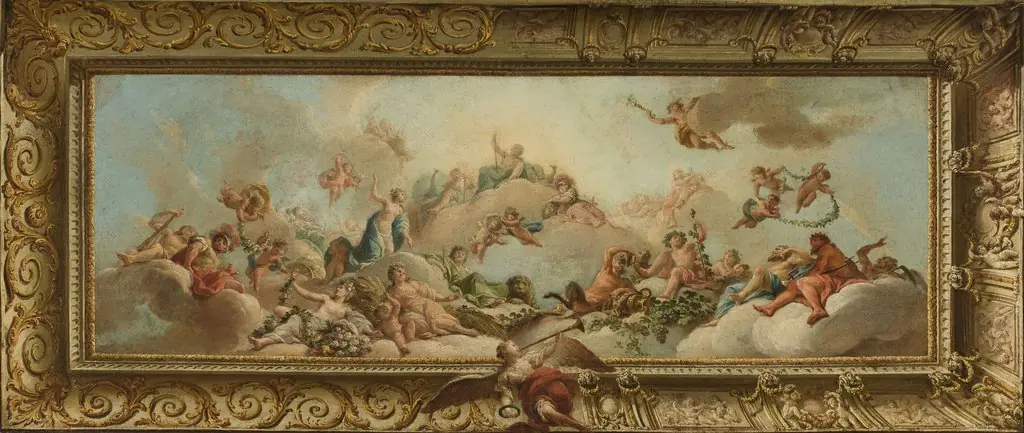 Greeting of Venus at Mount Olympus
 Apollo with the Muses – Project for a Plafond
 Sketch for a Ceiling Design
 Figure of the Royal Magnificence, Immortality and Progress in the Fine Arts
 Gloria de santos
- Allegory of the Arts