Artwork
Mars on his chariot pulled by wolves
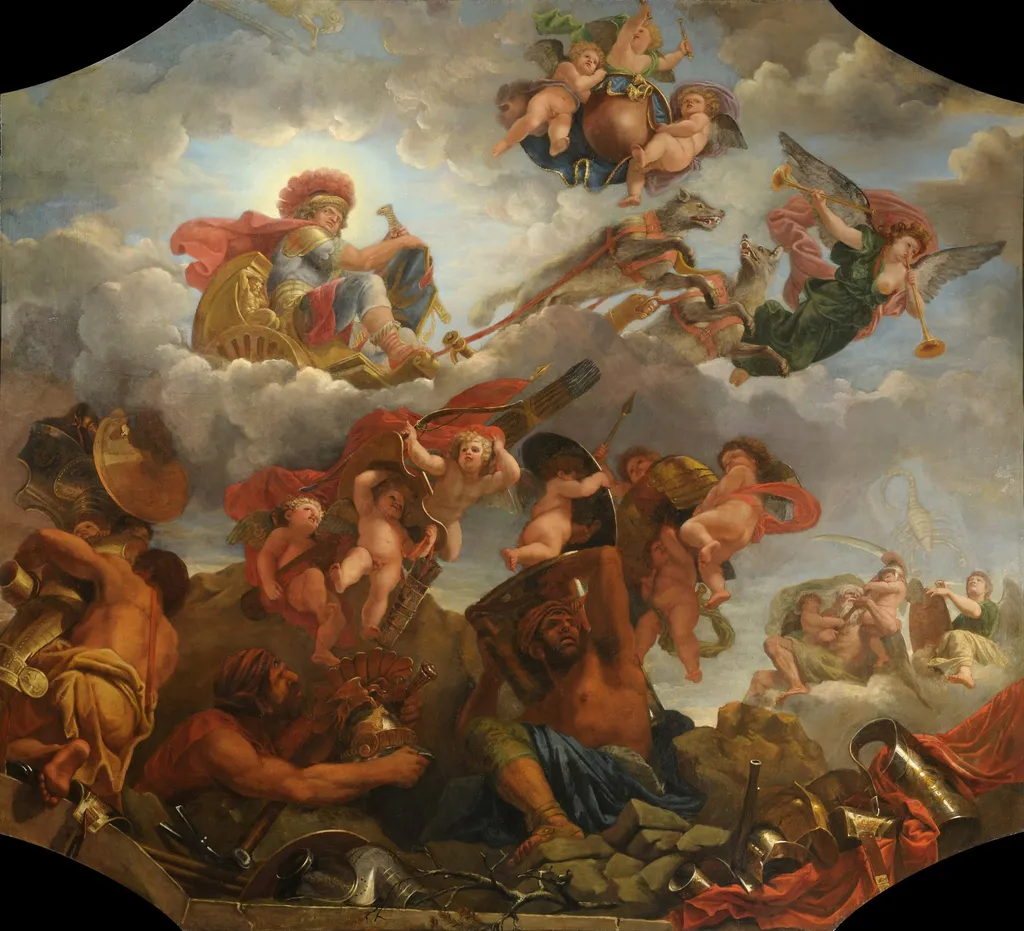
Mars on his chariot pulled by wolves is an oil painting by the French Classical Baroque artist Claude Audran the Younger. It dates from 1673 and is held in the collection of the Palace of Versailles.
About this work
Subject & Meaning
Accompanying figures include a putto, a trophy of arms, and clouds, which together reference martial victory, divine authority, and the spoils of conflict.
The painting shows Mars, the Roman god of war, seated in a chariot drawn by wolves. Accompanying figures include a putto, a trophy of arms, and clouds, which together reference martial victory, divine authority, and the spoils of conflict. Commissioned by Louis XIV around 1672 for the central panel of the Salon of Mars at Versailles, the work was intended to glorify the king’s martial power and align his reign with the imagery of the war god.
Technique & Style
Executed in oil paint on canvas, this mythological work depicts Mars riding a chariot drawn by wolves amidst clouds, putti, and trophies. The composition was originally conceived as the central panel for the ceiling of the Salon de Mars at the Palace of Versailles. Commissioned by Louis XIV around 1672, the painting features a square format measuring 450 cm in height and 450 cm in width.
The handling of the medium serves a grand decorative function within the royal residence, aligning with the allegorical themes of the room.
History & Provenance
Commissioned by Louis XIV in 1672, this painting was created to serve as the central panel of the ceiling in the salon de Mars at the Château de Versailles. The work was executed by Claude Audran the Younger around 1672 or 1673. It is an oil on canvas artwork measuring 450 cm by 450 cm. The painting remains housed at the Château de Versailles, specifically within the musée national des châteaux de Versailles et de Trianon, which operates as the Museum of the History of France at the Palace of Versailles.
The painting is held in the collection of the Museum of the History of France, located within the Palace of Versailles, and is part of the national museums of Versailles and Trianon. Commissioned by Louis XIV around 1672, the work was originally created for the central panel of the ceiling in the Salon of Mars at the château.
While the artwork's inception is frequently cited as 1673, historical records indicate the commission dates to approximately 1672. The piece is cataloged under the reference number 000PE011850 in the Joconde database of French museum collections. No specific exhibition history outside of its original architectural setting and current museum display is detailed in the available records.
Context
Created between 1672 and 1673, Mars on his chariot pulled by wolves was commissioned by Louis XIV to serve as the central ceiling panel for the Salon of Mars at the Palace of Versailles. This mythological work by Claude Audran the Younger exemplifies the grand decorative program executed for the French monarchy during the late 17th century. The painting's original function as a monumental ceiling piece within the royal residence underscores its role in the artistic propaganda of the Sun King's reign.
Today, the work remains housed within the Museum of the History of France at Versailles, preserving its historical context as a key component of the château's architectural and artistic heritage.
Legacy
The painting served as the central ceiling panel in the Salon de Mars at Versailles, commissioned by Louis XIV in 1672 for the palace's decorative program. It formed part of the mythological scheme decorating the king's apartments, linking martial triumph with divine favor. The work's presence in the royal collection influenced later interpretations of mythological subjects in French decorative art, particularly ceiling paintings celebrating allegorical victories.
Its iconography of Mars driven by wolves remained a reference point for subsequent artists exploring martial mythology in painted ceilings, though no direct copies survive from the 17th century. The composition's dynamic arrangement of figures and animals contributed to the visual language of royal propaganda during the Ancien Régime.
Overview
Claude Audran the Younger’s 1673 oil painting, Mars on his Chariot Pulled by Wolves, presents a dynamic mythological tableau in the French Classical Baroque manner. The canvas, originally commissioned for the Palace of Versailles, centers on the war god Mars driving a chariot drawn by snarling wolves, surrounded by a tumultuous sky and a host of winged putti.
Own this work as a print
Artist & collection
Artist
The Audran family was a French family of engravers and painters, mainly active in Paris and Lyon. The first well-known member was Charles Audran (1594–1674).

 Figure of the Royal Magnificence, Immortality and Progress in the Fine Arts
 capture the citadel
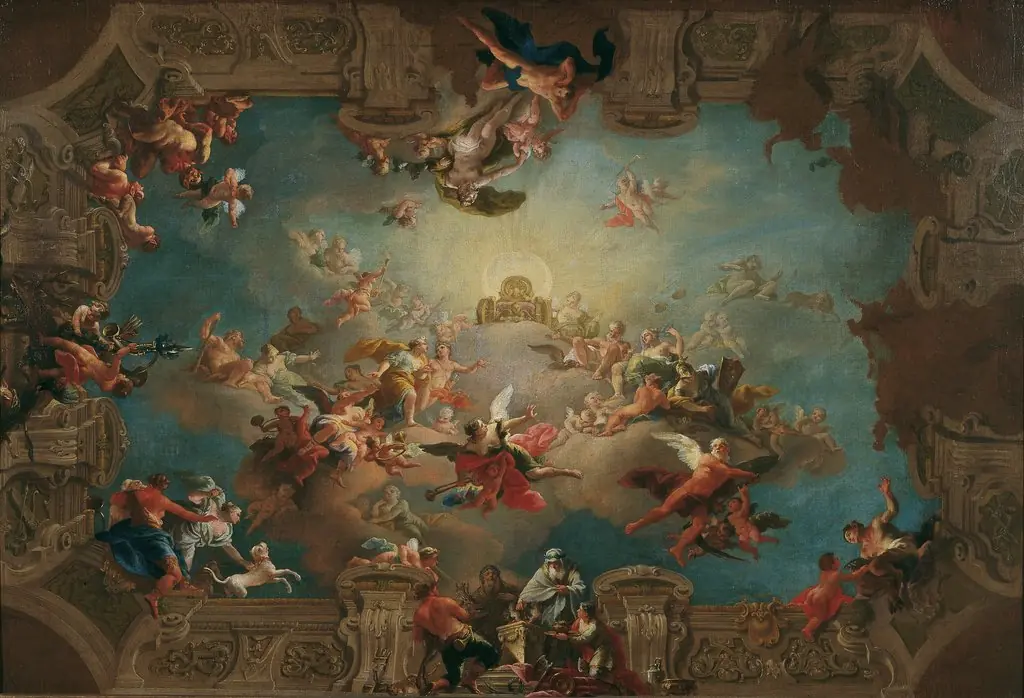 Diana's Admission to Olympus
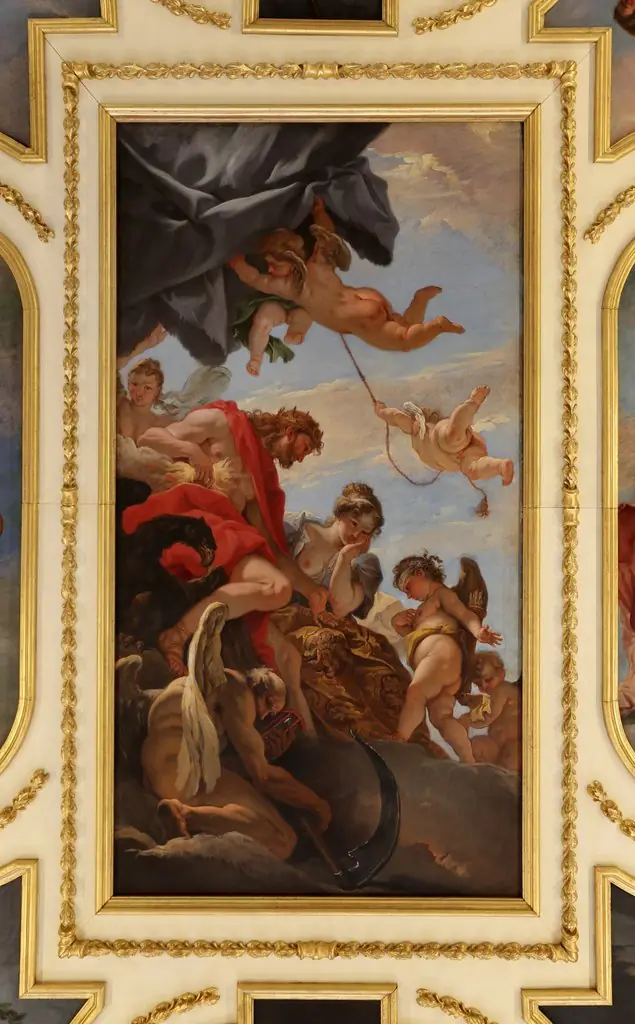 Amor vor Jupiter und Juno
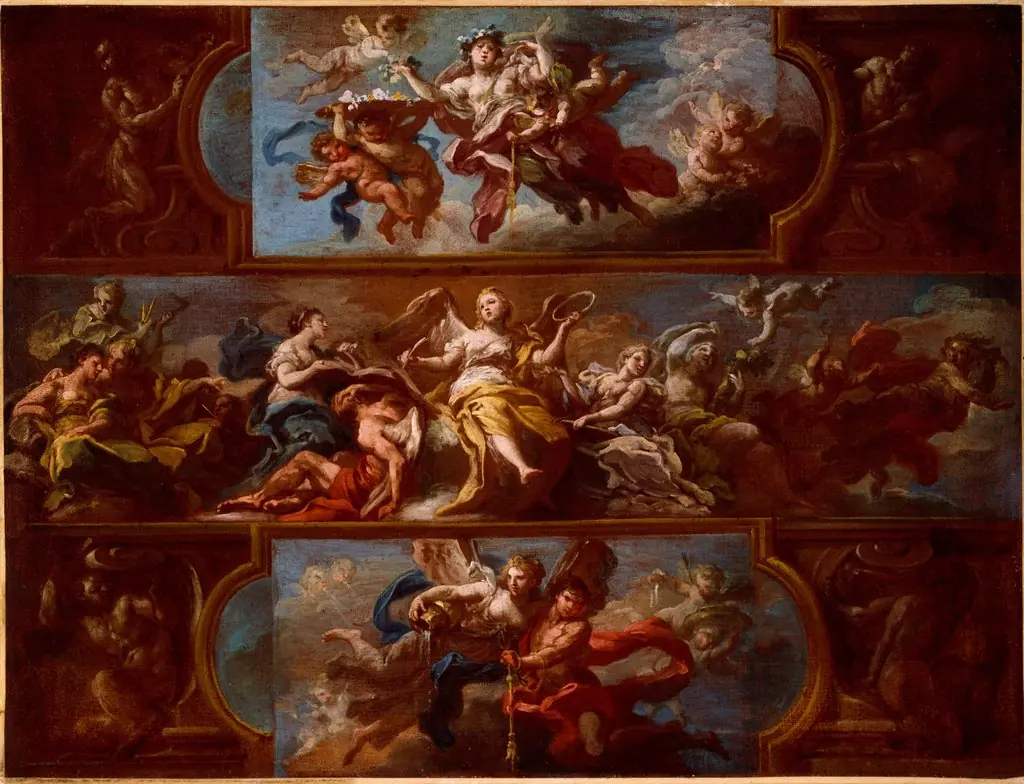 Allegory
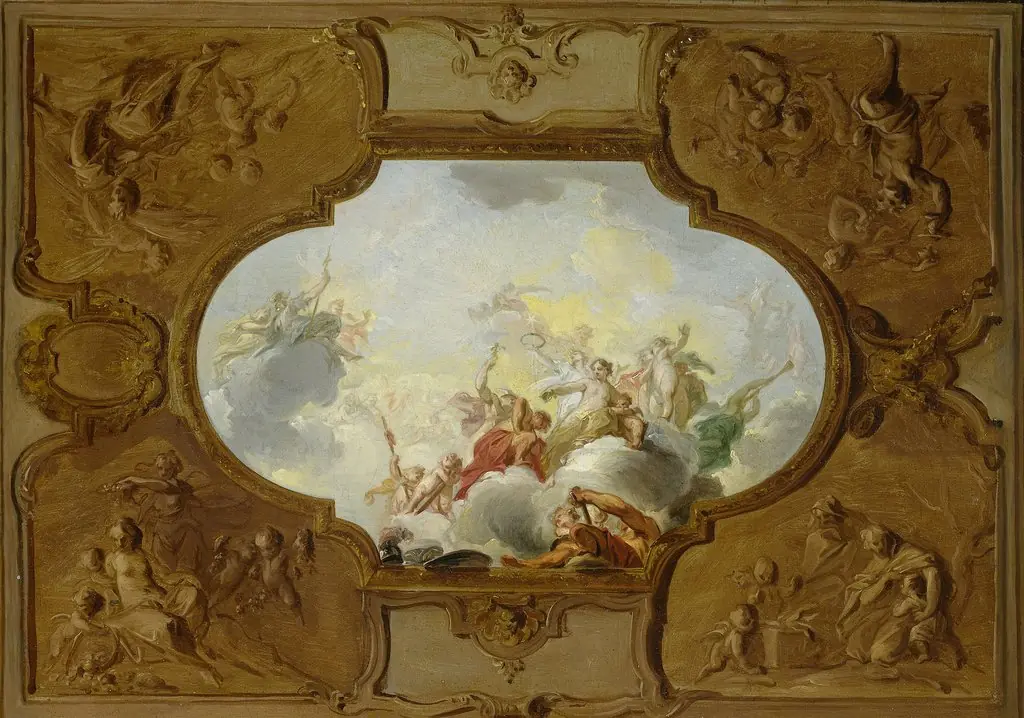 Design for a ceiling piece with Aeneas and the four seasons in the corners
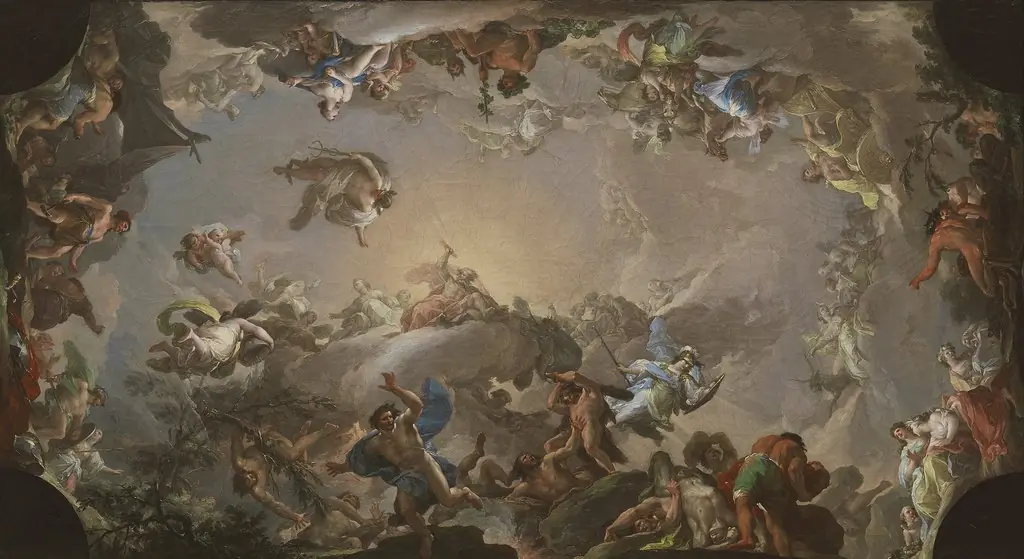 Olympus: The Fall of the Giants
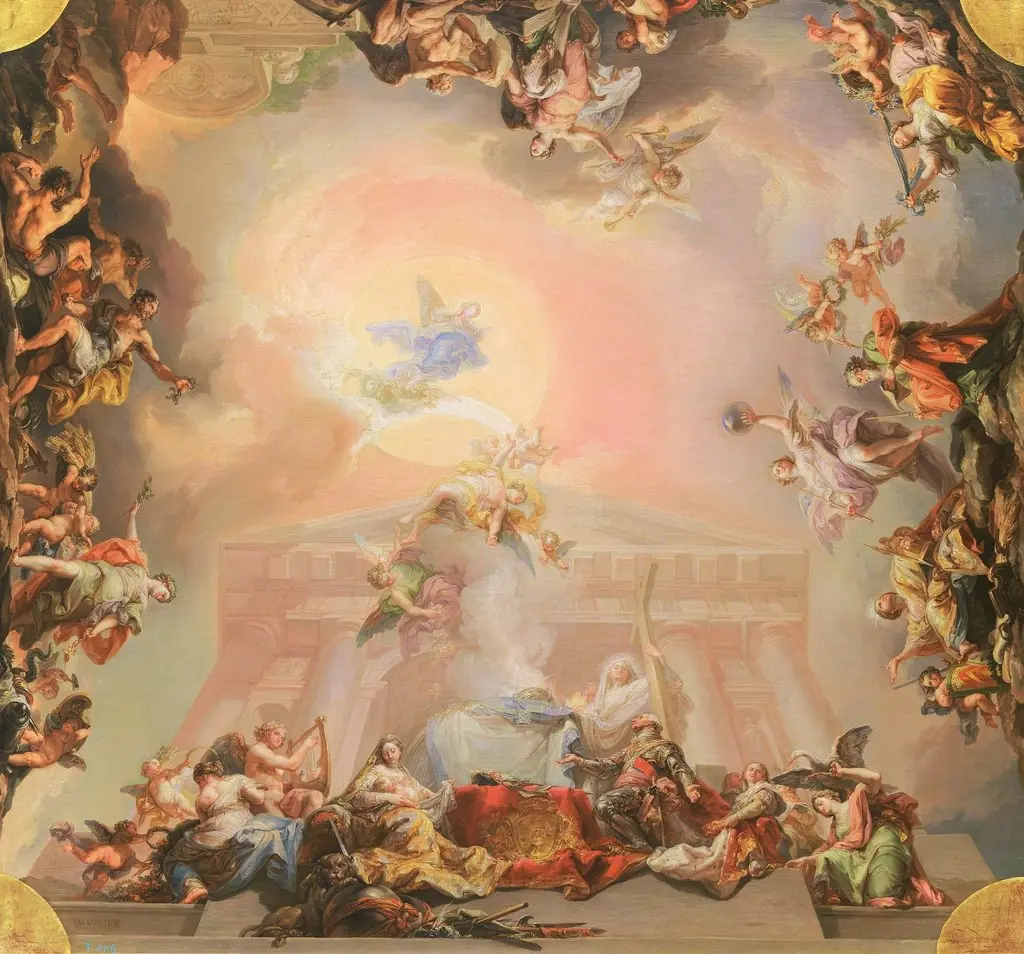 Sketch for Allegory of the Institution of the Order of Charles III
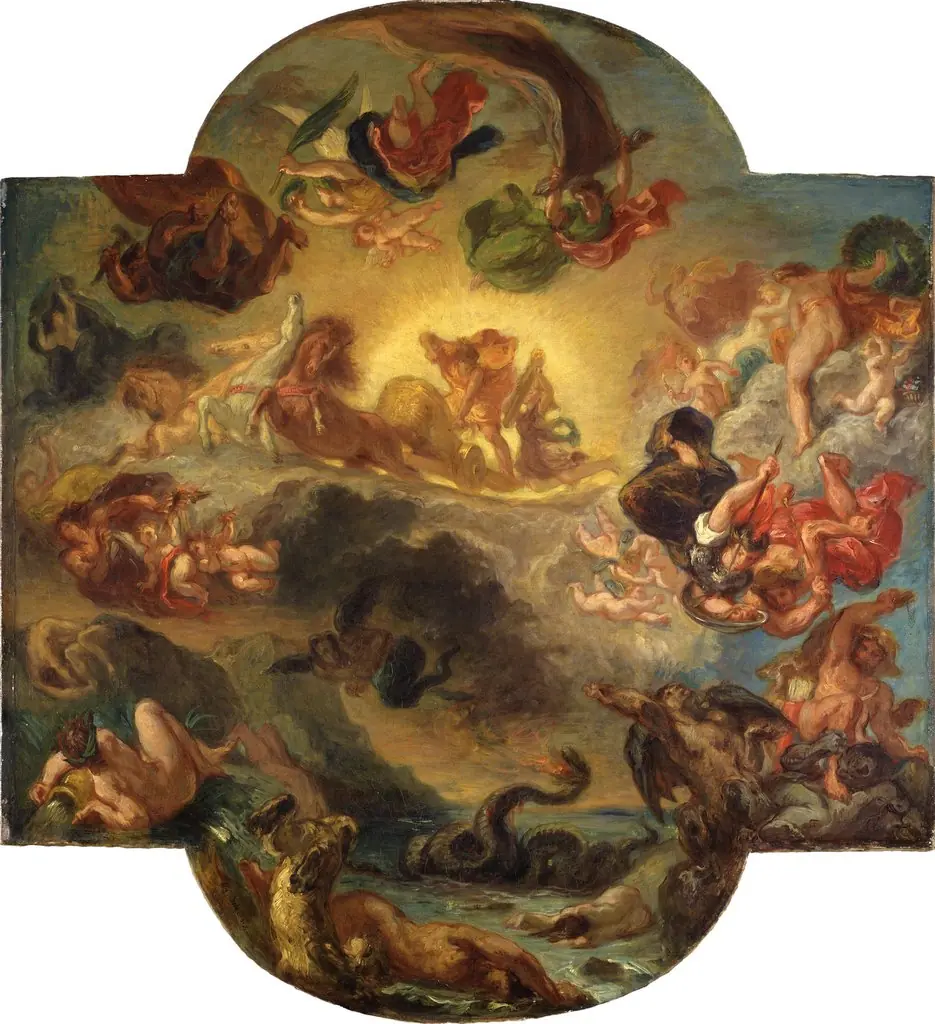 Apollo Slays Python
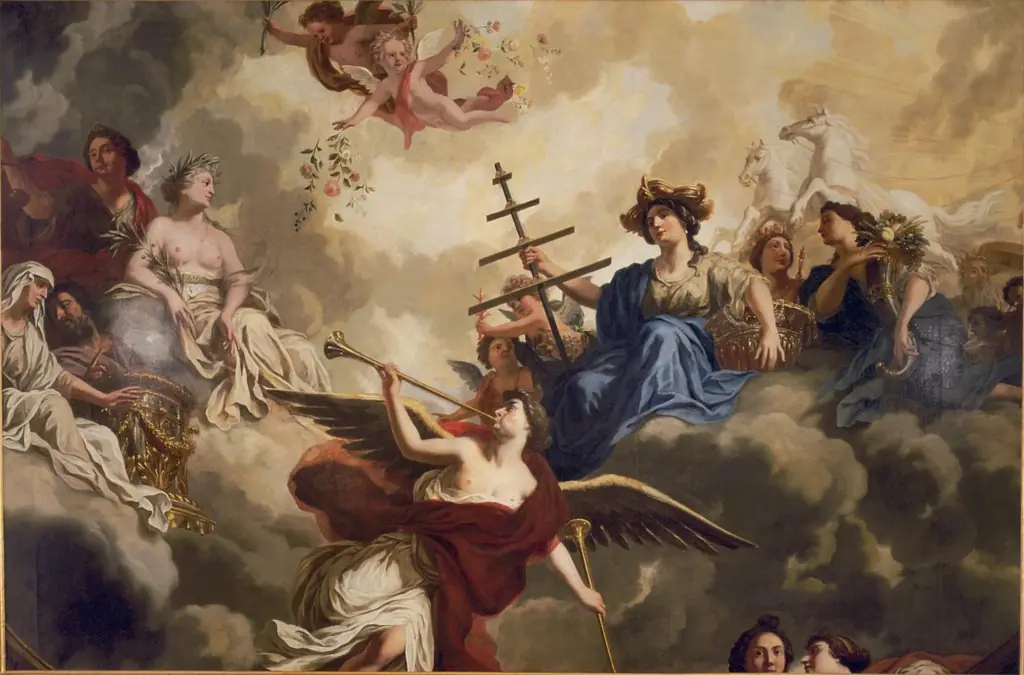 Allegory on Navigation
 Alegoría de la Aurora
- The Chariot of Phoebus