Artwork
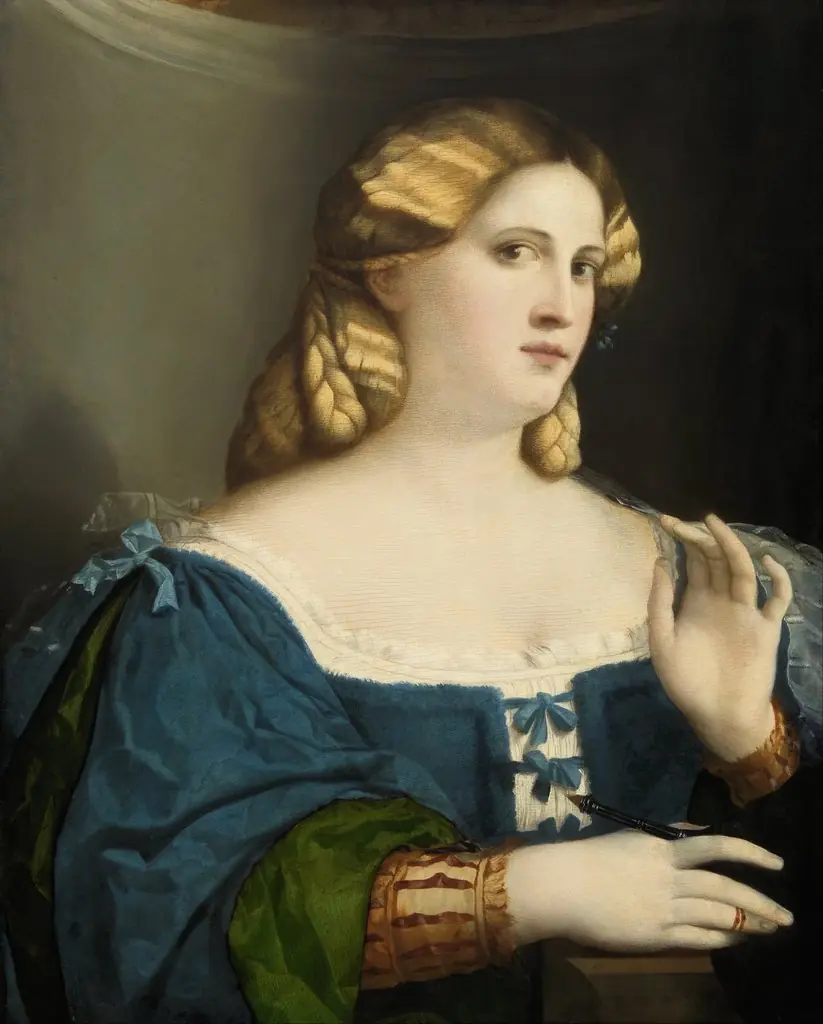
Portrait of a Young Woman as a Wise Virgin
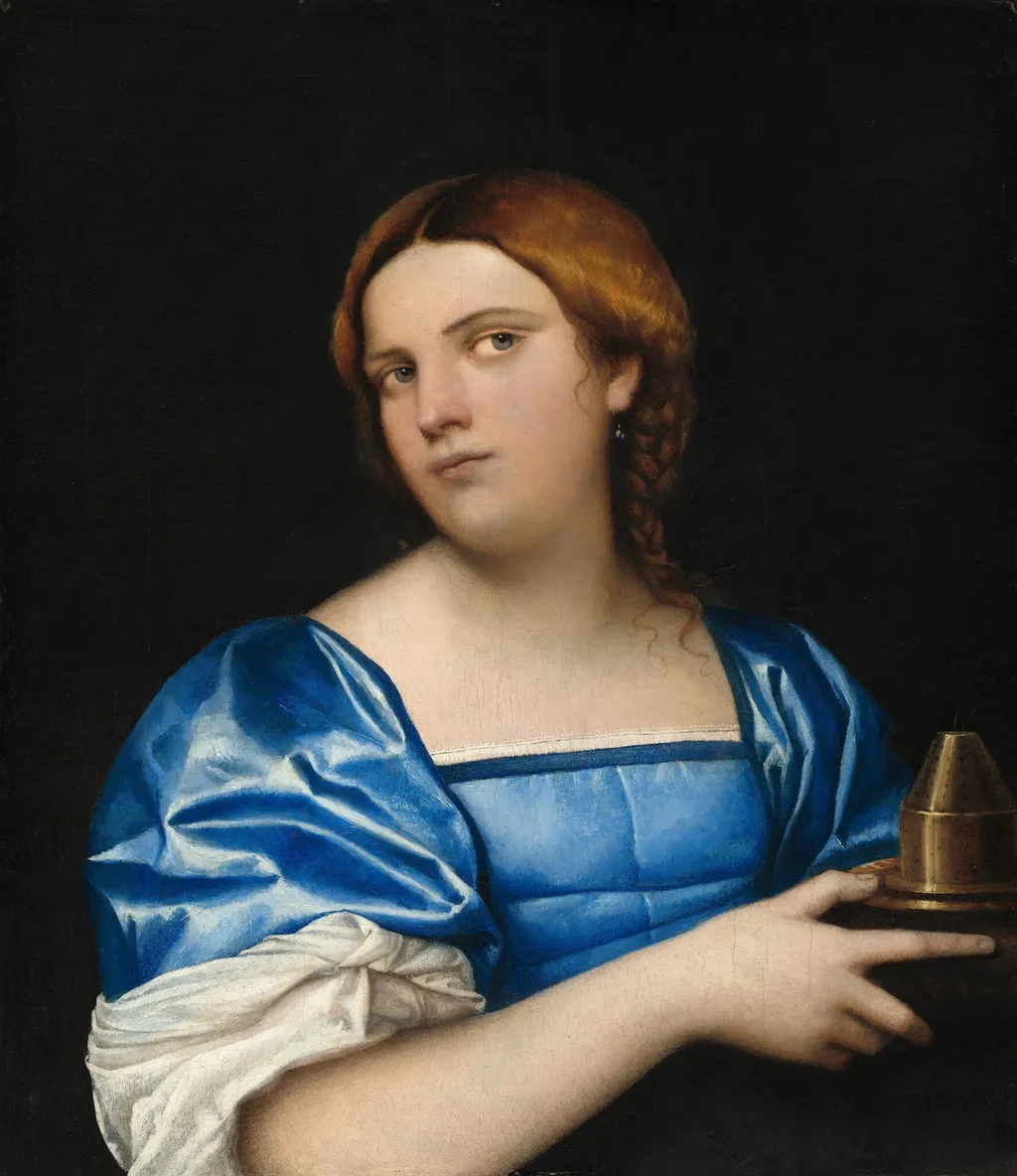
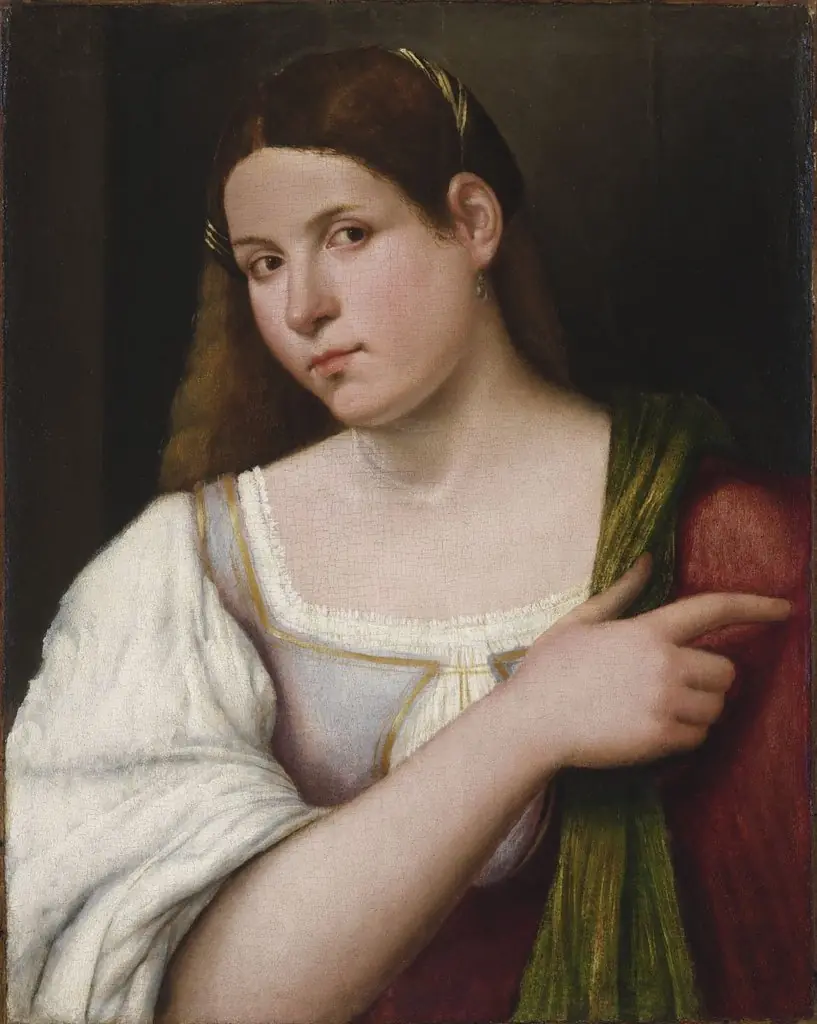
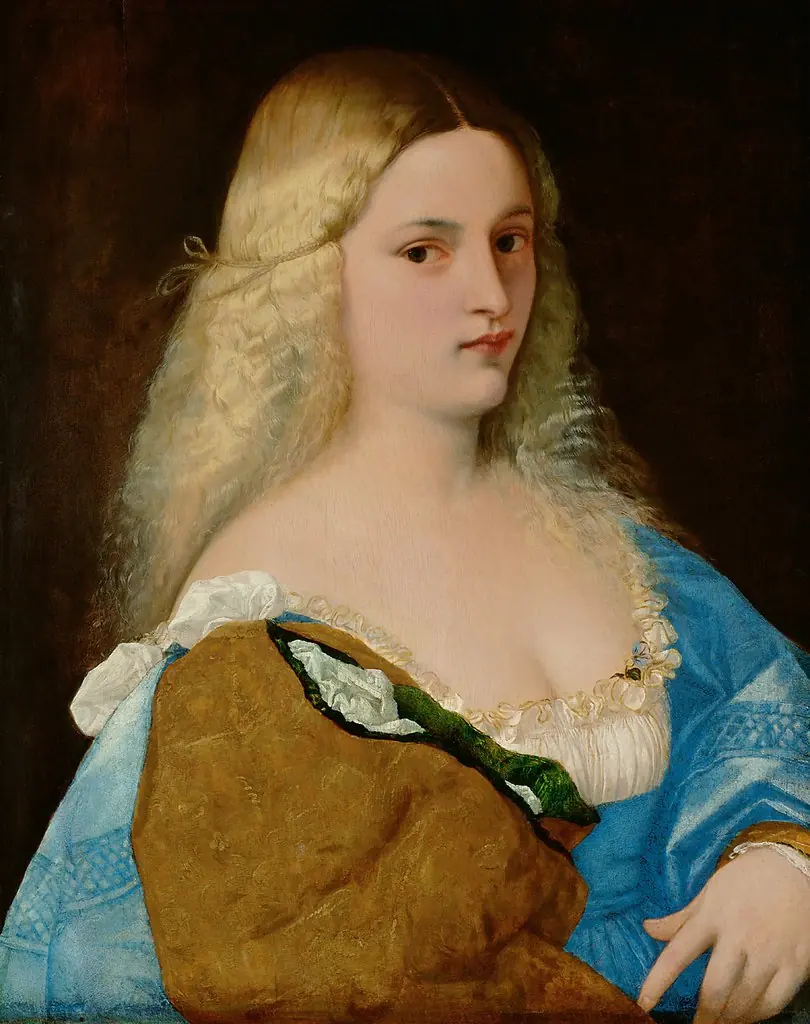
Portrait of a Young Woman as a Wise Virgin is an oil painting by the High Renaissance artist Sebastiano del Piombo. It dates from 1510 and is held in the collection of the National Gallery of Art.
- Inscription
- Inscribed:lower right below hand: V. [C]OLONNA
About this work
Subject & Meaning
John Chrysostom Altarpiece and Salome with the Head of John the Baptist, suggesting a connection to a specific individual known to the painter.
The work depicts a young woman identified as one of the wise virgins from the biblical parable of the Wise and Foolish Virgins. She is portrayed in a three-quarter bust view, holding an extinguished lamp in her right arm, a specific iconographic element that alludes to this scriptural narrative and provides a religious allegorical context for the portrait. The figure is rendered with a realistic, unidealized quality, showing a young, beautiful face with minor imperfections and a gaze that conveys steadiness mixed with timidity.
This model also appears in the artist's contemporary works, such as the St. John Chrysostom Altarpiece and Salome with the Head of John the Baptist, suggesting a connection to a specific individual known to the painter. The inclusion of the lamp serves as the primary symbol distinguishing the subject as a 'wise virgin' within the painting's meaning.
Technique & Style
The work is executed in oil on hardboard that has been transferred from its original panel. The painting is now housed in the National Gallery of Art, Washington, as part of the Samuel H. Kress Collection. It is depicted as a half-figure with a three-quarter bust turned to the right and the head turned left, holding an unlit lamp that alludes to the parable of the wise virgins.
The composition rests on a dark, uniform background derived from Giorgione, and the rendering shows careful study of light on a blue satin sleeve and a gathered white shirt, emphasizing a fresh realism and restrained idealization compared with contemporary works by Giorgione and Titian.
History & Provenance
The work, titled Portrait of a Young Woman as a Wise Virgin, was painted by Sebastiano del Piombo around 1510 in oil on hardboard transferred from panel. Its earliest documented ownership places it with Jan and Jacobus van Veerle in Antwerp by about 1650, later appearing in Edward White's London collection by 1870 and passing through a Christie's sale and Colnaghi to Sir Francis Cook, whose family retained it at Doughty House for several generations. The Cook heirs sold the painting in 1947 to the Samuel H. Kress Foundation, which gave it to the National Gallery of Art in Washington in 1952.
The work is housed in the National Gallery of Art, Washington, D.C., where it is listed as part of the Samuel H. Kress Collection. The catalogue records the piece as oil on hardboard, measuring 54.7 × 47.5 cm and dated to circa 1510. It has remained on display as part of the museum's permanent collection.
Context
Dating to circa 1510, the work is attributed to Sebastiano del Piombo and is considered one of his most renowned pieces. Scholars date the painting based on the model's resemblance to the Magdalene in the St. John Chrysostom Altarpiece and her appearance in the Salome with the Head of John the Baptist, suggesting she may have been the artist's lover. Stylistically, the portrait reflects Venetian influences, specifically the dark backgrounds of Giorgione and the compositional approaches of Giorgione and Titian.
However, critics distinguish the piece for its fresh realism and reduced idealization compared to contemporary works. The subject is depicted holding an extinguished lamp, an allegorical reference to the Parable of the Wise and Foolish Virgins, which provides a religious context to this half-length portrait characterized by a fixed yet timid gaze.
Legacy
The painting passed through several aristocratic collections before entering the Samuel H. Kress Foundation, which donated it to the National Gallery of Art in 1952, ensuring its preservation and public access. Its inclusion in the Kress Collection brought scholarly attention, and it is described as a key example of Sebastiano del Piombo's early portraiture and discussed in relation to the 'wise virgin' allegory. The attribution of the sitter as a possible companion of the artist and the work's stylistic links to Giorgione and Titian have been noted in art-historical literature, contributing to ongoing debate about the sitter's identity.
Overview
Sebastiano del Piombo's Portrait of a Young Woman as a Wise Virgin, painted around 1510, is an oil work now housed at the National Gallery of Art in Washington. The painting features a young woman, rendered with a serious expression and dressed in unadorned attire. She is depicted seated, her hands clasped together, dominating the composition as its central subject. The medium is oil on hardboard, having been transferred from its original panel support.
Own this work as a print
Artist & collection
Artist
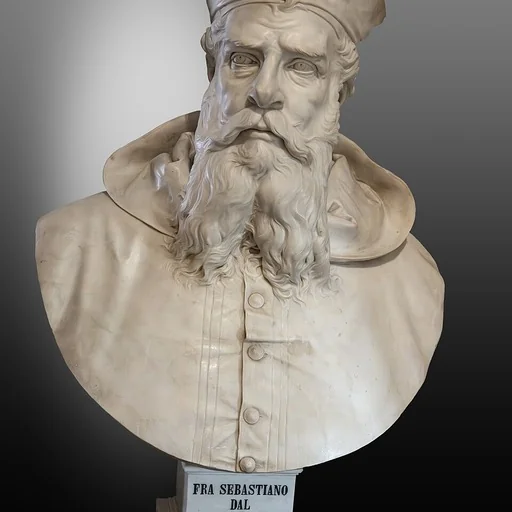
Sebastiano del Piombo (Italian:; c. 1485 – 21 June 1547) was an Italian painter of the High Renaissance and early Mannerist periods, famous as the only major artist of the period to combine the colouring of the Venetian…