Artwork
Death of Adonis
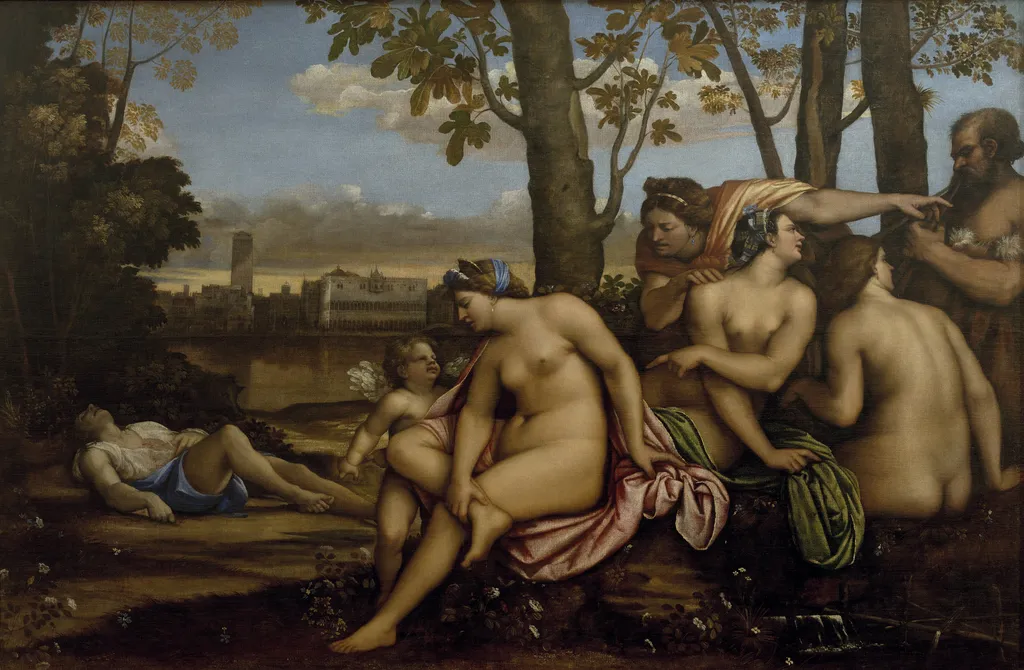
Death of Adonis is an oil painting by the High Renaissance artist Sebastiano del Piombo. It dates from 1512 and is held in the collection of the Uffizi Gallery.
About this work
Subject & Meaning
Venus's pose deliberately references the Hellenistic Spinario sculpture, a citation recognizable to Roman intellectual circles.
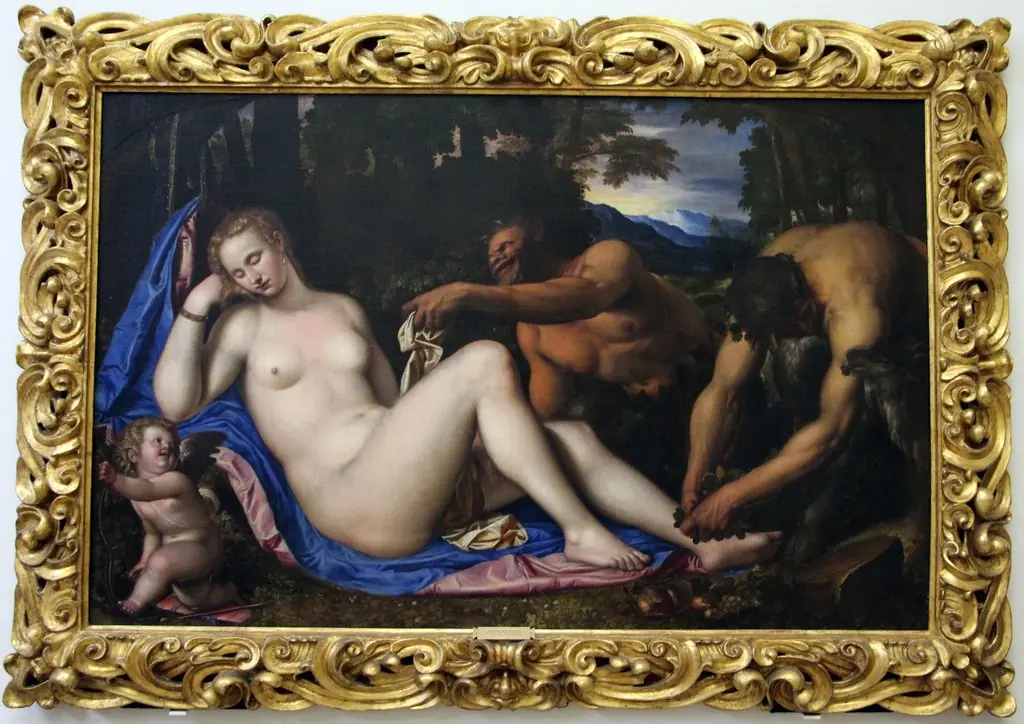
The painting depicts the mythological tragedy of Adonis's death, centered on a nude Venus sitting with crossed legs beside Cupid, mourning her lover's lifeless body. Venus's pose deliberately references the Hellenistic Spinario sculpture, a citation recognizable to Roman intellectual circles. To the right, grieving nymphs gesture toward a flute-playing Silenus, who remains unaware of the tragedy.
The background features a Venetian panorama at sunset, including the Doge's Palace and St. Mark's Basilica. This setting suggests an allegory where Venice, associated with "Venusia" (the grieving Venus), symbolizes a state doomed to decay and death if abandoned to sensuality and seduction. The composition blends Raphael's structural harmony with the lyrical softness characteristic of Giorgione.
Technique & Style
The work is an oil painting executed on canvas (189 × 285 cm) in Rome, originally commissioned by Agostino Chigi and later relocated to Florence where it entered the Palazzo Pitti and the Uffizi. The canvas suffered severe lacerations during the 1993 bombing of the Uffizi and was subsequently restored, a fact that has become symbolic of the museum’s recovery. Stylistically, the composition places a nude Venus seated with Cupid, her pose echoing the Hellenistic Spinario, while mourning companions and a Silenus playing a flute flank her; a distant Venetian skyline with the Doge’s Palace and St Mark’s domes appears in the background.
The painting thus combines Renaissance oil technique with a mythological narrative rendered in a composition that recalls Raphael and Giorgione.
History & Provenance
The Death of Adonis was painted by Sebastiano del Piombo in 1512, shortly after his arrival in Rome, where he had been summoned by Agostino Chigi to assist in decorating the Villa Chigi. A 1520 inventory of the villa lists the work among “the figures of the most nude and beautiful women.” By 1587 the painting had entered the Medici collection in Florence and was installed at Palazzo Pitti.
It was recorded in the holdings of Cardinal Leopoldo de’ Medici by 1675 before passing to the Uffizi, initially misattributed to Moretto and later correctly reattributed by Giovanni Morelli. Severely damaged in the 1993 Via dei Georgofili bombing, it was swiftly restored and remains in the Uffizi’s collection.
Sebastiano del Piombo's Death of Adonis (1512) is held in the Uffizi Gallery in Florence. Originally commissioned for Agostino Chigi's Villa Chigi in Rome, where it appeared in a 1520 inventory, the painting arrived in Florence in 1587 and was housed at the Palazzo Pitti. By 1675, it belonged to Cardinal Leopoldo de' Medici before transferring to the Uffizi, where it was initially misattributed to Moretto until Giovanni Morelli corrected the attribution.
The work suffered severe lacerations during the 1993 Via dei Georgofili bombing but underwent swift restoration, subsequently becoming a symbol of the museum's resilience. While specific accession numbers are not detailed in the provided records, its catalog history includes various attributive debates resolved following cleaning and conservation efforts.
Context
Sebastiano del Piombo's 1512 Death of Adonis stands as a pivotal synthesis of Venetian color and Roman monumentalism, created shortly after the artist's arrival in Rome for patron Agostino Chigi. The work integrates the lyrical influence of Giorgione with the structural harmony of Raphael, notably citing the Hellenistic Spinario in Venus's pose. Critical reception has evolved from initial misattribution to Moretto in the 17th century to a definitive restoration of Sebastiano's authorship by Giovanni Morelli, with later scholars like Bernard Berenson and Roberto Longhi resolving attribution doubts linked to the painting's darkened surface.
The inclusion of a panoramic view of Venice, featuring the Doge's Palace and St. Mark's Basilica, suggests a complex allegory linking the city's sensual allure to mortality. In modern art history, the canvas is also recognized for its resilience, having been severely damaged in the 1993 Via dei Georgofili bombing and subsequently restored as a symbol of the Uffizi's recovery.
Legacy
The Death of Adonis has been the subject of a complex post-1512 provenance that shaped its scholarly reputation. After arriving in Florence in 1587 and passing through the Palazzo Pitti and Cardinal Leopoldo de' Medici's collection, it entered the Uffizi under a misattribution to Moretto, before Giovanni Morelli restored the work to Sebastiano del Piombo. Further doubts were raised by critics including D'Achiardi, Bernardini, Suter, and Niccodemi, who variously linked it to Giulio Campagnola or Moretto's circle; these hesitations stemmed largely from the canvas's darkened, dirty condition.
Following restoration, Niccodemi reversed his view, and Lionello Venturi accepted the work into Sebastiano's catalogue, with Gombosi, Rodolfo Pallucchini, and Bernard Berenson definitively confirming the attribution. The painting suffered severe lacerations in the 1993 Via dei Georgofili bombing, and its prompt restoration transformed it into a symbol of the Uffizi's resilience and rebirth.
Overview
Sebastiano del Piombo's Death of Adonis, an oil on canvas from 1512, is housed in the Uffizi, Florence. Commissioned by Agostino Chigi shortly after the artist's arrival in Rome, this painting depicts a group of reclining nude women within a sylvan setting, observed by a male figure. The background features a detailed cityscape, referencing the artist's Venetian origins. This work was part of Chigi's ambitious decorative projects for his Roman villa.
Own this work as a print
Artist & collection

Artist
Sebastiano del Piombo (Italian:; c. 1485 – 21 June 1547) was an Italian painter of the High Renaissance and early Mannerist periods, famous as the only major artist of the period to combine the colouring of the Venetian…