Artwork
Untitled
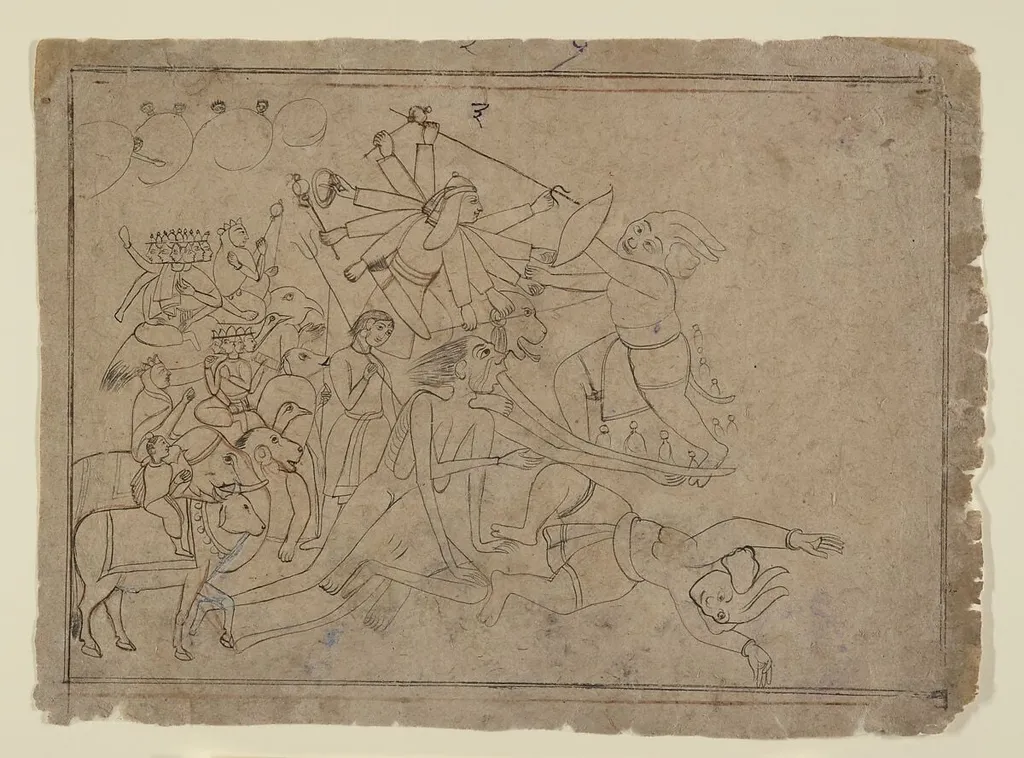
Untitled is an ink painting by the Romanticist artist Nainsukh. It is held in the collection of the Metropolitan Museum of Art.
About this work
Subject & Meaning
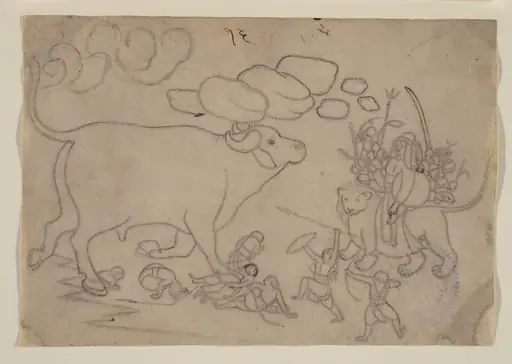
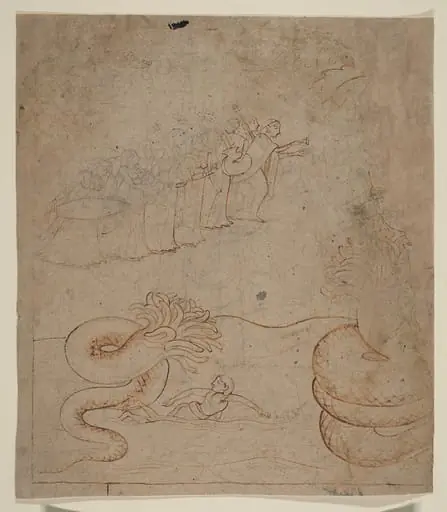
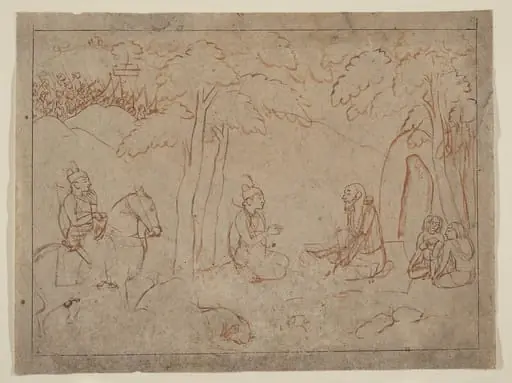
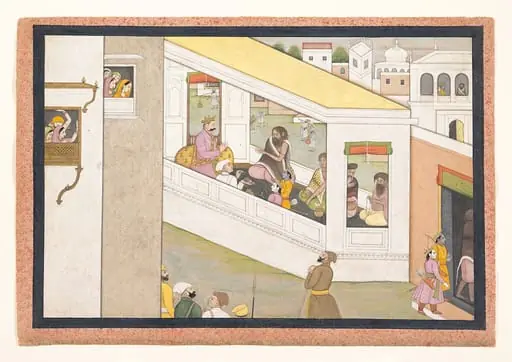
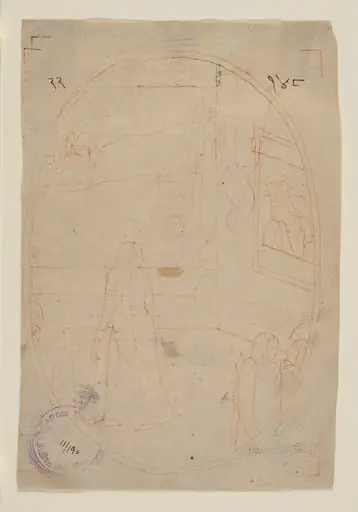
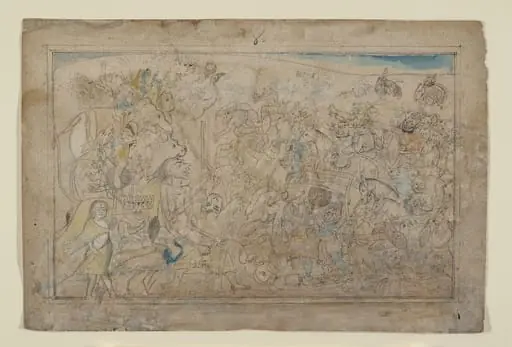
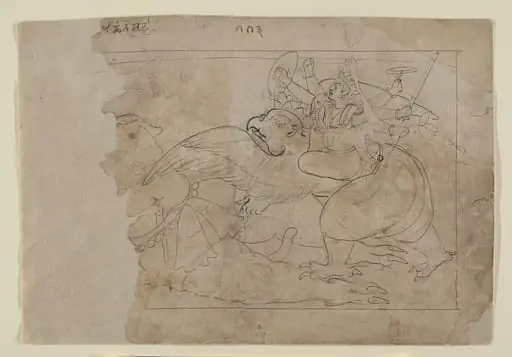
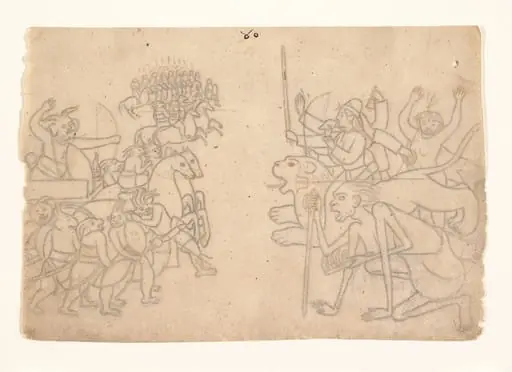
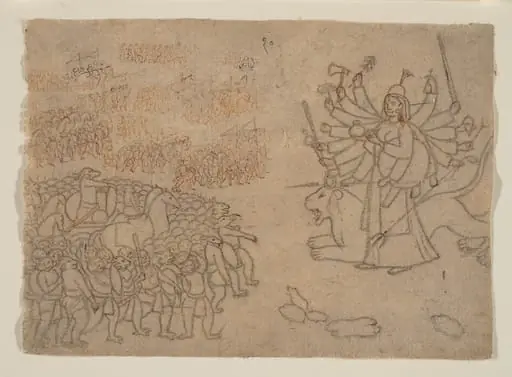
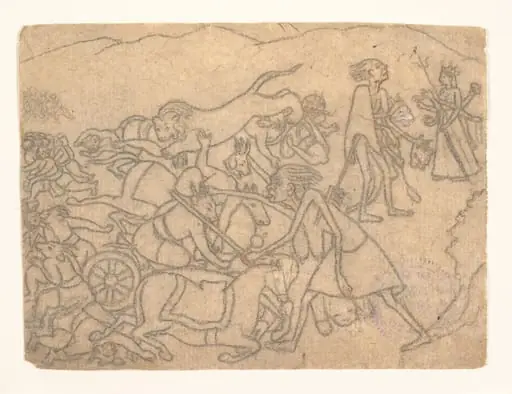
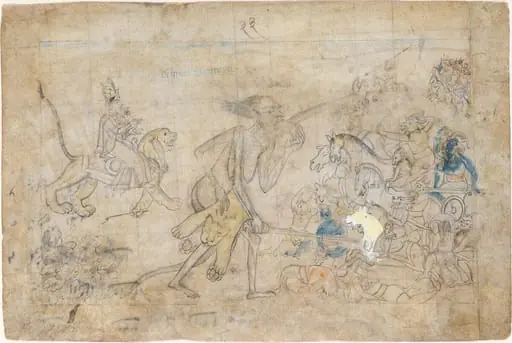
Attributed to a first-generation master following Nainsukh and dated to 1780, this work depicts the Hindu goddess Durga engaged in combat.
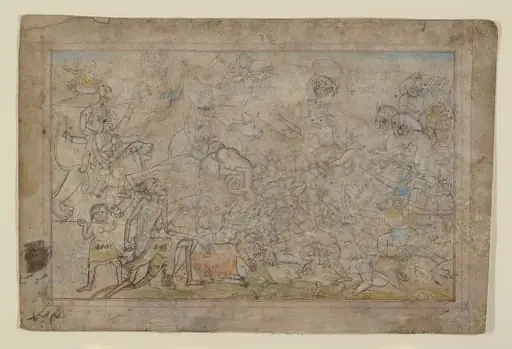
Attributed to a first-generation master following Nainsukh and dated to 1780, this work depicts the Hindu goddess Durga engaged in combat. The iconography centers on a dynamic battle scene where the deity confronts a demon, with an elephant also present in the composition. As a history painting created in India, the image represents a specific mythological narrative of divine victory over evil forces.
The visual elements combine to illustrate the fierce aspect of the goddess as she battles demonic entities, a common theme in South Asian religious art symbolizing the triumph of righteousness.
Technique & Style
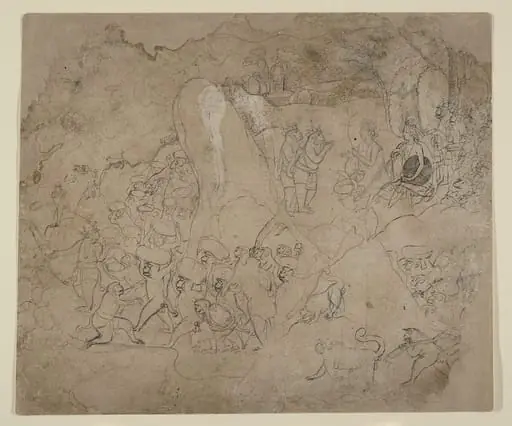
Created in India around 1780, this work is executed in ink and ocher, revealing an visible underdrawing beneath the surface layers. Attributed to a first-generation master following the style of Nainsukh, the painting functions as a history piece depicting a dynamic battle scene involving the goddess Durga, a demon, and an elephant. The composition measures approximately 22.2 by 29.8 centimeters.
While specific details regarding the physical support or current conservation status are not provided in the available records, the visible technical elements highlight the artist's preparatory process and the application of pigments typical of the period and region.
History & Provenance
The work is generally dated to 1780 on stylistic grounds and by alignment with Nainsukh’s late-period practice, when he trained a small circle of first-generation followers. Its earliest securely documented location is the collection of the Metropolitan Museum of Art, where it entered as a painting attributed to a first-generation master after Nainsukh. The subject, Durga’s battle with a demon atop an elephant, matches the iconography associated with Nainsukh’s Pahari idiom of the 1770s–1780s, supporting the dating and attribution lineage.
Untitled (c. 1780) by Nainsukh is held in the collection of the Metropolitan Museum of Art in New York. The work is catalogued as part of the museum's Indian miniature painting holdings, though the specific accession or inventory number is not disclosed in the available documentation. The painting depicts a battle scene with the goddess Durga confronting a demon on an elephant, rendered in ink, ochre, and underdrawing.
No exhibition history is recorded in the sources consulted; the only provenance noted is its presence in the Metropolitan Museum of Art's collection.
Legacy
The painting commonly referred to as Untitled, attributed to a first‑generation master within Nainsukh’s circle, dates to 1780 and exemplifies Pahari court art through its ink, ocher, and underdrawing technique. Depicting the goddess Durga engaged in combat with a demon atop an elephant, the composition reflects the thematic focus on divine warfare found in Hindu iconography. The work entered the collection of the Metropolitan Museum of Art, where its display has informed scholarly discourse on the stylistic transmission from Nainsukh to subsequent artists in the Himalayan region.
Its inclusion in major exhibitions and catalogues has cemented its role in the historical reception of Pahari painting.
Overview
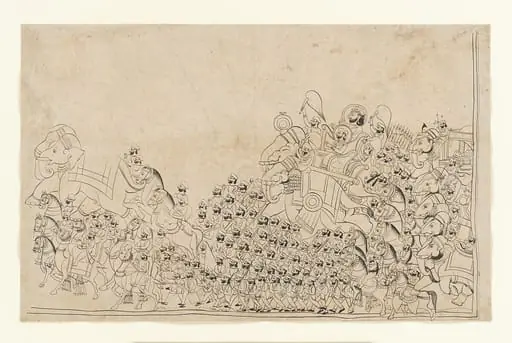
This untitled painting, rendered in ink, ocher, and underdrawing, presents a vibrant and intricate battle scene. The composition is filled with activity, showing soldiers engaged in combat both on foot and mounted on horses. A towering elephant dominates a central portion of the image, while a multi-armed goddess actively participates in the fray, riding into the midst of the conflict. The artwork's small scale belies its detailed depiction of warfare.
Context
This painting exemplifies the artistic traditions fostered by royal patronage in the Himalayan foothills, where Nainsukh was active. Such detailed depictions of battle, often featuring elephants, were a common theme in Indian art, reflecting both historical events and mythological narratives. The artwork thus sits within a rich lineage of visual storytelling, offering insights into the cultural and artistic interests of the region's rulers and their courts.
Artist & collection