Artwork
月に秋草図屏風|Autumn Grasses in Moonlight
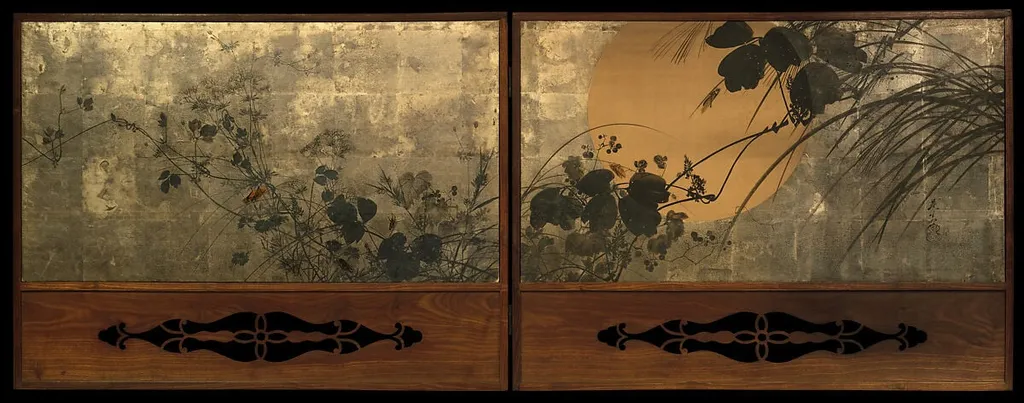
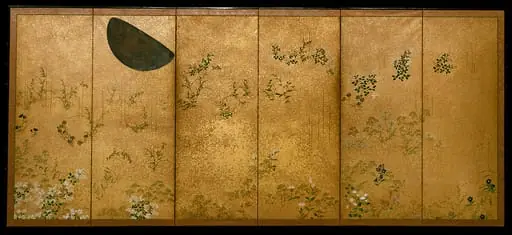
月に秋草図屏風|Autumn Grasses in Moonlight is an ink painting by the Impressionist artist Shibata Zeshin. It dates from 1874 and is held in the collection of the Metropolitan Museum of Art.
About this work
Subject & Meaning
The subject matter focuses on the interplay between the celestial body and terrestrial flora, specifically identifying the moon and various plants.
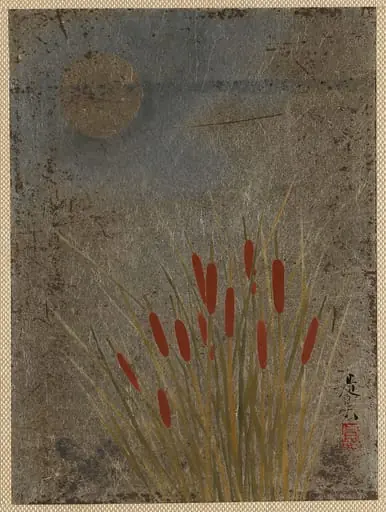
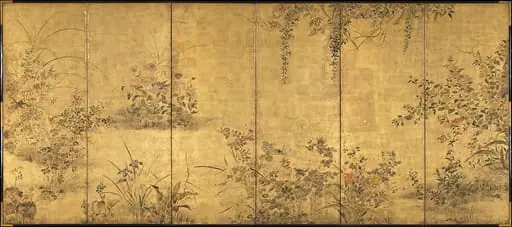
The work depicts a nocturnal landscape featuring the moon rising above autumn grasses. Executed as a two-panel folding screen, the composition utilizes ink, lacquer, silver, and silver leaf on paper to render the scene. The subject matter focuses on the interplay between the celestial body and terrestrial flora, specifically identifying the moon and various plants.
As a landscape genre piece created in the second half of the 19th century, the artwork represents a seasonal moment where the silver elements likely evoke the moonlight reflecting upon the vegetation. The iconography is defined by these natural elements, capturing the quiet atmosphere of an autumn night through the specific depiction of the moon and plants without additional narrative figures or objects.
Technique & Style
Created by Shibata Zeshin in the second half of the 19th century, this work is a two-panel folding screen. The artist employed a complex mixture of materials, utilizing ink, lacquer, silver, and silver leaf applied onto a paper support. Stylistically classified as a landscape, the composition formally depicts botanical subjects, specifically autumn grasses, set against a lunar backdrop.
The integration of lacquer with metallic elements like silver leaf and silver demonstrates Zeshin's distinctive handling of mixed media, merging painting techniques with lacquerware traditions to render the natural scene.
History & Provenance
The two-panel folding screen 月に秋草図屏風 (Autumn Grasses in Moonlight) was created by Shibata Zeshin in the second half of the 19th century, executed in ink, lacquer, silver, and silver leaf on paper, and depicts a landscape of the moon above autumn grasses. No documentary evidence of a specific commission has been identified in the available sources. The work is held by the Metropolitan Museum of Art under accession number 1975.268.137, where it has remained since its acquisition in 1975. The provided sources do not list specific past exhibitions or loan history for this object.
Overview
Shibata Zeshin created Autumn Grasses in Moonlight in 1874, a two-panel folding screen. This painting, rendered with ink, lacquer, and silver on paper, captures a serene nocturnal landscape. It features delicate silver blades of grass illuminated by the soft glow of a pale moon, presenting a contemplative scene characteristic of Japanese aesthetic sensibilities.
Context
The depiction of natural elements, particularly the moon and seasonal flora, holds a significant place in Japanese artistic traditions. Zeshin's portrayal of "autumn grasses in moonlight" aligns with a long-standing practice among artists in Japan who sought to capture such quiet, evocative moments. His work contributes to this rich lineage while introducing his unique technical innovations to a familiar theme.
Artist & collection