Artwork
Untitled
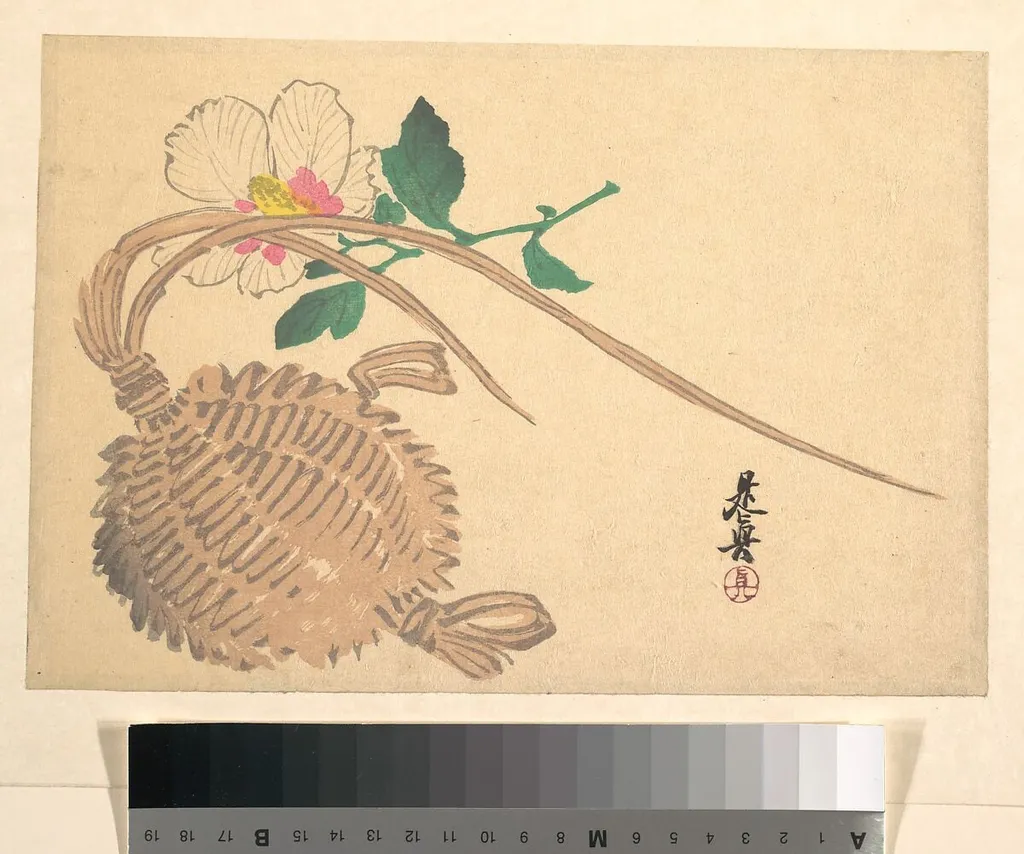
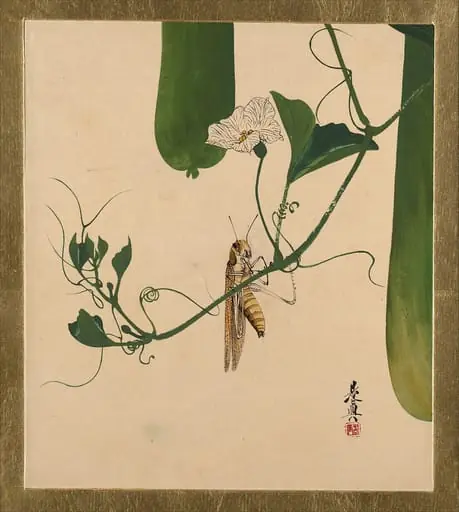
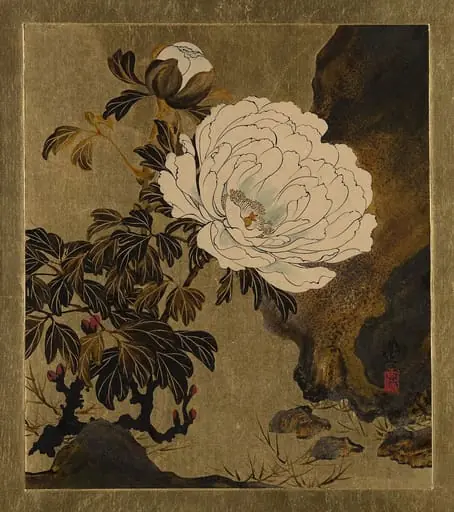
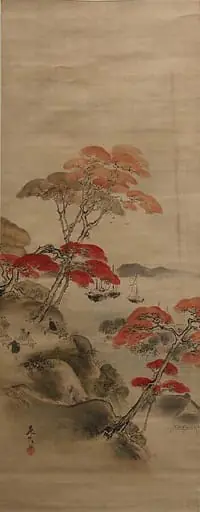
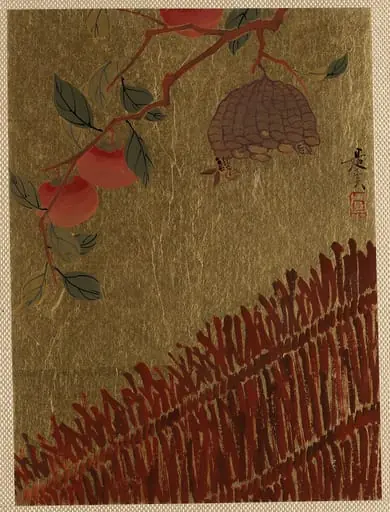
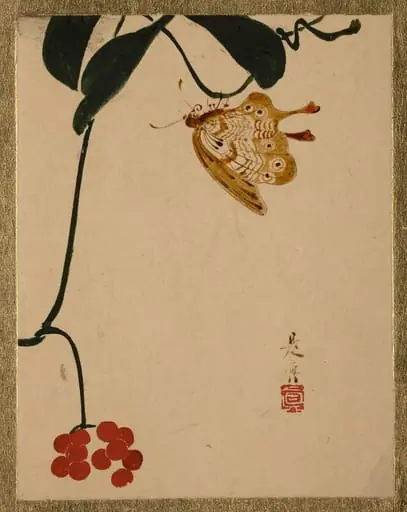
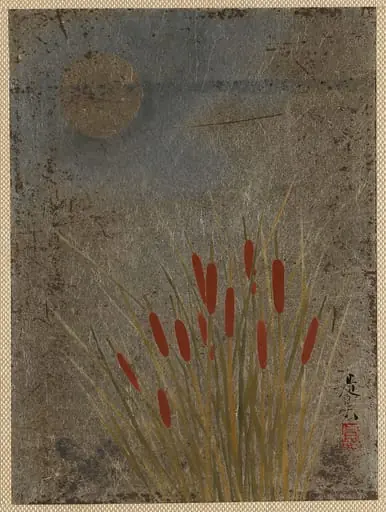
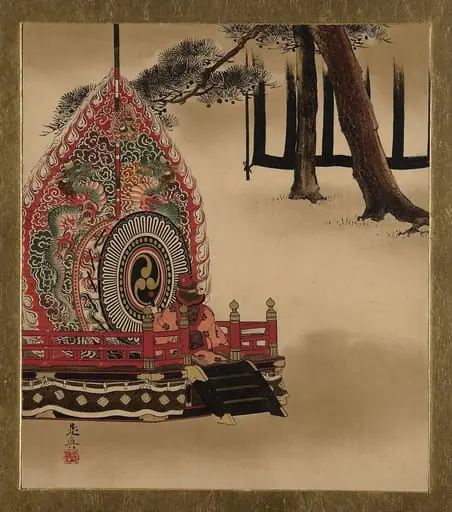
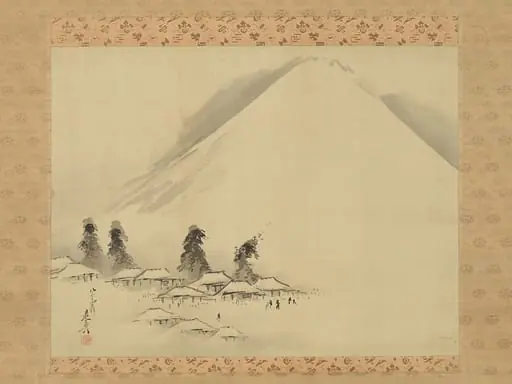
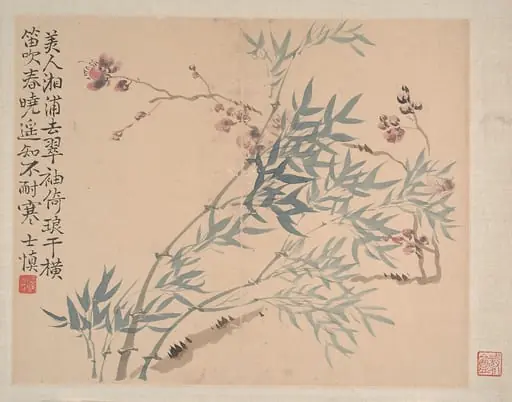
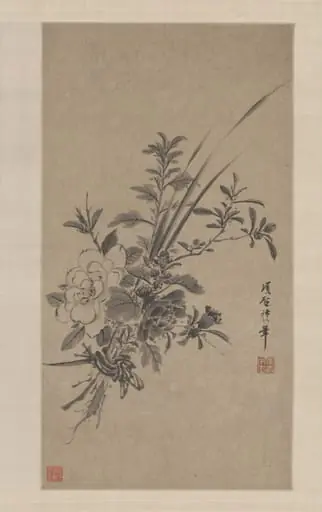
Untitled is an ink print by the Impressionist artist Shibata Zeshin. It dates from 1875 and is held in the collection of the Metropolitan Museum of Art.
About this work
Overview
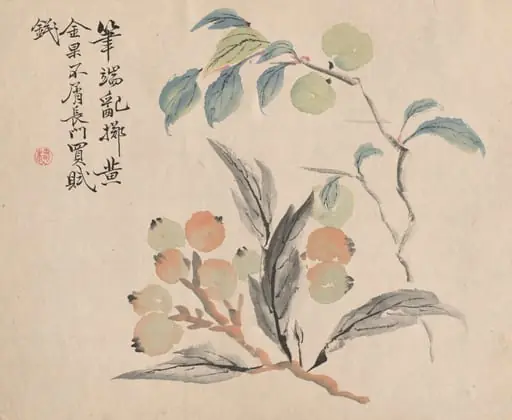
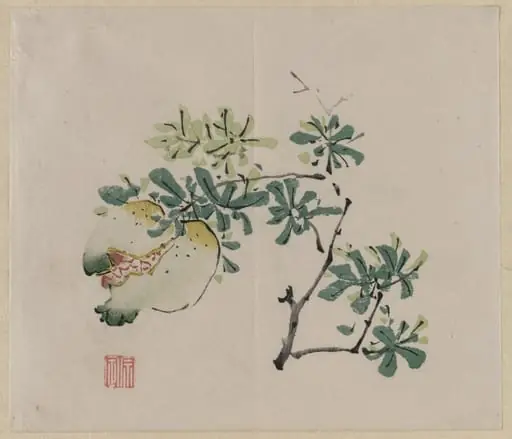
Created around 1875, this woodblock print by Shibata Zeshin is a quiet study of natural forms rendered in ink and color on paper. Held in The Metropolitan Museum of Art’s collection, it presents a minimal composition of a pinecone and a slender branch bearing delicate flowers. The work exemplifies Zeshin’s refined approach to botanical subjects, emphasizing structure over ornamentation.
Subject & Meaning
The print features a pinecone and a sprig of flowering branches, elements often associated with endurance and seasonal change in Japanese visual culture. The pinecone, with its dense, scaled surface, contrasts with the soft, open blooms, suggesting a dialogue between permanence and transience. No overt symbolism is stated, but the pairing invites contemplation of nature’s quiet cycles.
Technique & Style
Zeshin employed precise woodblock carving to define each form with clean outlines and flat, unmodulated color. Texture is suggested through carefully placed lines, short, curved strokes render the pinecone’s scales, while fine details distinguish petals and leaves. The absence of shading or atmospheric perspective reinforces a decorative clarity, characteristic of his late-period prints.
History & Provenance
The work dates from Zeshin’s mature period, when he increasingly focused on small-scale nature studies after shifting from lacquer art to printmaking. It entered The Metropolitan Museum of Art’s collection through documented acquisitions of his works in the 20th century, reflecting growing Western interest in Meiji-era Japanese prints.
Context
During the Meiji era, traditional Japanese arts underwent reinterpretation amid rapid modernization. Zeshin, once a lacquer master, turned to prints as a means of preserving refined craftsmanship. His botanical subjects, like this one, responded to both domestic aesthetic ideals and international curiosity in Japanese art, avoiding overt political or narrative themes.
Legacy
Zeshin’s prints, including this untitled work, influenced later generations of Japanese artists who sought to merge technical precision with natural observation. His restrained compositions and emphasis on material texture helped redefine woodblock printing beyond commercial ukiyo-e, positioning it as a medium for intimate, contemplative art.
Artist & collection