Artwork
Veue de Pont et partie de la Ville de Grenoble
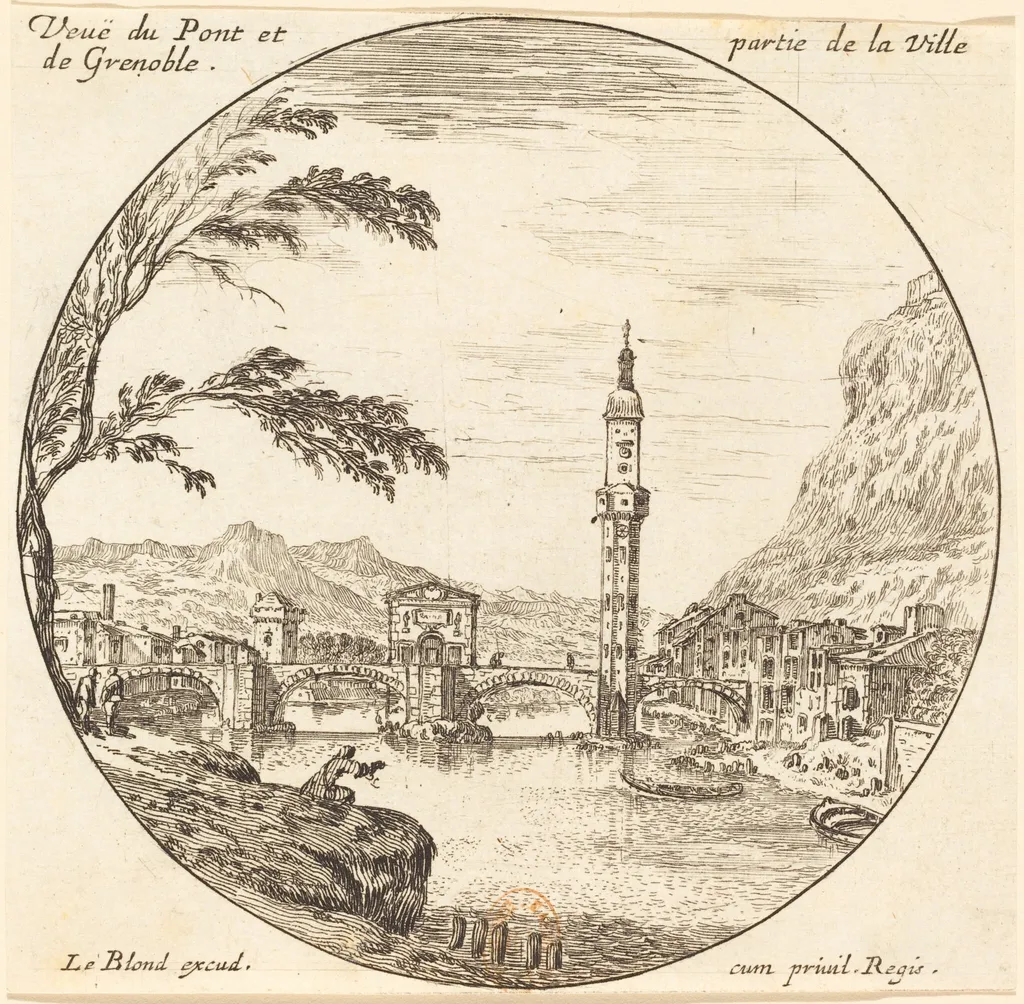
Veue de Pont et partie de la Ville de Grenoble is an ink print by the Baroque artist Israël Silvestre. It dates from 1656 and is held in the collection of the National Gallery of Art. Created in 1656, this black‑and‑white etching presents a view of a bridge spanning a river and a portion of the city of Grenoble.
About this work
Overview
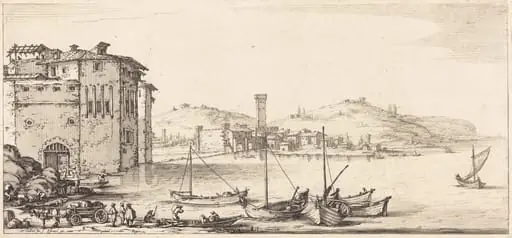
Created in 1656, this black‑and‑white etching presents a view of a bridge spanning a river and a portion of the city of Grenoble. The composition is bounded by a curved decorative frame, and the scene is rendered with fine linear work that models light and shadow across rooftops, a tall pointed tower, and the calm water.
Subject & Meaning
The print focuses on an urban landscape, highlighting the bridge as a central element that connects the two banks of the river. Architectural details such as the tower and the clustered buildings convey the character of 17th‑century Grenoble, offering a topographical record of the city’s built environment.
Technique & Style
Executed in etching, the work relies on delicate incised lines to delineate structures and foliage. The artist employs cross‑hatching and varied line weight to suggest depth, texture, and the play of light on stone and water, a hallmark of the period’s topographical prints.
History & Provenance
The piece was produced by Israel Silvestre, a French draftsman who specialized in city views. Orphaned early, he was trained by his uncle, a Parisian etcher and print‑seller, and later traveled across France, Spain, and Italy, turning his field sketches into detailed prints such as this one.
Context
Silvestre’s work belongs to a broader 17th‑century French tradition of documenting urban and architectural scenes for both scholarly and decorative purposes. His prints served as visual records for patrons interested in the geography and architecture of French towns during the reign of Louis XIV.
Own this work as a print
Artist & collection
Artist
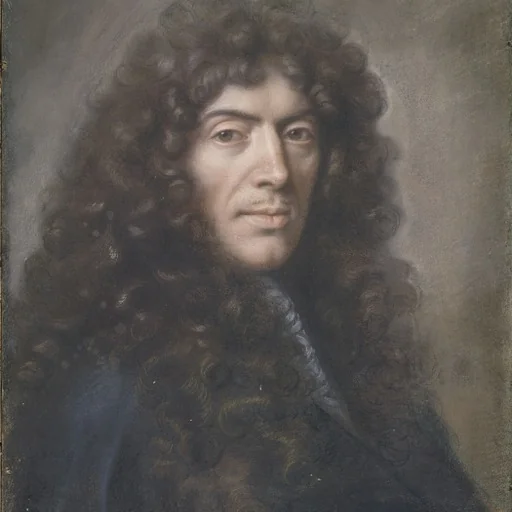
Israel Silvestre (13 August 1621 in Nancy – 11 October 1691 in Paris), called the Younger to distinguish him from his father, was a prolific French draftsman, etcher and print dealer who specialized in topographical views and perspectives…

 Castle under Siege
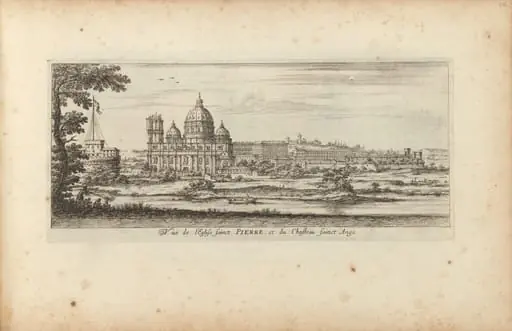 Vuë de l'Eglise sainct Pierre, et du Chasteau Sainct Ange
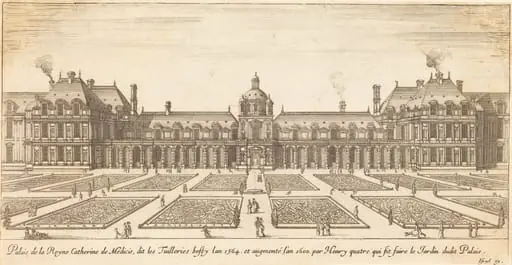 Palais de la Reyne Catherine de Medicis
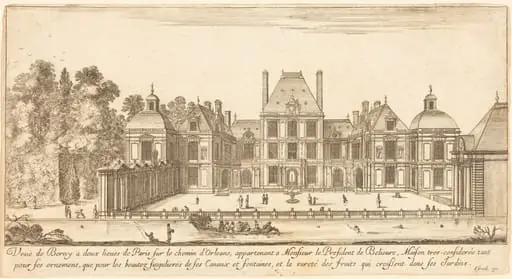 Veue de Berny a deux lieues de Paris sur le chemin d'Orléans
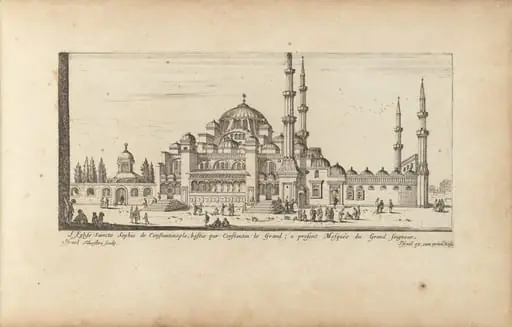 L'Eglise Saincte Sophie de Constantinople, bastie par Constantin le Grand; a present Mosquée du Grand seigneur
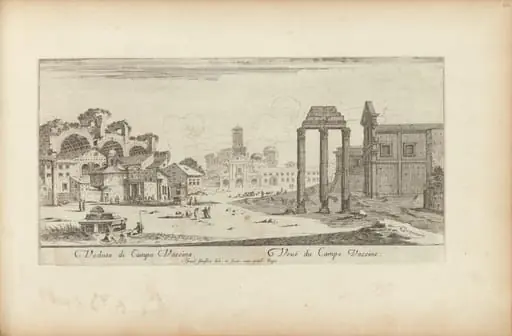
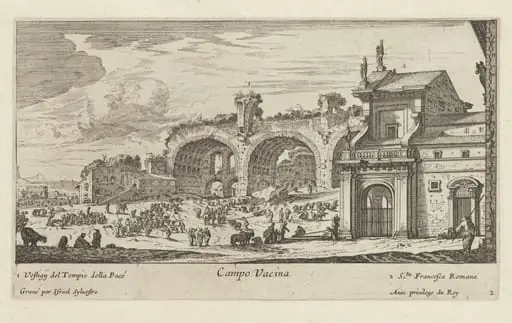 Campo Vacina
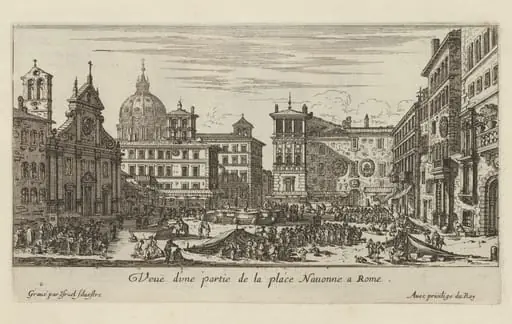 Veuë d'une partie de la place Navonne a Rome
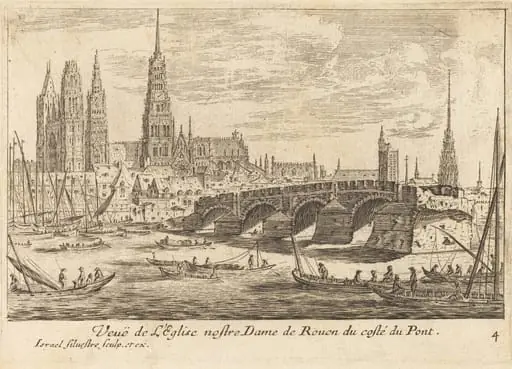 Veue de l'Eglise nostre Dame de Rouen
- View of a Town with a Bishop's Tomb
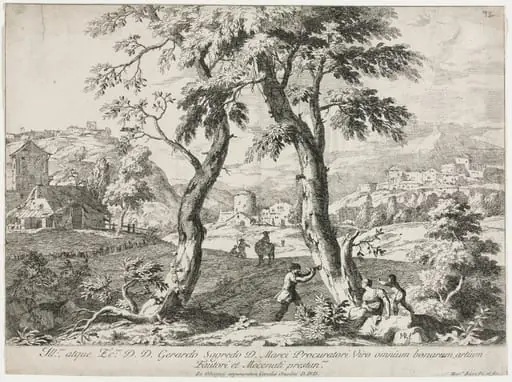 View of a Village with Figures in the Foreground
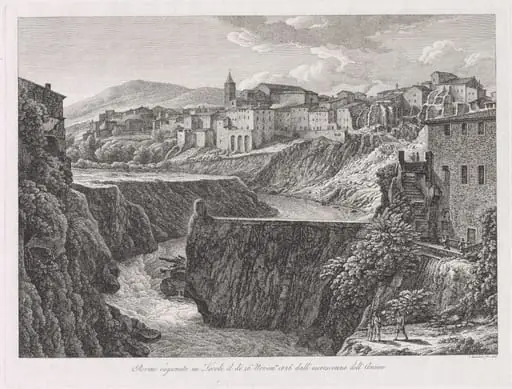 Rovine cagionate in Tivoli, dall'escrescenza dell'Aniene (Tivoli Damaged by the Flood of the River Aniene)
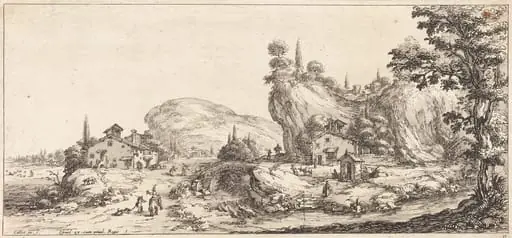 Returning Home from the Hunt
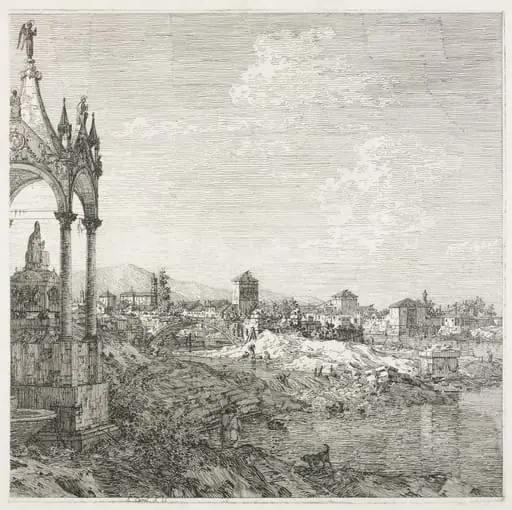 Views: The Sepulcher of a Bishop
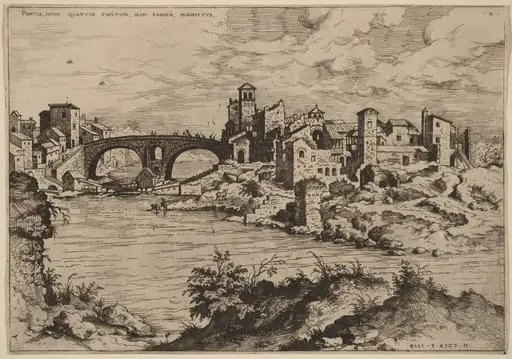 View of the Ponte Quattro Capi and the Island of the Tiber
 Houses at the Side of a River
 A Landscape with a Domed Building
 The Fishermen
 Veue des ruines d'une Tour qu'on dit avoir ete batie par les Romains
 Loading Merchandise
 Veduta di Campo Vaccina